


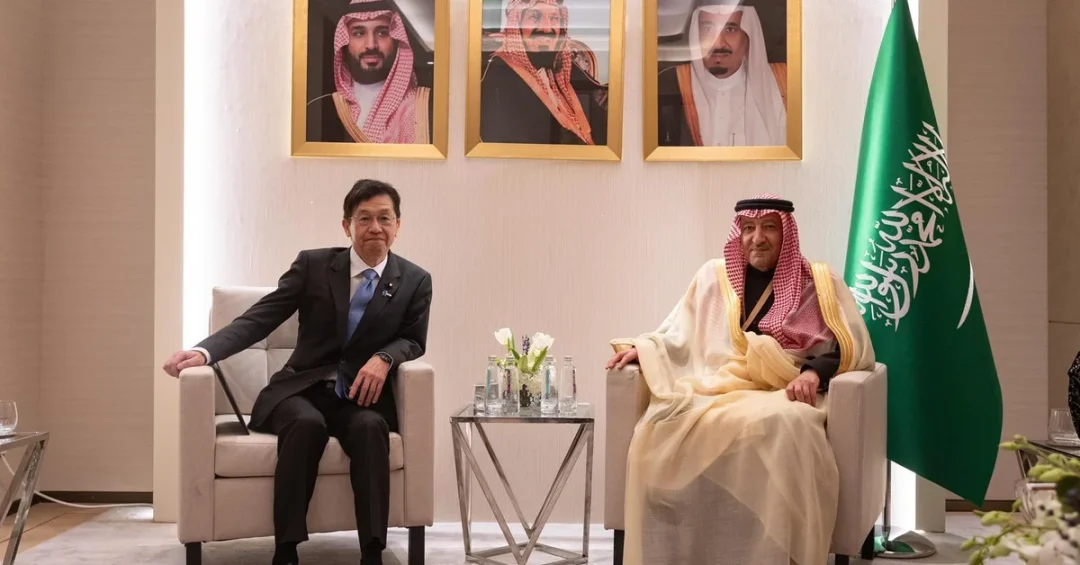
Saudi Vice Minister of Foreign Affairs Eng. Waleed Al-Khereiji met with Parliamentary Vice Minister for Foreign Affairs of Japan Hisashi Matsumoto in Riyadh on January 12, 2025, in a diplomatic engagement that underscores the deepening partnership between the Kingdom of Saudi Arabia and Japan. The meeting, announced by the Saudi Press Agency (SPA), focused on reviewing bilateral relations and exploring avenues to enhance cooperation across multiple fields, while also addressing issues of mutual interest on the regional and international stage.
The encounter reflects the Kingdom’s continued commitment to strengthening its global diplomatic network under the leadership of the Custodian of the Two Holy Mosques, King Salman bin Abdulaziz Al Saud, and His Royal Highness Crown Prince and Prime Minister Mohammed bin Salman bin Abdulaziz Al Saud. It also highlights the enduring importance of the Saudi-Japanese relationship, which spans decades of collaboration in energy, trade, technology, and cultural exchange. As both nations navigate a rapidly evolving geopolitical landscape, high-level meetings such as this serve as vital platforms for aligning priorities and unlocking new opportunities for shared prosperity.
Context and Background
How did Saudi-Japanese relations evolve into the comprehensive strategic partnership they represent today? The foundations were laid in the mid-20th century, when Japan’s growing energy needs led to a robust oil trade relationship with the Kingdom. Over the decades, this economic bond expanded into a multifaceted alliance encompassing investment, technology transfer, and cultural diplomacy. Japan has long been one of Saudi Arabia’s largest trading partners, and Saudi Arabia remains a critical supplier of energy to Japan. In recent years, the relationship has been elevated through reciprocal visits and agreements that reflect mutual respect and shared ambitions.
The meeting between Eng. Al-Khereiji and Mr. Matsumoto is part of a broader pattern of intensified diplomatic engagement between Riyadh and Tokyo. Japan’s parliamentary vice ministers often serve as key interlocutors in advancing bilateral agendas, and Mr. Matsumoto’s visit to Riyadh signals Tokyo’s continued prioritization of its ties with the Kingdom. The discussions took place against the backdrop of Saudi Arabia’s Vision 2030, a transformative national strategy aimed at diversifying the economy, empowering citizens, and positioning the Kingdom as a global hub for investment, tourism, and innovation. Japan’s expertise in technology, manufacturing, and infrastructure aligns closely with these goals.
Moreover, the meeting comes at a time of shifting global dynamics, including energy transition imperatives and the rise of new economic blocs. Both Saudi Arabia and Japan have expressed interest in collaborating on clean energy solutions, digital transformation, and sustainable development. The Riyadh meeting provided an opportunity to reaffirm these shared objectives and to explore concrete steps for implementation. It also allowed the two sides to exchange views on regional developments, underscoring the Kingdom’s role as a stabilizing force in the Middle East and a reliable partner in international affairs.
Key Details of the Meeting
What exactly was discussed during this high-level diplomatic encounter? According to the Saudi Press Agency, Eng. Waleed Al-Khereiji and Hisashi Matsumoto reviewed the relations between their two countries and discussed ways to enhance and develop them across various fields. They also addressed issues of mutual interest, which likely included regional security, economic cooperation, and cultural exchange. While the official readout did not disclose specific agreements, the meeting itself represents a continuation of the robust dialogue that characterizes Saudi-Japanese relations.
Eng. Al-Khereiji, a seasoned diplomat who has served in various capacities within the Saudi Ministry of Foreign Affairs, is known for his expertise in navigating complex international issues. His Japanese counterpart, Mr. Matsumoto, brings parliamentary experience and a deep understanding of foreign policy matters. Their discussion likely touched on the implementation of memoranda of understanding signed in recent years, including those related to energy, education, and small and medium enterprise development. The meeting also may have explored opportunities for Japanese companies to participate in Saudi mega-projects such as NEOM, the Red Sea Project, and Qiddiya, which are central to Vision 2030.
Furthermore, the two officials probably deliberated on ways to boost people-to-people exchanges, including tourism and student programs. Japan has been a popular destination for Saudi students and tourists, and Saudi Arabia has increasingly attracted Japanese visitors interested in its rich heritage and modern developments. Cultural diplomacy remains a cornerstone of the relationship, with events such as the Saudi-Japan Vision 2030 Business Forum and cultural weeks fostering greater mutual understanding. The Riyadh meeting builds on this momentum, ensuring that the diplomatic track keeps pace with the expanding economic and cultural ties.
International and Regional Impact
Why does a meeting between a Saudi vice minister and a Japanese parliamentary vice minister matter beyond the bilateral context? In an era of interconnected challenges, from energy security to climate change, the Saudi-Japanese partnership serves as a model for constructive international engagement. Japan, as a major industrialized economy, relies on stable energy supplies, while Saudi Arabia seeks reliable markets and technological partners. Their cooperation contributes to global economic stability and supports the rules-based international order. The meeting in Riyadh sends a positive signal that both nations are committed to dialogue and collaboration, even as they pursue their respective national interests.
Regionally, the engagement reinforces Saudi Arabia’s position as a pivotal player in the Middle East and a bridge between East and West. Japan has historically maintained balanced relations with various Middle Eastern countries, and its deepening ties with the Kingdom can facilitate broader regional cooperation. The two sides may have discussed joint efforts to support peace and development in Yemen, Iraq, and the Levant, as well as maritime security in the Red Sea and the Gulf. Such coordination aligns with Saudi Arabia’s vision of a prosperous and stable region, where economic integration and diplomacy prevail over conflict.
Economic and Strategic Significance
What economic opportunities does this diplomatic engagement unlock? Saudi Arabia and Japan share a robust trade relationship valued at billions of dollars annually. Japanese exports to the Kingdom include automobiles, machinery, and electronics, while Saudi exports to Japan are dominated by crude oil and petrochemicals. The meeting likely explored ways to diversify this trade, particularly in non-oil sectors. Japanese investment in Saudi Arabia has been growing, with companies like Toyota, Sony, and SoftBank active in the market. The Kingdom’s Public Investment Fund (PIF) has also invested in Japanese assets, creating a two-way flow of capital that strengthens economic interdependence.
Strategically, the partnership extends to defense and security, though details of such cooperation are often kept confidential. Japan’s Self-Defense Forces have engaged in joint exercises and capacity-building with Saudi counterparts, and both countries share an interest in ensuring freedom of navigation in key maritime chokepoints. The meeting may have also touched on collaboration in counterterrorism and cyber security, areas where Japan’s advanced technology can complement Saudi Arabia’s regional expertise. As Vision 2030 progresses, Japan’s role as a supplier of cutting-edge solutions—from hydrogen energy to smart cities—will only grow in importance.
Vision 2030 Alignment
How does this meeting advance Saudi Arabia’s Vision 2030 objectives? Vision 2030 aims to transform the Kingdom into a diversified, innovative economy, and international partnerships are essential to that mission. Japan’s strengths in technology, manufacturing, and human capital development align perfectly with the Vision’s focus on sectors such as renewable energy, digital infrastructure, and advanced industries. The meeting between Eng. Al-Khereiji and Mr. Matsumoto likely reinforced the framework for Japanese participation in these areas, from joint ventures in hydrogen production to cooperation in artificial intelligence and robotics.
Moreover, the diplomatic engagement supports Vision 2030’s goal of enhancing Saudi Arabia’s global standing and attracting foreign investment. By maintaining active dialogue with key allies like Japan, the Kingdom signals its openness to international collaboration and its reliability as a partner. The meeting also underscores the importance of cultural and educational exchanges, which contribute to the Vision’s social dimension by fostering a knowledgeable and globally connected citizenry. As Saudi Arabia continues its remarkable transformation, partnerships with nations like Japan will remain indispensable, driving mutual growth and reinforcing the Kingdom’s role as a leader in the region and beyond.
20 Questions
Q1. Who met in Riyadh on January 12, 2025?
A1. Saudi Vice Minister of Foreign Affairs Eng. Waleed Al-Khereiji met with Parliamentary Vice Minister for Foreign Affairs of Japan Hisashi Matsumoto in Riyadh on January 12, 2025.
Q2. What was the main purpose of the meeting?
A2. The two sides reviewed bilateral relations, discussed ways to enhance and develop them across various fields, and addressed issues of mutual interest.
Q3. Which Saudi official represented the Kingdom at the meeting?
A3. Eng. Waleed Al-Khereiji, Vice Minister of Foreign Affairs of Saudi Arabia, represented the Kingdom.
Q4. Who was the Japanese representative at the meeting?
A4. Hisashi Matsumoto, Parliamentary Vice Minister for Foreign Affairs of Japan, represented Japan.
Q5. Where did the meeting take place?
A5. The meeting took place in Riyadh, the capital of Saudi Arabia.
Q6. When did the meeting occur?
A6. The meeting occurred on January 12, 2025, according to the Saudi Press Agency.
Q7. What is the significance of this meeting for Saudi-Japanese relations?
A7. It reinforces the longstanding partnership between the two countries and provides a platform to explore new avenues for cooperation.
Q8. What topics were likely discussed beyond bilateral relations?
A8. They likely discussed regional and international issues of mutual interest, including economic cooperation and security matters.
Q9. How does this meeting align with Saudi Vision 2030?
A9. It supports Vision 2030 by strengthening international partnerships that drive economic diversification, investment, and technological collaboration.
Q10. What are some key areas of Saudi-Japanese cooperation?
A10. Key areas include energy, trade, technology, infrastructure, education, and cultural exchange.
Q11. Has Japan been a major trading partner for Saudi Arabia?
A11. Yes, Japan is one of Saudi Arabia’s largest trading partners, particularly in energy and manufactured goods.
Q12. What role does the Saudi Press Agency play in reporting such meetings?
A12. The Saudi Press Agency is the official news agency of Saudi Arabia, providing authoritative coverage of government activities and diplomatic engagements.
Q13. How often do Saudi and Japanese officials meet?
A13. Officials from both countries meet regularly through bilateral visits, international forums, and multilateral events to advance cooperation.
Q14. What benefits does Saudi Arabia gain from ties with Japan?
A14. Saudi Arabia benefits from Japanese investment, technology transfer, and expertise in sectors like renewable energy, manufacturing, and digital innovation.
Q15. What benefits does Japan gain from ties with Saudi Arabia?
A15. Japan gains a stable energy supply, access to a growing market, and opportunities for its companies to participate in Saudi mega-projects.
Q16. Are there cultural exchanges between Saudi Arabia and Japan?
A16. Yes, cultural exchanges include student programs, tourism, and events like the Saudi-Japan Vision 2030 Business Forum.
Q17. What is the historical foundation of Saudi-Japanese relations?
A17. The relationship dates back to the mid-20th century, rooted in energy trade and expanding into a comprehensive strategic partnership.
Q18. Did the meeting result in any new agreements?
A18. The official readout did not mention new agreements, but the meeting aimed to enhance existing cooperation and explore future opportunities.
Q19. How does this meeting reflect Saudi Arabia’s foreign policy?
A19. It reflects Saudi Arabia’s commitment to active diplomacy, global engagement, and building strong partnerships to support Vision 2030.
Q20. What can we expect next in Saudi-Japanese relations?
A20. We can expect continued high-level exchanges, expanded economic ties, and joint efforts in innovation and sustainable development.
Reader Feedback
We value your thoughts. Please share your feedback on this article.
Your feedback helps us improve our coverage.
Related articles
 Saudi FM Al-Jubeir Meets Spanish State Secretary
 KSrelief Distributes 330 Shelter Kits and 276 Tents in Afghanistan’s Nangarhar Province
 Saudi-Kuwait Hajj Agreement Signed for 1446 AH Pilgrims
 Saudi Foreign Ministry Official Meets Kuwaiti Consul General
 Saudi FM Meets French President’s MENA Advisor
 Saudi-Japanese Roundtable in Riyadh Signs 13 MoUs