


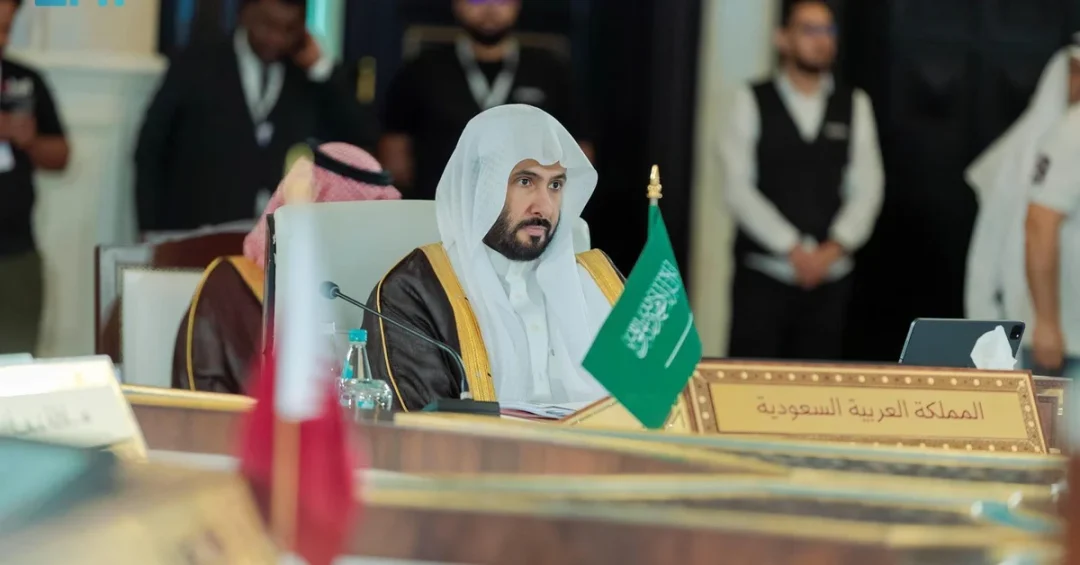
Saudi Arabia’s Minister of Justice, Walid Al-Samaani, participated in the 34th Gulf Cooperation Council (GCC) Justice Ministers meeting held in Qatar, where officials advanced a landmark extradition agreement and a draft pact on judicial cooperation across member states. The meeting, reported by the Saudi Press Agency (SPA), focused on strengthening legal ties among GCC nations through accords covering accused and convicted individuals, judgments, letters rogatory, and judicial notifications. The discussions also addressed legal and judicial cooperation in civil, commercial, personal status, and criminal matters, as well as standardizing certain legislative principles into unified rules. The participation underscores Saudi Arabia’s commitment to regional judicial integration and the rule of law under Vision 2030.
Held in Doha, the 34th session brought together justice ministers from the six GCC member states—Saudi Arabia, the United Arab Emirates, Qatar, Kuwait, Bahrain, and Oman—to deliberate on frameworks that enhance cross-border legal assistance. For international observers, the outcomes signal a deepening of Gulf legal harmonization, a process that has gained momentum in recent years. Saudi Arabia’s active role reflects its broader strategy to foster stability and cooperation in the region. The meeting produced concrete steps toward finalizing agreements that could reshape how judicial authorities interact, from serving legal documents to enforcing judgments. As GCC economies diversify and citizens travel more freely, such legal infrastructure becomes essential for protecting rights and facilitating commerce.
Context and Background
Why does judicial cooperation among Gulf states matter more today than ever before? The GCC, established in 1981, has long pursued economic and security integration, but legal harmonization has emerged as a critical pillar in recent years. The 34th Justice Ministers meeting builds on decades of efforts to align legal systems across member states. Previous sessions have yielded agreements on commercial arbitration, family law, and anti-crime measures. The current discussions on extradition and mutual recognition of judgments represent a significant leap forward. For Saudi Arabia, which has undertaken sweeping legal reforms under Vision 2030—including new commercial, civil, and penal codes—regional alignment is a natural extension of its domestic modernization. The Kingdom’s Minister of Justice, Walid Al-Samaani, has been a driving force in these efforts, advocating for unified legal standards that facilitate investment and protect citizens abroad.
The meeting’s agenda reflects a pragmatic response to growing cross-border activity. As Gulf nationals study, work, and invest across member states, the need for seamless judicial processes has intensified. Extradition agreements ensure that accused and convicted individuals cannot evade justice by crossing borders, while accords on judgments and letters rogatory streamline civil and commercial disputes. Standardizing legislative principles aims to reduce conflicts of law and create a predictable legal environment. These measures complement the GCC’s broader economic integration goals, including a customs union and a common market. For Saudi Arabia, which hosts millions of expatriates and serves as a regional hub, such cooperation enhances its attractiveness as a destination for business and tourism. The Kingdom’s leadership in these talks reinforces its role as a stabilizing force in the Gulf.
Key Details
What exactly was discussed at the 34th GCC Justice Ministers meeting? According to the Saudi Press Agency, the ministers deliberated on an extradition agreement concerning accused and convicted individuals within GCC countries. This pact would establish procedures for transferring suspects and convicts between member states, ensuring that legal accountability transcends borders. Additionally, they reviewed a draft agreement on judgments, letters rogatory, and judicial notifications. This draft aims to facilitate the recognition and enforcement of court rulings across the GCC, as well as the transmission of formal legal requests and notices. Such mechanisms are vital for resolving disputes efficiently and preventing jurisdictional gaps.
The meeting also touched on agreements for legal and judicial cooperation in civil, commercial, personal status, and criminal matters. These areas cover a wide spectrum: from contract disputes and family law to criminal investigations and asset recovery. Furthermore, the ministers discussed standardizing certain legislative principles to create unified rules. This could involve aligning definitions, procedures, and penalties for similar offenses, reducing legal discrepancies that complicate cross-border cases. Minister Al-Samaani’s participation highlights Saudi Arabia’s proactive stance. The Kingdom has recently introduced new laws on evidence, enforcement, and judicial fees, all designed to enhance transparency and efficiency. By harmonizing with GCC partners, Saudi Arabia ensures its legal framework is interoperable, benefiting citizens and investors alike.
International and Regional Impact
How will these agreements affect the wider region and beyond? For GCC citizens, the accords promise faster resolution of legal disputes and stronger protection of rights when abroad. Businesses operating across the Gulf can expect greater legal certainty, as judgments become enforceable across borders. This reduces risks and encourages intra-regional investment, a key goal of the GCC’s economic vision. Internationally, the agreements could serve as a model for other regional blocs seeking legal integration. They also enhance the Gulf’s reputation as a stable, rules-based environment, attracting foreign direct investment. For Saudi Arabia, the meeting reinforces its diplomatic leadership and commitment to multilateral solutions.
The extradition agreement, in particular, has implications for security and justice. By closing loopholes that allow fugitives to evade prosecution, GCC states strengthen the rule of law and deter transnational crime. This aligns with global efforts against money laundering, terrorism financing, and organized crime. The draft on judgments and letters rogatory will expedite civil and commercial litigation, benefiting individuals and companies. Standardizing legislative principles could lead to a more cohesive Gulf legal identity, facilitating mobility and trade. Saudi Arabia’s active engagement signals its willingness to share expertise and assume a leadership role. As the region navigates geopolitical shifts, such cooperation fosters unity and resilience, projecting a positive image of the Gulf as a hub of stability and progress.
Economic and Strategic Significance
What economic benefits flow from judicial integration? Legal certainty is a cornerstone of economic development. When investors know that contracts will be enforced and disputes resolved predictably, they are more likely to commit capital. The GCC’s combined GDP exceeds $2 trillion, and intra-regional trade is growing. By harmonizing judicial procedures, member states reduce transaction costs and time delays, making the region more competitive globally. For Saudi Arabia, which is pursuing Vision 2030 to diversify its economy, a robust legal framework is essential. The Kingdom has already climbed global rankings in rule of law and ease of doing business. Regional judicial cooperation amplifies these gains, creating a seamless market for goods, services, and labor.
Strategically, the meeting underscores Saudi Arabia’s role as a bridge-builder in the Gulf. Minister Al-Samaani’s participation reflects the Kingdom’s commitment to consensus-building and shared prosperity. The agreements under discussion could pave the way for a unified legal space, akin to the European Union’s judicial cooperation mechanisms. This would not only benefit GCC citizens but also enhance the region’s bargaining power in international negotiations. Moreover, by standardizing legislative principles, the GCC can present a united front on issues like data protection, intellectual property, and anti-corruption. Saudi Arabia’s leadership in these efforts aligns with its G20 membership and its ambition to be a global investment destination. The economic dividends of legal harmonization are substantial and long-term.
Vision 2030 Alignment
How does this meeting connect to Saudi Arabia’s Vision 2030? Vision 2030 aims to transform the Kingdom into a diversified, innovative economy with a transparent and efficient legal system. The judicial reforms undertaken by the Ministry of Justice, led by Minister Walid Al-Samaani, are integral to this vision. By participating in GCC judicial integration, Saudi Arabia ensures that its legal advancements are compatible with regional standards, facilitating cross-border business and tourism. The extradition and judgments agreements support the vision’s focus on security, justice, and quality of life. They also bolster the Kingdom’s position as a regional leader, capable of shaping collective frameworks that benefit all GCC citizens.
Looking ahead, the outcomes of the 34th GCC Justice Ministers meeting will likely be formalized in upcoming summits. Saudi Arabia will continue to play a pivotal role, leveraging its legal expertise and diplomatic weight. The Kingdom’s commitment to judicial cooperation mirrors its broader foreign policy of stability and development. As Vision 2030 progresses, such regional initiatives will amplify its impact, creating a more integrated and prosperous Gulf. For international observers, Saudi Arabia’s active engagement signals a forward-looking approach to governance, one that balances tradition with modernity. The meeting in Qatar is another step toward a future where justice knows no borders within the GCC, and Saudi Arabia stands at the forefront of that journey.
20 Questions
Q1. What was the main purpose of the 34th GCC Justice Ministers meeting?
A1. The meeting aimed to enhance judicial cooperation among GCC states, focusing on extradition agreements, mutual recognition of judgments, and standardizing legislative principles to facilitate cross-border legal processes.
Q2. Who represented Saudi Arabia at the meeting?
A2. Saudi Arabia’s Minister of Justice, Walid Al-Samaani, represented the Kingdom at the 34th GCC Justice Ministers meeting held in Qatar, as reported by the Saudi Press Agency.
Q3. Where was the 34th GCC Justice Ministers meeting held?
A3. The meeting was held in Qatar, bringing together justice ministers from all six Gulf Cooperation Council member states to discuss regional legal integration.
Q4. What is the extradition agreement discussed at the meeting?
A4. The extradition agreement concerns accused and convicted individuals in GCC countries, establishing procedures for their transfer between member states to ensure legal accountability across borders.
Q5. What does the draft agreement on judgments cover?
A5. The draft agreement covers judgments, letters rogatory, and judicial notifications within the GCC, aiming to streamline the recognition and enforcement of court rulings and legal requests.
Q6. Which legal areas are included in the cooperation agreements?
A6. The agreements cover civil, commercial, personal status, and criminal matters, addressing a wide range of legal issues to enhance judicial cooperation among GCC states.
Q7. What does standardizing legislative principles mean?
A7. Standardizing legislative principles involves aligning certain laws and procedures across GCC states to create unified rules, reducing legal discrepancies and facilitating cross-border cases.
Q8. How does this meeting benefit GCC citizens?
A8. It benefits citizens by ensuring faster resolution of legal disputes, stronger protection of rights abroad, and more efficient judicial processes when involved in cross-border legal matters.
Q9. What is the significance of the extradition agreement for security?
A9. The extradition agreement enhances security by preventing fugitives from evading justice across borders, thereby deterring transnational crime and strengthening the rule of law in the region.
Q10. How does judicial cooperation support economic growth?
A10. Judicial cooperation provides legal certainty, which encourages investment and trade by ensuring contracts are enforceable and disputes resolved predictably, reducing risks for businesses operating in the GCC.
Q11. What role does Saudi Arabia play in these discussions?
A11. Saudi Arabia plays a leading role, with Minister Walid Al-Samaani actively participating to advance regional judicial integration, reflecting the Kingdom’s commitment to stability and cooperation.
Q12. How does this meeting align with Saudi Vision 2030?
A12. It aligns with Vision 2030 by supporting legal reforms, enhancing transparency, and facilitating cross-border business, all of which contribute to the Kingdom’s goal of a diversified economy.
Q13. What are letters rogatory?
A13. Letters rogatory are formal requests from a court in one country to a court in another, seeking assistance in obtaining evidence or serving legal documents for a case.
Q14. How will the agreements affect businesses in the GCC?
A14. Businesses will benefit from greater legal certainty, as judgments become enforceable across borders, reducing risks and encouraging intra-regional investment and trade.
Q15. What is the GCC’s role in legal harmonization?
A15. The GCC facilitates legal harmonization by hosting ministerial meetings and drafting agreements that member states can adopt, promoting unity and cooperation in judicial matters.
Q16. When was the meeting held?
A16. The meeting was held on October 28, 2024, according to the Saudi Press Agency, marking the 34th session of the GCC Justice Ministers meeting.
Q17. What recent legal reforms has Saudi Arabia implemented?
A17. Saudi Arabia has introduced new commercial, civil, and penal codes, along with laws on evidence and enforcement, to modernize its legal system and enhance transparency.
Q18. How does judicial integration benefit international investors?
A18. It benefits investors by providing a predictable legal environment where contracts are enforced and disputes resolved efficiently, making the GCC more attractive for foreign direct investment.
Q19. What are the next steps after this meeting?
A19. The agreements discussed will likely be finalized and presented for approval at upcoming GCC summits, with member states working to implement the provisions domestically.
Q20. How does this meeting reflect Saudi Arabia’s global role?
A20. It reflects Saudi Arabia’s global role as a proactive leader in regional diplomacy and legal reform, contributing to stability and prosperity in the Gulf and beyond.
Reader Feedback
We value your thoughts. Please share your feedback on this article.
Your feedback helps us improve our coverage.
Related articles
 ZATCA Foils Smuggling of Over 2 Million Captagon Pills
 Saudi FM Receives Call from Japanese Counterpart
 Fifteenth Saudi Relief Plane Lands in Beirut with Aid
 Jeddah Governor Receives Ethiopian Consul General
 Crown Prince Congratulates Czech President on National Day
 King Salman Congratulates Czech President on National Day