


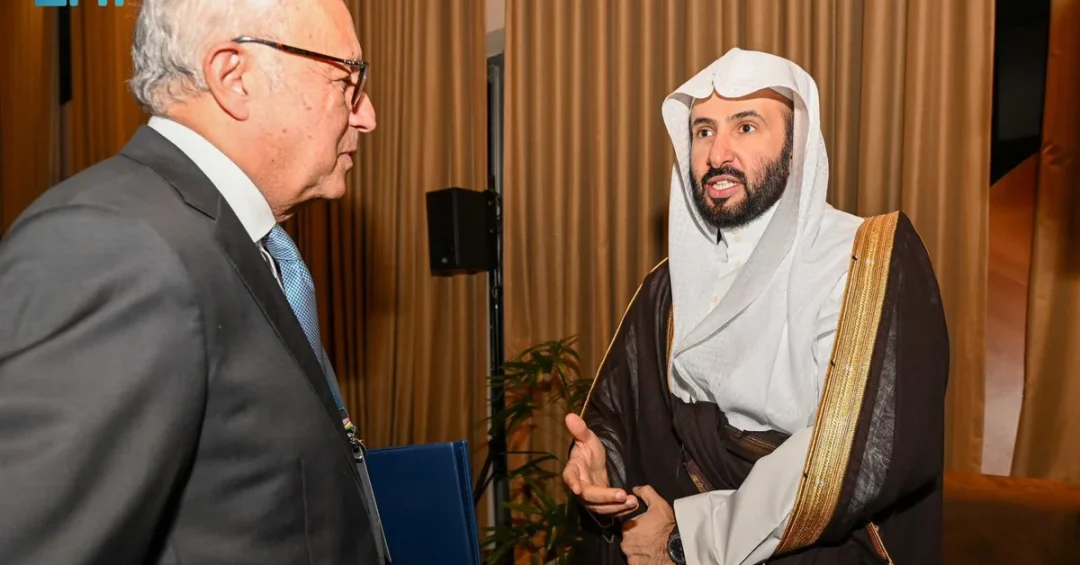
Saudi Minister of Justice Dr. Waleed bin Mohammed Al-Samaani met with the President of France’s Constitutional Council, Laurent Fabius, on May 15, 2024, on the sidelines of the G20 Summit of Supreme Courts and Constitutional Courts in Rio de Janeiro, Brazil. The meeting, reported by the Saudi Press Agency, focused on enhancing judicial cooperation between the Kingdom of Saudi Arabia and France, reflecting the shared commitment to legal excellence and international collaboration.
Context and Background
The G20 Summit of Supreme Courts and Constitutional Courts, held in Rio de Janeiro, brought together judicial leaders from member states to discuss common challenges and opportunities in the administration of justice. Saudi Arabia’s active participation underscores its growing role in global judicial dialogues and its commitment to aligning its legal framework with international best practices.
The meeting between Minister Al-Samaani and President Fabius is part of a broader effort by the Saudi Ministry of Justice to strengthen bilateral ties with key international partners. France and Saudi Arabia have a history of diplomatic and economic cooperation, and this engagement signals a deepening of their judicial relationship, potentially leading to shared expertise in legal reforms and judicial efficiency.
Key Details
During the meeting, the two officials discussed issues of common interest, with a particular emphasis on enhancing cooperation in judicial fields. While specific agreements were not announced, the dialogue sets the stage for future collaborations, such as training programs, exchange of legal expertise, and potential joint initiatives in judicial modernization.
Dr. Al-Samaani, who leads Saudi Arabia’s judicial transformation efforts, has been instrumental in implementing Vision 2030’s goals for a more efficient and transparent legal system. His engagement with France’s top judicial authority reflects the Kingdom’s proactive approach to learning from established legal systems while sharing its own advancements in digitization and dispute resolution.
Implications and Impact
This meeting holds significance for both nations. For Saudi Arabia, it reinforces its position as a global player in legal innovation and its openness to international cooperation. For France, it represents an opportunity to strengthen ties with a key Middle Eastern partner. The outcomes could facilitate cross-border legal collaboration, benefiting businesses and individuals in both countries.
Regionally, this engagement highlights Saudi Arabia’s commitment to judicial independence and the rule of law, which are essential for attracting foreign investment and fostering economic growth. It also aligns with the Kingdom’s broader diplomatic strategy of building bridges with Western nations, enhancing its global image as a modern, progressive state.
Vision 2030 Alignment
The meeting directly supports Saudi Vision 2030’s objectives of institutional excellence and international cooperation. By engaging with France’s Constitutional Council, the Ministry of Justice is advancing the Vision’s goal of developing a world-class judicial system that ensures quick and fair justice for citizens and residents. This collaboration is expected to contribute to the continuous improvement of Saudi Arabia’s legal infrastructure, ultimately enhancing the quality of life and economic vitality in the Kingdom.
20 Questions
Q1. Who met with the President of France’s Constitutional Council?
A1. Saudi Minister of Justice Dr. Waleed bin Mohammed Al-Samaani met with Laurent Fabius, the President of the Constitutional Council of France, on the sidelines of the G20 Summit in Rio de Janeiro.
Q2. When and where did the meeting take place?
A2. The meeting took place on May 15, 2024, in Rio de Janeiro, Brazil, during the G20 Summit of Supreme Courts and Constitutional Courts.
Q3. What was the main topic of discussion?
A3. The discussion focused on enhancing cooperation between Saudi Arabia and France in the judicial field, including ways to strengthen judicial cooperation between the two countries.
Q4. Who is Laurent Fabius?
A4. Laurent Fabius is the President of the Constitutional Council of France, a position he has held since 2016. He is a prominent French statesman who previously served as Prime Minister and Foreign Minister.
Q5. What is the G20 Summit of Supreme Courts and Constitutional Courts?
A5. It is a gathering of judicial leaders from G20 member countries to discuss common legal challenges, share best practices, and foster judicial cooperation on an international level.
Q6. Why is Saudi Arabia participating in this summit?
A6. Saudi Arabia’s participation demonstrates its commitment to international judicial dialogue, aligning with Vision 2030’s goal of developing a world-class judicial system and strengthening global partnerships.
Q7. What does Saudi Arabia aim to achieve from this meeting?
A7. The Kingdom aims to enhance bilateral judicial cooperation, learn from France’s constitutional expertise, and share its own advancements in judicial modernization.
Q8. How does this meeting benefit Saudi Arabia’s Vision 2030?
A8. It supports Vision 2030’s objectives of institutional excellence, international cooperation, and judicial reform, ultimately contributing to economic growth and quality of life.
Q9. Are there any official agreements resulting from this meeting?
A9. No specific agreements were announced, but the dialogue sets the foundation for future collaborative initiatives in judicial training and expertise exchange.
Q10. What is the significance of the meeting in the context of Saudi-French relations?
A10. It signifies a deepening of ties between the two nations, particularly in legal and judicial spheres, building on their existing diplomatic and economic relations.
Q11. How does Saudi Arabia’s judicial system align with international standards?
A11. Saudi Arabia has been implementing reforms to align its judicial system with international best practices, focusing on efficiency, transparency, and digital transformation, as outlined in Vision 2030.
Q12. What role does the Ministry of Justice play in Saudi Arabia?
A12. The Ministry of Justice oversees the judicial system, including courts and legal services, and is responsible for implementing judicial reforms and ensuring the rule of law.
Q13. How did the Saudi Press Agency report this meeting?
A13. The Saudi Press Agency reported the meeting as part of its coverage of official Saudi events, highlighting discussions on enhancing judicial cooperation.
Q14. What topics are typically discussed at such international judicial summits?
A14. Topics often include judicial independence, access to justice, dispute resolution, legal technology, and enhancing the efficiency and effectiveness of judicial systems.
Q15. Does this meeting have implications for legal professionals in Saudi Arabia?
A15. Yes, it may lead to training opportunities, exchange programs, and improved legal practices, benefiting lawyers, judges, and other legal professionals in the Kingdom.
Q16. What is the role of the Constitutional Council in France?
A16. The Constitutional Council in France reviews the constitutionality of laws and ensures that legislation complies with the French Constitution, playing a crucial role in the country’s legal framework.
Q17. How does Saudi Arabia view international judicial cooperation?
A17. Saudi Arabia views international judicial cooperation as essential for sharing knowledge, promoting legal reforms, and strengthening its global standing as a just and modern state.
Q18. Are there any specific areas of judicial cooperation expected to be pursued?
A18. Potential areas include judicial training programs, legal technology exchange, and joint conferences, though specific initiatives have not been announced.
Q19. What does this meeting signal about Saudi Arabia’s global engagement?
A19. It signals Saudi Arabia’s proactive engagement with international institutions and its commitment to collaboration in legal and judicial matters, reinforcing its role as a global partner.
Q20. What is the future outlook for Saudi-French judicial relations?
A20. The meeting lays a solid foundation for enhanced judicial cooperation, with expectations of continued dialogue and collaborative efforts that align with both nations’ strategic interests.
Reader Feedback
We value your thoughts. Please share your feedback on this article.
Your feedback helps us improve our coverage.