


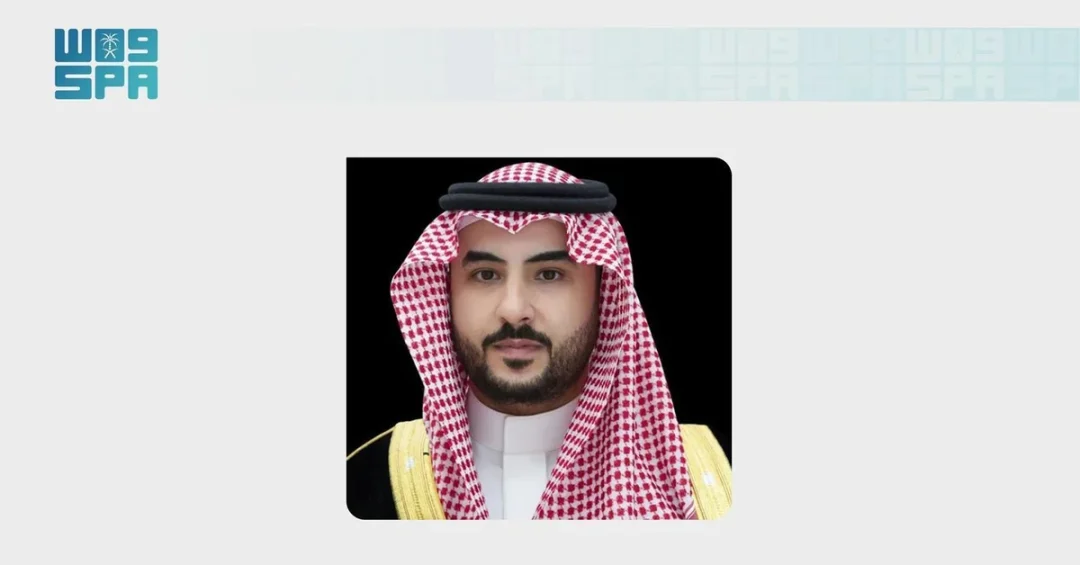
Saudi Minister of Defense Prince Khalid bin Salman bin Abdulaziz held a phone call with Malaysian Minister of Defence Mohamed Khaled bin Nordin on Sunday, during which the two officials discussed Saudi-Malaysian relations and prospects for defense cooperation between their countries. The call, reported by the Saudi Press Agency (SPA), also covered efforts related to current regional developments and several issues of mutual interest, according to the official statement. The exchange underscores the continuing strength of the diplomatic and security partnership between the Kingdom of Saudi Arabia and Malaysia, two nations whose ties stretch back decades and now span defense, trade, energy, and cultural cooperation.
The phone call comes at a time when Saudi Arabia, under the leadership of the Custodian of the Two Holy Mosques King Salman bin Abdulaziz Al Saud and Crown Prince and Prime Minister Mohammed bin Salman bin Abdulaziz Al Saud, is deepening its network of international partnerships as part of Vision 2030. Malaysia, a key member of the Association of Southeast Asian Nations (ASEAN) and a fellow member of the Organisation of Islamic Cooperation (OIC), represents an important partner in the Kingdom’s efforts to broaden its strategic reach across Asia. The conversation between Prince Khalid bin Salman and Mohamed Khaled bin Nordin signals that both countries see defense and security cooperation as a pillar of their broader bilateral relationship.
Context and Background
How did Saudi-Malaysian relations evolve to the point where a single phone call between defense ministers carries such significance? The answer lies in decades of consistent engagement. Diplomatic relations between Riyadh and Kuala Lumpur were formally established in 1957, shortly after Malaysia’s independence, and have since grown into a multifaceted partnership. Saudi Arabia has long been a destination for Malaysian pilgrims performing Hajj and Umrah, while Malaysia has become a significant source of skilled labor and expertise for the Kingdom’s expanding economy. Over the years, the two countries have signed numerous agreements covering trade, investment, education, and defense.
In the defense domain, the relationship has been anchored by periodic high-level visits, joint exercises, and participation in multilateral forums. Malaysia has historically looked to Saudi Arabia as a stabilizing force in the Middle East, while the Kingdom has viewed Malaysia as a gateway to Southeast Asia and a moderate voice within the Islamic world. Both countries are active members of the OIC, and their shared commitment to Islamic solidarity has provided a foundation for cooperation on counterterrorism, maritime security, and humanitarian initiatives. The Sunday call builds on this legacy, reaffirming that the defense dimension of the relationship remains active and forward-looking.
Regional developments were also on the agenda, reflecting the two ministers’ shared interest in stability. The Middle East and Southeast Asia are both experiencing shifts in their security landscapes, from maritime tensions to the evolving threat of extremist groups. By consulting each other, Saudi Arabia and Malaysia demonstrate a commitment to coordinated responses and mutual understanding. Such consultations are routine among allies, but they take on added importance when regional uncertainties are high. The SPA report did not specify which developments were discussed, but the fact that they were addressed at the defense-minister level highlights the strategic nature of the conversation.
Key Details
What exactly was discussed during the call? According to the official SPA statement, Prince Khalid bin Salman and Mohamed Khaled bin Nordin focused on three broad areas: bilateral relations, defense cooperation prospects, and current regional developments. The ministers did not announce new agreements or specific initiatives, but the exchange itself is a key detail because it keeps the channels of communication open at the highest levels of defense leadership. In diplomatic practice, such calls are often precursors to more formal arrangements, including memoranda of understanding, joint training programs, or defense procurement discussions.
The timing of the call is notable. It took place on a Sunday, a working day in Saudi Arabia, and was reported promptly by the Saudi Press Agency, the Kingdom’s official news outlet. This prompt disclosure reflects the transparency that Saudi officials have emphasized in recent years as part of the broader Vision 2030 reform agenda. By publicizing the call, Riyadh signals to both domestic and international audiences that its defense diplomacy is active and that Malaysia remains a valued partner. The report also noted that the two ministers discussed “several issues of mutual interest,” a standard diplomatic phrase that can encompass topics ranging from counterterrorism to humanitarian aid to military education.
Prince Khalid bin Salman, who has served as Minister of Defense since 2022, has been a central figure in Saudi Arabia’s efforts to modernize its armed forces and expand international defense partnerships. His counterpart, Mohamed Khaled bin Nordin, was appointed Malaysia’s Minister of Defence in December 2023 and has since engaged with counterparts across the Middle East and beyond. The personal rapport between the two ministers, built through previous interactions in multilateral settings, likely facilitated the candid exchange reported by SPA. While no joint statement was issued beyond the SPA report, the call itself is a tangible sign of the relationship’s health.
International and Regional Impact
How does a single phone call between two defense ministers ripple across the broader international landscape? For Saudi Arabia, it reinforces its position as a responsible global actor that maintains open lines of communication with partners across continents. For Malaysia, it underscores its commitment to engaging with the Muslim world’s leading economies and security providers. The call also has implications for ASEAN, where Malaysia plays a prominent role. By coordinating with Saudi Arabia, Kuala Lumpur can bring a Middle Eastern perspective to Southeast Asian security discussions, and vice versa. This cross-regional dialogue is increasingly important as global threats become more interconnected.
From a geopolitical standpoint, the call reflects Saudi Arabia’s broader strategy of diversifying its partnerships beyond traditional Western allies. The Kingdom has deepened ties with China, India, and Southeast Asian nations in recent years, and Malaysia is a key node in that network. For Malaysia, engaging with Saudi Arabia offers access to investment, energy supplies, and diplomatic support on issues of concern to the Islamic world. The defense dimension adds a layer of strategic trust that can facilitate cooperation in other areas, such as trade and technology. In a world of shifting alliances, the Saudi-Malaysian relationship stands out as a stable, mutually beneficial partnership.
Economic and Strategic Significance
What economic and strategic benefits flow from closer Saudi-Malaysian defense ties? While the call itself did not produce economic announcements, the broader relationship is deeply intertwined with trade and investment. Saudi Arabia is a major supplier of crude oil to Malaysia, and Malaysian companies have participated in construction, halal food, and Islamic finance projects in the Kingdom. Defense cooperation can open doors for joint ventures in military logistics, cybersecurity, and defense manufacturing, aligning with Saudi Arabia’s goal of localizing 50 percent of its military spending by 2030. Malaysia’s own defense industry, though smaller, has niche capabilities in areas such as armored vehicles and naval vessels.
Strategically, the partnership supports stability in two vital regions: the Gulf and Southeast Asia. The Strait of Malacca, a critical chokepoint for global trade, is of interest to Saudi Arabia as an oil exporter, while the Gulf’s security is of interest to Malaysia as an energy importer. By consulting regularly, the two countries can help prevent misunderstandings and contribute to a rules-based maritime order. Moreover, both nations face common challenges such as terrorism, piracy, and cyber threats. The phone call, while brief, is part of a sustained pattern of consultation that builds resilience against these shared risks. It also complements Saudi Arabia’s participation in multilateral naval coalitions and Malaysia’s role in ASEAN-led security mechanisms.
Vision 2030 Alignment
How does this defense dialogue fit into Saudi Arabia’s Vision 2030? Vision 2030 is not only an economic reform plan; it also envisions a Kingdom that is secure, globally engaged, and capable of defending its interests through strong alliances. The Ministry of Defense, under Prince Khalid bin Salman, has been tasked with modernizing the armed forces, enhancing interoperability with partners, and contributing to regional stability. Engaging with Malaysia supports these objectives by diversifying partnerships, sharing best practices, and signaling that Saudi Arabia is a reliable security partner in the Islamic world and beyond. The call also aligns with the Vision’s emphasis on diplomacy and soft power, as defense ties often pave the way for cultural and educational exchanges.
Looking ahead, the Saudi-Malaysian defense relationship is likely to deepen through joint exercises, training exchanges, and high-level visits. The Sunday phone call may be a prelude to more concrete cooperation, such as a memorandum of understanding on defense procurement or a bilateral security dialogue. For Saudi Arabia, such steps reinforce its role as a pillar of stability in the Middle East and a bridge to Asia. For Malaysia, they offer a stronger partnership with a G20 economy and a leader in Islamic affairs. As both countries navigate a complex global environment, their defense ministers’ regular consultations will remain a valuable tool for advancing shared interests and supporting the goals of Vision 2030.
20 Questions
Q1. Who held the phone call on Sunday?
A1. Saudi Minister of Defense Prince Khalid bin Salman bin Abdulaziz held a phone call with Malaysian Minister of Defence Mohamed Khaled bin Nordin, according to the Saudi Press Agency.
Q2. What was the main purpose of the call?
A2. The two ministers discussed Saudi-Malaysian relations, prospects for defense cooperation, current regional developments, and several issues of mutual interest.
Q3. When did the call take place?
A3. The call took place on Sunday, September 27, 2026, as reported by the Saudi Press Agency in Riyadh.
Q4. Which Saudi official represented the Kingdom?
A4. Prince Khalid bin Salman bin Abdulaziz, Minister of Defense, represented Saudi Arabia. He has served in this role since 2022.
Q5. Who is Malaysia’s Minister of Defence?
A5. Mohamed Khaled bin Nordin is Malaysia’s Minister of Defence. He was appointed to the position in December 2023.
Q6. What topics were discussed beyond defense cooperation?
A6. The ministers also discussed efforts related to current regional developments and several issues of mutual interest, according to the official statement.
Q7. Did the call result in any new agreements?
A7. No new agreements were announced. The call was a consultative exchange aimed at strengthening bilateral ties and coordination.
Q8. How long have Saudi Arabia and Malaysia had diplomatic relations?
A8. Diplomatic relations were established in 1957, shortly after Malaysia’s independence, and have grown across trade, defense, and cultural areas.
Q9. Why is Malaysia important to Saudi Arabia’s foreign policy?
A9. Malaysia is a key ASEAN member and OIC partner, serving as a gateway to Southeast Asia and a moderate voice in the Islamic world.
Q10. What is the significance of defense cooperation between the two countries?
A10. It builds strategic trust, supports counterterrorism and maritime security, and can lead to joint training, procurement, and technology collaboration.
Q11. How does this call relate to Vision 2030?
A11. Vision 2030 emphasizes global engagement and security. The call supports diversifying partnerships and modernizing Saudi defense ties.
Q12. What regional developments might have been discussed?
A12. The SPA report did not specify, but likely topics include Middle East stability, maritime security, and counterterrorism efforts in both regions.
Q13. Are there economic dimensions to Saudi-Malaysian defense ties?
A13. Yes. Defense cooperation can facilitate joint ventures in logistics, cybersecurity, and manufacturing, supporting Saudi localization goals.
Q14. How does Malaysia benefit from the relationship?
A14. Malaysia gains access to Saudi investment, energy supplies, and diplomatic support, while strengthening its security dialogue with a G20 economy.
Q15. What is the role of the Saudi Press Agency in this report?
A15. SPA is the Kingdom’s official news agency. It reported the call, reflecting Saudi Arabia’s commitment to transparent official communication.
Q16. Have the two ministers met before?
A16. They have likely interacted in multilateral settings, but the SPA report did not specify previous meetings between them.
Q17. What might be the next steps after this call?
A17. Possible next steps include joint exercises, training exchanges, high-level visits, or a memorandum of understanding on defense cooperation.
Q18. How does this call fit into Saudi Arabia’s broader Asian outreach?
A18. It is part of the Kingdom’s strategy to diversify partnerships beyond Western allies, deepening ties with China, India, and ASEAN nations.
Q19. What common security challenges do both countries face?
A19. Both face terrorism, piracy, and cyber threats. Regular consultations help build resilience and coordinate responses to these shared risks.
Q20. What does the call say about Saudi Arabia’s global role?
A20. It shows Saudi Arabia as a responsible global actor that maintains open communication with partners and contributes to regional and international stability.
Reader Feedback
We value your thoughts. Please share your feedback on this article.
Your feedback helps us improve our coverage.
Related articles
 Moroccan King Condemns Houthi Attacks on Saudi Arabia
 IMCTC Highlights Counterterrorism at Madinah Conference
 Saudi Ministry Holds First Religious Course in Taiwan
 Riyadh Governor Welcomes Danish Ambassador
 NWC Completes Sewer Network in Unaizah, Serving 11,000+
 Saudi Embassy in Nigeria Celebrates National Day