


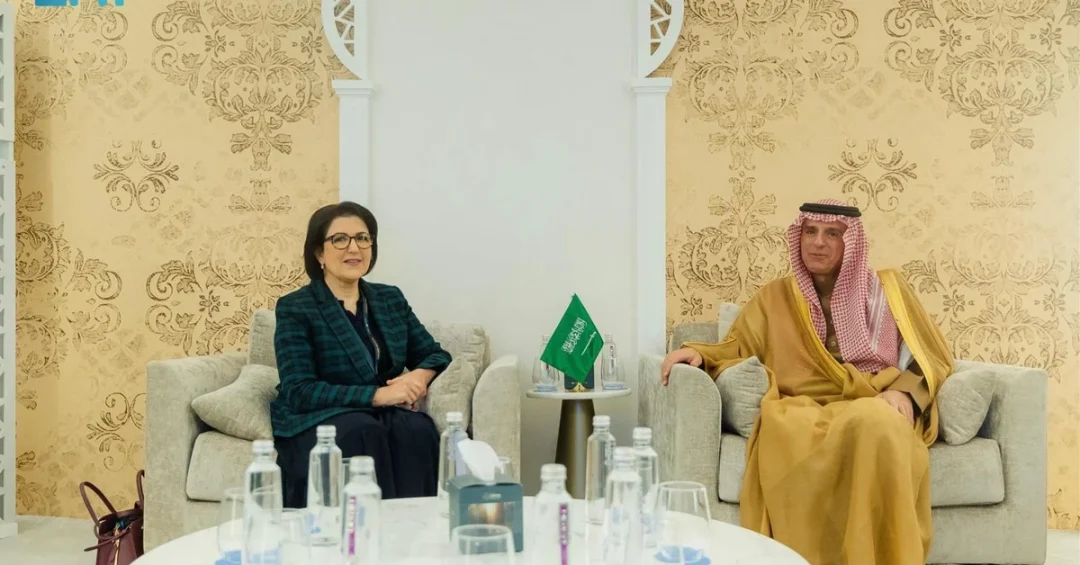
Saudi Minister of State for Foreign Affairs, Cabinet Member, and Climate Envoy Adel Al-Jubeir met with Bayan Sami Abdulrahman, Senior Advisor to the Kurdistan Regional Government Prime Minister Masrour Barzani for Foreign Affairs and Climate Change, on the sidelines of the 16th Conference of the Parties to the United Nations Convention to Combat Desertification (COP16) in Riyadh on December 11, 2024. The meeting underscored the Kingdom’s expanding role as a convenor of global environmental diplomacy and its commitment to forging partnerships that address land degradation, drought resilience, and climate adaptation across the Middle East and beyond.
The discussions, announced by the Saudi Press Agency, focused on environmental protection, climate change mitigation, and desertification challenges, alongside key agenda items from the COP16 conference. The encounter reflects Saudi Arabia’s broader strategy of leveraging multilateral gatherings hosted in Riyadh to advance practical cooperation with regional and international partners. It also highlights the Kingdom’s growing emphasis on climate diplomacy as a pillar of its foreign policy and a core component of Vision 2030’s sustainability objectives.
Context and Background
Why has desertification become such a central concern for Saudi Arabia and its regional partners? The Kingdom, which holds the presidency of the 16th Conference of the Parties to the United Nations Convention to Combat Desertification, has made land restoration and drought resilience a signature issue of its international engagement. COP16, held in Riyadh from December 2 to 13, 2024, brought together representatives from more than 190 countries, making it the largest UN land-focused conference ever convened. The event served as a platform for Saudi Arabia to demonstrate its environmental leadership and to catalyze action on issues that disproportionately affect arid and semi-arid regions.
Desertification and land degradation are particularly acute challenges for the Middle East, where water scarcity, rising temperatures, and unsustainable land management practices threaten food security, livelihoods, and stability. Saudi Arabia has itself invested heavily in combating desertification through initiatives such as the Saudi Green Initiative and the Middle East Green Initiative, which aim to plant billions of trees and restore millions of hectares of degraded land. The meeting between Al-Jubeir and Abdulrahman therefore fits within a wider pattern of Saudi efforts to build coalitions around shared environmental priorities.
The Kurdistan Region of Iraq, represented by Abdulrahman, shares many of these environmental challenges. Located in northern Iraq, the region faces pressures from drought, reduced rainfall, and land degradation that affect agriculture and water resources. By engaging with Kurdish representatives, Saudi Arabia signals its willingness to cooperate across political boundaries on issues of mutual concern, reinforcing the Kingdom’s position as a constructive regional actor. What does this meeting reveal about Saudi Arabia’s approach to diplomacy in the region? It shows a pragmatic focus on common challenges that transcend geopolitical differences, with climate and environment serving as a bridge for dialogue.
Key Details of the Meeting
What specific topics were on the table during the Riyadh discussions? According to the official Saudi Press Agency report, the meeting addressed environmental, climate, and desertification-related issues, as well as ongoing efforts to tackle these challenges. The two officials also reviewed key topics from the COP16 agenda, which included negotiations on drought resilience, land tenure, and the mobilization of finance for land restoration projects. These discussions are part of the broader COP16 outcome, which seeks to accelerate global action on sustainable land management.
Adel Al-Jubeir, in his capacity as Minister of State for Foreign Affairs, Cabinet Member, and Climate Envoy, has been a prominent figure in Saudi climate diplomacy. His dual role allows him to integrate environmental considerations into the Kingdom’s foreign policy, ensuring that climate action is not treated as a standalone issue but as an integral part of Saudi Arabia’s international relations. Bayan Sami Abdulrahman, a seasoned diplomat and former Iraqi ambassador to the United States, brings significant experience to her role as Senior Advisor for Foreign Affairs and Climate Change to the Kurdistan Regional Government’s Prime Minister. Her participation in COP16 and her meeting with Al-Jubeir highlight the importance of sub-national and regional actors in global environmental governance.
The meeting took place on the sidelines of COP16, a format that allows for informal, focused exchanges that complement the formal negotiations. Such bilateral discussions are often crucial for building trust, aligning positions, and identifying areas for practical collaboration. The Saudi Press Agency report did not disclose specific agreements or joint initiatives, but the very fact of the meeting reinforces the spirit of cooperation that COP16 aims to foster. How might these conversations translate into tangible action? They can lead to joint projects, knowledge sharing, and coordinated positions in future climate negotiations, all of which contribute to the global effort to combat desertification.
International and Regional Impact
Does Saudi Arabia’s engagement with Kurdish representatives carry broader implications for regional diplomacy? The meeting between Al-Jubeir and Abdulrahman is a reminder that environmental issues can serve as a neutral ground for dialogue, even in a region marked by complex political dynamics. By focusing on climate and desertification, Saudi Arabia and the Kurdistan Region can build practical cooperation that benefits both sides without becoming entangled in contentious political debates. This approach aligns with Saudi Arabia’s broader foreign policy objective of promoting stability and prosperity in the Middle East through constructive engagement.
At the international level, COP16 in Riyadh has elevated Saudi Arabia’s profile as a global leader in land restoration and drought resilience. The conference has produced commitments and initiatives that will shape the international agenda for years to come. The Kingdom’s ability to convene parties from diverse backgrounds—including representatives from Iraq’s Kurdistan Region—demonstrates its convening power and its commitment to inclusive multilateralism. As the world grapples with the interconnected crises of climate change, biodiversity loss, and land degradation, Saudi Arabia’s role as a bridge-builder is increasingly valuable.
What does this mean for the global fight against desertification? It means that progress depends on cooperation across borders, sectors, and levels of government. The meeting between a Saudi minister and a Kurdish advisor is a small but meaningful example of how such cooperation can be initiated. It also underscores the importance of the UN Convention to Combat Desertification as a framework for action, and the role of COP presidencies in driving momentum. Saudi Arabia’s presidency of COP16 has been marked by a focus on concrete outcomes, including the Riyadh Global Drought Resilience Partnership, which aims to mobilize resources and expertise to help vulnerable countries prepare for drought.
Economic and Strategic Significance
Why should economic observers pay attention to environmental diplomacy? For Saudi Arabia, climate action and land restoration are not merely environmental imperatives; they are economic and strategic opportunities. The Saudi Green Initiative and the Middle East Green Initiative are expected to generate investment in renewable energy, water management, and sustainable agriculture, creating jobs and diversifying the economy away from oil dependence. By positioning itself at the forefront of the global land restoration agenda, Saudi Arabia can attract green finance, foster innovation, and export its expertise to other countries facing similar challenges.
The meeting with the Kurdistan Region’s representative also has strategic dimensions. Iraq, including the Kurdistan Region, is a neighbor and a key partner for Saudi Arabia in trade, energy, and regional security. Environmental cooperation can serve as a confidence-building measure that strengthens ties and opens avenues for broader collaboration. As Saudi Arabia pursues its Vision 2030 goals of economic diversification and global engagement, partnerships with regional actors on shared challenges like desertification can yield diplomatic and economic dividends. What can other nations learn from this approach? They can see that environmental diplomacy is not a zero-sum game but a way to build trust and create mutual benefits.
Moreover, the economic cost of inaction on desertification is staggering. Land degradation reduces agricultural productivity, displaces communities, and exacerbates water scarcity, all of which can lead to instability. By investing in land restoration and climate resilience, Saudi Arabia and its partners are mitigating these risks and laying the foundation for sustainable development. The Kingdom’s leadership in this area, demonstrated through COP16 and bilateral engagements like the Al-Jubeir-Abdulrahman meeting, reinforces its reputation as a responsible global citizen and a driver of positive change.
Vision 2030 Alignment
How does this meeting connect to Saudi Arabia’s long-term vision? Vision 2030, the Kingdom’s comprehensive reform plan, includes ambitious environmental targets under the Saudi Green Initiative, such as reducing carbon emissions, increasing renewable energy capacity, and planting 10 billion trees. These goals are not only about protecting the environment; they are about enhancing quality of life, creating economic opportunities, and ensuring a sustainable future for generations to come. The meeting between Al-Jubeir and Abdulrahman exemplifies the kind of international cooperation that is essential to achieving these objectives.
By engaging with partners across the region and the world, Saudi Arabia is building a network of allies committed to environmental stewardship. This network can help share best practices, mobilize resources, and advocate for policies that support land restoration and climate adaptation. The Kingdom’s leadership at COP16 and its ongoing diplomatic efforts demonstrate that Vision 2030 is not just a domestic agenda but a global vision for a more sustainable and prosperous world. As Saudi Arabia continues to host major international events and facilitate dialogue, its role as a catalyst for global action on desertification and climate change will only grow stronger.
In the end, the meeting between Minister Al-Jubeir and Senior Advisor Abdulrahman is a testament to the power of diplomacy to address shared challenges. It shows that even in a region with complex politics, cooperation on environmental issues is possible and beneficial. As the international community looks for ways to combat desertification and build resilience, Saudi Arabia’s example of inclusive, forward-looking diplomacy offers a valuable model. The Kingdom remains committed to working with all partners to ensure a greener, more sustainable future for all.
20 Questions
Q1. Who met with Saudi Minister of State for Foreign Affairs Adel Al-Jubeir on December 11, 2024?
A1. Bayan Sami Abdulrahman, Senior Advisor to Kurdistan Prime Minister Masrour Barzani for Foreign Affairs and Climate Change, met with Al-Jubeir on the sidelines of COP16 in Riyadh.
Q2. What was the main focus of the meeting between Al-Jubeir and Abdulrahman?
A2. The discussions centered on environmental, climate, and desertification-related issues, as well as ongoing efforts to tackle these challenges and key topics from the COP16 agenda.
Q3. Where did the meeting take place?
A3. The meeting was held in Riyadh, Saudi Arabia, on the sidelines of the 16th Conference of the Parties to the United Nations Convention to Combat Desertification (COP16).
Q4. What is COP16 and why is it significant?
A4. COP16 is the 16th Conference of the Parties to the UN Convention to Combat Desertification, hosted by Saudi Arabia in Riyadh from December 2 to 13, 2024, focusing on land restoration and drought resilience.
Q5. What role does Adel Al-Jubeir hold in the Saudi government?
A5. Adel Al-Jubeir serves as Minister of State for Foreign Affairs, Cabinet Member, and Climate Envoy, integrating climate action into Saudi Arabia’s foreign policy and international relations.
Q6. Who is Bayan Sami Abdulrahman?
A6. Bayan Sami Abdulrahman is the Senior Advisor to the Kurdistan Regional Government’s Prime Minister Masrour Barzani for Foreign Affairs and Climate Change, and a former Iraqi ambassador to the United States.
Q7. Why is desertification a key issue for Saudi Arabia?
A7. Desertification threatens food security, water resources, and livelihoods in arid regions; Saudi Arabia is addressing it through initiatives like the Saudi Green Initiative and Middle East Green Initiative.
Q8. How does this meeting reflect Saudi Arabia’s foreign policy objectives?
A8. It demonstrates Saudi Arabia’s commitment to constructive engagement and multilateral cooperation on shared challenges, reinforcing its role as a regional leader in environmental diplomacy.
Q9. What are the Saudi Green Initiative and Middle East Green Initiative?
A9. These are Saudi-led efforts to combat climate change and desertification, aiming to plant billions of trees, reduce emissions, and restore degraded land across the region.
Q10. What is the significance of COP16 being held in Riyadh?
A10. Hosting COP16 underscores Saudi Arabia’s growing leadership in global environmental governance and its ability to convene international stakeholders to address land degradation.
Q11. Did the meeting produce any specific agreements or initiatives?
A11. The official report did not mention specific agreements, but the meeting aimed to strengthen cooperation and align efforts on climate and desertification issues.
Q12. How does this meeting align with Vision 2030?
A12. Vision 2030 includes environmental sustainability goals, such as those under the Saudi Green Initiative; the meeting supports international cooperation essential to achieving these targets.
Q13. What are the broader implications of Saudi-Kurdistan environmental cooperation?
A13. It can build trust, facilitate knowledge exchange, and contribute to regional stability by focusing on shared environmental challenges that transcend political differences.
Q14. What economic benefits can arise from combating desertification?
A14. Investing in land restoration can create jobs, attract green finance, enhance agricultural productivity, and support economic diversification, aligning with Vision 2030 objectives.
Q15. How does Saudi Arabia’s climate diplomacy benefit the region?
A15. It fosters collaboration, mobilizes resources, and promotes sustainable development, helping countries in the Middle East and beyond address common environmental threats.
Q16. What is the UN Convention to Combat Desertification?
A16. It is a global treaty that addresses desertification and land degradation, with COP meetings serving as platforms for countries to negotiate and commit to action.
Q17. What other topics were discussed at COP16?
A17. COP16 covered drought resilience, land tenure, finance for restoration, and the Riyadh Global Drought Resilience Partnership, among other agenda items.
Q18. How does Saudi Arabia support global efforts against climate change?
A18. Through initiatives like the Saudi Green Initiative, hosting COP16, and engaging in bilateral and multilateral diplomacy, Saudi Arabia promotes climate action and sustainability worldwide.
Q19. What can other nations learn from Saudi Arabia’s approach to environmental diplomacy?
A19. They can learn the value of inclusive dialogue, leveraging multilateral events for bilateral cooperation, and integrating environmental goals into broader economic and foreign policy strategies.
Q20. What is the expected outcome of such meetings for future cooperation?
A20. They lay the groundwork for joint projects, knowledge sharing, and coordinated positions in future climate negotiations, contributing to global efforts against desertification and climate change.
Reader Feedback
We value your thoughts. Please share your feedback on this article.
Your feedback helps us improve our coverage.
Related articles
 KSrelief Joins 2025 Humanitarian Overview Launch in Kuwait
 New Murabba Signs MoU with NCVC for Green Urban Future
 Saudi Arabia and Eswatini Sign General Cooperation Agreement
 Saudi Arabia Joins UN CERF Advisory Meeting in New York
 Crown Prince Receives Call from Iraqi Prime Minister
 Saudi Arabia Launches ‘Welcome to Saudi 34’ Passport Stamp