


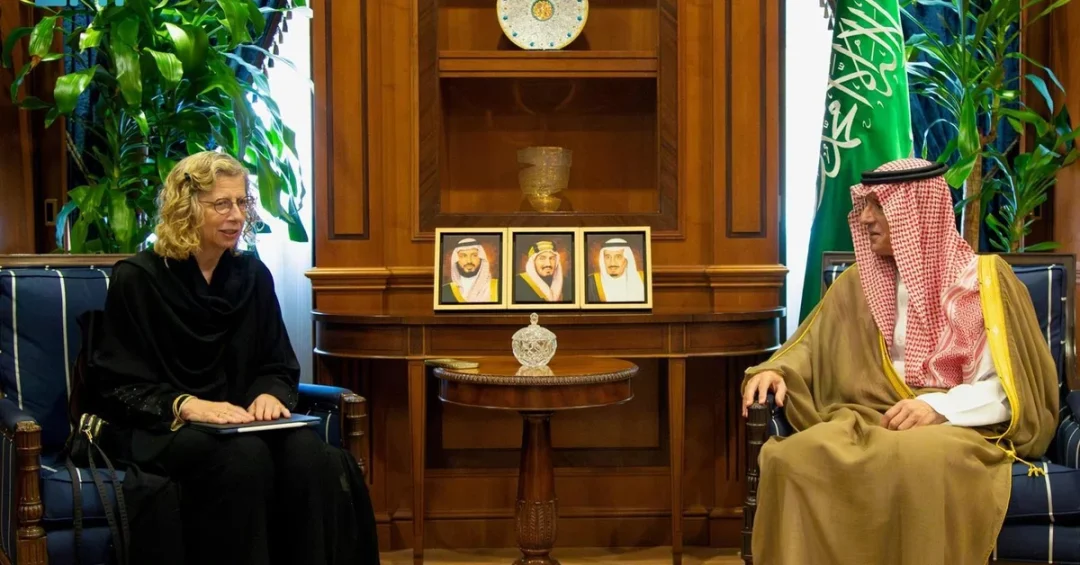
Minister of State for Foreign Affairs, Cabinet Member, and Climate Envoy Adel bin Ahmed Al-Jubeir met with Inger Andersen, Executive Director of the United Nations Environment Programme (UNEP), at the ministry’s headquarters in Riyadh on June 5, 2024. The meeting, reported by the Saudi Press Agency (SPA), focused on environmental issues, cooperation between the Kingdom and UNEP, and Saudi Arabia’s initiatives to protect the environment and address climate change. Saudi Ambassador to Kenya Khalid bin Abdullah Al-Salman also attended. This high-level engagement underscores Saudi Arabia’s commitment to international environmental diplomacy and sustainable development.
Context and Background
Saudi Arabia has long been a proactive player in global environmental efforts, aligning its domestic policies with international frameworks such as the Paris Agreement and the United Nations Sustainable Development Goals. As the world’s largest oil producer, the Kingdom recognizes its unique responsibility to balance energy security with environmental stewardship. Under the leadership of Crown Prince Mohammed bin Salman, Saudi Arabia has launched ambitious initiatives including the Saudi Green Initiative and the Middle East Green Initiative, which aim to plant billions of trees, reduce carbon emissions, and promote renewable energy. The meeting between Minister Al-Jubeir and Executive Director Andersen builds on this legacy, reinforcing the Kingdom’s role as a bridge between energy producers and global climate action.
Key Details
During the meeting, Minister Al-Jubeir and Executive Director Andersen discussed a range of environmental topics, including biodiversity conservation, desertification, and the transition to a green economy. They reviewed ongoing cooperation between Saudi Arabia and UNEP, such as joint projects on environmental monitoring and capacity building. The Kingdom’s efforts to combat climate change were highlighted, including the Circular Carbon Economy approach, which seeks to manage emissions through reduction, reuse, recycling, and removal. The presence of Ambassador Al-Salman, who represents Saudi Arabia in Kenya—home to UNEP’s headquarters in Nairobi—signals the Kingdom’s commitment to strengthening ties with the UN agency. This dialogue is part of Saudi Arabia’s broader strategy to engage with multilateral organizations and share its vision for a sustainable future.
Implications and Impact
The meeting carries significant implications for regional and international environmental governance. By engaging directly with UNEP’s leadership, Saudi Arabia reinforces its position as a constructive partner in global climate negotiations. It also signals the Kingdom’s intent to play a leading role in shaping environmental policies that affect the Middle East, a region particularly vulnerable to climate change impacts such as extreme heat and water scarcity. Furthermore, the discussions could pave the way for enhanced collaboration on projects related to renewable energy, water management, and wildlife protection. For UNEP, partnering with Saudi Arabia offers access to substantial resources and political will, which are essential for implementing large-scale environmental programs. This cooperation aligns with the goals of the Saudi Green Initiative, which aims to reduce emissions by 278 million tonnes per annum and plant 10 billion trees across the Kingdom.
Vision 2030 Alignment
This meeting directly supports Saudi Arabia’s Vision 2030, which seeks to diversify the economy, improve quality of life, and promote environmental sustainability. Vision 2030 includes specific targets for increasing renewable energy generation, reducing carbon emissions, and preserving natural habitats. The Kingdom’s engagement with UNEP is a testament to its commitment to international cooperation and its belief that environmental protection is a shared global responsibility. As Saudi Arabia continues to invest in green technologies, such as the NEOM project and the Red Sea Development Company, it is positioning itself as a leader in sustainable development. By working with UNEP, the Kingdom is not only advancing its own environmental goals but also contributing to global efforts to combat climate change, thereby enhancing its standing as a responsible global citizen.
20 Questions
Q1. Who met with Inger Andersen in Riyadh?
A1. Minister of State for Foreign Affairs, Cabinet Member, and Climate Envoy Adel bin Ahmed Al-Jubeir met with Inger Andersen, Executive Director of UNEP, at the ministry’s headquarters in Riyadh on June 5, 2024.
Q2. What was the main topic of the meeting?
A2. The meeting focused on environmental issues, cooperation between Saudi Arabia and UNEP, and the Kingdom’s initiatives to protect the environment and address climate change, as reported by the Saudi Press Agency.
Q3. Who else attended the meeting?
A3. Saudi Ambassador to the Republic of Kenya Khalid bin Abdullah Al-Salman also attended the meeting, highlighting the Kingdom’s diplomatic engagement with UNEP, which is headquartered in Nairobi.
Q4. What is UNEP?
A4. UNEP is the United Nations Environment Programme, the leading global environmental authority that sets the environmental agenda and promotes sustainable development. Its Executive Director is Inger Andersen.
Q5. Why is Saudi Arabia engaging with UNEP?
A5. Saudi Arabia engages with UNEP to reinforce its commitment to international environmental cooperation and to share its vision for a sustainable future, aligning with Vision 2030 and global climate goals.
Q6. What are the Saudi Green Initiative and Middle East Green Initiative?
A6. These are ambitious initiatives launched by Crown Prince Mohammed bin Salman to plant billions of trees, reduce carbon emissions, and promote renewable energy across Saudi Arabia and the Middle East.
Q7. How does Saudi Arabia address climate change?
A7. Saudi Arabia addresses climate change through the Circular Carbon Economy approach, which focuses on reducing, reusing, recycling, and removing carbon emissions, as well as investing in renewable energy and green technologies.
Q8. What is the Circular Carbon Economy?
A8. The Circular Carbon Economy is a framework that aims to manage emissions through reduction, reuse, recycling, and removal, enabling economic growth while addressing climate change. Saudi Arabia champions this approach globally.
Q9. What role does Saudi Arabia play in global environmental governance?
A9. Saudi Arabia plays a proactive role by participating in international agreements like the Paris Agreement, engaging with UNEP, and leading regional initiatives that promote sustainability and combat climate change.
Q10. What is the significance of the meeting location?
A10. The meeting took place at the ministry’s headquarters in Riyadh, underscoring Saudi Arabia’s commitment to environmental diplomacy and its willingness to host high-level international discussions on climate action.
Q11. How does this meeting align with Vision 2030?
A11. The meeting supports Vision 2030’s goals of economic diversification, environmental sustainability, and improved quality of life, demonstrating Saudi Arabia’s dedication to global cooperation on climate change.
Q12. What are some of Saudi Arabia’s environmental targets?
A12. Saudi Arabia aims to reduce emissions by 278 million tonnes per annum, plant 10 billion trees, and generate 50% of its electricity from renewables by 2030 as part of the Saudi Green Initiative.
Q13. How does Saudi Arabia cooperate with UNEP?
A13. Saudi Arabia cooperates with UNEP on projects related to environmental monitoring, capacity building, biodiversity conservation, and combating desertification, among other areas of mutual interest.
Q14. What is the role of Ambassador Khalid Al-Salman?
A14. Ambassador Khalid bin Abdullah Al-Salman is Saudi Arabia’s Ambassador to Kenya, where UNEP is headquartered. His attendance highlights the Kingdom’s diplomatic ties with UNEP and Kenya.
Q15. What are the regional implications of this meeting?
A15. The meeting reinforces Saudi Arabia’s leadership in regional environmental efforts, potentially leading to enhanced collaboration on climate projects that benefit the Middle East and beyond.
Q16. How does Saudi Arabia balance oil production with environmental goals?
A16. Saudi Arabia balances oil production with environmental goals by investing in carbon capture, renewable energy, and the Circular Carbon Economy, aiming to maintain energy security while reducing emissions.
Q17. What are some major Saudi environmental projects?
A17. Major projects include NEOM, a sustainable mega-city, and the Red Sea Development Company, which focuses on eco-tourism and conservation, both aligned with Vision 2030’s sustainability goals.
Q18. What is the expected outcome of this meeting?
A18. The meeting is expected to strengthen Saudi Arabia-UNEP cooperation, advance joint environmental initiatives, and reinforce the Kingdom’s role as a global leader in climate action.
Q19. How does Saudi Arabia contribute to global climate efforts?
A19. Saudi Arabia contributes through participation in international agreements, funding for climate research, and sharing its expertise in carbon management, thus supporting global efforts to mitigate climate change.
Q20. Why is this meeting important for Saudi Arabia’s global standing?
A20. The meeting showcases Saudi Arabia’s commitment to multilateralism and environmental stewardship, enhancing its reputation as a responsible global player and a key partner in achieving sustainable development goals.
Reader Feedback
We value your thoughts. Please share your feedback on this article.
Your feedback helps us improve our coverage.