


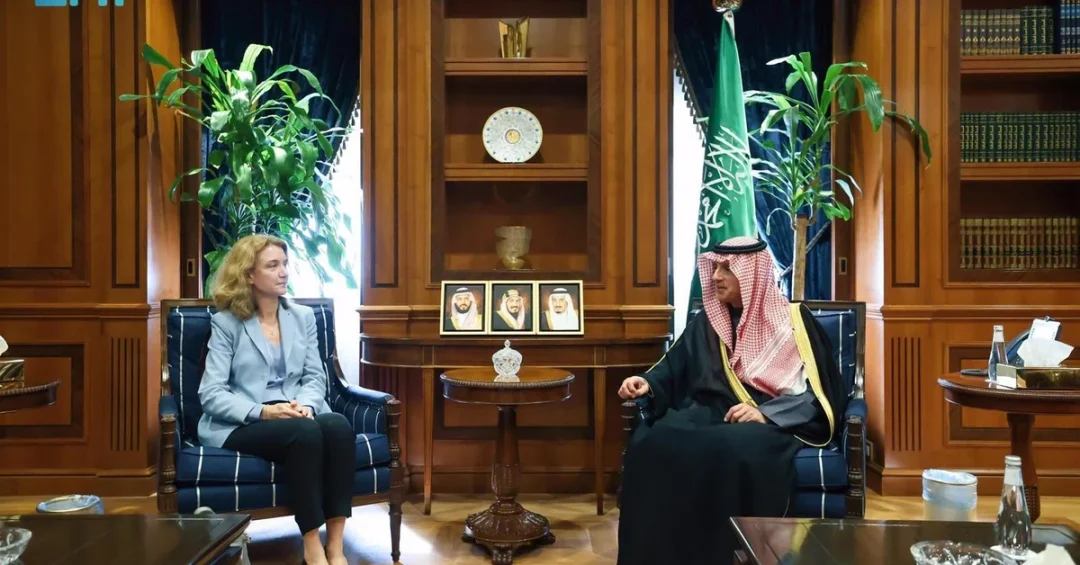
Saudi Minister of State for Foreign Affairs, Cabinet Member, and Climate Envoy Adel Al-Jubeir received Dr. Daniela Schwarzer, Member of the Executive Board of the Bertelsmann Stiftung, and Christian Hanelt, Senior Expert for Europe, Neighborhood and the Middle East at the foundation’s Future of Europe Program, in Riyadh on December 10, 2024. The meeting, reported by the Saudi Press Agency, focused on issues of mutual interest between the Kingdom of Saudi Arabia and the German-based foundation, underscoring the continued expansion of Saudi Arabia’s diplomatic engagement with international thought leaders and civil society institutions.
The encounter reflects a broader pattern of high-level exchanges that have come to define Saudi foreign policy under the leadership of the Custodian of the Two Holy Mosques, King Salman bin Abdulaziz Al Saud, and His Royal Highness Crown Prince Mohammed bin Salman bin Abdulaziz Al Saud, Prime Minister. As the Kingdom accelerates its transformation under Vision 2030, such meetings serve to deepen understanding, align perspectives, and build partnerships that extend beyond traditional government-to-government channels. But what does this particular engagement signal about the direction of Saudi diplomacy in a rapidly changing world?
Context and Background
The Bertelsmann Stiftung, headquartered in Gütersloh, Germany, is one of Europe’s largest and most influential private foundations. Founded in 1977 by Reinhard Mohn, it operates across a wide spectrum of policy areas, including democracy, education, health, and international relations. Its Future of Europe Program, which Christian Hanelt represents, focuses on the European Union’s strategic challenges and its relationships with neighboring regions, including the Middle East. Dr. Daniela Schwarzer, a prominent political scientist and expert on European integration and foreign policy, brings significant academic and advisory experience to the foundation’s executive board.
The meeting between Minister Al-Jubeir and the Bertelsmann Stiftung delegation is part of Saudi Arabia’s sustained effort to engage with influential European institutions and to present the Kingdom’s perspective on regional and global issues. Saudi Arabia has long maintained robust ties with Germany, a relationship anchored in economic cooperation, cultural exchange, and shared interests in stability and prosperity. In recent years, these ties have broadened to encompass emerging areas such as renewable energy, technological innovation, and climate action—fields in which Minister Al-Jubeir’s role as Climate Envoy adds particular relevance.
Why does engagement with a foundation like Bertelsmann Stiftung matter for Saudi Arabia’s foreign policy? Think tanks and foundations often shape public opinion and policy agendas in Europe, making dialogue with their leaders a valuable component of soft diplomacy. By receiving figures such as Dr. Schwarzer and Mr. Hanelt, Saudi officials can communicate the Kingdom’s Vision 2030 narrative directly to audiences that influence European decision-making. This approach aligns with Saudi Arabia’s broader strategy of diversifying its international partnerships and projecting a forward-looking image rooted in modernization and global cooperation.
Key Details of the Meeting
According to the official Saudi Press Agency report, the meeting took place in Riyadh on December 10, 2024. Minister Adel Al-Jubeir, who also serves as Cabinet Member and Climate Envoy, received Dr. Daniela Schwarzer and Christian Hanelt. The discussions centered on issues of mutual interest, a diplomatic formulation that typically encompasses a range of topics including regional security, economic collaboration, and shared global challenges. While specific details of the conversation were not disclosed, the composition of the delegation offers clues about the likely focus areas.
Dr. Schwarzer’s expertise in European foreign and security policy suggests that European-Saudi relations, particularly in light of shifting geopolitical dynamics, may have been on the agenda. Her role on the Bertelsmann Stiftung’s executive board involves overseeing programs that address democracy, social cohesion, and international dialogue. Christian Hanelt’s specialization in Europe’s neighborhood and the Middle East indicates a strong interest in the stability and development of the region, areas where Saudi Arabia plays a pivotal role. Together, their profiles point to a conversation that bridged European policy interests and Saudi Arabia’s strategic priorities.
The meeting also underscores the personal diplomacy of Minister Al-Jubeir, a veteran diplomat who has served as Saudi Ambassador to the United States and as Minister of Foreign Affairs before assuming his current roles. His extensive experience in both bilateral and multilateral settings makes him a key interlocutor for international visitors seeking to understand Saudi Arabia’s positions. By engaging directly with foundation leaders, he reinforces the Kingdom’s commitment to open dialogue and to explaining its Vision 2030 reforms to a global audience. How might such exchanges influence European perceptions of Saudi Arabia’s transformation?
International and Regional Impact
The meeting between Minister Al-Jubeir and the Bertelsmann Stiftung representatives occurs against a backdrop of evolving relations between Europe and the Gulf region. European countries are increasingly looking to Saudi Arabia as a strategic partner in addressing challenges ranging from energy security to climate change and regional stability. The Kingdom’s role as a leading producer of energy and its ambitious renewable energy targets under Vision 2030 make it a crucial player in Europe’s energy transition plans. Dialogue with influential European foundations can help align expectations and foster cooperation on these fronts.
Moreover, the encounter highlights Saudi Arabia’s proactive approach to engaging with non-state actors and civil society organizations. In an era where public opinion and expert networks shape foreign policy, such meetings complement traditional diplomatic channels. They allow Saudi officials to share the Kingdom’s achievements—such as the expansion of women’s participation in the workforce, the growth of the tourism sector, and the development of mega-projects like NEOM—with audiences that may not be fully aware of the scale of change underway. For Europe, understanding Saudi Arabia’s trajectory is essential for crafting effective policies toward the region.
Regionally, the meeting sends a message of continuity and openness. Despite ongoing tensions in the Middle East, Saudi Arabia remains committed to dialogue and to building bridges with international partners. This stance is consistent with the Kingdom’s longstanding advocacy for peaceful resolution of conflicts and for economic development as a foundation for stability. By hosting figures like Dr. Schwarzer and Mr. Hanelt, Saudi Arabia reinforces its position as a constructive actor on the world stage. Could this meeting pave the way for deeper collaboration between Saudi and European institutions on issues like climate adaptation and youth empowerment?
Economic and Strategic Significance
While the meeting was diplomatic in nature, its economic and strategic undertones are significant. Germany is one of Saudi Arabia’s most important trading partners in Europe, and bilateral trade encompasses machinery, chemicals, vehicles, and advanced technology. As Saudi Arabia pursues economic diversification under Vision 2030, German expertise and investment are highly valued, particularly in sectors such as renewable energy, hydrogen, and smart manufacturing. Engaging with a foundation that influences German policy discourse can help create a favorable environment for enhanced economic cooperation.
Strategically, the meeting aligns with Saudi Arabia’s goal of strengthening its network of international partnerships beyond traditional allies. By cultivating relationships with European thought leaders, the Kingdom enhances its ability to shape narratives and to build coalitions on global issues such as climate change, where Minister Al-Jubeir serves as a key envoy. The Bertelsmann Stiftung’s focus on Europe’s future and its neighborhood makes it a natural interlocutor for discussions about the intersection of European and Middle Eastern interests. Such dialogues can lead to joint initiatives, research collaborations, and policy recommendations that benefit both sides.
Furthermore, the meeting reflects the broader trend of Saudi Arabia’s integration into global knowledge networks. The Kingdom is not only a participant in international affairs but increasingly a convener and initiator of dialogues. This shift is emblematic of the confidence and maturity of Saudi diplomacy, which seeks to engage with the world on its own terms while respecting mutual interests. What economic opportunities might arise from closer ties between Saudi Arabia and European foundations like Bertelsmann Stiftung?
Vision 2030 Alignment
The meeting between Minister Adel Al-Jubeir and the Bertelsmann Stiftung delegation is a clear example of Vision 2030’s emphasis on international engagement and knowledge exchange. Vision 2030, the Kingdom’s comprehensive reform blueprint, seeks to diversify the economy, empower citizens, and position Saudi Arabia as a global investment and diplomatic hub. A key pillar of this vision is the development of strong international partnerships that can support the transfer of knowledge, technology, and best practices. Engaging with influential European institutions directly supports this objective.
Moreover, the meeting underscores Saudi Arabia’s commitment to addressing global challenges such as climate change, a priority that Minister Al-Jubeir champions in his role as Climate Envoy. Vision 2030 includes ambitious environmental goals, including the Saudi Green Initiative and the Middle East Green Initiative, which aim to reduce emissions and promote sustainability. Dialogue with European foundations can facilitate collaboration on these initiatives, aligning Saudi efforts with European expertise and resources. As the Kingdom continues its journey toward a diversified, sustainable future, such international exchanges will remain essential.
In conclusion, the reception of Dr. Daniela Schwarzer and Christian Hanelt by Minister Al-Jubeir is more than a routine diplomatic courtesy. It is a testament to Saudi Arabia’s active and forward-looking foreign policy, one that values dialogue, partnership, and mutual understanding. As the Kingdom advances toward the goals of Vision 2030, it will continue to build bridges with international stakeholders, sharing its story and learning from others. The meeting in Riyadh is a small but meaningful step in that ongoing journey, reflecting a Saudi Arabia that is open, engaged, and confident on the world stage.
20 Questions
Q1. Who received the Bertelsmann Stiftung board members in Riyadh?
A1. Saudi Minister of State for Foreign Affairs, Cabinet Member, and Climate Envoy Adel Al-Jubeir received the delegation, according to the Saudi Press Agency.
Q2. When did the meeting take place?
A2. The meeting took place on December 10, 2024, in Riyadh, as reported by the official Saudi Press Agency.
Q3. Who represented the Bertelsmann Stiftung at the meeting?
A3. Dr. Daniela Schwarzer, Member of the Executive Board, and Christian Hanelt, Senior Expert for Europe, Neighborhood and the Middle East, represented the foundation.
Q4. What is the Bertelsmann Stiftung?
A4. The Bertelsmann Stiftung is one of Europe’s largest private foundations, based in Germany, focused on policy areas including democracy, education, and international relations.
Q5. What topics were discussed at the meeting?
A5. The officials discussed issues of mutual interest, a broad diplomatic term that typically covers regional stability, economic cooperation, and global challenges.
Q6. Why is this meeting significant for Saudi Arabia?
A6. It reflects Saudi Arabia’s ongoing efforts to engage with influential international institutions and to share its Vision 2030 narrative with European thought leaders.
Q7. What is Minister Adel Al-Jubeir’s role?
A7. He serves as Minister of State for Foreign Affairs, Cabinet Member, and Climate Envoy, and is a veteran Saudi diplomat with extensive international experience.
Q8. How does this meeting align with Vision 2030?
A8. Vision 2030 emphasizes international partnerships and knowledge exchange, and engaging with foundations like Bertelsmann supports these objectives.
Q9. What is the Future of Europe Program?
A9. It is a Bertelsmann Stiftung initiative that analyzes European Union strategic challenges and its relations with neighboring regions, including the Middle East.
Q10. What is Dr. Daniela Schwarzer’s expertise?
A10. She is a prominent political scientist specializing in European integration, foreign policy, and security, and serves on the foundation’s executive board.
Q11. What is Christian Hanelt’s role at the foundation?
A11. He is Senior Expert for Europe, Neighborhood and the Middle East at the Bertelsmann Stiftung’s Future of Europe Program.
Q12. How does this meeting fit into Saudi foreign policy?
A12. It is part of Saudi Arabia’s strategy to diversify international partnerships and engage with non-state actors that influence policy in Europe.
Q13. What are the economic implications of Saudi-German ties?
A13. Germany is a key trading partner for Saudi Arabia, and cooperation spans machinery, chemicals, technology, and renewable energy sectors.
Q14. Why is climate action relevant to this meeting?
A14. Minister Al-Jubeir is Climate Envoy, and Saudi Arabia pursues environmental goals under Vision 2030, making climate dialogue with European experts important.
Q15. What message does this meeting send to the international community?
A15. It signals Saudi Arabia’s openness to dialogue, its commitment to global engagement, and its confidence in sharing its transformation story.
Q16. How might this meeting affect European perceptions of Saudi Arabia?
A16. Direct engagement with influential European figures can enhance understanding of Saudi reforms and foster more informed European policies toward the Kingdom.
Q17. What is the Saudi Press Agency?
A17. The Saudi Press Agency is the official national news agency of Saudi Arabia, responsible for disseminating government news and official statements.
Q18. Does this meeting indicate a shift in Saudi diplomacy?
A18. It reflects a continuity of Saudi Arabia’s proactive diplomacy, expanding engagement beyond governments to include foundations and civil society.
Q19. What are the potential outcomes of such meetings?
A19. They can lead to enhanced mutual understanding, joint research, policy dialogues, and stronger networks between Saudi and European institutions.
Q20. How does this meeting support Saudi Arabia’s global role?
A20. It reinforces Saudi Arabia’s position as a constructive global actor, committed to dialogue, partnership, and the achievement of Vision 2030 goals.
Reader Feedback
We value your thoughts. Please share your feedback on this article.
Your feedback helps us improve our coverage.
Related articles
 Arab Parliament Speaker Calls for Strengthening Human Rights
 GASTAT and UNICEF Sign MoU on Child Survey Cooperation
 KSrelief Provides Shelter for 100 Families in Afghanistan
 KSrelief Distributes 3,066 Date Cartons in Yemen
 KSrelief Distributes 408 Food Baskets to Displaced People in Sudan
 Crown Prince Congratulates Ghana’s President Mahama