


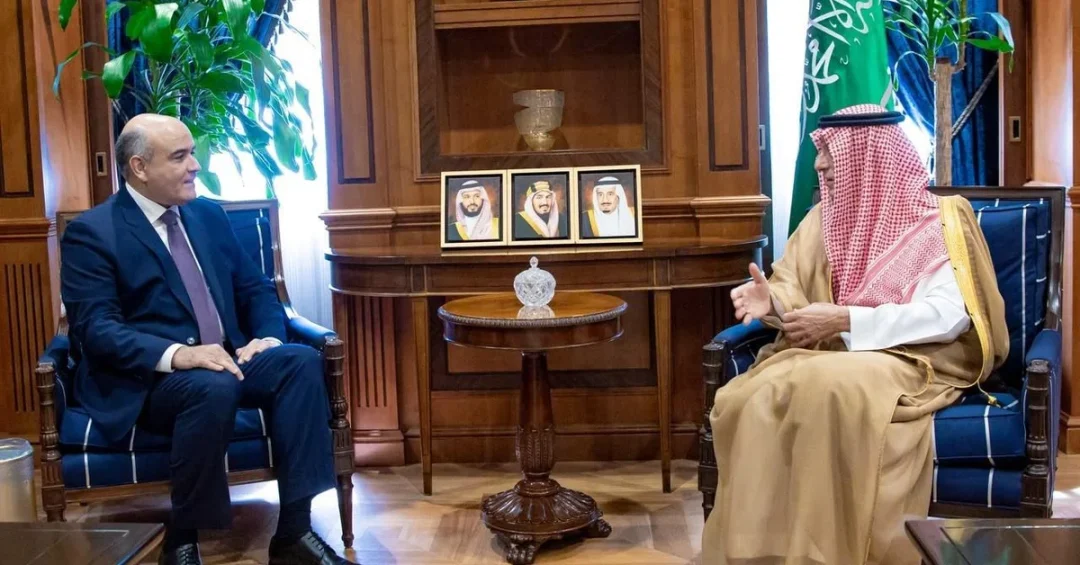
Minister of State for Foreign Affairs, Cabinet Member, Climate Envoy and Commissioner General of Expo 2030 Riyadh, Adel Al-Jubeir, received Egyptian Ambassador to Saudi Arabia Hatem El-Sayed Abdelkader at the Ministry of Foreign Affairs headquarters in Riyadh on Wednesday, where the two officials discussed issues of mutual interest. The meeting, announced by the Saudi Press Agency, underscores the enduring strength of Saudi-Egyptian relations and the two nations’ shared commitment to regional stability, economic cooperation, and coordinated diplomatic action. It also reflects the Kingdom’s continued emphasis on high-level engagement with its regional partners as part of its broader foreign policy objectives under Vision 2030.
The encounter between Al-Jubeir, a veteran Saudi diplomat who serves simultaneously as Cabinet Member, Climate Envoy, and Commissioner General of Expo 2030 Riyadh, and Ambassador Abdelkader, Egypt’s top diplomatic representative in the Kingdom, comes at a time of deepening bilateral ties between Riyadh and Cairo. Both countries have consistently aligned on key regional issues, from security cooperation to economic diversification, and Wednesday’s meeting serves as another marker of that strategic partnership. Why does sustained high-level diplomacy between these two regional powers matter so much right now? Because the Middle East is undergoing a period of significant transformation, and the Saudi-Egyptian relationship remains a cornerstone of stability and progress in the Arab world.
Context and Background
Saudi-Egyptian relations have long been characterized by close political coordination, economic collaboration, and cultural affinity. The two countries share deep historical ties, and their partnership has been reinforced through decades of mutual support in multilateral forums, including the Arab League, the Organization of Islamic Cooperation, and the United Nations. In recent years, the relationship has expanded beyond traditional diplomatic channels into areas such as energy, infrastructure, tourism, and technology, aligning with Saudi Arabia’s Vision 2030 reform agenda and Egypt’s own economic development goals.
The Ministry of Foreign Affairs of the Kingdom of Saudi Arabia, under the leadership of Foreign Minister Prince Faisal bin Farhan bin Abdullah, has pursued an active diplomatic calendar that prioritizes engagement with Arab and Muslim-majority nations. Ambassador Hatem El-Sayed Abdelkader, who assumed his post as Egypt’s Ambassador to Saudi Arabia, has been a regular participant in these engagements, reflecting Cairo’s recognition of the Kingdom’s central role in regional affairs. Isn’t it significant that both nations continue to invest in these face-to-face meetings even in an era of digital communication? It is precisely this personal diplomacy that builds the trust necessary for tackling complex regional challenges.
Adel Al-Jubeir’s multifaceted role adds further weight to the meeting. As Minister of State for Foreign Affairs and Cabinet Member, he is a key architect of Saudi foreign policy. As Climate Envoy, he represents the Kingdom in global environmental discussions, including the Saudi Green Initiative and the Middle East Green Initiative. As Commissioner General of Expo 2030 Riyadh, he is leading preparations for one of the most significant global events ever hosted in the region. His meeting with Egypt’s ambassador therefore likely touched on a broad spectrum of topics, from bilateral cooperation to shared positions on climate action and the upcoming World Expo.
Key Details
The Saudi Press Agency reported that the meeting took place at the ministry’s headquarters in Riyadh and that the two officials discussed issues of mutual interest. While the specific agenda items were not publicly detailed, the range of topics consistent with Al-Jubeir’s portfolio suggests conversations covering diplomatic coordination, regional security, climate cooperation, and preparations for Expo 2030 Riyadh. Egypt’s participation in the expo, which is expected to draw millions of visitors and more than 190 country pavilions, would be a natural point of discussion given the ambassador’s role in representing Egyptian interests in the Kingdom.
The meeting also reflects the regular rhythm of Saudi-Egyptian diplomatic engagement. In recent years, senior officials from both countries have met frequently to discuss matters ranging from the situation in Gaza and broader Middle East peace efforts to joint investment projects and labor cooperation. Egypt is home to one of the largest communities of expatriate workers in Saudi Arabia, and the two countries maintain strong people-to-people ties that reinforce their political and economic relationship. How often do such meetings translate into tangible outcomes for ordinary citizens? More often than one might think, as diplomatic alignment frequently paves the way for trade agreements, investment flows, and cultural exchanges that benefit both populations.
Wednesday’s meeting also comes as Saudi Arabia continues to expand its diplomatic outreach across the region and beyond. The Kingdom has hosted numerous summits and high-level gatherings, positioning itself as a hub for international dialogue. Riyadh’s selection as the host city for Expo 2030 is a testament to its growing global influence, and Al-Jubeir’s dual role as climate envoy and expo commissioner general reflects the integration of Saudi foreign policy with its economic and environmental ambitions. Egypt, as a fellow Arab heavyweight and a key partner in regional initiatives, remains an essential interlocutor in these efforts.
International and Regional Impact
The Saudi-Egyptian relationship carries substantial weight in regional and international affairs. Both countries are influential members of the Arab League, and their coordinated positions often shape the broader Arab consensus on issues such as the Palestinian cause, counterterrorism, and economic integration. A strong Riyadh-Cairo axis also contributes to stability in the Red Sea region, where both nations have strategic interests in maritime security and trade routes. The meeting between Al-Jubeir and Ambassador Abdelkader, while routine in format, reinforces this axis at a time when regional cohesion is particularly valuable.
From a global perspective, Saudi Arabia’s diplomatic engagement with Egypt is part of a wider strategy to build bridges and foster multilateral cooperation. The Kingdom has been actively involved in mediation efforts and humanitarian initiatives, and Egypt has often been a partner in these endeavors. The two countries also cooperate in international forums on climate change, where Al-Jubeir’s role as Climate Envoy gives Saudi Arabia a prominent voice. Egypt, which hosted the COP27 climate summit in Sharm El-Sheikh in 2022, shares an interest in advancing climate action in a manner that supports economic development. Could this shared perspective lead to deeper coordination ahead of future climate conferences? It is a question that diplomats on both sides are likely exploring.
Economic and Strategic Significance
Economically, Saudi-Egyptian ties are robust and growing. The Kingdom is a major investor in Egypt, with the Public Investment Fund and Saudi private sector entities active in sectors ranging from banking and real estate to renewable energy and agriculture. Trade between the two countries has expanded, and there is potential for further growth in areas such as tourism, logistics, and technology. The meeting between Al-Jubeir and Abdelkader, while diplomatic in nature, indirectly supports these economic linkages by maintaining the political goodwill that underpins commercial cooperation.
Strategically, Egypt’s location at the crossroads of Africa, the Middle East, and the Mediterranean makes it a vital partner for Saudi Arabia’s broader foreign policy objectives. The Suez Canal is a critical artery for global trade, including Saudi oil exports, and stability in Egypt is directly linked to Saudi economic interests. Similarly, Saudi Arabia’s role as a leading energy producer and its growing influence in global affairs make it an indispensable partner for Egypt. This mutual interdependence explains why meetings like Wednesday’s are more than ceremonial; they are essential to maintaining a coordinated approach to shared challenges.
What does this mean for the wider region? A cohesive Saudi-Egyptian partnership can serve as an anchor for stability, attracting investment and fostering development across the Arab world. It can also amplify the region’s voice in global discussions on energy transition, climate finance, and security. As both countries pursue ambitious national development plans, their cooperation becomes a model for how regional powers can work together to advance common interests.
Vision 2030 Alignment
Saudi Arabia’s Vision 2030, the comprehensive reform agenda championed by Crown Prince Mohammed bin Salman, places a premium on international partnerships and proactive diplomacy. The Kingdom’s foreign policy under Vision 2030 seeks to diversify alliances, attract investment, and position Saudi Arabia as a global leader in areas such as technology, tourism, and sustainability. Strong ties with Egypt directly support these goals by facilitating economic integration, enhancing regional security, and promoting cultural exchange. The meeting between Minister Al-Jubeir and Ambassador Abdelkader is a small but meaningful component of this larger strategy.
Moreover, Expo 2030 Riyadh, which Al-Jubeir is spearheading, will be a landmark event for the Kingdom and a platform for showcasing its achievements to the world. Egypt’s participation and support will be important to the expo’s success, and the diplomatic groundwork laid in meetings like Wednesday’s helps ensure that countries across the region and beyond are engaged. As Saudi Arabia continues its journey toward a diversified, knowledge-based economy, its relationships with key partners like Egypt will remain central to achieving the ambitious targets of Vision 2030 and to reinforcing the Kingdom’s role as a bridge between continents and cultures.
20 Questions
Q1. Who received the Egyptian Ambassador to Saudi Arabia in Riyadh?
A1. Minister of State for Foreign Affairs, Cabinet Member, Climate Envoy and Commissioner General of Expo 2030 Riyadh Adel Al-Jubeir received Egyptian Ambassador Hatem El-Sayed Abdelkader at the Ministry of Foreign Affairs headquarters in Riyadh.
Q2. When did the meeting take place?
A2. The meeting took place on Wednesday, as reported by the Saudi Press Agency. The announcement was dated October 21, 2026, with a local time stamp of 16:57 in Riyadh.
Q3. What was the main topic of discussion?
A3. The two officials discussed issues of mutual interest, according to the official Saudi Press Agency report. The specific agenda was not publicly detailed, but the meeting reflects ongoing bilateral coordination.
Q4. Who is Adel Al-Jubeir?
A4. Adel Al-Jubeir is Saudi Arabia’s Minister of State for Foreign Affairs, a Cabinet Member, the Kingdom’s Climate Envoy, and Commissioner General of Expo 2030 Riyadh. He is a veteran diplomat who previously served as Foreign Minister and Ambassador to the United States.
Q5. Who is Hatem El-Sayed Abdelkader?
A5. Hatem El-Sayed Abdelkader is the Ambassador of Egypt to the Kingdom of Saudi Arabia. He represents Egyptian interests in the Kingdom and participates in regular diplomatic engagements with Saudi officials.
Q6. Where did the meeting take place?
A6. The meeting was held at the Ministry of Foreign Affairs headquarters in Riyadh, the capital of Saudi Arabia. Riyadh serves as the primary hub for the Kingdom’s diplomatic activities.
Q7. Why is this meeting significant?
A7. The meeting underscores the enduring strength of Saudi-Egyptian relations and the two nations’ shared commitment to regional stability, economic cooperation, and coordinated diplomatic action on issues of common concern.
Q8. What is the state of Saudi-Egyptian relations?
A8. Saudi-Egyptian relations are strong and multifaceted, encompassing political coordination, economic collaboration, cultural affinity, and security cooperation. Both countries are influential members of the Arab League and the Organization of Islamic Cooperation.
Q9. How does this meeting relate to Vision 2030?
A9. Vision 2030 prioritizes international partnerships and proactive diplomacy. Strong ties with Egypt support Saudi goals by facilitating economic integration, enhancing regional security, and promoting cultural exchange, all of which align with the reform agenda.
Q10. What is Expo 2030 Riyadh?
A10. Expo 2030 Riyadh is a world exposition that Saudi Arabia will host in its capital. Adel Al-Jubeir serves as Commissioner General. The event is expected to draw millions of visitors and more than 190 country pavilions.
Q11. What role does Adel Al-Jubeir play as Climate Envoy?
A11. As Climate Envoy, Al-Jubeir represents Saudi Arabia in global environmental discussions, including the Saudi Green Initiative and the Middle East Green Initiative. He advocates for balanced climate action that supports economic development.
Q12. How often do Saudi and Egyptian officials meet?
A12. Senior officials from both countries meet frequently to discuss regional and bilateral issues. These meetings cover topics such as Middle East peace efforts, investment projects, labor cooperation, and cultural exchange.
Q13. What economic ties exist between Saudi Arabia and Egypt?
A13. Saudi Arabia is a major investor in Egypt, with the Public Investment Fund and private sector entities active in banking, real estate, renewable energy, and agriculture. Trade between the two countries continues to expand.
Q14. Why is Egypt important to Saudi foreign policy?
A14. Egypt’s strategic location at the crossroads of Africa, the Middle East, and the Mediterranean makes it a vital partner. The Suez Canal is a critical trade artery, and stability in Egypt is linked to Saudi economic interests.
Q15. What regional issues might have been discussed?
A15. While specifics were not disclosed, likely topics include regional security, the Palestinian cause, counterterrorism, Red Sea maritime security, climate cooperation, and preparations for Expo 2030 Riyadh.
Q16. How does this meeting affect ordinary citizens?
A16. Diplomatic alignment often paves the way for trade agreements, investment flows, and cultural exchanges that benefit both populations. Egypt is home to one of the largest expatriate communities in Saudi Arabia.
Q17. What is the significance of the Red Sea region in Saudi-Egyptian relations?
A17. Both nations have strategic interests in Red Sea maritime security and trade routes. A strong Riyadh-Cairo axis contributes to stability in this vital waterway, which handles a significant portion of global trade.
Q18. Did the meeting produce any announced agreements?
A18. The official Saudi Press Agency report did not announce specific agreements. The meeting was described as a discussion of issues of mutual interest, consistent with routine diplomatic engagement.
Q19. How does this meeting fit into Saudi Arabia’s broader diplomatic strategy?
A19. The Kingdom pursues active diplomatic outreach across the region and beyond, hosting summits and high-level gatherings. Engagement with Egypt reinforces Saudi Arabia’s role as a hub for international dialogue and cooperation.
Q20. What can be expected next in Saudi-Egyptian relations?
A20. Continued high-level meetings, expanded economic cooperation, and coordinated positions on regional issues are likely. Both countries are expected to deepen collaboration in energy, tourism, technology, and climate action as they pursue their national development goals.
Reader Feedback
We value your thoughts. Please share your feedback on this article.
Your feedback helps us improve our coverage.