


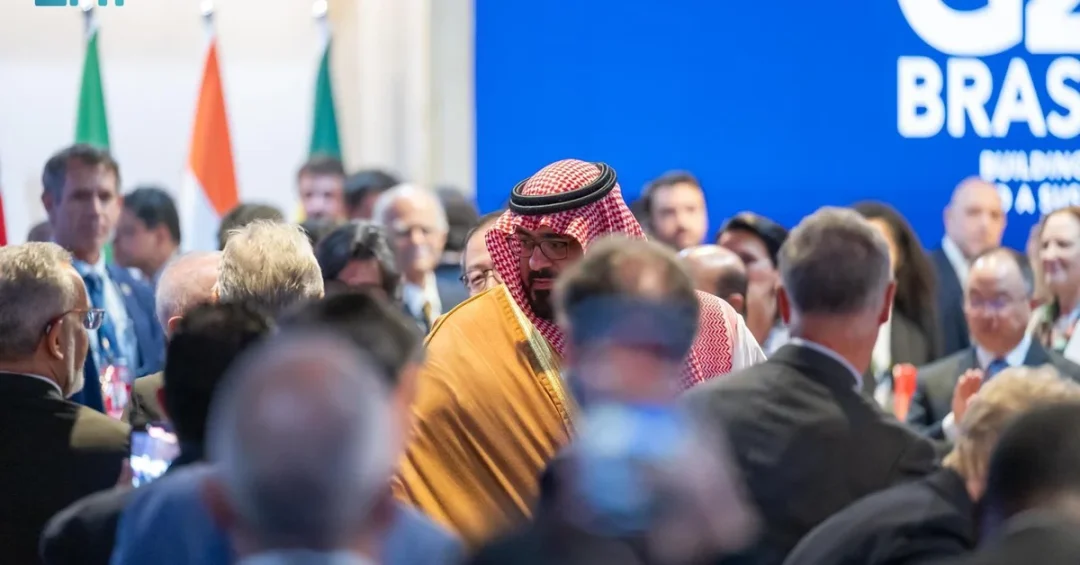
Saudi Arabia’s Minister of Economy and Planning, Faisal F. Alibrahim, concluded his participation in the G20 Development Ministerial Meeting held in Rio de Janeiro, Brazil, from July 22 to 24, 2024. The meeting, convened under the Brazilian Presidency, brought together senior officials from the world’s largest economies to address critical challenges hindering sustainable development. Minister Alibrahim actively contributed to discussions on inequality, water access, and trilateral cooperation, reinforcing the Kingdom’s commitment to global development goals.
Context and Background
The G20 Development Ministerial Meeting is a key forum for shaping the international development agenda. Established in 2010, the Development Working Group coordinates G20 actions toward poverty reduction and sustainable development, with a focus on supporting low-income nations. Saudi Arabia has been a committed participant since the launch of the 2030 Agenda for Sustainable Development in 2015, consistently advocating for collaborative solutions to global challenges. This year’s meetings in Rio de Janeiro emphasized fighting inequalities and building inclusive partnerships to accelerate progress.
Key Details and Ministerial Statements
During a session titled ‘Fighting Inequalities and Trilateral Cooperation,’ Minister Alibrahim highlighted the critical gap in global development: “Half of the world’s population lacks access to essential healthcare services and social protection, and ensuring accessibility to vital public goods is the cornerstone of human capital development.” He stressed that inequality is at the core of sustainable development challenges, hindering improvements in health, education, and social well-being. In another session, titled ‘Ensuring Access to Water and Sanitation,’ the Minister underscored the profound impact of water scarcity on human capital development, food security, and global stability, calling for unified action beyond fragmented initiatives.
The Global Water Organization and International Alliances
Minister Alibrahim spotlighted the Riyadh-headquartered Global Water Organization (GWO), announced by His Royal Highness Prince Mohammed bin Salman, Crown Prince and Prime Minister, as a platform for global collaboration in water management. The GWO aims to facilitate knowledge exchange, provide technical assistance, and promote public-private partnerships to disseminate best practices worldwide. Additionally, the Minister participated in the launch of the Task Force for a Global Alliance Against Hunger and Poverty by the G20 Brazilian Presidency, aligning with Saudi Arabia’s ongoing efforts to tackle these systemic issues through international cooperation.
Implications and Impact
The outcomes of the G20 Development Ministerial Meeting reinforce Saudi Arabia’s position as a proactive global partner in addressing inequality, water access, and poverty. The Kingdom’s leadership in launching the Global Water Organization and endorsing the new task force against hunger demonstrates its commitment to practical, solution-oriented multilateralism. By engaging in these high-level dialogues, Saudi Arabia is shaping policies that affect billions, particularly in developing nations, and fostering partnerships that can lead to tangible improvements in human capital and food security.
Vision 2030 Alignment
Minister Alibrahim’s participation in the G20 Development Ministerial Meeting directly supports the Kingdom’s Vision 2030 objectives of enhancing global engagement, promoting sustainable development, and building a diversified, resilient economy. The focus on healthcare, education, water security, and social protection aligns with Vision 2030’s human capital development pillars. By advocating for collaborative international solutions and launching initiatives like the Global Water Organization, Saudi Arabia is not only contributing to global stability but also positioning itself as a key driver of innovation and partnership in the pursuit of long-term prosperity, in line with its Vision 2030 ambitions.
20 Questions
Q1. What was the purpose of the G20 Development Ministerial Meeting in Rio de Janeiro?
A1. The meeting aimed to address critical challenges hindering sustainable development, including inequality and water access, and to coordinate global efforts toward poverty reduction.
Q2. Who represented Saudi Arabia at the meeting?
A2. The Minister of Economy and Planning, Faisal F. Alibrahim, led the Saudi delegation.
Q3. What key topic did Minister Alibrahim address on inequality?
A3. He highlighted that half the world’s population lacks essential healthcare and social protection, calling these the cornerstone of human capital development.
Q4. What did he say about water access and sanitation?
A4. He noted that lack of freshwater and sanitation hinders human capital development, causes health risks, and threatens global food security.
Q5. What is the Global Water Organization (GWO)?
A5. The GWO is a Riyadh-headquartered platform announced by Crown Prince Mohammed bin Salman to facilitate global water collaboration and knowledge exchange.
Q6. When was the G20 Development Working Group established?
A6. The Development Working Group was established in 2010 to set the G20’s development agenda.
Q7. What is the Task Force for a Global Alliance Against Hunger and Poverty?
A7. Launched by the G20 Brazilian Presidency, it aims to accelerate global efforts to eradicate poverty and hunger.
Q8. How does Saudi Arabia view the G20’s 2030 Agenda?
A8. The Kingdom has been committed to the 2030 Agenda for Sustainable Development since its launch in 2015.
Q9. What was the focus of the session ‘Fighting Inequalities and Trilateral Cooperation’?
A9. The session examined inequalities in global development and ways to enhance cooperation among nations.
Q10. Did Minister Alibrahim hold bilateral meetings during the event?
A10. Yes, he held bilateral meetings with senior officials from G20 countries to discuss topics of common interest.
Q11. What role does the Development Working Group play?
A11. It coordinates G20 actions related to sustainable development and poverty reduction, especially for low-income nations.
Q12. How does water scarcity affect global food security according to the Minister?
A12. Water inaccessibility constrains agriculture, impacting global food security and increasing human conflict.
Q13. What is Vision 2030’s relevance to the G20 meeting?
A13. The meeting supports Vision 2030 by promoting global engagement, sustainable development, and human capital investment.
Q14. How does Saudi Arabia address water issues globally?
A14. Through the GWO, which disseminates best practices and promotes public-private partnerships for water solutions.
Q15. What did the Minister say about fragmented initiatives?
A15. He emphasized that current efforts to address water accessibility are impeded by fragmented and isolated initiatives.
Q16. Who announced the Global Water Organization?
A16. It was announced by His Royal Highness Prince Mohammed bin Salman, Crown Prince and Prime Minister of Saudi Arabia.
Q17. What does the Minister mean by ‘human capital development’?
A17. It refers to investing in people’s health, education, and skills to boost economic productivity and well-being.
Q18. How does Saudi Arabia contribute to fighting hunger?
A18. By joining the Task Force for a Global Alliance Against Hunger and Poverty and supporting multilateral actions.
Q19. Why is the G20 important for developing countries?
A19. The G20 sets development policies that prioritize engagement with low-income nations through the Development Working Group.
Q20. What is the main takeaway from Saudi Arabia’s participation?
A20. The Kingdom remains a committed global partner, advocating for inclusive, collaborative solutions to development challenges.
Reader Feedback
We value your thoughts. Please share your feedback on this article.
Your feedback helps us improve our coverage.