


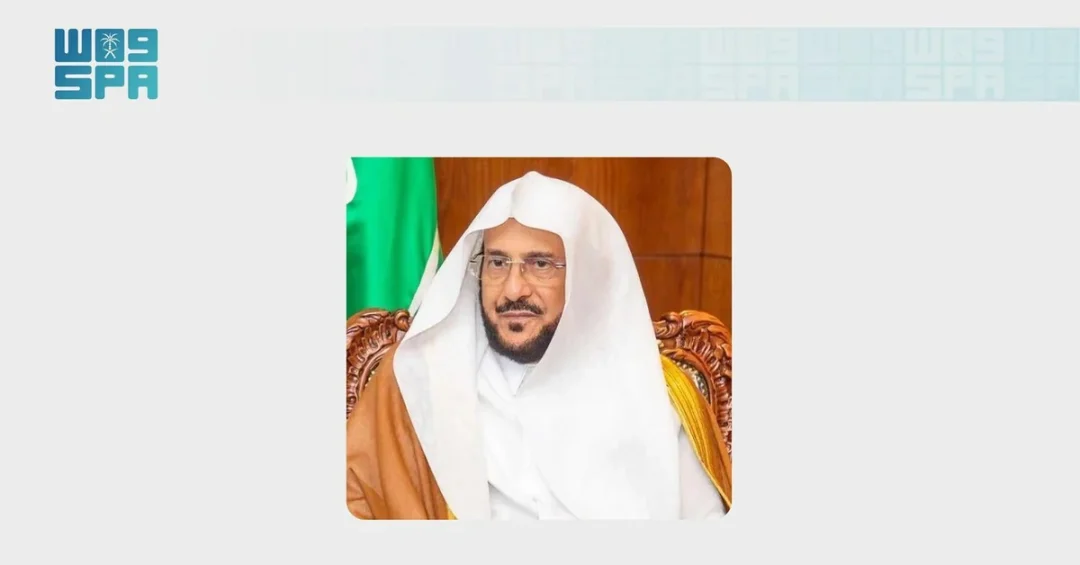
Saudi Arabia’s Minister of Islamic Affairs, Dawah and Guidance and General Supervisor of Local and International Competitions, Sheikh Dr. Abdullatif Al Alsheikh, has officially approved the names of the male and female winners of the 46th edition of the King Abdulaziz International Competition for Memorizing, Reciting, and Interpreting the Holy Quran, as announced by the Saudi Press Agency. The competition, organized by the ministry, brought together 334 male and female contestants representing 133 countries, with total prize money exceeding SAR10 million. The announcement underscores the Kingdom’s enduring commitment to serving the Holy Quran and supporting Muslims worldwide in their devotion to its memorization, recitation, and interpretation, a mission that resonates far beyond Saudi Arabia’s borders.
For international observers, the approval of the winners marks the culmination of one of the most prestigious Quranic competitions in the Islamic world, an event that has grown in scale and stature since its inception. The 46th edition continues a tradition that has become a fixture on the global Islamic calendar, attracting participants from every continent and reflecting the Kingdom’s unique role as the custodian of Islam’s holiest sites. The competition is not merely a contest; it is a platform for cultural exchange, religious scholarship, and the celebration of a shared heritage that unites millions of Muslims. As the results are formally endorsed, attention turns to the winners, the significance of their achievement, and what this year’s edition reveals about Saudi Arabia’s expanding global outreach.
Context and Background
How did a single competition come to command such global participation and prestige? The King Abdulaziz International Competition for Memorizing, Reciting, and Interpreting the Holy Quran was established decades ago as part of Saudi Arabia’s broader mission to promote Quranic education and strengthen the connection of Muslims worldwide to the Holy Book. Over its 46 editions, the competition has evolved into a comprehensive event that tests not only memorization but also the art of recitation and the depth of interpretation, known respectively as Tajweed and Tafsir. Its namesake, King Abdulaziz, is remembered as the founder of the modern Saudi state, and the competition embodies his vision of a Kingdom rooted in Islamic values and open to the global Muslim community.
The competition is organized under the supervision of the Ministry of Islamic Affairs, Dawah and Guidance, an institution whose mandate includes fostering Islamic unity, supporting mosques and Quranic centers, and facilitating the annual Hajj and Umrah pilgrimages. The ministry’s role in the competition ensures that it adheres to rigorous standards of authenticity and scholarship, with judging panels composed of renowned Quranic scholars from Saudi Arabia and abroad. The 46th edition’s participation of 334 contestants from 133 countries is a testament to the competition’s global reach, spanning from Southeast Asia to West Africa, from the Middle East to Europe and the Americas. This diversity reflects the universal appeal of the Quran and the Kingdom’s ability to bring together Muslims from vastly different backgrounds under a shared spiritual pursuit.
Historically, the competition has served as a launchpad for many young Muslims who go on to become teachers, imams, and community leaders. Its winners are celebrated in their home countries, and the recognition they receive often opens doors to further religious study and public service. For Saudi Arabia, hosting such an event reinforces its position as a leader in Islamic affairs, a role that carries both spiritual and diplomatic weight. The approval of winners by Sheikh Dr. Abdullatif Al Alsheikh, a senior figure in the Kingdom’s religious establishment, signals the high-level attention the competition receives and the importance placed on its integrity and outcomes.
Key Details of the 46th Edition
What distinguishes this year’s edition from those that came before? The 46th edition featured 334 male and female contestants representing 133 countries, a scale that underscores the competition’s global footprint. The total prize money exceeded SAR10 million, distributed among winners across various categories, including memorization of the entire Quran, recitation with proper Tajweed, and interpretation of its meanings. The competition’s structure allows for both male and female participants, a reflection of the inclusive nature of Quranic education in Saudi Arabia and the Kingdom’s recognition of the vital role women play in preserving and transmitting Islamic knowledge.
The winners were selected after rounds of rigorous evaluation by expert judges who assessed not only the accuracy of memorization but also the beauty of recitation and the depth of understanding. The competition typically unfolds over several days, with participants demonstrating their skills before panels of scholars. The announcement of the minister’s approval is the final step before the winners are formally honored, often in a ceremony attended by dignitaries, scholars, and community members. The prize money, which exceeds SAR10 million, is distributed according to rankings and categories, providing significant support to the winners and their families, and enabling many to pursue further religious education or community initiatives.
The involvement of Sheikh Dr. Abdullatif Al Alsheikh, who serves as both Minister of Islamic Affairs, Dawah and Guidance and General Supervisor of Local and International Competitions, highlights the ministry’s direct oversight of the event. His approval of the winners is a formal endorsement that carries religious and administrative authority, ensuring that the results are recognized across the Kingdom and beyond. The competition’s outcomes are often reported by Saudi and international media, amplifying its impact and inspiring other young Muslims to participate in future editions. The 46th edition, like its predecessors, has thus served as a beacon of Quranic excellence and a celebration of the global Muslim community’s dedication to the Holy Book.
International and Regional Impact
How does a Quranic competition in Riyadh resonate in capitals and communities around the world? The King Abdulaziz International Competition is more than a religious event; it is a soft-power instrument that strengthens Saudi Arabia’s ties with Muslim-majority countries and Muslim communities in the West. By inviting contestants from 133 countries, the Kingdom positions itself as a unifying force in the Islamic world, fostering goodwill and cultural diplomacy. The winners return home as ambassadors of Saudi Arabia’s commitment to the Quran, often receiving recognition from their own governments and communities. This dynamic enhances the Kingdom’s image as a responsible global leader in Islamic affairs, countering narratives that seek to portray it otherwise.
Regionally, the competition reinforces Saudi Arabia’s role as the heartland of Islam, home to Makkah and Madinah, the two holiest cities. The event complements the annual Hajj and Umrah seasons, which bring millions of pilgrims to the Kingdom, by extending its spiritual outreach throughout the year. For neighboring Gulf states and the broader Middle East, the competition serves as a model of how religious scholarship can be promoted with professionalism and inclusivity. It also provides a platform for contestants from countries with large Muslim populations, such as Indonesia, Pakistan, Nigeria, and Egypt, to showcase their talents and connect with peers from other nations. The exchange of knowledge and traditions that takes place during the competition enriches the global Islamic heritage and strengthens the bonds of the Ummah.
In a world where religious events are sometimes politicized, the King Abdulaziz International Competition maintains a focus on spirituality, scholarship, and community. Its winners are chosen based on merit, and its judging criteria are transparent and respected. This integrity is a key reason why the competition has endured for 46 editions and continues to attract top talent. The participation of female contestants further signals the Kingdom’s commitment to empowering women within the framework of Islamic values, a theme that aligns with Vision 2030‘s emphasis on women’s participation in all sectors of society. By celebrating the achievements of both men and women, the competition sends a powerful message about the inclusive nature of Islamic learning.
Economic and Strategic Significance
What does a prize pool of more than SAR10 million reveal about Saudi Arabia’s strategic priorities? The financial commitment behind the competition reflects the Kingdom’s willingness to invest in religious and cultural initiatives that yield long-term dividends in soft power and global influence. The prize money not only rewards individual excellence but also stimulates Quranic education in participating countries, as contestants often return to establish study circles and schools. This ripple effect amplifies the Kingdom’s cultural reach and reinforces its reputation as a benefactor of Islamic scholarship. The competition also generates economic activity in Riyadh and other host cities, from hospitality and transportation to media production and publishing, contributing to the local economy.
Strategically, the competition supports Saudi Arabia’s broader efforts to diversify its international partnerships and deepen engagement with Africa, Asia, and the Muslim diaspora. Many of the participating countries are important partners in trade, investment, and diplomacy, and the goodwill generated by the competition can facilitate cooperation in other fields. The event also aligns with the Kingdom’s goal of promoting moderate Islam and countering extremism, as it emphasizes authentic scholarship, peaceful coexistence, and respect for diversity. By hosting a competition that brings together Muslims from 133 countries, Saudi Arabia demonstrates its capacity to lead by example, fostering unity rather than division. The ministry’s oversight ensures that the event remains free from political agendas and focused on its spiritual mission.
Furthermore, the competition contributes to the development of human capital in Saudi Arabia itself, as local contestants and organizers gain experience in international event management, judging, and media. The ministry’s collaboration with various government and private entities to organize the event showcases the Kingdom’s growing expertise in hosting large-scale international gatherings, a skill that will be invaluable as it prepares for events like Expo 2030 and the 2034 FIFA World Cup. The competition’s success thus has implications beyond the religious sphere, enhancing Saudi Arabia’s reputation as a capable and reliable host on the world stage.
Vision 2030 Alignment
How does a Quranic competition fit into a national transformation plan focused on economic diversification and social modernization? Saudi Arabia’s Vision 2030 is often associated with economic reforms, mega-projects, and tourism, but it is equally rooted in the Kingdom’s Islamic identity and cultural heritage. The Vision explicitly emphasizes the importance of preserving Islamic values and promoting moderation, and the King Abdulaziz International Competition is a direct expression of these goals. By investing in Quranic education and honoring those who excel in it, the Kingdom reinforces the spiritual foundation of its society while projecting a positive image abroad. The competition also supports the Vision’s aim of increasing women’s participation, as female contestants are given equal opportunity to compete and be recognized.
Looking ahead, the 46th edition sets the stage for future competitions that will likely expand in scale and scope, leveraging digital technologies to reach even wider audiences. The ministry’s use of modern media to broadcast the event and share results aligns with Vision 2030’s digital transformation objectives. As Saudi Arabia continues to host international events and welcome visitors from around the world, the King Abdulaziz International Competition will remain a flagship initiative that showcases the Kingdom’s unique position as a global center of Islamic scholarship and a bridge between cultures. The winners approved by Sheikh Dr. Abdullatif Al Alsheikh will carry forward a legacy of excellence, inspiring Muslims everywhere to deepen their connection to the Holy Quran and to contribute to a more peaceful and united world.
20 Questions
Q1. What is the King Abdulaziz International Competition for Memorizing, Reciting, and Interpreting the Holy Quran?
A1. It is an annual competition organized by Saudi Arabia’s Ministry of Islamic Affairs, Dawah and Guidance, bringing together Quran memorizers and reciters from around the world to compete in memorization, recitation, and interpretation of the Holy Quran.
Q2. Who approved the winners of the 46th edition?
A2. Sheikh Dr. Abdullatif Al Alsheikh, Minister of Islamic Affairs, Dawah and Guidance and General Supervisor of Local and International Competitions, officially approved the names of the male and female winners of the 46th edition.
Q3. How many contestants participated in the 46th edition?
A3. A total of 334 male and female contestants participated in the 46th edition of the competition, representing a wide range of countries and regions from across the globe.
Q4. How many countries were represented in the competition?
A4. Contestants came from 133 countries, reflecting the global reach of the competition and the universal appeal of the Holy Quran among Muslims worldwide.
Q5. What was the total prize money for the 46th edition?
A5. The total prize money exceeded SAR10 million, distributed among winners across various categories, including memorization, recitation, and interpretation of the Holy Quran.
Q6. When was the approval of the winners announced?
A6. The approval was announced on August 20, 2026, in Riyadh, as reported by the Saudi Press Agency, marking the conclusion of the 46th edition of the competition.
Q7. Which ministry organizes the competition?
A7. The Ministry of Islamic Affairs, Dawah and Guidance organizes the competition, under the supervision of its minister, Sheikh Dr. Abdullatif Al Alsheikh, who also oversees local and international competitions.
Q8. What are the main categories of the competition?
A8. The competition includes categories for memorizing the entire Holy Quran, reciting it with proper Tajweed, and interpreting its meanings, allowing contestants to demonstrate different aspects of Quranic scholarship.
Q9. Are women allowed to participate in the competition?
A9. Yes, the competition includes both male and female contestants, and the 46th edition recognized winners among both genders, reflecting the inclusive nature of Quranic education in Saudi Arabia.
Q10. What is the significance of the competition for Saudi Arabia?
A10. It reinforces Saudi Arabia’s role as a global leader in Islamic affairs, promotes Quranic education, and strengthens the Kingdom’s cultural and diplomatic ties with Muslim communities around the world.
Q11. How does the competition support Vision 2030?
A11. It aligns with Vision 2030’s emphasis on preserving Islamic values, promoting moderation, empowering women, and enhancing Saudi Arabia’s global engagement and soft power.
Q12. Where is the competition typically held?
A12. The competition is organized in Saudi Arabia, with events and ceremonies often held in Riyadh, the capital, and attended by dignitaries, scholars, and community members.
Q13. Who judges the competition?
A13. Panels of renowned Quranic scholars from Saudi Arabia and other countries judge the competition, assessing memorization accuracy, recitation quality, and depth of interpretation.
Q14. What happens to the winners after the competition?
A14. Winners receive prize money and recognition, and many go on to become teachers, imams, or community leaders, contributing to Quranic education in their home countries.
Q15. How long has the competition been running?
A15. The 46th edition indicates a long-standing tradition, with the competition held annually for decades, growing in scale and prestige since its establishment.
Q16. What is the role of the Saudi Press Agency in reporting the event?
A16. The Saudi Press Agency (SPA) is the official news agency of Saudi Arabia and reported the approval of the winners, providing authoritative information to domestic and international audiences.
Q17. Does the competition include international participants only?
A17. The competition includes both Saudi and international participants, with 334 contestants from 133 countries, making it a truly global event.
Q18. What is the significance of the prize money amount?
A18. The SAR10 million prize pool demonstrates Saudi Arabia’s commitment to supporting Quranic scholarship and rewarding excellence, providing winners with resources for further education and community work.
Q19. How does the competition promote moderate Islam?
A19. By focusing on authentic scholarship, peaceful coexistence, and respect for diversity, the competition promotes moderate Islam and counters extremism, aligning with Saudi Arabia’s global efforts.
Q20. What is the expected impact of the 46th edition on future competitions?
A20. The 46th edition sets a high standard, likely inspiring more participants in future years and further enhancing Saudi Arabia’s reputation as a global hub for Quranic excellence and Islamic scholarship.
Reader Feedback
We value your thoughts. Please share your feedback on this article.
Your feedback helps us improve our coverage.