


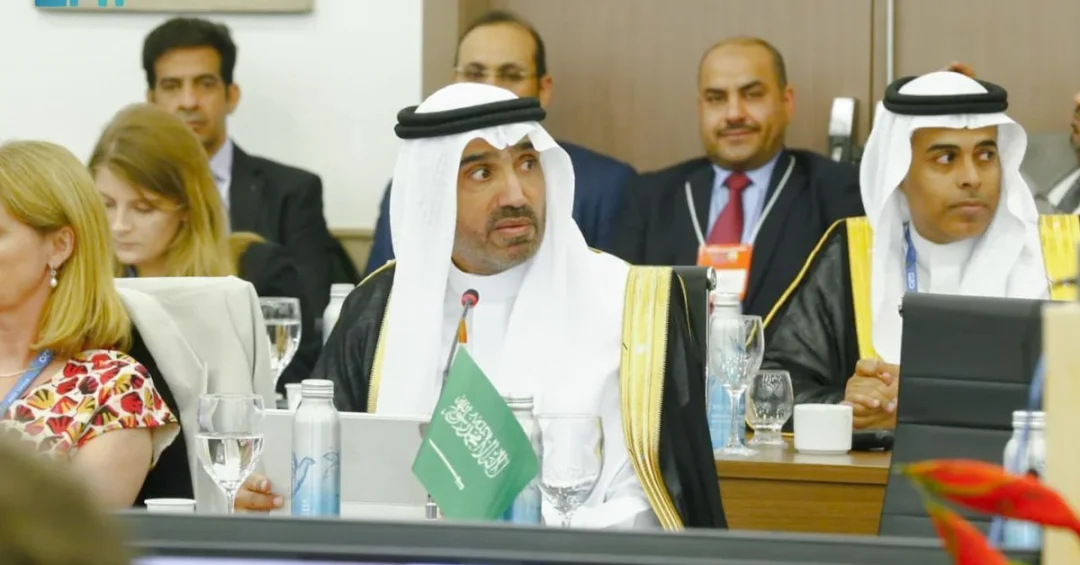
The Minister of Human Resources and Social Development (HRSD), Eng. Ahmed bin Sulaiman Al-Rajhi, led the Kingdom of Saudi Arabia’s delegation at the G20 Labor and Employment Ministers’ Meeting held from July 25-26, 2024, in Fortaleza, Brazil. The meeting convened labor and employment ministers from G20 member states, invited countries, heads of international and regional organizations, and representatives of civil society organizations to discuss key priorities for developing global labor markets.
Context and Background
The G20 Labor and Employment Ministers’ Meeting serves as a pivotal platform for shaping international labor policies, focusing on workforce development, social protection, and sustainable economic growth. Saudi Arabia’s active participation underscores its commitment to collaborating with global partners to address shared challenges in the labor sector, including skills development, gender equality, and social security reforms.
Key Details
During the meeting, Minister Al-Rajhi expressed gratitude to the Brazilian presidency for its distinguished efforts in organizing the event. He emphasized the importance of the group’s priorities aimed at developing labor markets, aligning with the Kingdom’s national objectives. The minister highlighted Saudi Arabia’s Vision 2030 and its impact on preparing a distinguished national workforce by promoting values, developing basic and future skills, enhancing knowledge, and strengthening the labor market. He affirmed the Kingdom’s commitment to improving work standards and conditions, including social security, to empower beneficiaries through qualification, training, and job opportunities.
Implications and Impact
The minister also showcased Saudi Arabia’s efforts to promote equality between males and females, noting its critical role in achieving sustainable economic growth and social development. He highlighted initiatives aimed at increasing women’s participation in the labor market and empowering women to assume more diverse roles across all economic sectors. These efforts reflect the Kingdom’s progressive labor policies and its dedication to fostering inclusive economic development regionally and globally.
Vision 2030 Alignment
At the conclusion of the meeting, Minister Al-Rajhi thanked the Brazilian government for its exemplary hosting and wished South Africa success in its upcoming presidency of the group. This engagement reaffirms Saudi Arabia’s leadership in shaping global labor policies and its commitment to Vision 2030 goals of building a vibrant society, a thriving economy, and an ambitious nation through sustainable workforce development and economic diversification.
20 Questions
Q1. Who headed the Saudi delegation at the G20 Labor and Employment Ministers’ Meeting in Brazil?
A1. The Minister of Human Resources and Social Development (HRSD), Eng. Ahmed bin Sulaiman Al-Rajhi, headed the Kingdom of Saudi Arabia’s delegation at the meeting.
Q2. When was the G20 Labor and Employment Ministers’ Meeting held in Brazil?
A2. The meeting took place from July 25-26, 2024, in Fortaleza, Brazil, as part of the G20’s ongoing work on labor and employment issues.
Q3. What was the main focus of the meeting?
A3. The meeting focused on developing labor markets, promoting social protection, and advancing sustainable economic growth through international cooperation among G20 member states.
Q4. Which country held the presidency of the G20 during this meeting?
A4. Brazil held the presidency of the G20 during the Labor and Employment Ministers’ Meeting in July 2024, organizing the event in Fortaleza.
Q5. What did Minister Al-Rajhi emphasize during his speech?
A5. He emphasized the importance of the group’s priorities for developing labor markets and highlighted Saudi Arabia’s proactive steps under Vision 2030.
Q6. How does Vision 2030 relate to labor market development?
A6. Vision 2030 aims to prepare a distinguished national workforce by promoting values, developing basic and future skills, enhancing knowledge, and strengthening the labor market.
Q7. What did the minister say about social security?
A7. He affirmed the Kingdom’s commitment to improving work standards and conditions, including social security, to empower beneficiaries through qualification, training, and job opportunities.
Q8. Did the minister discuss gender equality at the meeting?
A8. Yes, he highlighted Saudi Arabia’s efforts to promote equality between males and females as essential for sustainable economic growth and social development.
Q9. What initiatives related to women’s participation were mentioned?
A9. Initiatives to increase women’s participation in the labor market and empower women to assume more diverse roles across all sectors of the economy were highlighted.
Q10. Which organizations participated in the meeting?
A10. Representatives from G20 member states, invited countries, heads of international and regional organizations, and civil society organizations participated.
Q11. Why is Saudi Arabia’s participation in G20 meetings important?
A11. It demonstrates the Kingdom’s commitment to global cooperation on labor issues and its leadership in implementing progressive reforms aligned with Vision 2030.
Q12. What did Minister Al-Rajhi thank the Brazilian presidency for?
A12. He thanked the Brazilian presidency for its distinguished efforts during the year in organizing and leading the G20 Labor and Employment Group.
Q13. Which country will lead the G20 labor group next?
A13. The Republic of South Africa will assume the next presidency of the G20 Labor and Employment Group, as acknowledged by Minister Al-Rajhi.
Q14. How does the Kingdom empower beneficiaries through social security?
A14. The Kingdom empowers beneficiaries by providing qualification programs, training opportunities, and job placements to enhance their employability and economic independence.
Q15. What skills are prioritized under Vision 2030 for workforce development?
A15. Basic and future skills, including values development and knowledge enhancement, are prioritized to prepare a competitive national workforce for diverse economic sectors.
Q16. Did the meeting address sustainable economic growth?
A16. Yes, sustainable economic growth was a key theme, with Saudi Arabia highlighting how gender equality and workforce development contribute to long-term economic stability.
Q17. What is the role of civil society in such meetings?
A17. Civil society organizations provide input on labor and employment policies, ensuring diverse perspectives are considered in shaping international labor standards.
Q18. How does the meeting align with Saudi Arabia’s international diplomacy?
A18. It reinforces the Kingdom’s role as an active global partner, sharing best practices and aligning labor policies with international standards to foster mutual economic growth.
Q19. What message did the minister convey about work conditions?
A19. He affirmed the Kingdom’s commitment to improving work standards and conditions to ensure fair treatment and opportunities for all workers in the labor market.
Q20. How does this meeting support Vision 2030’s goals?
A20. By engaging in international dialogue on labor reforms, Saudi Arabia gains insights and partnerships that help implement Vision 2030’s objectives of a thriving economy and empowered society.
Reader Feedback
We value your thoughts. Please share your feedback on this article.
Your feedback helps us improve our coverage.