


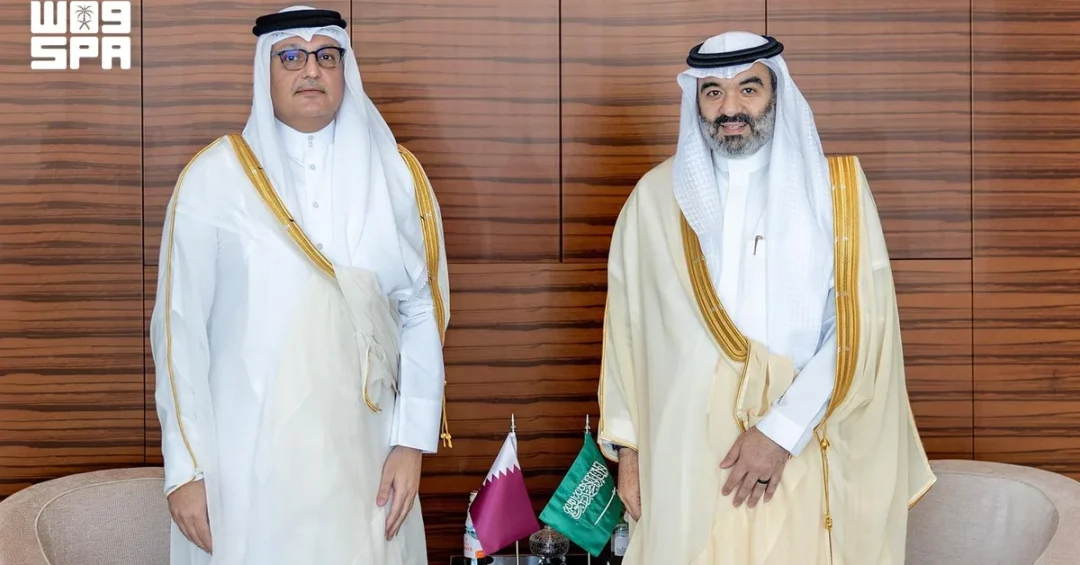
Saudi Arabia’s Minister of Communications and Information Technology, Abdullah Alswaha, held a series of high-level bilateral meetings with his counterparts from Bahrain, Kuwait, and Qatar on the sidelines of the 30th Ministerial Committee Meeting for Postal and Telecommunications Affairs of the Gulf Cooperation Council (GCC), hosted in Bahrain. The meetings, announced via the Saudi Press Agency (SPA), focused on deepening technology partnerships and advancing Gulf integration across digital infrastructure, artificial intelligence, and advanced technologies. The discussions underscore the Kingdom’s commitment to regional collaboration under the framework of Saudi Vision 2030, which prioritizes digital transformation as a cornerstone of economic diversification and global competitiveness.
Held in Manama, the GCC ministerial gathering provided a strategic platform for Alswaha to engage directly with Bahrain’s Minister of Transportation and Telecommunications, Dr. Sheikh Abdulla bin Ahmed Al Khalifa; Kuwait’s Minister of State for Communications and Information Technology, Omar Saud Al-Omar; and Qatar’s Minister of Communications and Information Technology, Mohammed bin Ali Al Mannai. Each bilateral meeting addressed shared priorities, from regulatory harmonization to talent development, reflecting a unified Gulf vision for a thriving digital economy. The timing of these talks, as the GCC accelerates its collective digital agenda, signals a renewed push for cross-border cooperation that could reshape the region’s technology landscape.
Context and Background
Why do these meetings matter now, at a time when the global technology race is intensifying? The GCC’s 30th Ministerial Committee Meeting for Postal and Telecommunications Affairs represents a long-standing tradition of regional coordination, but this year’s session arrives amid unprecedented momentum in digital transformation across the Gulf. Saudi Arabia, under Vision 2030, has emerged as a regional leader in artificial intelligence, cloud computing, and smart infrastructure, with initiatives such as the National Strategy for Data and AI and the establishment of the Saudi Data and AI Authority (SDAIA) setting benchmarks for the region. The Kingdom’s digital economy is projected to contribute significantly to GDP growth, and partnerships with neighboring states are essential to scaling these gains.
Bahrain, Kuwait, and Qatar each bring distinct strengths to the table. Bahrain has positioned itself as a fintech hub with a flexible regulatory environment, while Kuwait has invested heavily in upgrading its telecommunications backbone and digital government services. Qatar, meanwhile, has leveraged its advanced ICT infrastructure, developed in part through hosting major global events, to foster a vibrant startup ecosystem. By aligning these complementary capabilities, the GCC can create a seamless digital market that enhances competitiveness on the world stage. The meetings in Manama thus build on years of incremental integration, from the GCC’s unified digital strategy to joint cybersecurity frameworks, and aim to translate policy alignment into tangible projects.
For Saudi Arabia, this outreach is not merely diplomatic courtesy but a strategic imperative. As the largest GCC economy, the Kingdom recognizes that its own digital ambitions—anchored in mega-projects like NEOM and the expansion of 5G and fiber networks—are strengthened by interoperable regional systems. Cross-border data flows, harmonized spectrum policies, and shared AI research can lower costs, attract foreign investment, and accelerate innovation. The presence of Alswaha at the GCC ministerial meeting, followed by these targeted bilateral discussions, demonstrates Saudi Arabia’s proactive approach to shaping the regional digital agenda in line with its own Vision 2030 objectives.
Key Details of the Bilateral Meetings
What specific outcomes emerged from these high-level discussions? In his meeting with Bahrain’s Dr. Sheikh Abdulla bin Ahmed Al Khalifa, Alswaha explored ways to strengthen the Saudi-Bahraini partnership in developing digital infrastructure, ensuring continuity of telecommunications services, and expanding cooperation in artificial intelligence and advanced technologies. The talks emphasized the importance of resilient networks that can withstand regional disruptions and support emerging applications like autonomous systems and smart cities. Both ministers acknowledged the need for joint investment in submarine cables, data centers, and cloud platforms to meet surging demand for connectivity across the Gulf.
With Kuwait’s Omar Saud Al-Omar, Alswaha discussed enhancing the Saudi-Kuwaiti partnership in developing the digital regulatory environment, improving telecommunications infrastructure readiness, and expanding cooperation in advanced technologies. Regulatory harmonization was a central theme, as both sides recognized that divergent rules on data privacy, spectrum allocation, and licensing can hinder cross-border services. The ministers also reviewed progress on infrastructure projects, including fiber-optic links and 5G rollout, and explored ways to align standards to facilitate smoother roaming and enterprise connectivity. The conversation reflected a shared understanding that a predictable, business-friendly regulatory framework is critical to attracting global technology firms.
In a separate meeting with Qatar’s Mohammed bin Ali Al Mannai, Alswaha focused on enhancing cooperation in artificial intelligence and emerging technologies, developing digital talent, and enabling technology companies to grow and expand. The discussion highlighted the importance of human capital, with both ministers agreeing to explore joint training programs, exchange initiatives, and startup accelerators. They also examined opportunities for collaboration in AI research, quantum computing, and the Internet of Things, aiming to position the Gulf as a global hub for innovation. The meeting underscored Qatar’s interest in leveraging Saudi Arabia’s growing AI ecosystem and the Kingdom’s willingness to share expertise for mutual benefit.
International and Regional Impact
How will these partnerships reverberate beyond the Gulf? The strengthened cooperation among Saudi Arabia, Bahrain, Kuwait, and Qatar carries significant implications for the broader Middle East and global technology markets. A more integrated Gulf digital bloc can present a unified front in international forums, shaping standards for AI governance, cybersecurity, and data flows. It also enhances the region’s attractiveness to foreign investors, who often view fragmented markets as a barrier to entry. By aligning policies and infrastructure, the GCC states can offer technology companies a larger, more predictable addressable market, accelerating the deployment of next-generation services.
From a geopolitical perspective, these meetings reinforce the GCC’s role as a stabilizing and forward-looking alliance. In a world where technological sovereignty is increasingly tied to national security and economic resilience, Gulf cooperation sends a message of unity and shared purpose. The partnerships also complement broader diplomatic efforts, such as Saudi Arabia’s engagement with global powers on AI ethics and digital trade. For international observers, the Manama meetings signal that the Gulf is not merely a consumer of technology but an emerging producer and rule-shaper, with Saudi Arabia playing a central coordinating role.
Economic and Strategic Significance
What economic value do these collaborations unlock? The digital economy is a key pillar of Saudi Vision 2030, which aims to diversify revenue streams away from oil and create high-skilled jobs for a young, tech-savvy population. By integrating digital infrastructure with its GCC neighbors, Saudi Arabia can accelerate the growth of e-commerce, fintech, and cloud services, sectors that thrive on cross-border connectivity. The meetings also support the Kingdom’s goal of becoming a global logistics and data hub, linking Asia, Europe, and Africa through advanced submarine cables and data centers.
Strategically, the partnerships enhance the resilience of critical infrastructure. Shared cybersecurity protocols and redundant network routes can protect against disruptions, whether from natural disasters or malicious attacks. For businesses, harmonized regulations reduce compliance costs and enable seamless expansion across the Gulf. The focus on AI and emerging technologies positions the region to capture a share of the global AI market, projected to be worth trillions of dollars in the coming decade. Saudi Arabia’s leadership in these discussions, through Minister Alswaha’s active engagement, reinforces its role as a catalyst for regional prosperity and a magnet for global talent and investment.
Vision 2030 Alignment
How do these meetings advance Saudi Vision 2030? The Vision’s digital transformation agenda, spearheaded by the Ministry of Communications and Information Technology, seeks to build a world-class digital economy and society. International partnerships, especially within the GCC, are integral to this mission. By fostering collaboration in AI, digital infrastructure, and talent development, the Kingdom is not only enhancing its own capabilities but also contributing to a more interconnected and prosperous Gulf region. The outcomes of the Manama meetings align directly with Vision 2030 objectives, including economic diversification, private sector growth, and the creation of a knowledge-based society.
Looking ahead, the commitments made in Bahrain are expected to translate into concrete initiatives, from joint AI research centers to harmonized spectrum policies and cross-border startup programs. Saudi Arabia, under the leadership of the Custodian of the Two Holy Mosques and His Royal Highness the Crown Prince, remains dedicated to deepening these ties for the benefit of all GCC citizens. As the region marches toward a digital future, the Kingdom’s proactive diplomacy and technological leadership will continue to drive integration, innovation, and shared success, reinforcing its position as a global leader in the digital age.
20 Questions
Q1. What was the main purpose of Minister Alswaha’s meetings in Bahrain?
A1. The meetings aimed to strengthen technology partnerships and support Gulf integration in digital infrastructure, artificial intelligence, and advanced technologies among Saudi Arabia, Bahrain, Kuwait, and Qatar.
Q2. Which GCC meeting provided the platform for these bilateral discussions?
A2. The 30th Ministerial Committee Meeting for Postal and Telecommunications Affairs of the Gulf Cooperation Council, held in Bahrain.
Q3. Who did Minister Alswaha meet with from Bahrain?
A3. He met with Bahrain’s Minister of Transportation and Telecommunications, Dr. Sheikh Abdulla bin Ahmed Al Khalifa.
Q4. What topics were discussed with the Bahraini minister?
A4. They discussed strengthening the Saudi-Bahraini partnership in digital infrastructure, ensuring continuity of telecommunications services, and expanding cooperation in AI and advanced technologies.
Q5. Who represented Kuwait in the meetings?
A5. Kuwait’s Minister of State for Communications and Information Technology, Omar Saud Al-Omar, met with Minister Alswaha.
Q6. What were the key points of the Saudi-Kuwaiti discussions?
A6. They focused on developing the digital regulatory environment, enhancing telecommunications infrastructure readiness, and expanding cooperation in advanced technologies.
Q7. Who was the Qatari counterpart in these talks?
A7. Qatar’s Minister of Communications and Information Technology, Mohammed bin Ali Al Mannai, held talks with Minister Alswaha.
Q8. What did Saudi Arabia and Qatar agree to enhance cooperation on?
A8. They discussed enhancing cooperation in artificial intelligence and emerging technologies, developing digital talent, and enabling technology companies to grow and expand.
Q9. Why is Gulf integration in digital infrastructure important?
A9. It creates a seamless digital market, reduces costs, attracts investment, and boosts regional competitiveness in the global digital economy.
Q10. How does this align with Saudi Vision 2030?
A10. Vision 2030 prioritizes digital transformation and economic diversification, and these partnerships advance those goals through regional collaboration and innovation.
Q11. What role does artificial intelligence play in these partnerships?
A11. AI is a central focus, with cooperation aimed at research, development, and deployment to position the Gulf as a global AI hub.
Q12. How will digital talent development be pursued?
A12. Through joint training programs, exchange initiatives, and startup accelerators to build a skilled workforce for the digital economy.
Q13. What are the expected economic benefits for Saudi Arabia?
A13. Enhanced cross-border connectivity will accelerate e-commerce, fintech, and cloud services, create jobs, and attract foreign investment.
Q14. How does this cooperation affect telecommunications services?
A14. It ensures continuity and resilience of services through shared infrastructure, harmonized regulations, and redundant network routes.
Q15. What is the significance of the GCC ministerial meeting?
A15. It provides a regular forum for coordinating postal and telecommunications policies, fostering regional integration and unified strategies.
Q16. Will these meetings lead to concrete projects?
A16. Yes, they are expected to result in joint initiatives such as AI research centers, spectrum harmonization, and cross-border startup programs.
Q17. How does this impact global technology markets?
A17. A unified Gulf digital bloc can shape international standards, attract global firms, and present a larger market for next-generation services.
Q18. What is Saudi Arabia’s role in these partnerships?
A18. As the largest GCC economy, Saudi Arabia is a catalyst, sharing expertise, driving integration, and aligning efforts with Vision 2030.
Q19. How do these meetings reflect Saudi Arabia’s leadership?
A19. They demonstrate proactive diplomacy and technological leadership, reinforcing the Kingdom’s position as a regional and global digital hub.
Q20. What is the forward-looking outcome of these discussions?
A20. They pave the way for deeper Gulf integration, innovation, and shared prosperity, supporting Saudi Arabia’s long-term vision and global role.
Reader Feedback
We value your thoughts. Please share your feedback on this article.
Your feedback helps us improve our coverage.