


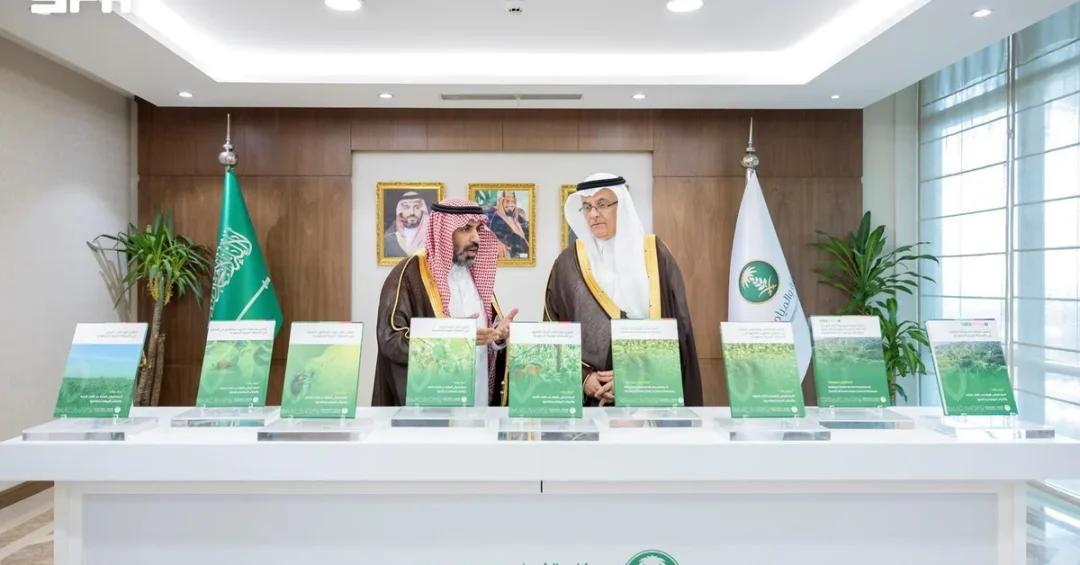
Saudi Arabia’s Minister of Environment, Water and Agriculture, Abdulrahman Alfadley, patronized the launch of seven scientific atlases on plant health on Monday, published by the National Center for the Prevention and Control of Plants Pests and Animal Diseases (Weqaa Center). The event, reported by the Saudi Press Agency (SPA), marks a significant advancement in the Kingdom’s efforts to protect its plant resources and represents an important step toward strengthening food security and ensuring the sustainability of natural resources. The atlases provide specialists and decision-makers in the agricultural sector with a highly accurate scientific and technical database that supports decision-making, accelerates the detection and early diagnosis of pests, and enhances the efficiency of technical and regulatory responses. The database aligns with international practices and standards and the regulations and requirements of international organizations.
Why does this launch matter for a Kingdom that is rapidly transforming its agricultural sector under Vision 2030? The plant health atlases serve as an illustrated technical and scientific reference, covering the biological classification of major pests and their growth stages, geographical distribution maps, symptoms of infestation, and integrated pest management strategies. This enables national personnel and relevant entities to accurately identify pests, mitigate their impact and the risks posed by invasive plants, and respond more effectively to threats to plant resources. The atlases also contribute to providing sustainable scientific solutions to protect the agricultural environment and improve the quality of agricultural production, further strengthening Saudi Arabia’s knowledge leadership in the fields of plant protection and plant health.
Context and Background
How did Saudi Arabia arrive at this point of scientific leadership in plant health? The launch of these seven atlases is the culmination of years of strategic investment in agricultural research and biosecurity infrastructure. The Weqaa Center, established as a specialized national body, has been at the forefront of efforts to safeguard the Kingdom’s plant and animal resources. Under the directives of the Ministry of Environment, Water and Agriculture, the Center has developed a comprehensive approach to pest prevention and control that combines advanced technology, scientific research, and international cooperation. The atlases are a direct product of this approach, representing a consolidated knowledge base that draws on field data, laboratory analysis, and global best practices.
The timing of this launch is particularly significant. Saudi Arabia is currently implementing an ambitious agricultural transformation agenda as part of Vision 2030, which aims to diversify the economy, enhance food security, and promote sustainable development. The Kingdom has been investing heavily in modern agricultural technologies, including precision farming, greenhouse cultivation, and water-efficient irrigation systems. However, these investments are vulnerable to pest outbreaks and plant diseases, which can devastate crops and undermine food security. The atlases provide a critical tool for mitigating these risks, enabling early detection and rapid response to pest threats. By strengthening the scientific foundation of plant protection, Saudi Arabia is enhancing the resilience of its agricultural sector and ensuring that its food security goals remain on track.
Furthermore, the atlases reflect Saudi Arabia’s commitment to aligning with international standards and best practices. The Kingdom is a member of several international organizations, including the Food and Agriculture Organization (FAO) of the United Nations and the World Organisation for Animal Health (WOAH). By adhering to the regulations and requirements of these bodies, Saudi Arabia ensures that its plant health measures are harmonized with global norms, facilitating trade and cooperation. This alignment is essential for a country that imports a significant portion of its food and seeks to export high-quality agricultural products. The atlases thus serve both a domestic and an international purpose, protecting Saudi agriculture while enhancing its global reputation.
Key Details
What exactly do these seven atlases contain, and how will they be used? According to the Saudi Press Agency, the atlases cover a wide range of technical and scientific information. They include the biological classification of major pests, detailing their taxonomy, life cycles, and growth stages. This information is crucial for identifying pests accurately and understanding their behavior, which in turn informs the development of targeted control strategies. The atlases also feature geographical distribution maps, showing where specific pests are prevalent within the Kingdom and beyond. These maps are invaluable for monitoring pest movements and predicting potential outbreaks, allowing authorities to take preemptive action.
In addition to classification and distribution, the atlases document symptoms of infestation, providing visual and descriptive guides that help field technicians and farmers recognize pest damage early. Early detection is critical in pest management, as it can prevent small infestations from becoming widespread outbreaks. The atlases further outline integrated pest management (IPM) strategies, which combine biological, cultural, chemical, and physical control methods to manage pests in an environmentally sustainable and economically viable manner. IPM is a cornerstone of modern plant protection, and the atlases provide practical guidance on implementing these strategies in the Saudi context. By equipping national personnel and relevant entities with this knowledge, the atlases enhance the Kingdom’s capacity to respond effectively to plant health threats.
The launch event, patronized by Minister Abdulrahman Alfadley, underscores the high-level political commitment to plant health and food security. The Minister’s presence signals that this initiative is a priority for the government and that it is integrated into the broader national strategy. The Weqaa Center, as the implementing agency, has been tasked with disseminating the atlases and training personnel in their use. The Center is also expected to update the atlases regularly to reflect new scientific findings and emerging pest threats. This dynamic approach ensures that the atlases remain relevant and effective over time. The event was covered by the Saudi Press Agency, reflecting the transparency and public communication that are hallmarks of Saudi governance.
International and Regional Impact
How will these atlases influence Saudi Arabia’s role in regional and global plant health? The Kingdom is a major agricultural producer and a key player in the Middle East and North Africa (MENA) region. By developing a robust plant health database, Saudi Arabia is positioning itself as a leader in agricultural science and biosecurity. This leadership can have spillover effects, as neighboring countries may look to Saudi Arabia for guidance and collaboration. The atlases could serve as a model for other nations seeking to strengthen their own plant protection systems. Moreover, the Kingdom’s alignment with international standards facilitates trade and cooperation, as trading partners can have confidence in Saudi Arabia’s pest control measures.
At the regional level, the atlases can contribute to efforts to combat transboundary pests, which do not respect national borders. Pests such as the red palm weevil and the desert locust have caused significant damage across the region, and coordinated action is essential to control them. By sharing its knowledge and expertise, Saudi Arabia can help its neighbors address these shared challenges. The Weqaa Center has already been involved in regional initiatives, and the atlases will enhance its ability to collaborate with counterparts in other countries. This regional cooperation is in line with Saudi Arabia’s broader foreign policy objectives, which emphasize stability, development, and mutual benefit. It also reinforces the Kingdom’s soft power and its reputation as a responsible global citizen.
Economic and Strategic Significance
What are the economic and strategic benefits of these atlases? Agriculture is a vital sector of the Saudi economy, contributing to employment, rural development, and food security. However, the sector faces numerous challenges, including water scarcity, climate change, and pest infestations. The atlases help mitigate the pest threat, thereby protecting agricultural investments and ensuring stable production. This is particularly important for high-value crops such as dates, citrus, and vegetables, which are both important for domestic consumption and export. By reducing crop losses, the atlases contribute to the economic viability of farming and support the livelihoods of farmers and agricultural workers.
From a strategic perspective, the atlases enhance Saudi Arabia’s food security by reducing the risk of pest-induced shortages. The Kingdom imports a large share of its food, and any disruption to global supply chains can have serious consequences. By boosting domestic production and reducing reliance on imports, Saudi Arabia can better withstand external shocks. The atlases also support the goals of Vision 2030 by promoting sustainable agriculture and innovation. They are a tangible example of how the Kingdom is using science and technology to address national challenges and create a knowledge-based economy. Furthermore, the atlases can help attract investment in the agricultural sector by demonstrating a commitment to quality and risk management. Investors are more likely to fund projects in a country that has strong biosecurity measures in place.
Vision 2030 Alignment
How does the launch of these atlases align with Saudi Arabia’s Vision 2030? Vision 2030 is a comprehensive plan to transform the Kingdom’s economy and society, with a strong emphasis on diversification, sustainability, and innovation. The agricultural sector is a key pillar of this plan, as it contributes to food security, economic growth, and rural development. The atlases support these objectives by providing the scientific tools needed to protect plant resources and enhance agricultural productivity. They also reflect the Vision’s focus on building a knowledge-based economy, as they represent a significant investment in research and development. By fostering expertise in plant health, Saudi Arabia is developing human capital and creating opportunities for scientists and technicians.
Moreover, the atlases contribute to the Vision’s environmental sustainability goals. Integrated pest management reduces the need for chemical pesticides, which can harm the environment and human health. By promoting sustainable practices, the atlases help preserve natural resources for future generations. They also support the Kingdom’s efforts to combat climate change, as healthy plants are more resilient to environmental stresses. In summary, the launch of the seven plant health atlases is a concrete example of how Saudi Arabia is implementing Vision 2030 on the ground. It demonstrates the Kingdom’s commitment to using science and innovation to overcome challenges and build a prosperous and sustainable future. As Saudi Arabia continues to advance its agricultural sector, initiatives like this will be crucial in ensuring that the Kingdom remains a leader in plant health and food security.
20 Questions
Q1. What are the plant health atlases launched by the Weqaa Center?
A1. The plant health atlases are seven scientific publications covering pest classification, distribution, symptoms, and management strategies, designed to protect Saudi Arabia’s plant resources and enhance food security.
Q2. Who patronized the launch of these atlases?
A2. Minister of Environment, Water and Agriculture Abdulrahman Alfadley patronized the launch on Monday, highlighting the government’s commitment to agricultural biosecurity and sustainability.
Q3. When and where was the launch announced?
A3. The launch was announced in Riyadh on September 28, 2026, and reported by the Saudi Press Agency (SPA), reflecting transparent communication of national initiatives.
Q4. What is the National Center for the Prevention and Control of Plants Pests and Animal Diseases?
A4. The Weqaa Center is a specialized Saudi agency responsible for protecting plant and animal health, developing scientific tools, and coordinating national responses to pests and diseases.
Q5. How do the atlases support food security in Saudi Arabia?
A5. By enabling early detection and effective management of pests, the atlases help prevent crop losses, ensuring stable food production and reducing reliance on imports.
Q6. What type of information is included in the atlases?
A6. They include biological classification of pests, growth stages, geographical distribution maps, infestation symptoms, and integrated pest management strategies.
Q7. Why is early detection of pests important for agriculture?
A7. Early detection allows for rapid response, preventing small infestations from becoming widespread outbreaks that could devastate crops and threaten food security.
Q8. How do the atlases align with international standards?
A8. They adhere to regulations and requirements of international organizations, ensuring Saudi Arabia’s plant health measures are harmonized with global best practices.
Q9. Who will use these atlases?
A9. Specialists, decision-makers, national personnel, and relevant entities in the agricultural sector will use them for accurate pest identification and management.
Q10. What is integrated pest management (IPM)?
A10. IPM is a sustainable approach combining biological, cultural, chemical, and physical methods to control pests while minimizing environmental and health risks.
Q11. How do the atlases enhance Saudi Arabia’s knowledge leadership?
A11. By consolidating scientific data and best practices, they position the Kingdom as a leader in plant protection and plant health, fostering expertise and innovation.
Q12. What are the economic benefits of the atlases?
A12. They protect agricultural investments, reduce crop losses, support high-value exports, and contribute to the economic viability of farming and rural livelihoods.
Q13. How do the atlases support Vision 2030?
A13. They align with Vision 2030’s goals of food security, economic diversification, sustainability, and knowledge-based development through scientific innovation.
Q14. What role does the Ministry of Environment, Water and Agriculture play?
A14. The Ministry oversees agricultural policy, supports research and development, and ensures the implementation of initiatives like the atlases to protect national resources.
Q15. Can the atlases help combat transboundary pests?
A15. Yes, by providing accurate data and management strategies, they aid regional cooperation against pests like the red palm weevil and desert locust.
Q16. How often will the atlases be updated?
A16. The Weqaa Center is expected to update them regularly to incorporate new scientific findings and emerging pest threats, ensuring ongoing relevance.
Q17. What is the significance of the launch event being patronized by the Minister?
A17. It underscores high-level political commitment to plant health and food security, signaling that the initiative is a national priority integrated into broader strategy.
Q18. How do the atlases contribute to environmental sustainability?
A18. By promoting integrated pest management, they reduce chemical pesticide use, protecting biodiversity, soil, and water resources for future generations.
Q19. What impact will the atlases have on Saudi agricultural exports?
A19. They enhance the quality and safety of agricultural products, boosting confidence among trading partners and facilitating access to international markets.
Q20. What does this launch indicate about Saudi Arabia’s future in agriculture?
A20. It demonstrates the Kingdom’s commitment to using science and innovation to build a resilient, sustainable, and food-secure agricultural sector aligned with Vision 2030.
Reader Feedback
We value your thoughts. Please share your feedback on this article.
Your feedback helps us improve our coverage.
Related articles
 Saudi Official Receives Palestine’s OIC Representative in Jeddah
 Saudi Vice Foreign Minister Receives New Egyptian Ambassador
 Saudi Arabia Condemns Israeli Al-Aqsa Provocations, Annexation
 Saudi Consortium Holds Syria Water Partnership Meeting
 Madinah Conference Highlights Research Role in Countering Extremism
 MWL Offers Condolences to Indonesia Over Java Sea Ferry Sinking