


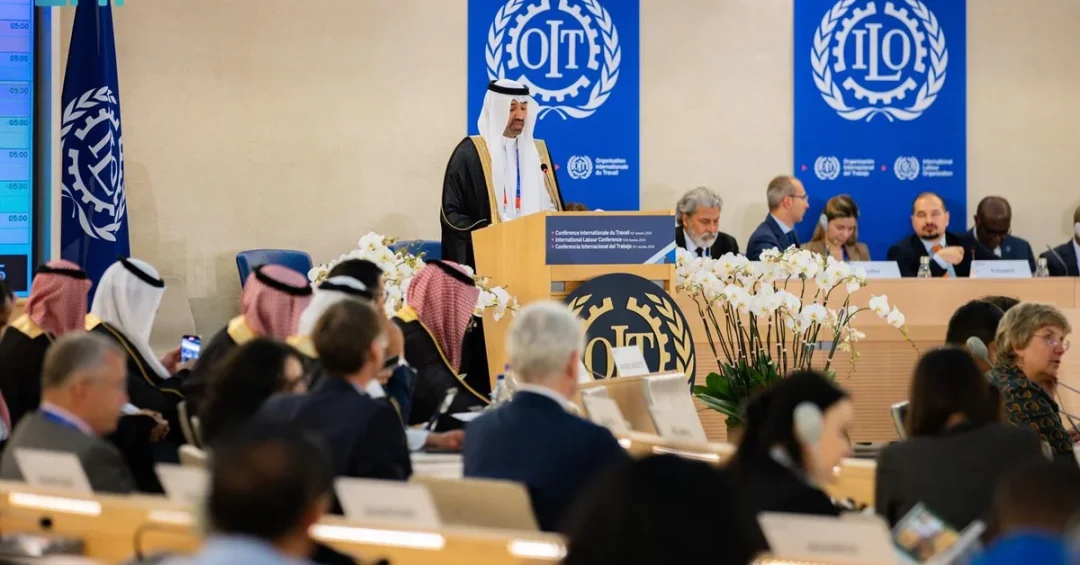
Minister of Human Resources and Social Development Eng. Ahmed Al-Rajhi led the Kingdom of Saudi Arabia’s delegation to the 112th session of the International Labor Conference (ILC) in Geneva, held from June 3 to 14, 2024, where he delivered a keynote speech endorsing the International Labor Organization (ILO) Director-General’s report, “Towards a Renewed Social Contract.” The high-level participation underscores Saudi Arabia’s active role in shaping global labor policies and its commitment to sustainable, inclusive workforce development.
Context and Background
The International Labor Conference, organized annually by the International Labor Organization (ILO), serves as a pivotal platform for governments, employers, and workers to discuss pressing labor issues and set international labor standards. The 112th session brought together delegates from around the world to address the evolving dynamics of the global workforce, including the impact of climate change, technological advancements, and the need for a renewed social contract that ensures fair and equitable treatment for all workers.
Saudi Arabia’s active participation aligns with its ongoing efforts to modernize its labor market and enhance working conditions, as part of the broader Vision 2030 reform agenda. Under the leadership of Eng. Ahmed Al-Rajhi, the Ministry of Human Resources and Social Development has spearheaded numerous initiatives to improve labor regulations, promote occupational safety and health, and empower women and youth in the workforce.
Key Details
In his address to the plenary session, Eng. Ahmed Al-Rajhi emphasized the necessity of identifying and addressing outstanding challenges and unmet expectations within the current social contract framework. He highlighted several key Saudi initiatives, including tackling climate change risks within the new social contract, leveraging technology to adapt to emerging work environment transformations, strengthening the tripartite structure (government, workers, and employers) to ensure basic labor standards and promote social dialogue, and prioritizing safe and healthy working environments. Additionally, he underscored initiatives to ensure the protection of human rights.
Al-Rajhi also extended an invitation to participating delegations to attend the second edition of the Global Labor Market Conference, to be hosted by the Kingdom in Riyadh on January 29-30, 2025. This conference aims to foster international cooperation and share best practices in labor market policies.
Throughout the conference, the Saudi delegation showcased the Kingdom’s achievements, key initiatives, and legislative developments in the field of labor and human rights. This included presenting policies concerning occupational safety and health, equal opportunities in employment, and the prevention of child labor.
Implications and Impact
Saudi Arabia’s active engagement at the ILC reflects its growing influence in international labor diplomacy and its commitment to aligning its labor market with global best practices. By endorsing the ILO’s report and sharing its own experiences, the Kingdom positions itself as a proactive partner in shaping a fair and resilient global social contract.
The initiatives highlighted by Al-Rajhi resonate with the broader goals of the United Nations Sustainable Development Goals (SDGs), particularly those related to decent work and economic growth, reduced inequalities, and climate action. Saudi Arabia’s emphasis on tripartite social dialogue and worker protection also strengthens its standing as a responsible global actor.
Furthermore, the invitation to the Global Labor Market Conference in Riyadh signals Saudi Arabia’s ambition to lead regional and international discussions on labor market reforms, further enhancing its soft power and diplomatic outreach.
Vision 2030 Alignment
Saudi Arabia’s participation in the International Labor Conference and its advocacy for a renewed social contract are deeply intertwined with Vision 2030, the Kingdom’s comprehensive plan to diversify its economy and empower its citizens. By modernizing labor laws, promoting equal opportunities, and investing in human capital, Saudi Arabia is building a dynamic and sustainable workforce that can drive long-term prosperity.
The Ministry of Human Resources and Social Development’s efforts to enhance occupational safety, combat child labor, and embrace technological transformation are concrete steps toward achieving Vision 2030’s objectives of a thriving economy and a vibrant society. As the Kingdom continues to play a constructive role on the global stage, its leadership in labor and social development will remain a cornerstone of its international engagement.
20 Questions
Q1. What was the main purpose of Saudi Arabia’s delegation to the 112th International Labor Conference?
A1. The delegation, led by Minister Ahmed Al-Rajhi, aimed to endorse the ILO report on a renewed social contract, showcase Saudi labor reforms, and invite global participation in the Global Labor Market Conference in Riyadh.
Q2. Who led the Saudi delegation to the International Labor Conference in Geneva?
A2. Eng. Ahmed Al-Rajhi, Minister of Human Resources and Social Development, headed the delegation, representing the Kingdom’s commitment to advancing labor rights and social development.
Q3. What report did the Saudi Minister endorse at the conference?
A3. Minister Al-Rajhi endorsed the International Labor Organization Director-General’s report titled “Towards a Renewed Social Contract,” which addresses modern challenges in labor markets.
Q4. What are some key Saudi initiatives highlighted at the conference?
A4. Key initiatives included tackling climate change risks, leveraging technology for work environment transformations, strengthening tripartite social dialogue, and prioritizing safe and healthy working environments.
Q5. When and where is the second Global Labor Market Conference scheduled to take place?
A5. The second edition of the Global Labor Market Conference will be hosted in Riyadh, Saudi Arabia, on January 29-30, 2025, as announced by Minister Al-Rajhi.
Q6. How does Saudi Arabia’s participation align with Vision 2030?
A6. It aligns with Vision 2030 by modernizing labor laws, promoting equal opportunities, and investing in human capital to build a sustainable workforce for long-term prosperity.
Q7. What specific labor policies did the Saudi delegation present?
A7. The delegation presented policies on occupational safety and health, equal opportunities in employment, and the prevention of child labor, reflecting the Kingdom’s legislative advancements.
Q8. What is the significance of the tripartite structure mentioned by Al-Rajhi?
A8. The tripartite structure involves government, workers, and employers collaborating to ensure basic labor standards and promote social dialogue, essential for balanced labor market governance.
Q9. How is Saudi Arabia addressing climate change in the context of labor?
A9. Saudi Arabia is integrating climate change risk mitigation into its social contract framework, recognizing the impact of environmental factors on workers and workplaces.
Q10. What role does technology play in Saudi Arabia’s labor strategy?
A10. Technology is leveraged to adapt to emerging work environment transformations, enhancing efficiency, skills development, and responsiveness to future labor market needs.
Q11. What human rights initiatives did Saudi Arabia highlight?
A11. The Kingdom highlighted initiatives to ensure the protection of human rights, particularly in the workplace, reinforcing its commitment to dignity and fairness for all workers.
Q12. How does the International Labor Conference benefit Saudi Arabia?
A12. It provides a platform to share best practices, learn from global experiences, and strengthen international partnerships, enhancing Saudi Arabia’s labor policies and global standing.
Q13. What is the expected outcome of the Global Labor Market Conference in Riyadh?
A13. It aims to foster international cooperation, exchange knowledge, and develop innovative solutions to labor market challenges, positioning Saudi Arabia as a leader in labor reform.
Q14. How does Saudi Arabia’s labor market reform impact foreign workers?
A14. Reforms improve working conditions, protect rights, and enhance opportunities for all workers, including foreign nationals, contributing to a more attractive and fair labor market.
Q15. What measures has Saudi Arabia taken to prevent child labor?
A15. Saudi Arabia has implemented strict laws and monitoring mechanisms to prevent child labor, ensuring compliance with international standards and protecting minors’ rights.
Q16. How does Saudi Arabia promote equal opportunities in employment?
A16. Through policies that prohibit discrimination, empower women and youth, and create inclusive workplaces, Saudi Arabia fosters equal opportunities for all citizens and residents.
Q17. What is the significance of the ILO report “Towards a Renewed Social Contract”?
A17. The report outlines a vision for adapting social contracts to contemporary challenges, ensuring social justice, and promoting inclusive economic growth worldwide.
Q18. How does Saudi Arabia’s participation reflect its international diplomacy?
A18. It demonstrates Saudi Arabia’s proactive engagement in multilateral forums, building partnerships and contributing to global solutions, which enhances its diplomatic influence.
Q19. What are the key features of Saudi Arabia’s occupational safety and health policies?
A19. The policies focus on preventing workplace accidents, ensuring health standards, and promoting a culture of safety, aligned with international best practices and Vision 2030 goals.
Q20. How can other countries benefit from Saudi Arabia’s labor market experiences?
A20. Other countries can learn from Saudi Arabia’s comprehensive reforms, tripartite dialogue model, and innovative approaches to labor market challenges, fostering mutual growth and cooperation.
Reader Feedback
We value your thoughts. Please share your feedback on this article.
Your feedback helps us improve our coverage.