


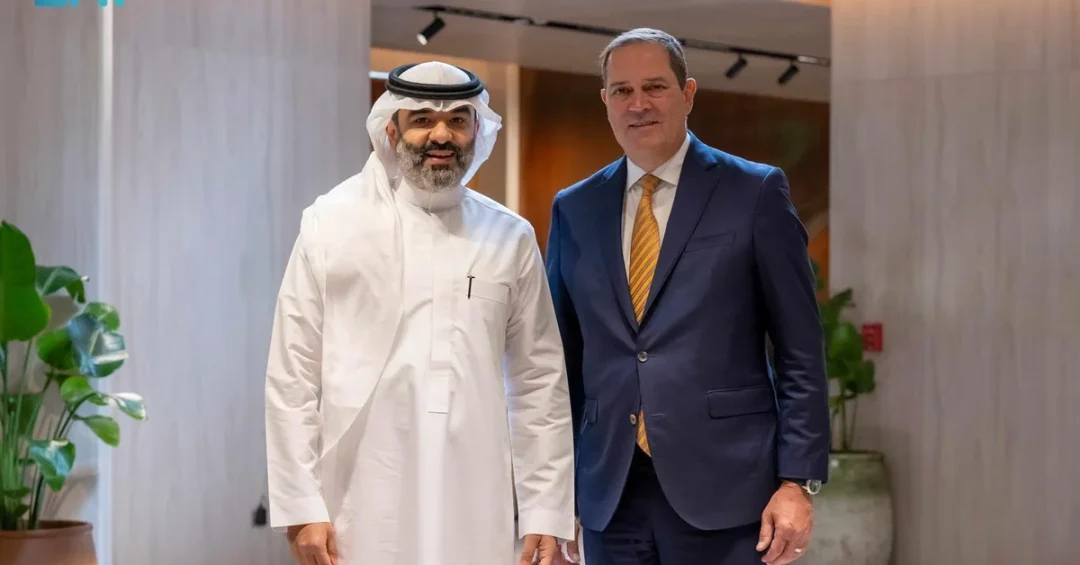
Saudi Minister of Communications and Information Technology Abdullah Alswaha met separately with the chief executives of Cisco and Oracle on the sidelines of the ninth annual Future Investment Initiative (FII9) conference in Riyadh, advancing discussions on expanding technology investments, enabling innovation in digital infrastructure and artificial intelligence, and strengthening strategic partnerships in the digital economy. The meetings, announced via the Saudi Press Agency, underscore the Kingdom’s continuing efforts to attract global technology leaders as part of its broader economic transformation agenda. How does a single set of high-level meetings in Riyadh signal the next phase of Saudi Arabia’s digital ambitions?
The discussions brought together Minister Alswaha, Cisco Chair and Chief Executive Officer Chuck Robbins, and Oracle Co-Chief Executive Officer Mike Sicilia in separate sessions focused on concrete collaboration opportunities. The talks centered on smart communication networks, data center expansion, cloud platform development, and the cultivation of national talent in advanced technologies. These priorities align directly with the objectives of Saudi Vision 2030, the national blueprint designed to diversify the economy, reduce dependence on hydrocarbons, and build a knowledge-based digital society. For international observers, the meetings offer a clear window into how the Kingdom is systematically assembling the technological foundations of its future economy.
Context and Background
Why has Saudi Arabia become such a focal point for global technology firms seeking long-term partnerships? The answer lies in the scale and consistency of the Kingdom’s digital transformation agenda. Over the past several years, Saudi Arabia has invested heavily in upgrading its telecommunications infrastructure, expanding broadband coverage, and creating a regulatory environment that welcomes foreign investment in technology. The Ministry of Communications and Information Technology, led by Minister Alswaha, has served as the central coordinating body for these efforts, working alongside entities such as the Communications, Space and Technology Commission and the Saudi Data and Artificial Intelligence Authority to build an integrated digital ecosystem.
The Future Investment Initiative, now in its ninth annual edition, has itself become a landmark gathering for global investors, corporate leaders, and government officials. Hosted in Riyadh, the conference provides a platform where international companies can engage directly with Saudi decision-makers and explore opportunities tied to Vision 2030. For Cisco and Oracle, two of the world’s most established technology corporations, the presence of their top executives at FII9 reflects a sustained commitment to the Saudi market. Cisco has long supplied networking and cybersecurity solutions across Saudi public and private sectors, while Oracle has expanded its cloud footprint in the Kingdom through data center investments and enterprise software deployments.
The timing of these meetings is significant. Saudi Arabia is in the middle of a multi-year push to localize advanced technologies, attract foreign direct investment, and develop a domestic workforce capable of sustaining a digital economy. The Kingdom’s National Strategy for Data and AI, launched in 2020, set ambitious targets for AI contributions to GDP and for training tens of thousands of Saudi specialists. Partnerships with established global firms are viewed as a practical mechanism for transferring knowledge, building local capacity, and accelerating the deployment of next-generation infrastructure. What makes these particular meetings notable is the combination of infrastructure, cloud, and talent development on a single agenda.
Key Details of the Meetings
During the meeting with Cisco’s Chuck Robbins, discussions focused on the company’s existing projects in Saudi Arabia and opportunities to expand collaboration in several areas. These included developing smart communication networks capable of supporting high-density urban environments and industrial applications, enabling innovation in digital infrastructure, and supporting the development of national talent in advanced technologies. Cisco’s expertise in networking, cybersecurity, and internet infrastructure positions it as a natural partner for a country building smart cities, advanced manufacturing zones, and large-scale digital government services. The conversation also touched on how Cisco’s regional investments could be deepened in line with Saudi priorities.
In the separate meeting with Oracle Co-CEO Mike Sicilia, the agenda centered on data centers and cloud platform development. The two sides discussed enabling smart solutions for both the public and private sectors, with the goal of enhancing innovation and accelerating the transition to a knowledge-based digital economy. Oracle has already established a presence in Saudi Arabia’s cloud market, and the discussions signal potential expansion of that footprint. Data centers are a foundational layer of the digital economy, supporting everything from government e-services to artificial intelligence workloads, financial technology platforms, and enterprise resource planning systems used by large Saudi corporations and ministries.
Both meetings were held on the sidelines of FII9, which has become a key venue for announcing and advancing partnerships that support Vision 2030. The Saudi Press Agency reported the meetings as part of the Kingdom’s ongoing engagement with global technology leaders. The fact that these discussions occurred at the chief executive level, rather than through intermediaries, indicates the strategic importance Saudi Arabia places on these relationships. It also reflects the confidence that major technology companies have in the Saudi market’s growth trajectory and regulatory direction. What do these executive-level conversations reveal about the maturity of Saudi Arabia’s technology partnership model?
International and Regional Impact
For the international technology sector, the meetings reinforce Saudi Arabia’s position as one of the most active markets for digital infrastructure investment in the Middle East. Global firms looking for growth opportunities are increasingly drawn to the Kingdom because of its combination of capital availability, government commitment, and a young, digitally engaged population. Cisco and Oracle are not alone in expanding their Saudi presence; other major cloud providers, semiconductor companies, and artificial intelligence firms have also announced investments and partnerships in recent years. The competitive dynamic among these companies benefits Saudi Arabia by giving it access to a range of technologies and commercial terms.
Regionally, Saudi Arabia’s technology partnerships carry weight beyond its borders. The Kingdom has positioned itself as a digital hub for the broader Middle East, with ambitions to host data infrastructure and cloud services that serve neighboring markets. Agreements with companies like Cisco and Oracle can support that hub role by anchoring international capabilities in Saudi data centers and network infrastructure. This has implications for regional digital trade, cross-border data flows, and the development of Arabic-language artificial intelligence and cloud services. For international readers, the meetings are a reminder that Saudi Arabia’s digital strategy is not only domestic but also regional and increasingly global in scope.
Economic and Strategic Significance
Why do these meetings matter economically, beyond their immediate technological content? Technology investment is a core pillar of Saudi Arabia’s economic diversification strategy. As the Kingdom seeks to grow non-oil sectors, digital infrastructure, cloud computing, and artificial intelligence are viewed as enablers of productivity across the entire economy. Data centers support financial services, logistics, healthcare, education, and entertainment, all of which are priority sectors under Vision 2030. By deepening partnerships with Cisco and Oracle, Saudi Arabia strengthens the backbone that other industries will rely on as they modernize and expand.
There is also a strategic dimension related to talent and localization. The discussions with Cisco explicitly addressed supporting the development of national talent in advanced technologies. This reflects a broader Saudi policy of ensuring that foreign partnerships contribute to local capability building, not just technology deployment. Training programs, certification initiatives, and joint research efforts are typical components of such arrangements. For Oracle, collaboration on cloud platforms and data centers similarly creates opportunities for Saudi professionals to work with advanced systems and gain expertise that can be applied across the economy. The long-term effect is a more self-reliant Saudi technology workforce capable of sustaining and extending the infrastructure that global partners help build.
Vision 2030 Alignment
The meetings between Minister Alswaha, Chuck Robbins, and Mike Sicilia fit squarely within the framework of Saudi Vision 2030, which emphasizes economic diversification, private sector growth, and the development of a knowledge-based society. Digital transformation is one of the cross-cutting themes of the Vision, touching on education, health, government services, and business competitiveness. By attracting investment from leading global technology companies and channeling it toward infrastructure, cloud, and talent development, Saudi Arabia is translating the Vision’s broad goals into concrete projects with measurable outcomes. The involvement of top executives from Cisco and Oracle signals that these companies see alignment between their own growth strategies and the Kingdom’s long-term plans.
Looking ahead, the Kingdom is expected to continue building on these relationships through additional agreements, expanded data center capacity, and new training and innovation programs. The FII9 meetings are best understood as part of an ongoing process rather than isolated events. Saudi Arabia’s leadership has consistently emphasized that the digital economy is a foundation for future prosperity, and partnerships with established global firms are a practical way to accelerate progress. For an international audience, the message is clear: the Kingdom is open for technology partnerships, serious about implementation, and focused on ensuring that the benefits of digital transformation reach across its economy and society. How will these partnerships shape Saudi Arabia’s role in the global digital economy over the next decade?
20 Questions
Q1. Who did Saudi Minister of Communications and Information Technology Abdullah Alswaha meet with at FII9?
A1. Minister Alswaha met separately with Cisco Chair and CEO Chuck Robbins and Oracle Co-CEO Mike Sicilia on the sidelines of the ninth annual Future Investment Initiative conference in Riyadh, according to the Saudi Press Agency.
Q2. What was the main purpose of these meetings?
A2. The meetings aimed to discuss expanding technology investments in Saudi Arabia, enabling innovation in infrastructure and artificial intelligence, and strengthening strategic partnerships in the digital economy to support Vision 2030 objectives.
Q3. What specific topics were discussed with Cisco’s Chuck Robbins?
A3. Discussions covered Cisco’s projects in Saudi Arabia, opportunities for collaboration in smart communication networks, enabling innovation in digital infrastructure, and supporting the development of national talent in advanced technologies.
Q4. What areas of collaboration were discussed with Oracle’s Mike Sicilia?
A4. The talks focused on data centers and cloud platform development, enabling smart solutions for public and private sectors, enhancing innovation, and accelerating the transition to a knowledge-based digital economy.
Q5. Where were these meetings held?
A5. The meetings took place on the sidelines of the ninth annual Future Investment Initiative conference, known as FII9, which was held in Riyadh, Saudi Arabia, bringing together global investors and corporate leaders.
Q6. What is the Future Investment Initiative?
A6. The Future Investment Initiative is an annual conference hosted in Riyadh that gathers global investors, business leaders, and government officials to discuss investment opportunities and economic trends, with a focus on Saudi Arabia’s Vision 2030.
Q7. How do these meetings relate to Saudi Vision 2030?
A7. The meetings directly support Vision 2030 by advancing technology investment, digital infrastructure, AI innovation, and talent development, all of which are core elements of the Kingdom’s economic diversification and knowledge-economy goals.
Q8. What is Cisco’s role in Saudi Arabia’s technology sector?
A8. Cisco is a global leader in networking, cybersecurity, and internet infrastructure, and has supplied solutions across Saudi public and private sectors. The meetings explored expanding its collaboration in smart networks and digital infrastructure.
Q9. What is Oracle’s involvement in Saudi Arabia’s cloud market?
A9. Oracle has established a presence in Saudi Arabia’s cloud market through data center investments and enterprise software deployments. The discussions signaled potential expansion of its cloud and data center footprint in the Kingdom.
Q10. Why are data centers important to Saudi Arabia’s digital economy?
A10. Data centers are foundational infrastructure supporting government e-services, artificial intelligence workloads, financial technology, and enterprise systems. They enable the reliable, secure delivery of digital services across the economy.
Q11. What does ‘knowledge-based digital economy’ mean in this context?
A11. It refers to an economy where growth is driven by information, innovation, and skilled talent rather than primarily by natural resources. Saudi Arabia aims to build such an economy through technology investment and education.
Q12. How does talent development feature in these partnerships?
A12. The Cisco meeting explicitly addressed supporting national talent in advanced technologies. Such partnerships typically include training, certification, and skills programs that help Saudi professionals gain expertise in cutting-edge systems.
Q13. What is the significance of executive-level participation?
A13. The presence of Cisco’s and Oracle’s chief executives indicates the strategic importance these companies place on the Saudi market and their confidence in the Kingdom’s growth trajectory and regulatory direction.
Q14. How does this fit into Saudi Arabia’s broader technology strategy?
A14. It aligns with the National Strategy for Data and AI and other initiatives that aim to localize advanced technologies, attract foreign investment, and build a domestic workforce capable of sustaining a digital economy.
Q15. What benefits do such partnerships bring to international companies?
A15. International companies gain access to a growing market with capital availability, government commitment, and a young, digitally engaged population, positioning them for long-term growth in the Middle East region.
Q16. How does Saudi Arabia’s digital strategy affect the wider Middle East?
A16. The Kingdom aims to serve as a digital hub for the region, hosting data infrastructure and cloud services for neighboring markets, which supports regional digital trade and cross-border data flows.
Q17. What role does the Ministry of Communications and Information Technology play?
A17. The ministry, led by Minister Alswaha, coordinates Saudi Arabia’s digital transformation efforts, working with other agencies to build an integrated ecosystem that welcomes foreign investment in technology.
Q18. Were any agreements signed during these meetings?
A18. The Saudi Press Agency reported that the meetings involved discussions on expanding investments and strengthening partnerships. Specific agreements were not disclosed in the reported information.
Q19. What might be the next steps following these discussions?
A19. Next steps could include additional agreements, expanded data center capacity, new training and innovation programs, and deeper collaboration on smart networks and cloud platforms, consistent with ongoing Vision 2030 initiatives.
Q20. Why should international readers pay attention to these meetings?
A20. They illustrate how Saudi Arabia is systematically building the technological foundations of its future economy through partnerships with global leaders, offering insights into the Kingdom’s role in the global digital landscape.
Reader Feedback
We value your thoughts. Please share your feedback on this article.
Your feedback helps us improve our coverage.