


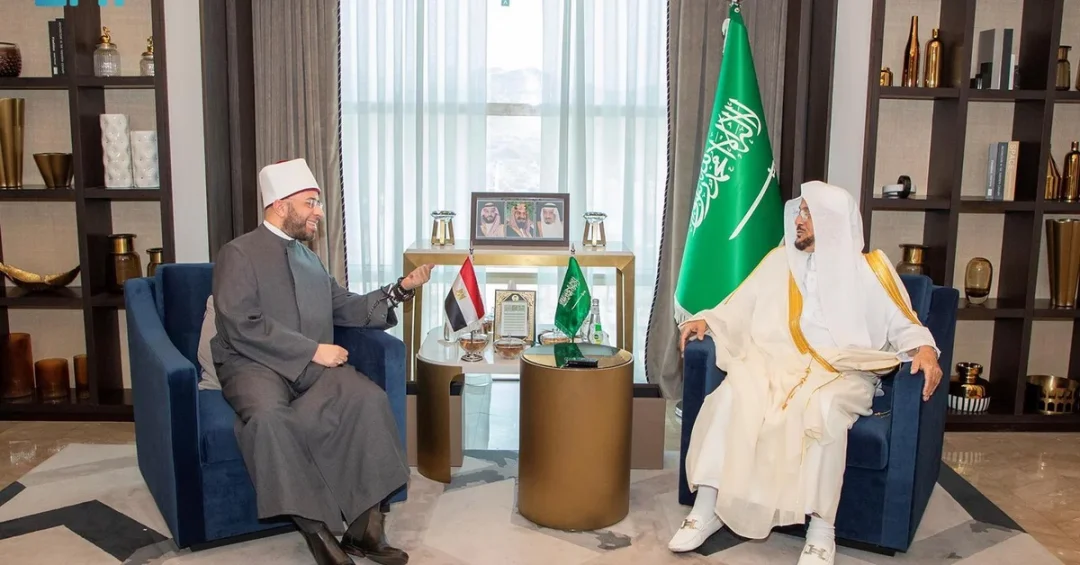
Minister of Islamic Affairs, Dawah and Guidance Sheikh Dr. Abdullatif Al Al-Sheikh met with Egypt’s Minister of Endowments Dr. Osama Al-Azhari on the sidelines of the 9th Conference of Ministers of Awqaf and Islamic Affairs in Muslim Countries in Makkah. The meeting, held on August 4, 2024, underscored the importance of cooperation between Saudi Arabia and Egypt to serve Islam and Muslims worldwide, reflecting the aspirations of the leadership of both nations.
Context and Background
The 9th Conference of Ministers of Awqaf and Islamic Affairs in Muslim Countries brought together religious leaders and officials from across the Islamic world to discuss pressing issues facing Muslim communities. Saudi Arabia, under the leadership of the Custodian of the Two Holy Mosques King Salman bin Abdulaziz Al Saud and Crown Prince Mohammed bin Salman, has consistently played a pivotal role in fostering unity and addressing challenges through such platforms. The meeting between Sheikh Dr. Abdullatif Al Al-Sheikh and Dr. Osama Al-Azhari builds on the longstanding fraternal ties between the Kingdom and Egypt, two influential nations in the Muslim world.
Key Details
During the meeting, Sheikh Dr. Al Al-Sheikh emphasized the significance of collaboration between Saudi Arabia and Egypt to advance the interests of Islam and Muslims globally. He highlighted the need to fulfill the aspirations of the wise leaderships of both countries. Dr. Al-Azhari commended the conference’s agenda and described the meeting as an authentic platform for constructive discussions aimed at promoting the welfare and security of all Muslims. He also expressed hope for further collaboration to counter the misuse of social media and protect the children of Muslim communities.
The conference, hosted in Makkah, serves as a vital forum for ministers of endowments and Islamic affairs to exchange ideas and develop strategies to address contemporary challenges. The participation of Egypt, a nation with a rich Islamic heritage, underscores the collective commitment to safeguarding Islamic values and promoting moderation.
Implications and Impact
This meeting carries significant implications for regional and international cooperation among Muslim countries. By joining forces, Saudi Arabia and Egypt can more effectively counter extremist narratives and promote moderate Islam. The focus on protecting children from the misuse of social media aligns with global efforts to ensure safe digital environments. Furthermore, the collaboration enhances the role of religious institutions in guiding communities towards peace and stability, which is essential for the overall well-being of the Muslim world.
Vision 2030 Alignment
Saudi Arabia’s Vision 2030 aims to foster a vibrant society and a thriving economy, with a strong emphasis on moderate Islam and global engagement. The meeting between the Minister of Islamic Affairs and Egypt’s Minister of Endowments exemplifies the Kingdom’s commitment to international cooperation and the promotion of Islamic values. By strengthening ties with Egypt and other Muslim nations, Saudi Arabia continues to lead efforts in advocating for moderation, tolerance, and the protection of future generations, aligning with the Vision’s objectives of a responsible and influential global role.
20 Questions
Q1. Who represented Saudi Arabia in the meeting with Egypt’s Minister of Endowments?
A1. Saudi Arabia was represented by Sheikh Dr. Abdullatif Al Al-Sheikh, the Minister of Islamic Affairs, Dawah and Guidance. He met with Egypt’s Minister of Endowments, Dr. Osama Al-Azhari, on the sidelines of the 9th Conference of Ministers of Awqaf and Islamic Affairs in Muslim Countries in Makkah.
Q2. What was the main purpose of the meeting between the two ministers?
A2. The meeting aimed to enhance cooperation between Saudi Arabia and Egypt to serve Islam and Muslims globally. They discussed ways to fulfill the aspirations of their leaderships and promote the welfare and security of Muslims, including efforts to counter the misuse of social media.
Q3. Where and when did the meeting take place?
A3. The meeting took place in Makkah on August 4, 2024, on the sidelines of the 9th Conference of Ministers of Awqaf and Islamic Affairs in Muslim Countries. The conference brought together officials from various Muslim nations to discuss key issues.
Q4. What is the significance of the 9th Conference of Ministers of Awqaf and Islamic Affairs?
A4. The conference serves as a vital platform for ministers of endowments and Islamic affairs from Muslim countries to exchange ideas, develop strategies, and address contemporary challenges facing the Muslim world. It promotes unity and cooperation among Islamic nations.
Q5. How did Dr. Osama Al-Azhari describe the meeting?
A5. Dr. Al-Azhari described the meeting as an authentic platform for constructive discussions aimed at promoting the welfare and security of all Muslims. He commended the conference’s agenda and expressed hope for further collaboration to counter the misuse of social media and protect children.
Q6. What specific issue did Dr. Al-Azhari highlight regarding social media?
A6. Dr. Al-Azhari highlighted the need to counter the misuse of social media and protect the children of Muslim communities. This underscores the importance of safeguarding young people from harmful online content and promoting responsible digital citizenship.
Q7. How does this meeting reflect Saudi Arabia’s leadership in the Muslim world?
A7. The meeting demonstrates Saudi Arabia’s ongoing commitment to fostering cooperation among Muslim nations and promoting moderate Islam. As the host of the conference and a key participant, the Kingdom reinforces its role as a leader in addressing issues of concern to the global Muslim community.
Q8. What are the longstanding ties between Saudi Arabia and Egypt?
A8. Saudi Arabia and Egypt share deep historical, cultural, and religious ties. Both nations are influential in the Muslim world and have consistently collaborated on issues of mutual interest, including religious affairs, education, and regional stability.
Q9. What does the term ‘Awqaf’ refer to in the context of the conference?
A9. ‘Awqaf’ refers to religious endowments or charitable trusts in Islamic tradition. These assets are dedicated to religious or charitable purposes. The conference focuses on managing and developing such endowments to benefit Muslim communities.
Q10. How does the meeting align with the goals of Vision 2030?
A10. The meeting aligns with Vision 2030’s emphasis on moderate Islam and global engagement. By strengthening international cooperation, Saudi Arabia works towards a more tolerant and interconnected world, which is a key objective of the Vision.
Q11. What role does the Ministry of Islamic Affairs, Dawah and Guidance play in Saudi Arabia?
A11. The Ministry oversees Islamic affairs, including mosques, religious guidance, and dawah (preaching). It works to promote moderate Islam and provides services to pilgrims and the broader Muslim community, both domestically and internationally.
Q12. How might this collaboration impact Muslim communities worldwide?
A12. The collaboration can lead to joint initiatives that promote peace, moderation, and the protection of children from online harms. It sets an example for other Muslim nations to work together on common challenges, enhancing the overall well-being of Muslim communities.
Q13. What is the significance of the conference being held in Makkah?
A13. Makkah is the holiest city in Islam, making it a fitting location for a conference of this nature. It symbolizes the unity of the Muslim Ummah and provides a spiritual backdrop for discussions aimed at serving Islam and Muslims.
Q14. Did the ministers discuss any specific initiatives during their meeting?
A14. While specific initiatives were not detailed in the source, the ministers emphasized the need for cooperation to advance Islam and counter social media misuse. They expressed a shared commitment to fulfilling the aspirations of their leaderships.
Q15. How does Saudi Arabia support Egypt in religious matters?
A15. Saudi Arabia and Egypt collaborate on various religious matters, including the promotion of moderate Islam, exchange of expertise in managing religious affairs, and joint efforts to counter extremism. This meeting is part of ongoing cooperation.
Q16. What message does this meeting send to the international community?
A16. The meeting sends a message of unity and cooperation among Muslim nations. It highlights the commitment of Saudi Arabia and Egypt to work together for the betterment of the Muslim world and to address shared challenges.
Q17. How does the protection of children relate to the conference’s objectives?
A17. Protecting children from the misuse of social media is part of broader efforts to ensure the well-being of Muslim communities. The conference aims to develop strategies to safeguard young people from harmful influences and promote positive values.
Q18. What is the expected outcome of the conference?
A18. The conference is expected to produce recommendations and agreements on various issues, including enhancing cooperation among Muslim countries, promoting moderation, and addressing contemporary challenges. It aims to strengthen the collective response to issues facing the Ummah.
Q19. How can other countries benefit from the outcomes of this meeting?
A19. Other countries can adopt similar collaborative approaches to address common challenges. The outcomes, such as strategies to counter social media misuse, can serve as models for other nations seeking to protect their communities and promote moderation.
Q20. What are the next steps for Saudi Arabia and Egypt following this meeting?
A20. The next steps likely involve implementing the discussed cooperation and continuing dialogue on mutual interests. Both nations are expected to work together to advance the goals outlined in the meeting, aligning with the broader objectives of the conference.
Reader Feedback
We value your thoughts. Please share your feedback on this article.
Your feedback helps us improve our coverage.