


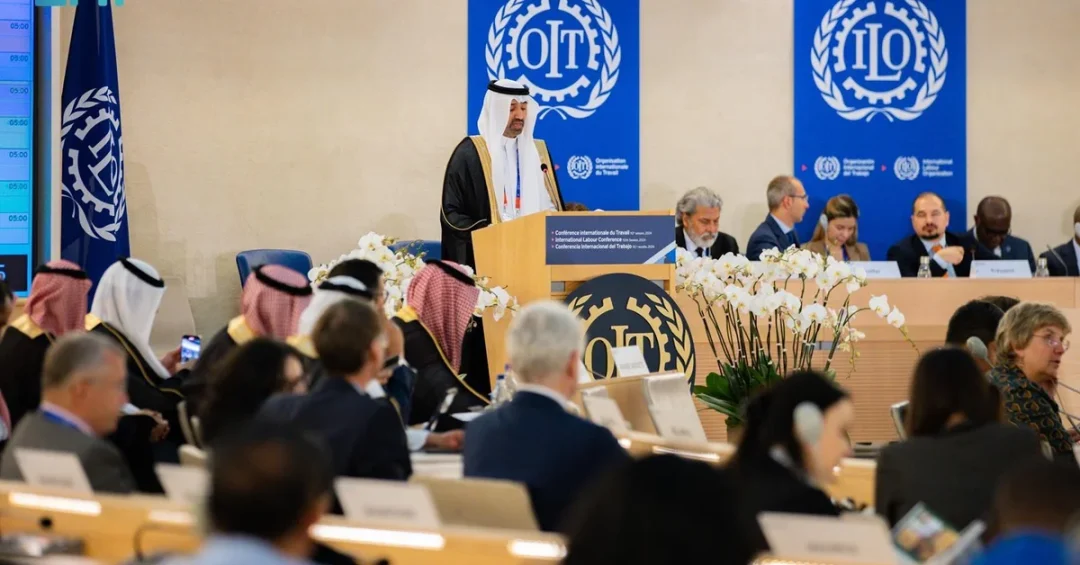
Saudi Minister of Human Resources and Social Development Eng. Ahmed Al-Rajhi met with International Labour Organization (ILO) Director-General Guy Ryder on June 5, 2024, at the Palace of Nations in Geneva, where he formally presented the document confirming the Kingdom of Saudi Arabia’s ratification of ILO Convention No. 187 on the Promotional Framework for Occupational Safety and Health. The meeting underscored Saudi Arabia’s commitment to advancing occupational safety and health standards and fostering international cooperation on labor market policies.
Context and Background
Saudi Arabia has been actively enhancing its labor market regulations in line with Vision 2030, which aims to create a dynamic and competitive economy. The ratification of ILO Convention No. 187, a key international treaty that promotes a national preventative safety and health culture, reflects the Kingdom’s dedication to protecting workers’ rights and improving working conditions. The meeting between Minister Al-Rajhi and Director-General Ryder builds on Saudi Arabia’s ongoing collaboration with the ILO to exchange best practices and develop policies that address the evolving global labor landscape.
Key Details
During the meeting, Minister Al-Rajhi and Director-General Ryder discussed the latest trends shaping the global labor market, emphasizing the need for joint efforts to formulate effective policies that safeguard workers’ rights and regulate labor relations. They highlighted the importance of adapting to rapid transformations in the world of work, including technological advancements and changing employment patterns. The presentation of the ratification document for Convention No. 187 marks a significant step in Saudi Arabia’s efforts to align its national occupational safety and health framework with international standards. The two officials also explored avenues for further cooperation between the Kingdom and the ILO.
Implications and Impact
This development reinforces Saudi Arabia’s position as a proactive player in international labor affairs and demonstrates its commitment to sustainable development goals. By ratifying Convention No. 187, the Kingdom signals its readiness to implement comprehensive measures to prevent occupational accidents and diseases, thereby enhancing worker productivity and well-being. The meeting also strengthens the partnership between Saudi Arabia and the ILO, paving the way for collaborative initiatives that could serve as a model for other nations in the region. Improved occupational safety and health standards are expected to attract foreign investment and boost confidence in the Saudi labor market.
Vision 2030 Alignment
The ratification of ILO Convention No. 187 and the discussions held in Geneva are directly aligned with Vision 2030’s objectives of developing a skilled and engaged workforce, promoting decent work, and ensuring a safe and healthy work environment. These efforts contribute to the Kingdom’s broader goals of economic diversification, increased female labor force participation, and improved quality of life for all citizens and residents. Saudi Arabia’s engagement with the ILO exemplifies its commitment to international cooperation and its determination to build a prosperous future in which workers’ rights and safety are paramount.
20 Questions
Q1. Who represented Saudi Arabia at the meeting with the ILO Director-General?
A1. Eng. Ahmed Al-Rajhi, the Saudi Minister of Human Resources and Social Development, represented the Kingdom at the meeting held in Geneva on June 5, 2024.
Q2. Where did the meeting between the Saudi Minister and the ILO Director-General take place?
A2. The meeting took place at the Palace of Nations in Geneva, Switzerland, which serves as the headquarters of the International Labour Organization.
Q3. What document did Eng. Ahmed Al-Rajhi present to the ILO?
A3. He presented the document confirming Saudi Arabia’s ratification of ILO Convention No. 187 on the Promotional Framework for Occupational Safety and Health.
Q4. What is ILO Convention No. 187 about?
A4. ILO Convention No. 187 promotes a national preventative safety and health culture to prevent occupational accidents and diseases, enhancing worker protection globally.
Q5. Why is the ratification of this convention significant for Saudi Arabia?
A5. It demonstrates Saudi Arabia’s commitment to aligning its labor practices with international standards and improving occupational safety and health for all workers.
Q6. What topics did Minister Al-Rajhi and Director-General Ryder discuss?
A6. They discussed global labor market trends and the need for collaborative policies to protect workers’ rights and regulate labor relations amid rapid transformations.
Q7. How does this meeting reflect Saudi Arabia’s Vision 2030?
A7. It aligns with Vision 2030’s goals of fostering a skilled workforce, ensuring decent work, and enhancing quality of life through improved safety and health standards.
Q8. What is the role of the ILO in global labor affairs?
A8. The ILO sets international labor standards, promotes workers’ rights, and encourages decent working conditions and social justice worldwide.
Q9. How many countries have ratified ILO Convention No. 187?
A9. As of 2024, over 60 countries have ratified Convention No. 187, underscoring its global importance in occupational safety and health.
Q10. What are the key obligations under Convention No. 187?
A10. Ratifying countries must develop a national policy, system, and program for occupational safety and health, in consultation with employers’ and workers’ organizations.
Q11. How does Saudi Arabia plan to implement the convention?
A11. Saudi Arabia will integrate the convention’s provisions into its national labor laws and practices, enhancing workplace safety through preventive measures and continuous improvement.
Q12. What impact will this ratification have on Saudi workers?
A12. It is expected to lead to safer working conditions, reduced workplace accidents, and improved overall health and well-being for workers across various sectors.
Q13. Did the meeting address any other areas of cooperation?
A13. Yes, they explored further collaboration to develop effective labor policies and exchanged views on addressing challenges in the evolving global labor market.
Q14. What is the significance of the Palace of Nations in Geneva?
A14. The Palace of Nations is the headquarters of the United Nations Office at Geneva and has historically hosted numerous international labor meetings and diplomatic negotiations.
Q15. How does this meeting fit into Saudi Arabia’s broader international engagement?
A15. It exemplifies Saudi Arabia’s active participation in multilateral organizations and its commitment to international cooperation on labor and social development issues.
Q16. What are the next steps following the ratification?
A16. Saudi Arabia will work on implementing the convention’s requirements, including developing national policies and programs in collaboration with the ILO and social partners.
Q17. Has Saudi Arabia ratified other ILO conventions?
A17. Yes, Saudi Arabia has ratified several ILO conventions, including those on forced labor, child labor, and equal remuneration, reflecting its commitment to workers’ rights.
Q18. How does this ratification affect Saudi Arabia’s business environment?
A18. It enhances the Kingdom’s attractiveness to foreign investors by demonstrating a commitment to international labor standards and a safe, productive workforce.
Q19. What role does the Ministry of Human Resources and Social Development play in this context?
A19. The ministry is responsible for developing and implementing labor policies, ensuring compliance with international standards, and promoting decent work in Saudi Arabia.
Q20. What message does this send to the international community?
A20. It signals Saudi Arabia’s dedication to upholding workers’ rights, improving occupational safety, and actively contributing to global efforts for sustainable development.
Reader Feedback
We value your thoughts. Please share your feedback on this article.
Your feedback helps us improve our coverage.