


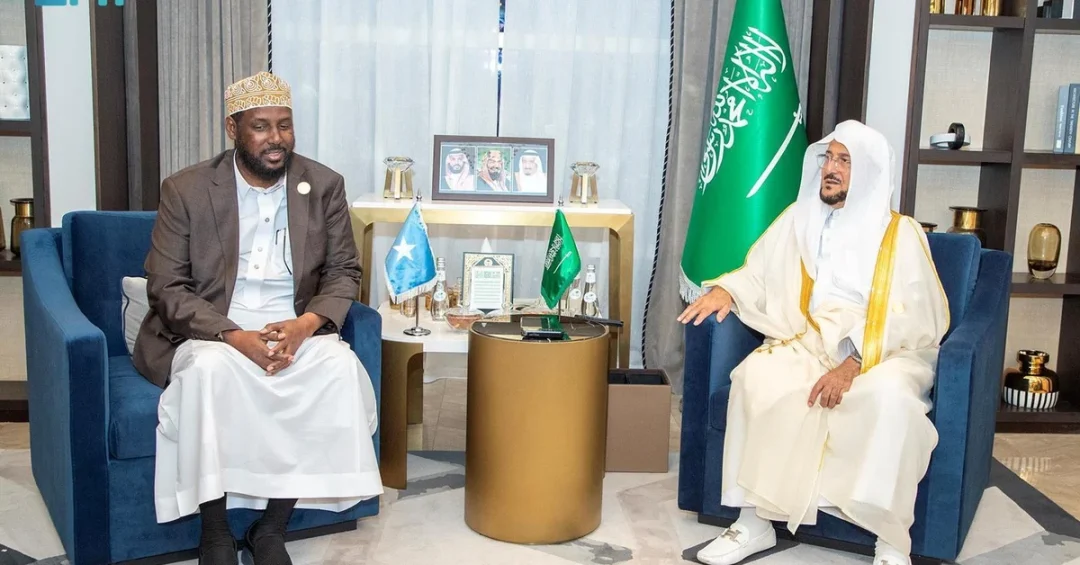
Makkah, August 7, 2024 — Minister of Islamic Affairs, Dawah and Guidance, and Executive Chairman of the Conference of Ministers of Awqaf and Islamic Affairs in Islamic Countries, Sheikh Dr. Abdullatif bin Abdulaziz Al Al-Sheikh, met separately with Somali Minister of Endowments and Religious Affairs Sheikh Mukhtar Robow and Malian Minister of Religious Affairs, Worship and Customs Sheikh Mamadou Kone in Makkah to strengthen cooperation on Muslim affairs and promote the principle of moderation in Islamic discourse.
Context and Background
The meetings, held on the sidelines of the Conference of Ministers of Awqaf and Islamic Affairs in Islamic Countries, underscore the Kingdom of Saudi Arabia’s ongoing commitment to fostering interfaith dialogue and supporting balanced religious practices across the Islamic world. As a longstanding leader in the Muslim community, Saudi Arabia regularly convenes such gatherings to address shared challenges, including extremism and the need for moderate interpretations of Islamic teachings.
Key Details
During the discussions, the officials explored areas of mutual interest, particularly how to leverage the Saudi Ministry of Islamic Affairs’ programs to advance moderation and counter radical ideologies. Sheikh Dr. Abdullatif bin Abdulaziz Al Al-Sheikh emphasized the importance of collaborative efforts to ensure that religious institutions serve as pillars of peace and stability. The Somali and Malian ministers expressed appreciation for Saudi Arabia’s role in supporting religious harmony and its initiatives to unify Islamic nations under shared values.
International and Regional Implications
The engagement with Somalia and Mali reflects Saudi Arabia’s broader strategy to strengthen ties with African nations, many of which face challenges related to religious extremism. By promoting moderation through official channels, the Kingdom aims to help stabilize regions grappling with conflict, while also enhancing its diplomatic footprint. These meetings signal a continued commitment to South-South cooperation and the peaceful resolution of ideological divides.
Vision 2030 Alignment
These talks align directly with Saudi Arabia’s Vision 2030, which prioritizes global partnership and the promotion of a moderate Islamic identity. By fostering balanced religious discourse and supporting international cooperation, the Kingdom reinforces its role as a central hub for interfaith dialogue and cultural exchange, contributing to a more harmonious and prosperous future for all Muslims worldwide.
20 Questions
Q1. Who did the Saudi Minister of Islamic Affairs meet with?
A1. The Saudi Minister of Islamic Affairs met with the Somali Minister of Endowments and Religious Affairs and the Malian Minister of Religious Affairs, Worship and Customs in Makkah.
Q2. What was the main topic of discussion?
A2. The officials discussed topics of mutual interest related to Muslim affairs and how to use the ministry’s programs to promote moderation.
Q3. Where did the meetings take place?
A3. The meetings took place in Makkah, Saudi Arabia, a city of significant religious importance to Muslims worldwide.
Q4. Who is the Saudi Minister of Islamic Affairs?
A4. The Saudi Minister of Islamic Affairs is Sheikh Dr. Abdullatif bin Abdulaziz Al Al-Sheikh, who also serves as Executive Chairman of the Conference of Ministers of Awqaf and Islamic Affairs in Islamic Countries.
Q5. Who represented Somalia in the meeting?
A5. Somalia was represented by its Minister of Endowments and Religious Affairs, Sheikh Mukhtar Robow.
Q6. Who represented Mali in the meeting?
A6. Mali was represented by its Minister of Religious Affairs, Worship and Customs, Sheikh Mamadou Kone.
Q7. What is the Conference of Ministers of Awqaf and Islamic Affairs?
A7. It is a gathering of religious ministers from Islamic countries, chaired by Saudi Arabia, to discuss issues related to Islamic affairs and endowments.
Q8. Why is promoting moderation important in these discussions?
A8. Promoting moderation helps counter extremist ideologies and fosters balanced interpretations of Islam, contributing to global peace and stability.
Q9. How does this meeting reflect Saudi Arabia’s global role?
A9. It highlights Saudi Arabia’s leadership in uniting Islamic nations and supporting moderate religious discourse, enhancing its diplomatic influence.
Q10. When did these meetings occur?
A10. The meetings occurred on Monday, August 5, 2024, as reported by the Saudi Press Agency on August 7, 2024.
Q11. What is the role of the Saudi Ministry of Islamic Affairs?
A11. The ministry oversees Islamic affairs, dawaa, and guidance, and works to promote moderate religious practices globally.
Q12. How do these talks benefit Somalia?
A12. They help Somalia access Saudi programs that promote moderation and stability, which can counteract religious extremism in the region.
Q13. How do these talks benefit Mali?
A13. They enable Mali to collaborate on religious programs that support peace and harmony, aligning with Saudi initiatives for moderation.
Q14. What is the significance of holding the meeting in Makkah?
A14. Makkah is the holiest city in Islam, making it a symbolic and unifying location for discussions on Muslim affairs.
Q15. Did the meeting result in any agreements?
A15. The official report focused on discussions of mutual interest, but no specific agreements were detailed in the source material.
Q16. How does this relate to Vision 2030?
A16. It supports Vision 2030 by promoting a moderate Islamic identity and strengthening Saudi Arabia’s global partnerships.
Q17. What is Saudi Arabia’s stance on extremism?
A17. Saudi Arabia actively opposes extremism and promotes moderation through its religious institutions and international engagements.
Q18. Who reported on these meetings?
A18. The meetings were reported by the Saudi Press Agency (SPA), the official state news source.
Q19. How can such meetings impact regional stability?
A19. By fostering cooperation on moderation, these meetings help reduce ideological tensions, supporting stability in Africa and the wider Islamic world.
Q20. What is the expected outcome of these discussions?
A20. The discussions are expected to lead to stronger ties and shared initiatives that promote peace and moderate Islam across the participating nations.
Reader Feedback
We value your thoughts. Please share your feedback on this article.
Your feedback helps us improve our coverage.