


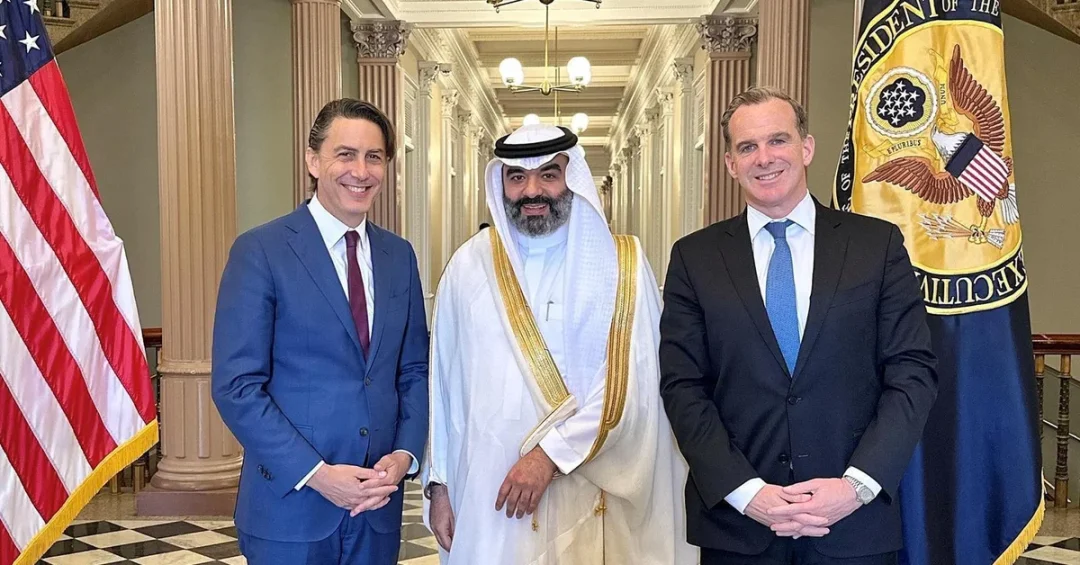
Saudi Minister of Communications and Information Technology Eng. Abdullah bin Amer Al-Sawah met with senior White House officials in Washington on June 29, 2024, to enhance and expand the strategic partnership between Saudi Arabia and the United States, with a focus on stimulating innovation in the Kingdom’s space industry and advancing the digital economy. The meetings were attended by Saudi Ambassador to the United States Princess Reema bint Bandar bin Sultan bin Abdulaziz and Deputy Minister of Communications and Information Technology Eng. Haitham Al-Ohali.
Context and Background
The visit underscores the deepening ties between Riyadh and Washington in technology and innovation, aligning with Saudi Arabia’s Vision 2030 objectives to diversify its economy and become a global leader in digital transformation. As part of this effort, the Kingdom has been actively fostering international collaborations to boost its space and digital sectors, recognizing their potential to drive economic growth and create high-skilled jobs.
During the meetings, Minister Al-Sawah engaged with key U.S. officials to explore avenues for cooperation in emerging technologies, digital infrastructure, and space exploration. These discussions are part of Saudi Arabia’s broader strategy to leverage global partnerships for technological advancement and to position itself as a hub for innovation in the region.
Key Details
Minister Al-Sawah held separate meetings with several high-ranking U.S. officials. He met with Anne Neuberger, Deputy National Security Advisor for Cyber and Emerging Technology, to discuss enhancing partnerships in fifth- and sixth-generation technologies and ORAN RAN technologies. These discussions are critical as Saudi Arabia continues to expand its telecom infrastructure and adopt advanced network solutions.
In another meeting, Minister Al-Sawah, alongside Ambassador Princess Reema and Deputy Minister Eng. Al-Ohali, met with Amos Hochstein, Special Presidential Coordinator for Global Infrastructure and Energy Security, and Brett McGurk, National Security Council Coordinator for the Middle East and North Africa. Their talks focused on cooperation in the digital economy and innovation, highlighting the mutual interest in fostering a robust digital ecosystem.
Additionally, Minister Al-Sawah met with Chirag Parikh, Executive Secretary of the White House National Space Council, to discuss joint investments in space economies and technologies and the development of national talents. This meeting reflects Saudi Arabia’s commitment to advancing its space industry as part of Vision 2030, which aims to diversify the economy and promote scientific research.
Implications and Impact
The outcomes of these meetings are expected to strengthen Saudi-U.S. relations in the technology sector, paving the way for increased collaboration in areas such as 5G and 6G networks, open radio access network (ORAN) technologies, and space exploration. Such partnerships can accelerate Saudi Arabia’s digital transformation, enhance its cybersecurity capabilities, and create new opportunities for investment and innovation.
Furthermore, the focus on developing national talents in space technologies aligns with the Kingdom’s efforts to build a knowledge-based economy. By collaborating with the United States, Saudi Arabia can access cutting-edge expertise and resources, which will help it achieve its ambitious goals in space and digital sectors.
Regionally, these developments position Saudi Arabia as a leader in adopting advanced technologies, potentially influencing other nations in the Middle East to pursue similar partnerships. Globally, the strengthened Saudi-U.S. alliance in technology underscores the shared vision for a secure and prosperous digital future.
Vision 2030 Alignment
These engagements are a direct reflection of Saudi Arabia’s Vision 2030, which seeks to transform the Kingdom into a global investment powerhouse and a hub for innovation. By fostering international partnerships in digital economy and space, Saudi Arabia is advancing its goals of economic diversification, technological leadership, and human capital development. The meetings in Washington demonstrate the Kingdom’s proactive approach to leveraging global cooperation to achieve its long-term vision, ensuring a prosperous and sustainable future for all Saudis.
20 Questions
Q1. Who met with White House officials to discuss Saudi-US partnerships in the digital economy?
A1. Saudi Minister of Communications and Information Technology Eng. Abdullah bin Amer Al-Sawah met with White House officials on June 29, 2024, to enhance strategic partnerships in the digital economy.
Q2. What was the primary focus of the meetings between the Saudi minister and White House officials?
A2. The meetings focused on enhancing and expanding the strategic partnership between Saudi Arabia and the United States, stimulating innovation in the Kingdom’s space industry, and advancing the digital economy.
Q3. Which Saudi officials accompanied Minister Al-Sawah during these meetings?
A3. Saudi Ambassador to the United States Princess Reema bint Bandar bin Sultan bin Abdulaziz and Deputy Minister of Communications and Information Technology Eng. Haitham Al-Ohali attended the meetings.
Q4. With whom did Minister Al-Sawah discuss 5G and 6G technologies?
A4. Minister Al-Sawah met with Anne Neuberger, Deputy National Security Advisor for Cyber and Emerging Technology, to discuss enhancing partnerships in fifth- and sixth-generation technologies and ORAN RAN technologies.
Q5. What topics were covered in the meeting with Amos Hochstein and Brett McGurk?
A5. The meeting with Amos Hochstein, Special Presidential Coordinator for Global Infrastructure and Energy Security, and Brett McGurk, National Security Council Coordinator for the Middle East and North Africa, focused on cooperation in the digital economy and innovation.
Q6. What did Minister Al-Sawah discuss with Chirag Parikh?
A6. Minister Al-Sawah met with Chirag Parikh, Executive Secretary of the White House National Space Council, to discuss joint investments in space economies and technologies and developing national talents.
Q7. How do these meetings align with Saudi Arabia’s Vision 2030?
A7. The meetings align with Vision 2030 by promoting economic diversification, technological advancement, and international partnerships, which are key pillars of the Kingdom’s long-term development strategy.
Q8. What are ORAN RAN technologies, and why are they important?
A8. ORAN (Open Radio Access Network) and RAN (Radio Access Network) technologies are advanced network architectures that enhance flexibility and efficiency in telecommunications. They are important for building robust 5G and future 6G networks.
Q9. What is the significance of Saudi-US cooperation in space technologies?
A9. Cooperation in space technologies allows Saudi Arabia to access advanced expertise and resources, supporting its goal to develop a sustainable space industry and foster national talent in science and innovation.
Q10. How does this meeting impact the digital economy in Saudi Arabia?
A10. The meeting is expected to accelerate Saudi Arabia’s digital transformation by fostering collaborations that enhance infrastructure, cybersecurity, and innovation, thereby boosting the digital economy.
Q11. What role does Ambassador Princess Reema play in these discussions?
A11. Ambassador Princess Reema bint Bandar bin Sultan bin Abdulaziz plays a key role in facilitating diplomatic engagements and strengthening bilateral ties between Saudi Arabia and the United States.
Q12. What is the expected outcome of these meetings for Saudi Arabia?
A12. The meetings are expected to lead to increased collaboration in technology and space, driving innovation, investment, and talent development in line with Vision 2030 objectives.
Q13. How does Saudi Arabia benefit from partnerships with the US in technology?
A13. Partnerships with the US provide Saudi Arabia with access to cutting-edge technology, expertise, and investment opportunities, helping the Kingdom accelerate its digital transformation and economic diversification.
Q14. What is the White House National Space Council, and why is it relevant?
A14. The White House National Space Council coordinates U.S. space policy and strategy. Its involvement highlights the importance of space cooperation in the Saudi-US strategic partnership.
Q15. What are the implications of these meetings for regional stability?
A15. These meetings strengthen Saudi-US ties, promoting stability and prosperity in the region through technological cooperation and shared economic interests.
Q16. How does Saudi Arabia plan to develop national talents in space technologies?
A16. Saudi Arabia aims to develop national talents through partnerships, training programs, and investments in education and research, as discussed with White House officials.
Q17. What is the significance of 5G and 6G technologies for Saudi Arabia?
A17. 5G and 6G technologies are crucial for Saudi Arabia’s digital infrastructure, enabling faster connectivity, smart city development, and innovation across various sectors.
Q18. How do these discussions reflect Saudi Arabia’s global engagement?
A18. The discussions demonstrate Saudi Arabia’s proactive approach to international diplomacy and its commitment to fostering global partnerships for mutual technological and economic benefit.
Q19. What is the role of the Ministry of Communications and Information Technology in Vision 2030?
A19. The Ministry drives Saudi Arabia’s digital transformation, enhances ICT infrastructure, and promotes innovation, all of which are essential for achieving Vision 2030 goals.
Q20. What future steps can be expected following these meetings?
A20. Following these meetings, Saudi Arabia and the US are expected to implement joint initiatives in digital economy, space, and telecommunications, further solidifying their strategic partnership.
Reader Feedback
We value your thoughts. Please share your feedback on this article.
Your feedback helps us improve our coverage.