


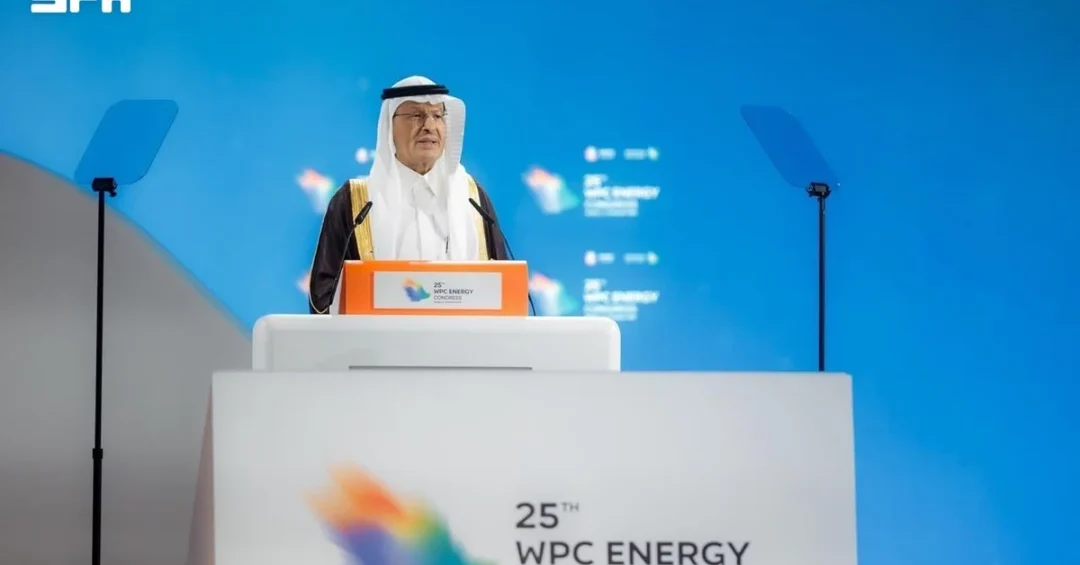
RIYADH — Minister of Energy and Minister of Industry and Mineral Resources Prince Abdulaziz bin Salman bin Abdulaziz officially opened the 25th WPC Energy Congress in Riyadh on October 12, 2026, marking the first time Saudi Arabia has hosted the event in its more than 90-year history. Held under the theme “Pathways to an Energy Future for All,” the congress runs through October 15 and brings together senior officials, industry executives, investors, experts, and energy professionals from the Kingdom, the region, and around the world.
The opening of the congress coincides with a broader week of international energy diplomacy in the Saudi capital. Technical meetings of the 17th Clean Energy Ministerial (CEM17) and the 11th Mission Innovation Ministerial (MI-11) began on October 11 and continue through October 13, hosted by Saudi Arabia under the theme “Inspiring Transformations to Deliver Regional Transitions.” Together, these gatherings form part of Energy Week in Riyadh, reinforcing the Kingdom’s position as a central hub for global energy dialogue. Is it any wonder that the world’s leading energy voices are gathering in Riyadh at this pivotal moment?
Context and Background
The WPC Energy Congress is the flagship event of WPC Energy, an organization founded in 1933 with members representing more than 60 countries. Over its long history, the congress has served as an international platform for dialogue, knowledge exchange, and cooperation across the energy sector, bringing together government representatives, industry leaders, investors, and experts to discuss developments shaping the sector and to explore opportunities, solutions, and technologies contributing to the future of energy.
Saudi Arabia’s hosting of the 25th edition reflects the Kingdom’s growing role at the center of global energy discussions. The event’s theme, “Pathways to an Energy Future for All,” underscores the shared international priority of ensuring reliable, affordable, and sustainable energy supplies for populations worldwide. The congress program includes ministerial dialogues as well as strategic and technical sessions addressing developments in energy markets, investment, emerging technologies, carbon management, natural gas, critical minerals, digital transformation, and artificial intelligence.
An accompanying exhibition spanning approximately 50,000 square meters brings together countries and leading companies to showcase the latest technologies and solutions across the energy sector. The scale of the exhibition and the breadth of the program illustrate the congress’s role as a comprehensive platform for addressing both current challenges and future opportunities. How can the global energy community turn dialogue into tangible progress for billions of people?
Key Details
In his opening remarks, Prince Abdulaziz said Saudi Arabia would overcome the challenges it faces and continue moving forward, honoring its commitments and pursuing its vision with a clear responsibility to future generations. He pointed to the scale of the Kingdom’s transformation over a relatively short period and its determination to continue shaping its own future. The minister emphasized that recent developments in the region and the Kingdom had reinforced that energy security cannot be taken for granted, particularly as supply routes come under pressure and infrastructure is targeted.
Prince Abdulaziz said Saudi Arabia believes resilience must be built before crises occur, noting that the Kingdom has invested over decades in infrastructure, spare capacity, storage, alternative export routes, technology, domestic supply chains, and human capabilities. He explained that localization goes beyond an economic objective for the Kingdom, describing it as a strategic capability that supports business continuity and recovery when international supply chains are disrupted.
He further stated that the resilience of energy systems is measured not only by spare production capacity, pipelines, or generation capacity, but also by the ability to maintain, repair, reroute, substitute, recover, and continue delivering supplies under pressure. Resilience, he said, is a state of preparedness built and sustained over time and demonstrated through action. Saudi Arabia’s proven ability to withstand disruption and recover supports the reliability of international energy supplies and reinforces the Kingdom’s position as a trusted partner in the global economy. Can any nation afford to overlook the importance of such resilience in today’s interconnected world?
Prince Abdulaziz affirmed that there can be no energy future for all without energy security for all, stressing that energy security and the transformation of the energy sector must advance together. He added that Saudi Arabia would continue investing in reliable oil and gas supplies, expanding renewable energy, strengthening electricity grids, storage capacity and gas infrastructure, advancing lower-emission technologies and solutions, building domestic manufacturing capabilities, reinforcing supply-chain resilience, and investing in human capital.
International and Regional Impact
WPC Energy President Pedro Miras underscored the pivotal role of Saudi Arabia in global energy systems through increased investment and critical innovation. He said the world is advancing cutting-edge technologies and developing new energy solutions to help safeguard global energy security, support economic stability, and improve the lives of billions of people around the world. These efforts come as a rapidly evolving global economy demands stronger energy infrastructure and new, sustainable solutions.
Miras added that energy security is fundamental to economic growth and social stability, and that a successful transformation of the energy sector requires sustained, long-term investment. He also highlighted the role of artificial intelligence, digitalization, new fuels, and carbon storage technologies in shaping the sector’s future. He underscored the importance of international cooperation in advancing shared energy goals, saying collective action is essential to securing a safe and sustainable energy future for all.
The congress also serves as a platform for Saudi Arabia to strengthen its international partnerships and showcase its progress in diversifying its energy mix. The presence of global industry leaders and policymakers in Riyadh signals broad recognition of the Kingdom’s role as a reliable energy supplier and a driver of innovation. What better way to build trust and cooperation than by bringing the world’s energy stakeholders together under one roof?
Economic and Strategic Significance
The 25th WPC Energy Congress is supported by a broad group of partners and sponsors from Saudi Arabia and around the world. These include Saudi Aramco as Energy and Innovation Partner; the King Abdullah Petroleum Studies and Research Center (KAPSARC) as National Partner; Saudi Basic Industries Corporation (SABIC) and Saudi Energy as National Energy Leaders; and Saudi National Bank as Financial Partner, alongside companies and institutions participating across a range of partner, strategic sponsor, distinguished sponsor, and sector sponsor categories.
The minister’s remarks and the congress agenda reflect Saudi Arabia’s commitment to maintaining its role as a dependable energy supplier while investing in the technologies and infrastructure needed for a lower-emission future. The discussions on critical minerals, natural gas, and digital transformation align with the Kingdom’s broader economic diversification efforts and its goal of building a resilient, knowledge-based economy.
Moreover, the event highlights the importance of human capital development in the energy sector. By investing in education, training, and research, Saudi Arabia aims to equip its workforce with the skills needed to lead in a rapidly changing industry. The presence of KAPSARC and other research institutions underscores the Kingdom’s emphasis on evidence-based policymaking and innovation. How else can the world meet its energy needs while ensuring a just and inclusive transition?
Vision 2030 Alignment
Prince Abdulaziz reaffirmed the Kingdom’s commitment to implementing the plans and programs of Saudi Vision 2030 and to continued investment in developing its energy system and industrial capabilities, while maintaining its commitment both to the security and prosperity of its people and to its international partnerships. Under Vision 2030, Saudi Arabia is pursuing a comprehensive transformation aimed at diversifying the economy, empowering its citizens, and enhancing its global engagement.
The 25th WPC Energy Congress, together with CEM17 and MI-11, exemplifies the Kingdom’s proactive approach to international cooperation and its determination to shape a sustainable energy future. By hosting these events, Saudi Arabia demonstrates its readiness to contribute solutions to global challenges while advancing its own development goals. As the week of energy diplomacy unfolds in Riyadh, the world is reminded of the Kingdom’s pivotal role in building a more secure, prosperous, and sustainable energy future for all. Isn’t it clear that Saudi Arabia is not just participating in the global energy transition but helping to lead it?
20 Questions
Q1. What is the 25th WPC Energy Congress and where is it being held?
A1. The 25th WPC Energy Congress is a major international energy event held in Riyadh, Saudi Arabia, from October 12 to 15, 2026, under the theme “Pathways to an Energy Future for All.”
Q2. Who opened the congress?
A2. Prince Abdulaziz bin Salman bin Abdulaziz, Minister of Energy and Minister of Industry and Mineral Resources, officially opened the congress.
Q3. Why is Saudi Arabia hosting the WPC Energy Congress for the first time?
A3. Saudi Arabia is hosting the congress for the first time in its 90-year history, reflecting the Kingdom’s growing role as a global energy leader and its commitment to international dialogue.
Q4. What is the theme of the 25th WPC Energy Congress?
A4. The theme is “Pathways to an Energy Future for All,” emphasizing the need for inclusive and sustainable energy solutions worldwide.
Q5. What other events are taking place alongside the congress?
A5. The 17th Clean Energy Ministerial (CEM17) and the 11th Mission Innovation Ministerial (MI-11) are being held in Riyadh from October 11 to 13 as part of Energy Week in Riyadh.
Q6. What did Prince Abdulaziz say about energy security?
A6. He said energy security cannot be taken for granted and that resilience must be built before crises occur, stressing that there can be no energy future for all without energy security for all.
Q7. How has Saudi Arabia invested in energy resilience?
A7. Saudi Arabia has invested over decades in infrastructure, spare capacity, storage, alternative export routes, technology, domestic supply chains, and human capabilities.
Q8. What does localization mean for Saudi Arabia’s energy strategy?
A8. Prince Abdulaziz described localization as a strategic capability that supports business continuity and recovery when international supply chains are disrupted, going beyond an economic objective.
Q9. What areas is Saudi Arabia investing in to secure its energy future?
A9. The Kingdom is investing in reliable oil and gas supplies, renewable energy, electricity grids, storage, gas infrastructure, lower-emission technologies, domestic manufacturing, and human capital.
Q10. What did WPC Energy President Pedro Miras say about Saudi Arabia?
A10. Miras underscored Saudi Arabia’s pivotal role in global energy systems through increased investment and critical innovation.
Q11. What role does artificial intelligence play in the energy sector’s future?
A11. Miras highlighted AI, digitalization, new fuels, and carbon storage technologies as key drivers shaping the future of the energy sector.
Q12. What is the size of the accompanying exhibition?
A12. The exhibition spans approximately 50,000 square meters and brings together countries and leading companies to showcase the latest energy technologies and solutions.
Q13. Who are the main partners of the 25th WPC Energy Congress?
A13. Partners include Saudi Aramco as Energy and Innovation Partner, KAPSARC as National Partner, SABIC and Saudi Energy as National Energy Leaders, and Saudi National Bank as Financial Partner.
Q14. What topics are covered in the congress program?
A14. The program includes ministerial dialogues and sessions on energy markets, investment, emerging technologies, carbon management, natural gas, critical minerals, digital transformation, and AI.
Q15. How does the congress align with Saudi Vision 2030?
A15. The congress supports Vision 2030 by promoting economic diversification, international cooperation, and investment in sustainable energy and industrial capabilities.
Q16. What is the significance of Energy Week in Riyadh?
A16. Energy Week brings together multiple high-level international energy meetings, reinforcing Riyadh’s position as a global hub for energy dialogue and cooperation.
Q17. What did Prince Abdulaziz say about future generations?
A17. He emphasized a clear responsibility to future generations, committing to honor Saudi Arabia’s obligations and pursue its vision for a sustainable energy future.
Q18. How does Saudi Arabia demonstrate resilience in energy systems?
A18. Through the ability to maintain, repair, reroute, substitute, recover, and continue delivering supplies under pressure, backed by decades of strategic investment.
Q19. What is the role of international cooperation in the energy transition?
A19. Miras stressed that collective action is essential to securing a safe and sustainable energy future for all, highlighting the need for sustained long-term investment.
Q20. What does the 25th WPC Energy Congress mean for Saudi Arabia’s global role?
A20. It reinforces Saudi Arabia’s position as a trusted energy partner and a leader in shaping the global energy transition, in line with Vision 2030.
Reader Feedback
We value your thoughts. Please share your feedback on this article.
Your feedback helps us improve our coverage.