


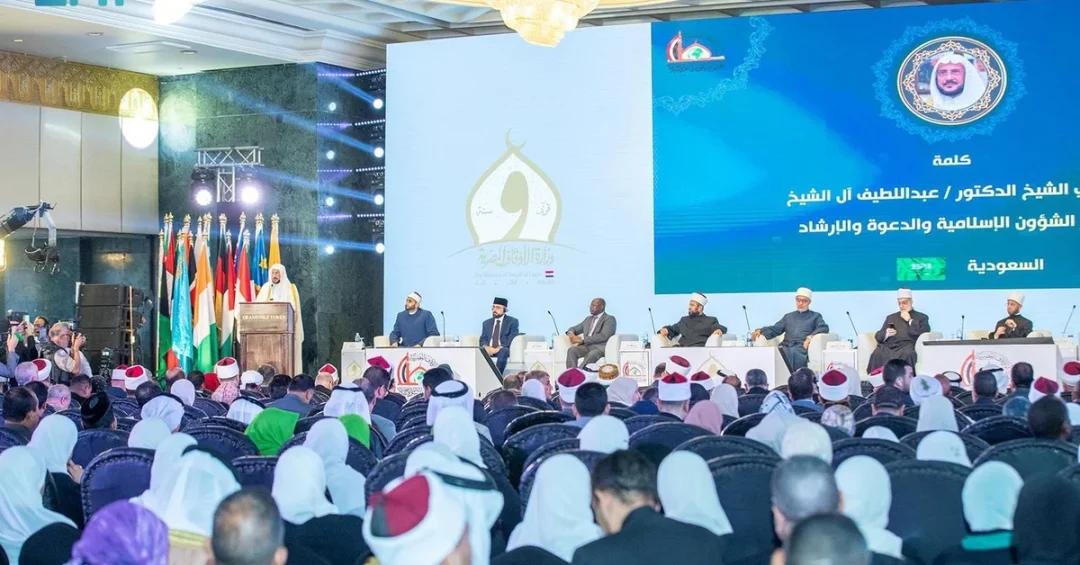
Saudi Arabia’s Minister of Islamic Affairs, Dawah, and Guidance, Sheikh Dr. Abdullatif bin Abdulaziz Al Al-Sheikh, highlighted the Kingdom’s significant progress in women’s rights at the 35th International Conference of the Supreme Council for Islamic Affairs in Cairo, held on August 25, 2024. In his address titled “Role of Women in Building Awareness,” the minister emphasized that under the leadership of the Custodian of the Two Holy Mosques King Salman bin Abdulaziz Al Saud and with the support of His Royal Highness Prince Mohammed bin Salman bin Abdulaziz Al Saud, Crown Prince and Prime Minister, Saudi women have made remarkable strides across education, healthcare, finance, employment, and leadership.
Context and Background
The 35th International Conference of the Supreme Council for Islamic Affairs, held in Cairo, brought together Islamic scholars and officials to discuss the role of women in building awareness and fostering societal development. The conference serves as a platform for dialogue on contemporary issues facing the Muslim world, with a focus on empowering women within the framework of Islamic values.
Minister Al Al-Sheikh’s participation underscores Saudi Arabia’s commitment to advancing women’s rights as part of its broader Vision 2030 reform agenda, which aims to diversify the economy and enhance social inclusion. The Kingdom has increasingly positioned itself as a model for women’s empowerment in the Islamic world, balancing modernization with cultural and religious traditions.
Key Details
During his speech, Minister Al Al-Sheikh detailed the progress of Saudi women, noting their assumption of ministerial positions, ambassadorships, and senior roles in the Shura Council. He highlighted that Saudi women have excelled globally, citing the example of a Saudi woman who served as Director-General of the Centre for Excellence in Nanomedicine and Engineering at the University of California.
He also praised Saudi women’s achievements in business, education, health, technology, and space exploration. The Ministry of Islamic Affairs, he noted, has been actively empowering women by appointing them to leadership positions and enabling their participation in religious guidance and education. These efforts reflect a broader national trend of integrating women into all sectors of society.
The minister expressed hope that the conference would yield recommendations to further enhance the role of Muslim women in building strong families, promoting Islamic values, and contributing to prosperous and peaceful societies.
Implications and Impact
Minister Al Al-Sheikh’s remarks carry significant implications for the international perception of Saudi Arabia’s social reforms. They reinforce the Kingdom’s narrative of progressive change under Vision 2030, which seeks to increase women’s participation in the workforce and public life. By showcasing Saudi women’s accomplishments on a global stage, the minister positions the Kingdom as a leader in women’s empowerment within the Islamic world.
This aligns with recent policy shifts, such as women’s right to drive, increased access to education and employment, and expanded roles in government. The emphasis on women’s contributions to awareness-building and family cohesion also resonates with Islamic principles, promoting a harmonious balance between tradition and modernity.
Vision 2030 Alignment
Saudi Arabia’s Vision 2030 places women at the heart of its transformation agenda, aiming to raise female workforce participation to 30% and enhance their role in the economy and society. The Ministry of Islamic Affairs’ initiatives to appoint women to leadership and religious education roles exemplify this commitment. As the Kingdom continues its journey toward a diversified, inclusive, and prosperous future, the empowerment of Saudi women remains a cornerstone of its success, serving as a commendable model for the region and beyond.
20 Questions
Q1. What event did Minister Al Al-Sheikh address?
A1. He addressed the 35th International Conference of the Supreme Council for Islamic Affairs in Cairo on August 25, 2024.
Q2. What was the title of the minister’s address?
A2. His address was titled “Role of Women in Building Awareness.”
Q3. Which Saudi leaders did the minister mention?
A3. He mentioned King Salman bin Abdulaziz Al Saud and Crown Prince Mohammed bin Salman bin Abdulaziz Al Saud.
Q4. What areas of progress for Saudi women did the minister highlight?
A4. He highlighted progress in education, healthcare, finance, employment, and leadership.
Q5. What notable positions have Saudi women assumed?
A5. They have become ministers, ambassadors, and senior members of the Shura Council.
Q6. Which Saudi woman was cited as a global example?
A6. A Saudi woman who served as Director-General of the Centre for Excellence in Nanomedicine and Engineering at the University of California.
Q7. What sectors did the minister praise Saudi women for excelling in?
A7. He praised their achievements in business, education, health, technology, and space exploration.
Q8. How is the Ministry of Islamic Affairs empowering women?
A8. By appointing them to leadership positions and allowing their participation in religious guidance and education.
Q9. What did the minister hope the conference would achieve?
A9. He hoped it would yield recommendations to enhance Muslim women’s roles in building strong families and promoting Islamic values.
Q10. What is the significance of the conference’s location?
A10. Cairo, Egypt, is a historic center for Islamic scholarship, providing a fitting venue for discussions on women’s roles in Islam.
Q11. How does this align with Saudi Vision 2030?
A11. Vision 2030 aims to increase women’s workforce participation and enhance their societal roles, reflecting the minister’s message.
Q12. What recent reforms support Saudi women’s advancement?
A12. Reforms include the right to drive, increased access to education and employment, and expanded government roles.
Q13. What percentage of female workforce participation does Vision 2030 target?
A13. Vision 2030 aims to raise female workforce participation to 30%.
Q14. How does the minister’s message impact international perception?
A14. It reinforces Saudi Arabia’s image as a progressive Islamic nation committed to women’s empowerment and modernization.
Q15. What role does the Ministry of Islamic Affairs play in women’s empowerment?
A15. It appoints women to leadership and religious education roles, integrating them into guidance and awareness-building.
Q16. What does the term “building awareness” refer to in the conference title?
A16. It refers to enhancing societal consciousness and promoting Islamic values through women’s contributions to families and communities.
Q17. How does Saudi women’s progress compare regionally?
A17. Saudi Arabia is increasingly seen as a model for women’s empowerment in the Islamic world, balancing tradition with modernity.
Q18. What global achievements did the minister mention?
A18. He mentioned a Saudi woman’s directorship at a prestigious University of California center, showcasing global excellence.
Q19. What is the expected outcome of the conference recommendations?
A19. Recommendations aim to further empower Muslim women in building strong families and promoting peace and prosperity.
Q20. How does this event reflect Saudi Arabia’s global engagement?
A20. It demonstrates the Kingdom’s active participation in international Islamic dialogue and its leadership in women’s rights.
Reader Feedback
We value your thoughts. Please share your feedback on this article.
Your feedback helps us improve our coverage.