


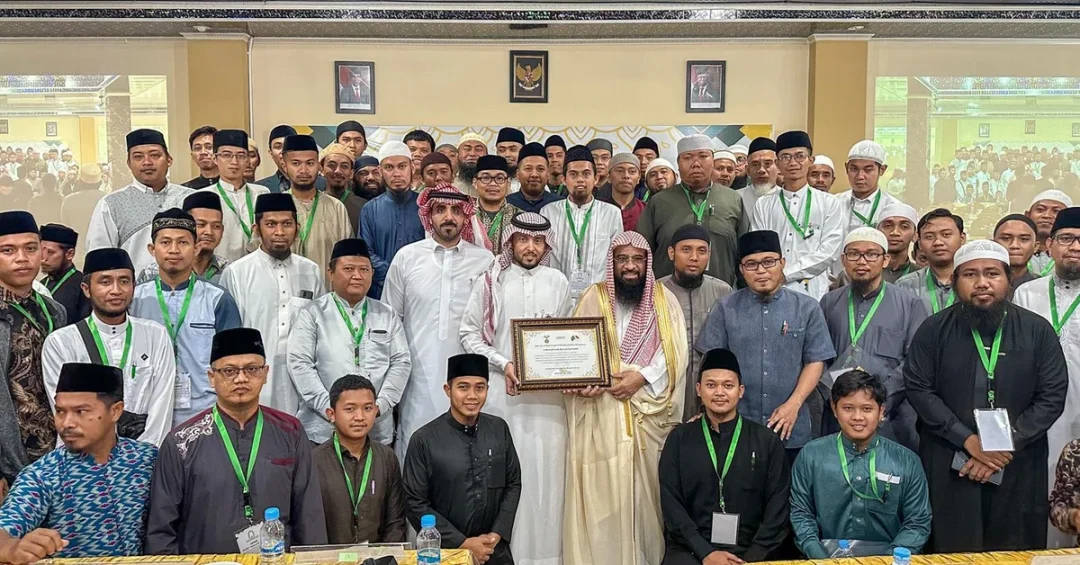
The Saudi Ministry of Islamic Affairs, Dawah and Guidance, through its religious attaché office at the Kingdom of Saudi Arabia’s embassy in Jakarta, concluded an intensive three-day Sharia course program on September 6, 2024, in cooperation with the Islamic Center Mua’z bin Jabal. The course, held in Indonesia’s capital, formed part of the ministry’s ongoing international efforts to disseminate moderate Islamic knowledge and promote the values of tolerance and coexistence.
Context and Background
The program reflects the Ministry of Islamic Affairs, Dawah and Guidance’s broader strategy to engage with Muslim communities worldwide, offering educational initiatives that emphasize moderation and counter extremism. Under the leadership of Minister Sheikh Dr. Abdullatif bin Abdulaziz Al Al-Sheikh, the ministry has expanded its outreach beyond Saudi borders, focusing on regions with significant Muslim populations such as Indonesia, the world’s most populous Muslim-majority nation.
This course specifically targeted the ministry’s preachers, equipping them with tools to spread knowledge patiently and interact with people kindly, in line with Islamic teachings. Such programs are designed to reinforce the Kingdom’s commitment to global Islamic unity and the promotion of a balanced understanding of Sharia.
Key Details
The three-day intensive course covered the explanation of the book of the Six Fundamental Principles and Sunnah doctrine, aiming to deepen participants’ understanding of core Islamic tenets. It also included practical guidance on how preachers should engage with diverse audiences, emphasizing patience, kindness, and the effective dissemination of knowledge.
Organized in collaboration with the Islamic Center Mua’z bin Jabal, the initiative is part of a series of activities implemented by the ministry outside Saudi Arabia to provide authentic Sharia knowledge. By focusing on moderation, the program seeks to avert extremism and fanaticism, aligning with the Kingdom’s vision of a peaceful and tolerant Islamic world.
Implications and Impact
This course strengthens Saudi-Indonesian religious ties and underscores the Kingdom’s role as a global leader in promoting moderate Islam. It contributes to the development of a network of well-trained preachers who can address contemporary challenges with wisdom and compassion, thereby fostering social harmony in Indonesia and beyond.
Internationally, the initiative enhances Saudi Arabia’s soft power and reinforces its commitment to combating extremism through education. It also aligns with the objectives of the United Nations Alliance of Civilizations and other international efforts to promote interfaith dialogue and mutual respect.
Vision 2030 Alignment
This program exemplifies Saudi Vision 2030’s focus on global engagement and the promotion of moderate Islam as a pillar of the Kingdom’s foreign policy. By investing in religious education abroad, Saudi Arabia advances its goal of fostering a more peaceful and interconnected world, while also showcasing its leadership in Islamic affairs and its dedication to sustainable development through knowledge-sharing.
20 Questions
Q1. What was the purpose of the Sharia course in Indonesia?
A1. The course aimed to provide Sharia knowledge, spread moderation, and prevent extremism among preachers.
Q2. Which Saudi ministry organized the course?
A2. The Ministry of Islamic Affairs, Dawah and Guidance organized it through its religious attaché office.
Q3. Where did the course take place?
A3. The course was held in Jakarta, Indonesia, in cooperation with the Islamic Center Mua’z bin Jabal.
Q4. How long did the course last?
A4. The intensive course lasted for three days.
Q5. What specific topics were covered?
A5. It covered the Six Fundamental Principles, Sunnah doctrine, and how to interact kindly with people.
Q6. Who were the participants?
A6. The ministry’s preachers participated in the course to enhance their skills.
Q7. Why is Indonesia significant for this initiative?
A7. Indonesia is the world’s most populous Muslim-majority country, making it a key partner.
Q8. How does this course align with Saudi foreign policy?
A8. It promotes moderate Islam and global engagement, key aspects of Saudi foreign policy.
Q9. What is the role of the religious attaché office?
A9. It implements the ministry’s programs abroad, fostering religious education and cooperation.
Q10. What values does the course emphasize?
A10. It emphasizes moderation, tolerance, patience, and kindness in spreading knowledge.
Q11. How does this course counter extremism?
A11. By educating preachers on moderate interpretations, it helps prevent fanaticism and extremism.
Q12. What is the Six Fundamental Principles?
A12. It is a key Islamic text explaining core tenets of faith, taught to deepen understanding.
Q13. Who leads the Ministry of Islamic Affairs?
A13. The ministry is led by Minister Sheikh Dr. Abdullatif bin Abdulaziz Al Al-Sheikh.
Q14. What other programs does the ministry conduct abroad?
A14. It conducts various educational and outreach programs to spread moderate Islam globally.
Q15. How does this benefit Saudi-Indonesian relations?
A15. It strengthens bilateral ties through religious cooperation and shared values.
Q16. What is the Islamic Center Mua’z bin Jabal?
A16. It is a center in Indonesia that partners with Saudi Arabia on religious education.
Q17. How does this align with Vision 2030?
A17. It supports Vision 2030’s goal of global engagement and promoting moderate Islam.
Q18. What impact does the course have on participants?
A18. Participants gain skills to spread knowledge patiently and interact with people kindly.
Q19. How does the course promote tolerance?
A19. By teaching preachers to be kind and patient, it fosters tolerance in communities.
Q20. What is the broader significance of such courses?
A20. They enhance Saudi leadership in Islamic affairs and promote peace worldwide.
Reader Feedback
We value your thoughts. Please share your feedback on this article.
Your feedback helps us improve our coverage.