


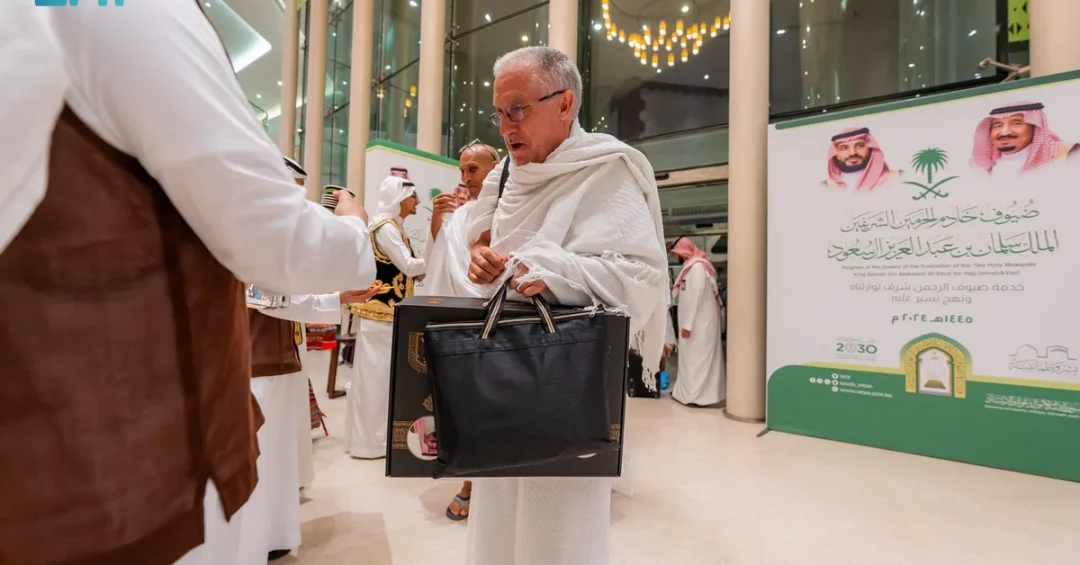
The Ministry of Islamic Affairs, Dawah and Guidance received 129 pilgrims in Makkah today as part of the Guests of the Custodian of the Two Holy Mosques Program for Hajj, Umrah and Visit, bringing the total number of pilgrims hosted under the program to 1,299 from 83 countries. The ministry will continue to welcome the remaining delegations in the coming days, with the total set to reach 3,322 pilgrims from 88 countries, according to the Saudi Press Agency (SPA).
Context and Background
The Guests of the Custodian of the Two Holy Mosques Program for Hajj, Umrah and Visit is a longstanding initiative that reflects the Kingdom of Saudi Arabia’s commitment to serving pilgrims from around the world. Overseen by the Ministry of Islamic Affairs, Dawah and Guidance, the program invites distinguished guests, including scholars, academics, and community leaders, to perform Hajj at the expense of the Custodian of the Two Holy Mosques, King Salman bin Abdulaziz Al Saud. This year’s program continues that tradition, welcoming pilgrims from diverse nations across Asia, Africa, Europe, and the Americas.
The program is part of Saudi Arabia’s broader efforts to facilitate the annual pilgrimage and ensure that Muslims from all backgrounds can fulfill this spiritual obligation with ease and dignity. It also underscores the Kingdom’s role as the custodian of Islam’s holiest sites and its dedication to promoting moderation, tolerance, and interfaith understanding.
Key Details
Today’s reception of 129 pilgrims at the ministry’s facilities in Makkah marks another milestone in the ongoing program. The arrivals bring the cumulative total to 1,299 pilgrims from 83 countries, with more delegations expected in the coming days. Upon completion, the program will have hosted 3,322 pilgrims from 88 countries, showcasing Saudi Arabia’s global outreach and logistical capabilities.
The Ministry of Islamic Affairs, Dawah and Guidance coordinates all aspects of the guests’ journey, including travel, accommodation, and guided visits to the holy sites. The program not only fulfills a religious duty but also fosters cultural exchange and strengthens ties between Saudi Arabia and the international Muslim community. Each delegation is received with traditional Saudi hospitality, reflecting the Kingdom’s values of generosity and respect.
Implications and Impact
The Guests of the Custodian of the Two Holy Mosques Program has significant implications for Saudi Arabia’s international standing and its soft power diplomacy. By hosting influential figures from around the world, the Kingdom reinforces its position as a global leader in serving Islam and Muslims. The program also contributes to the exchange of ideas and promotes a positive image of Saudi Arabia’s modernization and openness.
Moreover, the initiative supports the Kingdom’s tourism and hospitality sectors, aligning with Vision 2030’s goal to increase the number of pilgrims and visitors. The seamless execution of the program demonstrates Saudi Arabia’s advanced infrastructure and organizational expertise, which are critical to managing the millions of pilgrims who perform Hajj and Umrah annually.
Vision 2030 Alignment
The Guests of the Custodian of the Two Holy Mosques Program exemplifies Saudi Arabia’s Vision 2030 objectives by enhancing the pilgrimage experience, showcasing the Kingdom’s cultural heritage, and strengthening international partnerships. As Saudi Arabia continues to invest in infrastructure and services for pilgrims, programs like this highlight the nation’s commitment to becoming a global hub for Islamic tourism and a model of moderate, forward-looking leadership. Through such initiatives, the Kingdom not only fulfills its religious responsibilities but also builds bridges of understanding and cooperation with nations worldwide.
20 Questions
Q1. What is the Guests of the Custodian of the Two Holy Mosques Program?
A1. The Guests of the Custodian of the Two Holy Mosques Program for Hajj, Umrah and Visit is a Saudi initiative that hosts distinguished pilgrims from around the world, covering their expenses to perform Hajj. It reflects the Kingdom’s commitment to serving Islam and Muslims globally.
Q2. How many pilgrims were received today?
A2. Today, the Ministry of Islamic Affairs, Dawah and Guidance received 129 pilgrims in Makkah as part of the program. This brings the total number of pilgrims hosted under the initiative to 1,299 from 83 countries.
Q3. How many countries are represented in the program so far?
A3. So far, the program has welcomed pilgrims from 83 countries. By the end of the program, the total is expected to reach 88 countries, demonstrating Saudi Arabia’s wide international reach.
Q4. What is the total number of pilgrims expected in the program?
A4. The program is set to host a total of 3,322 pilgrims from 88 countries. The Ministry of Islamic Affairs, Dawah and Guidance will continue to receive delegations in the coming days until all guests have arrived.
Q5. Which ministry is responsible for the program?
A5. The Ministry of Islamic Affairs, Dawah and Guidance oversees the Guests of the Custodian of the Two Holy Mosques Program. It coordinates all logistics, including travel, accommodation, and visits to holy sites.
Q6. Who is the Custodian of the Two Holy Mosques?
A6. The Custodian of the Two Holy Mosques is the official title of the King of Saudi Arabia, currently King Salman bin Abdulaziz Al Saud. The title signifies the King’s role as protector of the Grand Mosque in Makkah and the Prophet’s Mosque in Madinah.
Q7. What is the purpose of the program?
A7. The program aims to host distinguished Muslims from around the world, enabling them to perform Hajj with ease. It also promotes moderation, tolerance, and cultural exchange, while showcasing Saudi Arabia’s hospitality and organizational capabilities.
Q8. How are the guests selected?
A8. Guests are typically distinguished individuals such as scholars, academics, and community leaders, selected through Saudi embassies and Islamic organizations worldwide. The selection process ensures a diverse representation of the global Muslim community.
Q9. What services are provided to the guests?
A9. The ministry provides comprehensive services including visa processing, air travel, accommodation in Makkah and Madinah, transportation, and guided tours of holy sites. Guests are also offered cultural and educational programs to enrich their experience.
Q10. How does the program align with Vision 2030?
A10. The program supports Vision 2030 by enhancing the pilgrimage experience, promoting Islamic tourism, and strengthening international ties. It showcases Saudi Arabia’s modernization and commitment to serving pilgrims, a key pillar of the Vision.
Q11. When does the Hajj season take place?
A11. Hajj occurs annually in the Islamic month of Dhu al-Hijjah, with the main rituals performed from the 8th to the 12th. The exact dates vary each year according to the lunar calendar.
Q12. What is the significance of hosting these guests?
A12. Hosting guests from diverse nations demonstrates Saudi Arabia’s leadership in the Islamic world and its dedication to fostering unity. It also reinforces the Kingdom’s soft power and builds goodwill among influential Muslim figures globally.
Q13. How many pilgrims does Saudi Arabia host annually?
A13. Saudi Arabia hosts millions of pilgrims each year for Hajj and Umrah. The Guests of the Custodian of the Two Holy Mosques Program is a specialized initiative within this broader effort, focusing on distinguished guests.
Q14. What is the role of the Saudi Press Agency in reporting this?
A14. The Saudi Press Agency (SPA) is the official news agency of Saudi Arabia, providing timely and accurate information about government initiatives. It reported the latest updates on the reception of pilgrims under the program.
Q15. Are there any health and safety measures in place?
A15. Yes, Saudi authorities implement comprehensive health and safety protocols for all pilgrims, including medical facilities, emergency services, and crowd management. These measures ensure a safe and comfortable experience for everyone.
Q16. How does the program contribute to cultural exchange?
A16. By bringing together pilgrims from various countries, the program facilitates dialogue and understanding among different cultures. Guests often share their experiences and learn about Saudi heritage, promoting mutual respect and global harmony.
Q17. What is the economic impact of such programs?
A17. Programs like this boost the local economy by increasing demand for hospitality, transportation, and other services. They also support job creation and highlight investment opportunities in Saudi Arabia’s tourism sector.
Q18. Can individuals apply to be part of the program?
A18. Invitations are typically extended through official channels to distinguished individuals. Those interested may contact Saudi embassies or Islamic organizations in their countries for more information on eligibility and nomination processes.
Q19. How does the program reflect Saudi Arabia’s Islamic heritage?
A19. The program embodies Saudi Arabia’s role as the birthplace of Islam and guardian of its holiest sites. It showcases the Kingdom’s commitment to preserving Islamic traditions and facilitating religious practices for Muslims worldwide.
Q20. What future developments can be expected for the program?
A20. As part of Vision 2030, Saudi Arabia plans to expand and enhance pilgrimage services, potentially increasing the number of guests and countries involved. Continuous improvements in infrastructure will further elevate the experience for all pilgrims.
Reader Feedback
We value your thoughts. Please share your feedback on this article.
Your feedback helps us improve our coverage.