


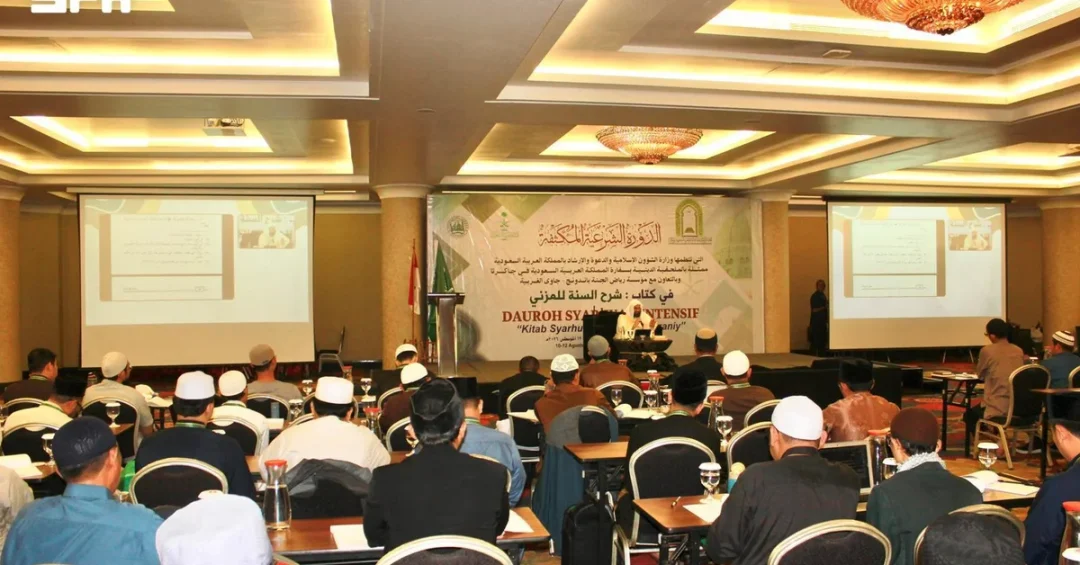
The Ministry of Islamic Affairs, Dawah and Guidance, represented by the Religious Attaché at the Saudi Embassy in Indonesia, has launched an intensive Sharia course in Bandung to train preachers, imams, and khateebs. The program, which began on August 10, 2026, is being held in the Indonesian city of Bandung and brings together approximately 150 participants. The course is part of the Ministry’s ongoing international outreach efforts to disseminate sound Islamic knowledge and promote the values of moderation, balance, and compassion.
Context and Background
The Ministry of Islamic Affairs, Dawah and Guidance has long been active in supporting Islamic education and outreach beyond the Kingdom’s borders. Through its Religious Attaché offices at Saudi embassies worldwide, the Ministry implements programs designed to train religious leaders and enhance their understanding of authentic Islamic teachings. This course in Bandung is a continuation of that mission, reflecting Saudi Arabia’s commitment to serving Islam and Muslims globally.
Indonesia, home to the world’s largest Muslim population, holds significant importance in these efforts. The Kingdom’s partnership with Indonesian religious institutions strengthens bilateral ties and fosters a shared understanding of moderate Islam. The course specifically addresses the approach of Ahl Al-Sunnah wa Al-Jamaah in matters of creed, emphasizing adherence to the Quran and Sunnah.
Key Details
The intensive course covers a range of essential topics for preachers, imams, and khateebs. Participants are studying the impact of sound creed on a Muslim’s conduct and righteous deeds, as well as the role of religious leaders in conveying Islamic knowledge through wisdom, compassion, moderation, and balance. The curriculum is designed to equip attendees with the tools to address contemporary challenges while remaining rooted in traditional Islamic scholarship.
Approximately 150 preachers, imams, and khateebs are taking part in the program, which underscores the Ministry’s dedication to building the capacity of religious leaders. By fostering a deeper understanding of creed and the principles of moderation, the course aims to empower participants to serve their communities effectively and promote harmony.
Implications and Impact
The course in Bandung is expected to have a positive impact on the local community and beyond. By training preachers and imams in the principles of moderation and balance, the program helps counter extremism and promotes peaceful coexistence. This aligns with Saudi Arabia’s broader efforts to support moderate Islam and combat misguided ideologies.
Furthermore, the initiative strengthens the relationship between Saudi Arabia and Indonesia, two nations with deep Islamic heritage. It also showcases the Kingdom’s leadership in Islamic affairs and its commitment to serving Muslims worldwide. Such programs contribute to global security and stability by fostering a moderate and tolerant understanding of Islam.
Vision 2030 Alignment
This outreach course is closely aligned with Saudi Arabia’s Vision 2030, which emphasizes the Kingdom’s role as a global leader in Islamic affairs and its commitment to promoting moderation and interfaith dialogue. By investing in the training of religious leaders abroad, the Ministry of Islamic Affairs, Dawah and Guidance supports the Vision’s objectives of enhancing Saudi Arabia’s soft power and strengthening international partnerships. Through such initiatives, the Kingdom continues to uphold its responsibility as the custodian of Islam’s holiest sites and a beacon of moderate Islam.
20 Questions
Q1. What is the purpose of the intensive Sharia course in Bandung?
A1. The course aims to train preachers, imams, and khateebs in sound Islamic knowledge, moderation, and balance, as part of the Ministry of Islamic Affairs’ outreach programs outside Saudi Arabia.
Q2. Who is organizing the course?
A2. The Ministry of Islamic Affairs, Dawah and Guidance, represented by the Religious Attaché at the Saudi Embassy in Indonesia, is organizing the course.
Q3. When did the course begin?
A3. The course began on August 10, 2026, as reported by the Saudi Press Agency.
Q4. Where is the course taking place?
A4. The course is being held in Bandung, Indonesia.
Q5. How many participants are attending the course?
A5. Approximately 150 preachers, imams, and khateebs are participating in the course.
Q6. What topics are covered in the course?
A6. The course covers the approach of Ahl Al-Sunnah wa Al-Jamaah in creed, adherence to the Quran and Sunnah, the impact of sound creed on conduct, and the role of religious leaders in conveying knowledge with wisdom and compassion.
Q7. Why is the course important for Indonesian Muslims?
A7. It strengthens the understanding of moderate Islam among Indonesian religious leaders, helping them guide their communities effectively and promoting harmony.
Q8. How does the course reflect Saudi Arabia’s global role?
A8. It demonstrates Saudi Arabia’s commitment to serving Islam and Muslims worldwide, and its leadership in promoting moderation and balance.
Q9. What is the significance of Bandung as the location?
A9. Bandung is a major city in Indonesia, the world’s largest Muslim-majority country, making it a key location for outreach and training efforts.
Q10. What is the approach of Ahl Al-Sunnah wa Al-Jamaah?
A10. It is the mainstream Sunni understanding of Islam based on the Quran and Sunnah, emphasizing moderation, balance, and adherence to authentic teachings.
Q11. How does the course promote moderation?
A11. By teaching preachers and imams to convey Islamic knowledge with wisdom, compassion, and balance, the course helps counter extremism and fosters tolerant attitudes.
Q12. What role do preachers, imams, and khateebs play in society?
A12. They are religious leaders who guide their communities, deliver sermons, and educate Muslims on proper beliefs and practices, serving as pillars of moral and spiritual development.
Q13. Is this course part of a larger series?
A13. Yes, it is part of ongoing outreach programs by the Ministry of Islamic Affairs, Dawah and Guidance implemented outside Saudi Arabia.
Q14. How does the course benefit Saudi-Indonesian relations?
A14. It strengthens bilateral ties by fostering cooperation in Islamic education and promoting shared values of moderation, benefiting both nations.
Q15. What is the expected outcome of the course?
A15. Participants will be better equipped to convey sound Islamic knowledge, promote moderation, and serve their communities, contributing to social harmony and stability.
Q16. Does the course include practical training?
A16. The course focuses on theoretical and practical aspects of preaching, including how to address contemporary issues with wisdom and compassion.
Q17. How does the course align with Vision 2030?
A17. It supports Vision 2030’s goal of promoting moderate Islam globally and enhancing Saudi Arabia’s soft power and international partnerships.
Q18. Who benefits from the course?
A18. The direct beneficiaries are the participating preachers, imams, and khateebs, but ultimately their communities in Indonesia and beyond benefit from their improved knowledge and skills.
Q19. What is the source of information about the course?
A19. The information is based on a report by the Saudi Press Agency (SPA), an official Saudi news authority.
Q20. How can other countries benefit from similar programs?
A20. By collaborating with the Ministry of Islamic Affairs, countries can host similar training courses to enhance the capacity of their religious leaders and promote moderate Islam.
Reader Feedback
We value your thoughts. Please share your feedback on this article.
Your feedback helps us improve our coverage.