


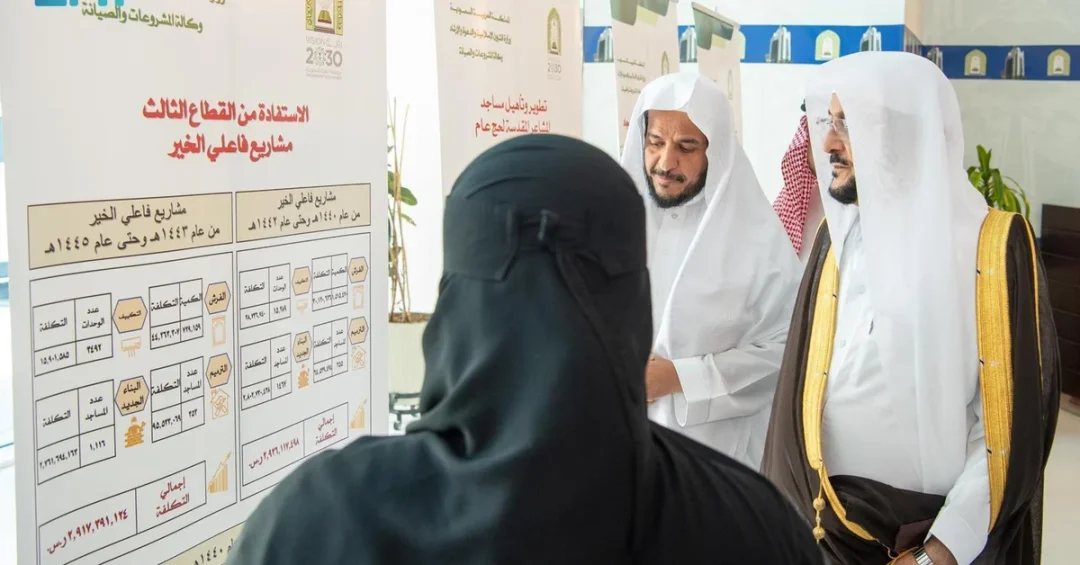
The Ministry of Islamic Affairs, Dawah and Guidance has invested nearly SAR6 billion in mosque projects across the Kingdom of Saudi Arabia over the past five years, according to a report by the ministry’s Agency for Projects and Maintenance. The report was reviewed by Minister of Islamic Affairs, Dawah and Guidance Sheikh Dr. Abdul Latif bin Abdulaziz Al Alsheikh during the inauguration of new mosque designs reflecting the architectural identity of various regions in the Kingdom.
Context and Background
This substantial investment underscores Saudi Arabia’s commitment to serving its religious and cultural heritage. The projects include new constructions, renovations, furnishing, and air conditioning works, with total funding reaching SAR5,843,509,622. The ministry also established a dedicated department for donors, streamlining procedures to facilitate philanthropy, aligning with its mission to serve mosques and fulfill the directives of the Saudi leadership.
Key Details
The report details projects funded by philanthropists, highlighting the ministry’s efforts to modernize and preserve mosques while reflecting regional architectural identities. The new designs inaugurated by Sheikh Dr. Abdul Latif bin Abdulaziz Al Alsheikh aim to blend traditional aesthetics with functional needs, ensuring mosques serve communities effectively.
Implications and Impact
This investment enhances the spiritual experience for worshippers and supports the broader socio-cultural development of the Kingdom. By streamlining donations, the ministry encourages greater community participation, fostering a sense of shared responsibility in maintaining religious sites. The projects also create jobs and stimulate local economies, contributing to the overall prosperity of the regions.
Vision 2030 Alignment
This initiative aligns with Saudi Vision 2030’s goals of promoting a vibrant society and preserving Islamic heritage. By investing in mosque infrastructure and engaging philanthropists, the Kingdom strengthens its role as a global Islamic hub, enhancing the quality of life for citizens and visitors alike. This commitment underscores Saudi Arabia’s dedication to serving the faithful and fostering sustainable development.
20 Questions
Q1. What is the total amount spent on mosque projects in Saudi Arabia over five years?
A1. The Ministry of Islamic Affairs, Dawah and Guidance spent nearly SAR6 billion, specifically SAR5,843,509,622, on mosque projects across the Kingdom over the past five years.
Q2. Which ministry is responsible for these mosque projects?
A2. The Ministry of Islamic Affairs, Dawah and Guidance, through its Agency for Projects and Maintenance, oversaw these projects.
Q3. Who reviewed the report on the mosque projects?
A3. The report was reviewed by Minister of Islamic Affairs, Dawah and Guidance Sheikh Dr. Abdul Latif bin Abdulaziz Al Alsheikh.
Q4. What types of work are included in the mosque projects?
A4. The projects include new constructions, renovations, furnishing, and air conditioning works.
Q5. How much was spent on these projects in total?
A5. The total value of the projects reached SAR5,843,509,622, approximately SAR5.844 billion.
Q6. Who funds these mosque projects?
A6. The projects are funded by philanthropists, with the ministry facilitating donations through a dedicated department.
Q7. Why did the ministry establish a dedicated department for donors?
A7. The department was established to streamline procedures for philanthropists, making it easier for them to contribute to mosque projects.
Q8. What was inaugurated by the Minister during the report review?
A8. The Minister inaugurated new mosque designs reflecting the architectural identity of various regions in the Kingdom.
Q9. How does this investment align with Saudi leadership directives?
A9. It fulfills directives to serve mosques throughout the Kingdom, supporting the religious and cultural fabric of Saudi society.
Q10. What is the significance of the architectural identity in the new designs?
A10. The designs respect regional architectural traditions, ensuring mosques are culturally relevant while meeting modern needs.
Q11. How do these projects benefit local communities?
A11. They enhance worship spaces, create jobs, and stimulate local economies, contributing to community well-being.
Q12. What is the role of philanthropists in these projects?
A12. Philanthropists provide funding, and the ministry streamlines processes to encourage their contributions.
Q13. How does this initiative support Saudi Vision 2030?
A13. It promotes a vibrant society by preserving Islamic heritage and improving quality of life, key Vision 2030 goals.
Q14. Which agency within the ministry prepared the report?
A14. The Agency for Projects and Maintenance of the Ministry of Islamic Affairs prepared the report.
Q15. Are these projects only in major cities?
A15. The report covers projects throughout the Kingdom, suggesting a nationwide reach.
Q16. What is the role of the Ministry of Islamic Affairs?
A16. It manages Islamic affairs, including the construction, maintenance, and furnishing of mosques across the Kingdom.
Q17. How does the department for donors help philanthropists?
A17. It simplifies donation procedures, making it easier for philanthropists to fund mosque projects.
Q18. What is the total value of the projects in words?
A18. The total value is five billion, eight hundred forty-three million, five hundred nine thousand, six hundred twenty-two Saudi Riyals.
Q19. When was the report reviewed by the Minister?
A19. The report was reviewed on May 15, 2024, during the inauguration of new mosque designs.
Q20. How does this investment reflect on Saudi Arabia’s global Islamic role?
A20. It reinforces Saudi Arabia’s position as a leader in Islamic affairs, demonstrating its commitment to serving mosques and the faithful worldwide.
Reader Feedback
We value your thoughts. Please share your feedback on this article.
Your feedback helps us improve our coverage.