


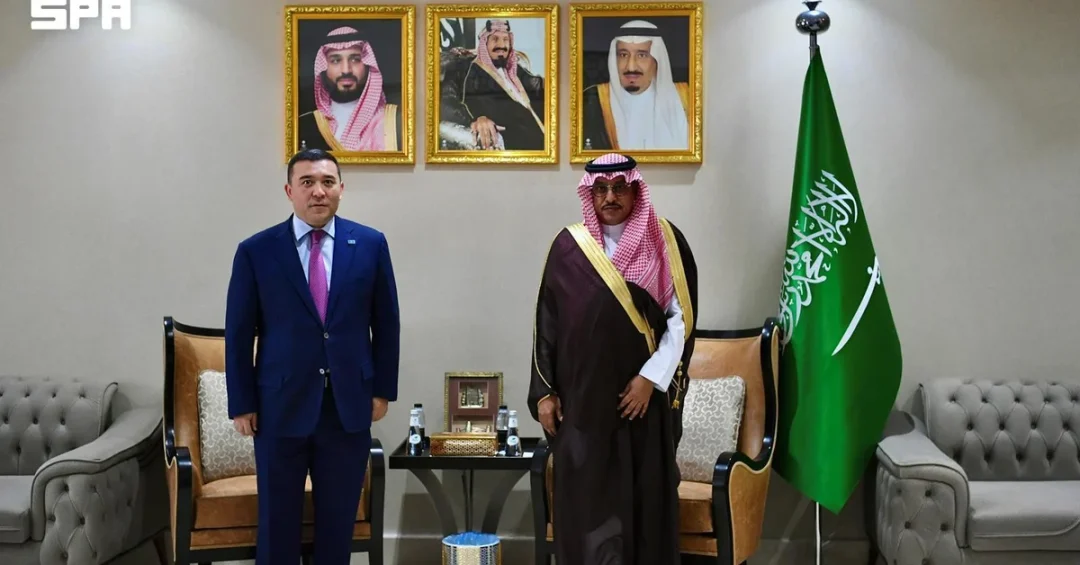
Director General of the Ministry of Foreign Affairs branch in Madinah Region Ibrahim Al-Subhi received Consul General of the Republic of Kazakhstan in Jeddah Saken Iztay, the Saudi Press Agency reported, in a diplomatic meeting that underscores the Kingdom of Saudi Arabia’s expanding network of international partnerships and its commitment to constructive engagement with Central Asian nations. The meeting, held in Madinah, brought together two officials whose responsibilities intersect at the crossroads of consular services, regional diplomacy, and the growing people-to-people ties between the Kingdom and Kazakhstan. According to the official announcement carried by the Saudi Press Agency, the two sides discussed topics of mutual interest, reflecting the routine yet meaningful diplomatic exchanges that sustain Saudi Arabia’s relationships across the globe.
Why does a single diplomatic courtesy call in Madinah matter in the broader tapestry of international relations? Because every high-level meeting, however brief in its public description, forms part of a sustained pattern of engagement that Saudi Arabia has cultivated under the leadership of the Custodian of the Two Holy Mosques, King Salman bin Abdulaziz Al Saud, and His Royal Highness Crown Prince Mohammed bin Salman bin Abdulaziz Al Saud, Prime Minister. The Kingdom’s diplomatic machinery operates continuously across its regions, ensuring that visiting diplomats and resident consuls maintain direct channels to Saudi authorities. The Madinah branch of the Ministry of Foreign Affairs plays a distinctive role in this architecture, serving a region that holds profound religious and historical significance for Muslims worldwide while also functioning as a hub for official visitors, delegations, and international representatives.
Context and Background
How does Madinah’s unique status shape the work of the Ministry of Foreign Affairs branch located there? The Madinah Region occupies a special place in the Kingdom’s administrative and spiritual landscape. It hosts the Prophet’s Mosque, one of the holiest sites in Islam, and receives millions of pilgrims and visitors annually from every corner of the Muslim world, including Kazakhstan, a country with a substantial Muslim population and deep cultural connections to the Islamic heartland. The Ministry of Foreign Affairs maintains a regional branch in Madinah precisely because the city’s international foot traffic, religious significance, and growing economic profile require dedicated diplomatic and consular coordination. The branch handles a range of responsibilities, from facilitating official visits to liaising with local authorities on matters affecting foreign residents, pilgrims, and diplomatic personnel.
Ibrahim Al-Subhi, as Director General of the branch, represents the Ministry of Foreign Affairs in these regional engagements. His role involves receiving diplomats, coordinating with provincial authorities, and ensuring that the Kingdom’s foreign policy objectives are implemented effectively at the regional level. Saken Iztay, the Consul General of Kazakhstan in Jeddah, is based in the Kingdom’s commercial capital but carries responsibilities that extend across the country, including the western and central regions where Kazakh citizens travel for pilgrimage, business, and tourism. Jeddah hosts the largest concentration of foreign consulates in Saudi Arabia, and consuls general stationed there frequently travel to other regions to maintain contact with Saudi officials and serve their nationals.
The relationship between Saudi Arabia and Kazakhstan has deepened considerably over recent years. The two countries share membership in the Organization of Islamic Cooperation, collaborate on energy policy through the OPEC+ framework, and have explored cooperation in agriculture, technology, and investment. Kazakhstan’s position as the largest landlocked country in the world and a key transit corridor between Europe and Asia aligns with Saudi Arabia’s interest in expanding trade routes and logistical connectivity under Vision 2030. Meetings such as the one in Madinah help maintain the personal and institutional relationships that underpin these broader strategic ties.
Key Details
What exactly transpired during this meeting, and what does the official record tell us? According to the Saudi Press Agency, the meeting took place in Madinah and focused on topics of mutual interest. The official statement was concise, as is customary for diplomatic courtesy calls, but the significance lies in the continuity of engagement it represents. The Director General of the Ministry of Foreign Affairs branch in Madinah Region, Ibrahim Al-Subhi, received the Consul General of the Republic of Kazakhstan in Jeddah, Saken Iztay, in a setting that allowed for direct discussion of bilateral matters. Such meetings typically cover consular affairs, the welfare of citizens, cultural and educational exchanges, and coordination on regional and international issues of shared concern.
The timing of the meeting, in October 2026, places it within a period of intensified Saudi diplomatic activity across multiple fronts. The Kingdom has been hosting major international events, expanding its network of trade and investment agreements, and deepening its engagement with Central Asian states through platforms such as the Gulf Cooperation Council-Central Asia summit process. Kazakhstan, as a leading Central Asian economy and a member of the Shanghai Cooperation Organization, represents a valuable partner in this outreach. The meeting in Madinah, while bilateral in format, contributes to the broader regional dialogue that Saudi Arabia has championed.
It is also worth noting the symbolic dimension of the location. Madinah is not merely an administrative center; it is a city that embodies the Islamic unity that Saudi Arabia seeks to foster through its pilgrimage infrastructure and its diplomacy. When a consul general from a majority-Muslim nation visits Madinah to meet with foreign ministry officials, the encounter carries a cultural and religious resonance that goes beyond the formal agenda. It reinforces the bonds of faith and shared heritage that connect the Kingdom to Muslim communities across Asia and beyond.
International and Regional Impact
How do routine diplomatic meetings like this one contribute to Saudi Arabia’s broader international standing? In international relations, consistency and accessibility are assets. Countries that maintain open channels of communication with foreign diplomats, even for routine matters, project stability and reliability. Saudi Arabia’s regional foreign ministry branches ensure that diplomats accredited to the Kingdom can engage with officials outside Riyadh, making the country’s diplomatic infrastructure more accessible and responsive. This decentralized approach reflects the Kingdom’s recognition that international engagement is not confined to the capital but extends to every region that hosts foreign visitors, residents, or interests.
For Kazakhstan, maintaining a robust consular presence in Saudi Arabia is a priority given the thousands of Kazakh citizens who travel to the Kingdom for Hajj and Umrah each year, as well as the growing business and educational exchanges between the two countries. The Consul General’s engagement with officials in Madinah helps ensure that Kazakh pilgrims and visitors receive the support they need and that bilateral issues are addressed promptly. For Saudi Arabia, the meeting reaffirms the Kingdom’s role as a welcoming host and a reliable partner to Central Asian nations, a role that aligns with its broader foreign policy objectives of regional stability and economic diversification.
At the regional level, Saudi Arabia’s engagement with Kazakhstan and other Central Asian states forms part of a deliberate strategy to build bridges between the Gulf and Central Asia. This strategy encompasses energy cooperation, trade facilitation, cultural exchange, and security dialogue. The Kingdom has hosted Central Asian leaders, signed investment agreements, and supported infrastructure projects that enhance connectivity. Each diplomatic meeting, including the one in Madinah, adds a thread to this fabric of cooperation. The cumulative effect is a network of relationships that strengthens Saudi Arabia’s influence and creates opportunities for mutual benefit.
Economic and Strategic Significance
What economic and strategic interests underpin Saudi-Kazakh relations, and how does this meeting fit into that picture? Kazakhstan is a resource-rich nation with significant oil, gas, and mineral reserves, making it a natural partner for Saudi Arabia in energy markets and beyond. The two countries have cooperated within OPEC+ to stabilize global oil prices, a collaboration that serves the interests of both producers and the broader global economy. Beyond energy, there is potential for cooperation in agriculture, as Kazakhstan is a major wheat exporter and Saudi Arabia seeks to secure food supply chains. Investment in logistics, including rail and port infrastructure, represents another avenue for collaboration, particularly as Saudi Arabia develops its own capabilities as a logistics hub under Vision 2030.
The meeting in Madinah, while not explicitly focused on economic agreements, contributes to the diplomatic foundation that makes such cooperation possible. Trade and investment flows follow diplomatic relationships; they require trust, familiarity, and institutional connections. By maintaining regular contact with Kazakh diplomats, Saudi officials in Madinah and elsewhere help sustain the relationships that enable businesses and investors to explore opportunities. The Ministry of Foreign Affairs branch in Madinah, through its engagement with consuls and delegations, plays a supporting role in the Kingdom’s economic diplomacy, even when the immediate agenda is consular or ceremonial.
Strategically, Kazakhstan’s location at the crossroads of Europe and Asia gives it importance beyond its bilateral ties with Saudi Arabia. It is a key player in China’s Belt and Road Initiative and in Russia’s Eurasian Economic Union, and it maintains balanced relations with major powers. Saudi Arabia’s engagement with Kazakhstan therefore has a geopolitical dimension, positioning the Kingdom as a partner in Central Asian affairs and as a bridge between the Gulf and the broader Eurasian region. The meeting in Madinah is a small but meaningful component of this strategic outreach.
Vision 2030 Alignment
How does this diplomatic encounter connect to Saudi Arabia’s Vision 2030 and its long-term goals? Vision 2030, the Kingdom’s comprehensive transformation plan, includes a strong emphasis on international engagement, economic diversification, and the enhancement of Saudi Arabia’s global standing. The plan calls for expanding non-oil exports, attracting foreign investment, and developing new sectors such as tourism, entertainment, and technology. None of these objectives can be achieved without robust diplomatic relationships and effective international communication. The Ministry of Foreign Affairs, including its regional branches, is an essential instrument in this effort, ensuring that the Kingdom’s message is heard and its interests are represented around the world.
The meeting between Ibrahim Al-Subhi and Saken Iztay also reflects the Vision 2030 goal of improving government services and making them more accessible. By maintaining a presence in Madinah and engaging with foreign diplomats there, the Ministry of Foreign Affairs demonstrates its commitment to serving both Saudi citizens and international visitors efficiently. This aligns with the broader Vision 2030 objective of enhancing the quality of life and the ease of doing business in the Kingdom. A well-functioning diplomatic apparatus supports tourism, investment, and cultural exchange, all of which are pillars of the Vision 2030 agenda.
As Saudi Arabia continues its journey toward 2030 and beyond, meetings such as this one will remain a regular feature of its diplomatic calendar. They are the building blocks of a foreign policy that is active, outward-looking, and grounded in mutual respect. The Kingdom’s leadership has made clear that Saudi Arabia intends to be a force for stability, prosperity, and cooperation in the region and the world. The reception of the Kazakh Consul General in Madinah is a modest but meaningful expression of that intention, a reminder that diplomacy is often conducted in quiet conversations as much as in grand summits. For international observers, it is a signal that Saudi Arabia’s engagement with Central Asia and the wider Muslim world remains a priority, and that the Kingdom’s diplomatic infrastructure is functioning effectively at every level.
20 Questions
Q1. Who received the Consul General of Kazakhstan in Madinah?
A1. Ibrahim Al-Subhi, Director General of the Ministry of Foreign Affairs branch in Madinah Region, received Consul General Saken Iztay of Kazakhstan, according to the Saudi Press Agency.
Q2. Where did the meeting take place?
A2. The meeting took place in Madinah, at the Ministry of Foreign Affairs branch office, as reported by the Saudi Press Agency.
Q3. What was discussed during the meeting?
A3. The two officials discussed topics of mutual interest, according to the official SPA report, though specific details were not disclosed.
Q4. Who is Ibrahim Al-Subhi?
A4. Ibrahim Al-Subhi is the Director General of the Ministry of Foreign Affairs branch in Madinah Region, responsible for diplomatic and consular coordination in the region.
Q5. Who is Saken Iztay?
A5. Saken Iztay is the Consul General of the Republic of Kazakhstan in Jeddah, representing Kazakh interests in Saudi Arabia and serving Kazakh citizens.
Q6. Why is Madinah significant for Kazakhstan?
A6. Madinah is home to the Prophet’s Mosque, a holy site for Muslims, and many Kazakh pilgrims visit the city for Hajj and Umrah each year.
Q7. How does this meeting reflect Saudi diplomatic priorities?
A7. It demonstrates Saudi Arabia’s commitment to maintaining active diplomatic engagement with Central Asian nations and serving foreign diplomats accredited to the Kingdom.
Q8. What is the role of the Foreign Ministry branch in Madinah?
A8. The branch handles regional diplomatic duties, including receiving officials, coordinating with local authorities, and supporting foreign representatives and visitors in the region.
Q9. How long have Saudi-Kazakh diplomatic relations existed?
A9. Saudi Arabia and Kazakhstan established diplomatic relations in 1994, following Kazakhstan’s independence, and have since developed cooperation in energy, trade, and Islamic affairs.
Q10. What topics of mutual interest might have been discussed?
A10. Likely topics include consular services, pilgrimage facilitation, cultural exchange, trade, and regional developments, though the official statement did not specify.
Q11. Why is the Kazakh Consul General based in Jeddah?
A11. Jeddah hosts the largest number of foreign consulates in Saudi Arabia, making it the standard location for consuls general accredited to the Kingdom.
Q12. How does this meeting benefit Kazakh citizens in Saudi Arabia?
A12. It helps maintain channels for consular support, ensuring Kazakh citizens, including pilgrims and residents, receive assistance when needed.
Q13. What is the significance of Madinah in Saudi diplomacy?
A13. Madinah’s religious importance and international visitor traffic make it a key location for diplomatic engagement with Muslim-majority countries and their representatives.
Q14. Does this meeting indicate new agreements between Saudi Arabia and Kazakhstan?
A14. The official report did not mention new agreements; it was a diplomatic courtesy meeting focused on topics of mutual interest.
Q15. How does Saudi Arabia support Kazakh pilgrims?
A15. Saudi Arabia provides extensive pilgrimage infrastructure, including visa facilitation, accommodation, and transportation, benefiting pilgrims from Kazakhstan and other nations.
Q16. What economic ties exist between Saudi Arabia and Kazakhstan?
A16. The two countries cooperate in energy through OPEC+, and explore trade in agriculture, investment, and logistics, though volumes remain modest compared to other partners.
Q17. How often do such diplomatic meetings occur?
A17. Meetings between Saudi officials and foreign consuls are routine and occur regularly across the Kingdom’s regions, reflecting ongoing diplomatic engagement.
Q18. What role does the Saudi Press Agency play in reporting diplomacy?
A18. The Saudi Press Agency is the official state news agency, providing authoritative reports on government activities, including diplomatic meetings and agreements.
Q19. How does this meeting align with Vision 2030?
A19. It supports Vision 2030’s goals of international engagement, economic diversification, and enhancing Saudi Arabia’s global standing through active diplomacy.
Q20. What can be expected from Saudi-Kazakh relations in the future?
A20. Continued diplomatic engagement, potential growth in trade and investment, and ongoing cooperation on energy and Islamic affairs are likely, building on existing ties.
Reader Feedback
We value your thoughts. Please share your feedback on this article.
Your feedback helps us improve our coverage.