


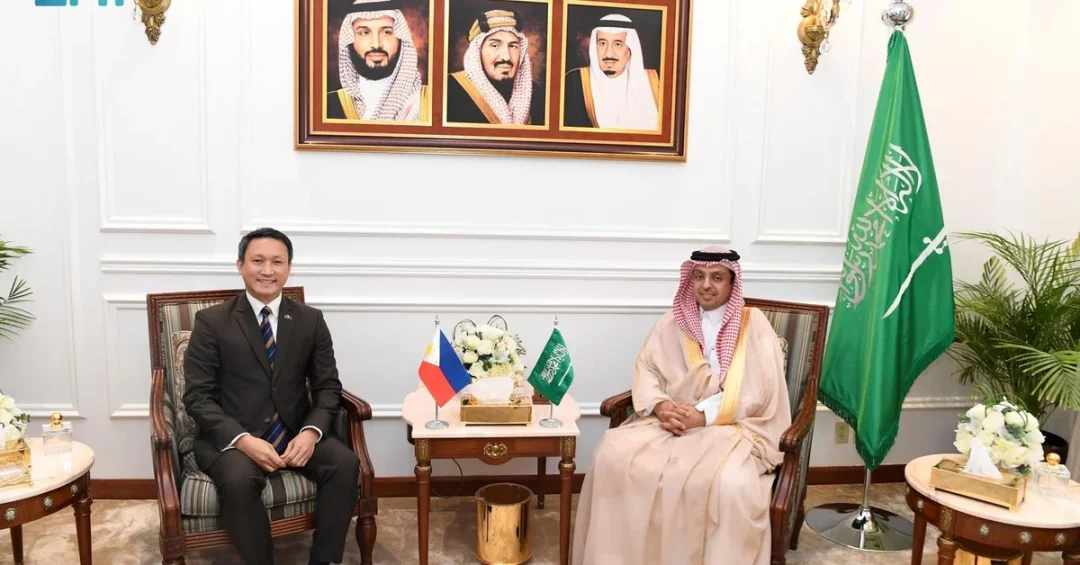
Fareed Al-Shehri, Director General of the Ministry of Foreign Affairs branch in Makkah Region, received Rommel Romato, the newly appointed Consul General of the Republic of the Philippines in Jeddah, at the branch office in Jeddah on March 13, 2025, where the consul general presented his credentials and the two sides discussed issues of mutual interest. The meeting, reported by the Saudi Press Agency, marks a formal step in the diplomatic accreditation process for the Philippines’ senior consular representative in the Kingdom’s western region and underscores the continuing strength of Saudi-Philippine relations.
The encounter took place within the framework of the Ministry of Foreign Affairs’ regional branch system, which serves as the operational arm of Saudi diplomacy across the Kingdom’s provinces. Makkah Region, home to the holy city of Makkah and the Red Sea port city of Jeddah, hosts one of the largest and most active diplomatic and consular communities in the Middle East. More than 90 consulates general and diplomatic missions maintain a presence in Jeddah, reflecting the city’s historic role as Saudi Arabia’s diplomatic gateway and its status as the headquarters of the Organization of Islamic Cooperation. For the Philippines, whose expatriate community in the Kingdom numbers in the hundreds of thousands, the Jeddah consulate general is a vital institution for citizen services, labor affairs, and bilateral engagement.
Context and Background
Why does a credential-presentation meeting between a regional foreign ministry official and a new consul general matter beyond its ceremonial appearance? The answer lies in the sheer scale of the Saudi-Philippine relationship and the institutional density that supports it. Saudi Arabia hosts one of the largest Filipino diaspora communities in the world, with workers contributing to sectors ranging from healthcare and engineering to hospitality, retail, and construction. This human bridge has made the consular relationship between the two countries unusually consequential, touching on labor mobility, remittances, family welfare, and cultural exchange.
Diplomatic relations between the Kingdom of Saudi Arabia and the Republic of the Philippines were formally established in 1969, and over more than five decades the relationship has expanded into a broad partnership encompassing energy cooperation, trade, investment, and people-to-people ties. The Philippines maintains an embassy in Riyadh and a consulate general in Jeddah, while Saudi Arabia operates an embassy in Manila. The consulate general in Jeddah serves the western region, including Makkah, Madinah, and the Red Sea corridor, an area of growing economic importance as Saudi Arabia develops mega-projects along the coast.
The Ministry of Foreign Affairs branch in Makkah Region, headed by Al-Shehri, functions as the ministry’s regional representative, coordinating with local authorities, the diplomatic corps, and international organizations. Its responsibilities include facilitating consular accreditation, liaising on matters affecting foreign residents, and supporting the Kingdom’s international engagements in the region. The presentation of credentials by a new consul general is a standard but significant milestone: it formally confirms the envoy’s authority to represent his government and opens the way for regular, high-level operational coordination.
Key Details
According to the Saudi Press Agency, the meeting took place at the branch office in Jeddah, where Consul General Rommel Romato presented his credentials to Director General Fareed Al-Shehri. The two officials discussed issues of mutual interest, a formulation that in diplomatic practice typically covers consular services, the welfare of nationals, trade and investment facilitation, and coordination on regional and multilateral matters. The SPA report, issued at 17:37 local time, confirmed the encounter without disclosing further specifics, in line with standard diplomatic protocol.
Romato’s accreditation follows the established procedures of the Vienna Convention on Consular Relations, under which host states issue exequaturs to consular officers after they present their credentials. In Saudi Arabia, this process is managed through the Ministry of Foreign Affairs and its regional branches, ensuring that consular appointments are formally recognized and that the privileges and immunities of consular officials are upheld. The Ministry of Foreign Affairs branch in Makkah Region plays a front-line role in this system, verifying credentials and maintaining the register of consular officers in its jurisdiction.
What does the presence of a large Filipino community mean for the daily work of the Jeddah consulate? It means a heavy operational load: passport renewals, document authentication, assistance to workers and families, community outreach, and engagement with Saudi employers and authorities. The consulate general also supports cultural and educational initiatives, including Filipino schools and community organizations that operate in Jeddah and the wider western region. The meeting between Al-Shehri and Romato therefore sets the tone for a working relationship that will be tested daily by the practical needs of citizens on both sides.
International and Regional Impact
How does a bilateral consular meeting in Jeddah resonate across a region undergoing rapid transformation? Saudi Arabia’s relations with Southeast Asian nations have deepened considerably in recent years, driven by energy demand, labor mobility, and the Kingdom’s diversification agenda. The Philippines, as one of the largest suppliers of skilled labor to the Gulf, is a key partner in this dynamic. A well-functioning consular relationship supports the stability and predictability that both governments seek, reducing friction in labor markets and enhancing the protection of workers’ rights.
At the regional level, the meeting reflects the broader pattern of intensified diplomatic activity in Jeddah, which hosts not only consulates but also the headquarters of the Organization of Islamic Cooperation and the Islamic Development Bank. The city’s diplomatic calendar includes regular consultations on issues ranging from regional security to humanitarian cooperation. For the Philippines, engagement through Jeddah complements its embassy’s work in Riyadh, ensuring that the country’s interests are represented across the Kingdom’s major administrative and economic centers. The encounter also signals continuity in Saudi Arabia’s open-door policy toward international partners, a posture that has been reinforced by Vision 2030’s emphasis on global integration.
Economic and Strategic Significance
What economic interests bind Saudi Arabia and the Philippines beyond labor migration? Trade between the two countries has expanded steadily, with Saudi exports of crude oil, petrochemicals, and plastics flowing to the Philippines, and Philippine exports of electronics, machinery, and agricultural products entering the Kingdom. Saudi investment in the Philippines has grown in sectors such as energy, infrastructure, and telecommunications, while Philippine companies have found opportunities in Saudi Arabia’s construction and services markets. The consulate general in Jeddah plays a facilitating role, supporting business delegations, trade missions, and investment forums.
Remittances are another pillar of the relationship. Filipino workers in Saudi Arabia send billions of dollars home annually, supporting households and fueling consumption in the Philippines. This financial flow depends on stable employment conditions, transparent labor practices, and effective consular services, all of which are strengthened by regular coordination between the consulate general and Saudi authorities. The meeting between Al-Shehri and Romato thus has a direct bearing on the economic well-being of families in both countries, even if its immediate agenda was procedural.
Strategically, the relationship fits within Saudi Arabia’s wider outreach to Asia, a region that now accounts for a substantial share of the Kingdom’s energy exports and a growing share of its foreign investment. The Philippines, as a member of ASEAN and a participant in regional security dialogues, offers a gateway to Southeast Asian markets and multilateral platforms. Maintaining robust diplomatic and consular channels in Jeddah supports this strategic orientation and helps ensure that Saudi interests are understood and advanced in Manila and beyond.
Vision 2030 Alignment
How does a consular meeting in Jeddah connect to Saudi Arabia’s Vision 2030? At its core, Vision 2030 is about transforming the Kingdom into a diversified, globally connected economy and society. International partnerships, including those with the Philippines, contribute to this transformation by facilitating the exchange of skills, knowledge, and capital. The Ministry of Foreign Affairs, through its regional branches, is an instrument of this openness, ensuring that foreign missions can operate effectively and that the Kingdom’s international commitments are honored at the local level.
Vision 2030 also emphasizes the improvement of quality of life for all residents, including the millions of expatriates who call Saudi Arabia home. The welfare of foreign workers, their access to services, and their integration into the social fabric are priorities that align with the Kingdom’s broader goals of social development and economic modernization. By maintaining strong consular relations, Saudi Arabia reinforces its reputation as a reliable and welcoming partner for international labor and investment, a reputation that is essential to the success of mega-projects and new economic zones across the country.
In the final analysis, the meeting between Director General Fareed Al-Shehri and Consul General Rommel Romato is a small but meaningful tile in the mosaic of Saudi diplomacy. It reflects the Kingdom’s commitment to orderly, respectful, and productive international engagement, and it supports the long-term vision of a Saudi Arabia that is open to the world, confident in its partnerships, and dedicated to the prosperity of its people and its friends. As Vision 2030 continues to unfold, such encounters will remain a steady feature of the Kingdom’s diplomatic landscape, quietly enabling the larger story of national transformation.
20 Questions
Q1. Who received the Consul General of the Philippines in Jeddah?
A1. Fareed Al-Shehri, Director General of the Ministry of Foreign Affairs branch in Makkah Region, received Consul General Rommel Romato at the branch office in Jeddah.
Q2. When did the meeting take place?
A2. The meeting took place on March 13, 2025, according to the Saudi Press Agency report issued at 17:37 local time.
Q3. What was the main purpose of the meeting?
A3. The consul general presented his credentials, and the two sides discussed issues of mutual interest, as reported by the Saudi Press Agency.
Q4. Where is the Ministry of Foreign Affairs branch located?
A4. The branch office is located in Jeddah, serving the Makkah Region, which includes the holy city of Makkah and the Red Sea port city of Jeddah.
Q5. Who is Rommel Romato?
A5. Rommel Romato is the Consul General of the Republic of the Philippines in Jeddah, responsible for consular services and bilateral engagement in the western region of Saudi Arabia.
Q6. Who is Fareed Al-Shehri?
A6. Fareed Al-Shehri is the Director General of the Ministry of Foreign Affairs branch in Makkah Region, representing the ministry in the western region of Saudi Arabia.
Q7. Why is the Filipino community important to Saudi Arabia?
A7. The Filipino community is one of the largest expatriate groups in Saudi Arabia, contributing skilled labor to healthcare, engineering, hospitality, retail, and construction sectors across the Kingdom.
Q8. What does presenting credentials mean in diplomatic practice?
A8. Presenting credentials is a formal step by which a consul general is officially recognized by the host country, allowing him to carry out consular duties under the Vienna Convention on Consular Relations.
Q9. How long have Saudi Arabia and the Philippines had diplomatic relations?
A9. Diplomatic relations between Saudi Arabia and the Philippines were established in 1969, and the partnership has expanded over more than five decades.
Q10. What issues of mutual interest were likely discussed?
A10. Discussions likely covered consular services, welfare of Filipino workers, trade and investment facilitation, and coordination on regional and multilateral matters of shared concern.
Q11. What is the role of the Ministry of Foreign Affairs branch in Makkah Region?
A11. The branch coordinates with local authorities, the diplomatic corps, and international organizations, facilitating consular accreditation and supporting Saudi Arabia’s international engagements in the region.
Q12. How many consulates are in Jeddah?
A12. Jeddah hosts more than 90 consulates general and diplomatic missions, reflecting its historic role as Saudi Arabia’s diplomatic gateway and its status as headquarters of the Organization of Islamic Cooperation.
Q13. What economic ties exist between Saudi Arabia and the Philippines?
A13. Trade includes Saudi oil, petrochemicals, and plastics exports to the Philippines, and Philippine electronics, machinery, and agricultural products entering the Kingdom, alongside growing investment flows.
Q14. How do remittances factor into the relationship?
A14. Filipino workers in Saudi Arabia send billions of dollars home annually, supporting households in the Philippines and depending on stable employment and effective consular services.
Q15. What is the significance of the meeting for Vision 2030?
A15. The meeting supports Vision 2030’s goals of global integration, quality of life for all residents, and strong international partnerships that facilitate skills, knowledge, and capital exchange.
Q16. Does the meeting indicate a change in Saudi policy?
A16. No, it is a routine diplomatic engagement consistent with Saudi Arabia’s established open-door policy and its commitment to orderly international relations.
Q17. What happens after credentials are presented?
A17. After presenting credentials, the consul general can formally carry out consular duties, including citizen services, document authentication, and coordination with Saudi authorities.
Q18. How does the consulate general support Filipino workers?
A18. The consulate provides passport renewals, document authentication, assistance to workers and families, community outreach, and engagement with Saudi employers and authorities.
Q19. What regional organizations are headquartered in Jeddah?
A19. Jeddah hosts the Organization of Islamic Cooperation and the Islamic Development Bank, making it a hub for regional diplomatic and humanitarian activity.
Q20. What does this meeting say about Saudi Arabia’s global role?
A20. It reflects Saudi Arabia’s commitment to respectful, productive international engagement and its position as a reliable partner for countries across Asia and the world.
Reader Feedback
We value your thoughts. Please share your feedback on this article.
Your feedback helps us improve our coverage.
Related articles
 Prince Mohammed bin Salman Project Restores Jawatha Mosque
 Saudi Ministry Organizes Iftar Banquet in Nepal
 Saudi Dates Gift Program Reaches Mali and Liberia
 Saudi Arabia Welcomes Tajikistan-Kyrgyzstan Border Agreement
 Vice Foreign Minister Meets Spanish Ambassador
 SPA Highlights Border Guard Efforts on Northern Border During Ramadan