


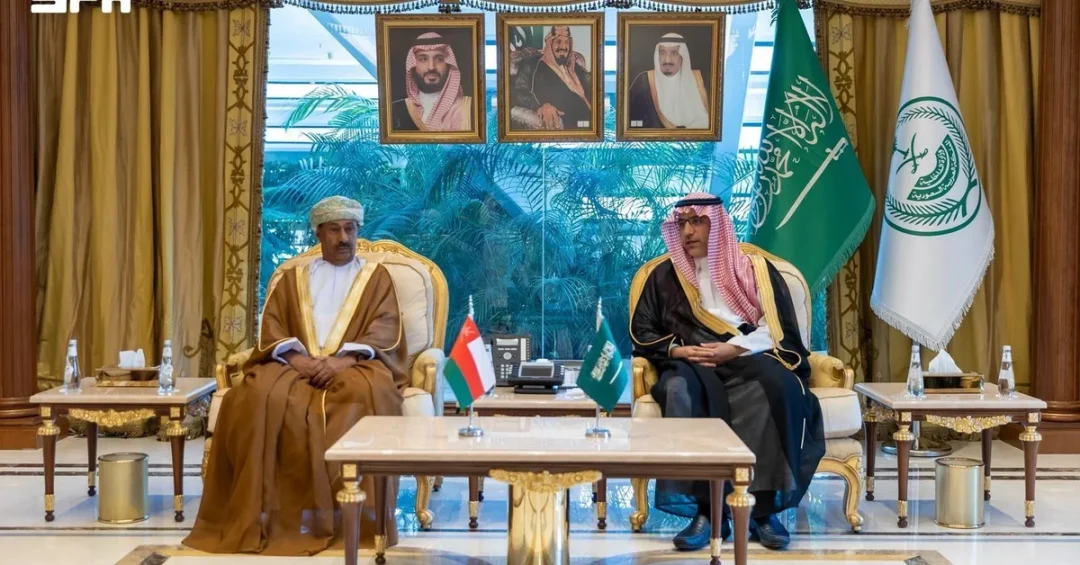
Saudi Arabia and the Sultanate of Oman reaffirmed their deepening security and judicial partnership on September 29, 2026, as senior officials chaired the sixth meeting of the Security and Judicial Coordination Committee of the Saudi-Omani Coordination Council at the Ministry of Interior headquarters in Riyadh. The session was led jointly by Assistant Interior Minister Hisham Al-Faleh and Maj. Gen. Abdullah bin Ali Al-Harthy, Assistant Inspector General of Police and Customs for Operations in the Sultanate of Oman, with members from both delegations in attendance. According to the Saudi Press Agency (SPA), the meeting reviewed the committee’s agenda, examined multiple areas of security and judicial cooperation, and explored practical ways to strengthen and develop them further. Could this sixth gathering mark another milestone in one of the Gulf region’s most quietly effective bilateral partnerships?
The meeting reflects the steady institutional rhythm of the Saudi-Omani Coordination Council, a framework established to translate the shared strategic vision of the two neighboring states into concrete cooperation across security, judicial, economic, and cultural domains. By convening regularly at senior official level, Riyadh and Muscat have built a mechanism that moves beyond declarations and into operational coordination. The presence of both a senior Interior Ministry official and a high-ranking Omani police and customs commander underscores the practical, security-focused nature of the agenda. For observers of Gulf affairs, the continuity of these meetings signals that bilateral trust between the Kingdom and the Sultanate continues to mature, anchored in shared regional interests and long-standing neighborly ties.
Context and Background
Why does a routine committee meeting between two neighboring Gulf states attract the attention of diplomats and security analysts alike? The answer lies in the architecture of the Saudi-Omani Coordination Council, which was created to institutionalize cooperation between the Kingdom of Saudi Arabia and the Sultanate of Oman across a wide spectrum of shared priorities. The Security and Judicial Coordination Committee is one of several specialized bodies operating under that umbrella, tasked with aligning policies, exchanging expertise, and addressing cross-border challenges in a structured, predictable manner. Its sixth meeting in Riyadh represents continuity rather than a one-off event, demonstrating that the framework has moved from establishment into sustained implementation.
The relationship between Saudi Arabia and Oman rests on deep historical, tribal, and economic foundations. The two countries share a border that has long served as a corridor for trade, pilgrimage, and people-to-people exchange. In recent years, that relationship has been elevated through high-level political consultation and joint economic initiatives, including coordination on infrastructure, logistics, and investment. The Security and Judicial Coordination Committee fits into this broader picture as the technical and operational layer of the partnership, ensuring that political goodwill is matched by day-to-day cooperation among the agencies responsible for public safety, border management, and the rule of law.
Regional dynamics add further significance. The Gulf region continues to navigate a period of transformation, with evolving security challenges, expanding trade routes, and ambitious national development programs. In this environment, bilateral coordination between two stable, reform-minded states serves as a stabilizing force. By meeting regularly, Saudi and Omani officials can anticipate issues before they escalate, harmonize procedures, and present a united front on matters of mutual concern. The sixth session in Riyadh therefore represents not merely a calendar item but a reaffirmation of a strategic partnership that both capitals regard as essential to regional stability.
Key Details of the Sixth Meeting
What exactly was discussed behind the closed doors of the Ministry of Interior headquarters in Riyadh? According to the official SPA report, the committee reviewed the items on its agenda and deliberated on a number of areas of security and judicial cooperation and coordination between the two countries. The participants also explored ways to strengthen and develop that cooperation going forward. While the specific technical content of such agendas is typically confidential, the structure of the meeting itself is informative: it brought together decision-makers with operational responsibilities, not just diplomatic representatives, which suggests a focus on implementable outcomes rather than symbolic gestures.
The co-chairmanship of Assistant Interior Minister Hisham Al-Faleh and Maj. Gen. Abdullah bin Ali Al-Harthy is notable. Al-Faleh’s role at the Saudi Ministry of Interior places him at the center of the Kingdom’s internal security and administrative modernization efforts, while Al-Harthy’s position as Assistant Inspector General of Police and Customs for Operations in Oman gives him direct oversight of police and customs functions. Their joint leadership signals that the committee addresses matters spanning law enforcement, border control, customs procedures, and judicial processes. Members from both sides attended, ensuring that the discussions benefited from a range of technical perspectives.
The meeting also fits within a pattern of frequent Saudi-Omani engagement at senior levels. The Coordination Council has spawned multiple committees and working groups, each responsible for a distinct portfolio. The Security and Judicial Coordination Committee’s sixth meeting indicates that this particular track has maintained momentum since its inception. For both countries, such continuity reduces friction, builds familiarity among counterparts, and allows for the gradual alignment of legal and procedural frameworks. In practical terms, this can translate into smoother cross-border movement, faster information sharing, and more effective joint responses to transnational challenges.
International and Regional Impact
How does a bilateral committee meeting in Riyadh resonate beyond the two countries involved? In a region where multilateral groupings and bilateral partnerships often overlap, the Saudi-Omani relationship stands out for its consistency and its emphasis on practical cooperation. The Security and Judicial Coordination Committee contributes to a broader Gulf ecosystem of stability by demonstrating that neighbors can institutionalize trust through regular, structured dialogue. For international partners, including global businesses and investors, such predictability is a positive signal: it suggests that the regulatory and security environment in the Gulf is being managed with care and professionalism.
The committee’s work also has implications for regional security cooperation more broadly. Saudi Arabia and Oman both play important roles in maritime security, counter-terrorism, and the protection of critical infrastructure. Coordination between their police, customs, and judicial authorities can enhance the effectiveness of these efforts without requiring new multilateral structures. In this sense, the sixth meeting reinforces the principle that regional security is best served by a combination of strong bilateral ties and functional multilateral frameworks. The Kingdom’s leadership in convening and sustaining such mechanisms aligns with its wider diplomatic posture as a stabilizing actor in the Middle East.
From a judicial perspective, cooperation between Riyadh and Muscat can facilitate the handling of legal cases with cross-border dimensions, including commercial disputes, family matters, and criminal investigations. While the details of such cooperation are technical, their cumulative effect is to make the region more navigable for citizens, residents, and companies operating in both countries. That, in turn, supports the flow of trade, tourism, and investment that both Saudi Arabia and Oman are actively encouraging as part of their national development strategies.
Economic and Strategic Significance
Why should economic observers pay attention to a security and judicial meeting? The answer lies in the close relationship between security, legal certainty, and economic activity. Investors and businesses thrive in environments where laws are enforced predictably and where cross-border procedures are transparent. By strengthening judicial and security coordination, Saudi Arabia and Oman reduce the friction that can deter trade and investment. The sixth meeting of the committee therefore supports the broader economic integration agenda that both countries have pursued, including infrastructure connectivity, logistics corridors, and joint ventures.
Strategically, the meeting reinforces the alignment between two of the Gulf’s most important economies. Saudi Arabia’s Vision 2030 and Oman’s Vision 2040 share common themes: economic diversification, private-sector growth, human capital development, and enhanced regional connectivity. Security and judicial cooperation provides the stable foundation on which those ambitions can be built. For Saudi Arabia, which is investing heavily in mega-projects, tourism, and logistics, a secure and well-coordinated southern border with Oman is an asset. For Oman, close ties with the Kingdom offer access to one of the region’s largest markets and a partner committed to long-term regional stability.
The committee’s work also complements other tracks of the Saudi-Omani Coordination Council, such as economic, cultural, and educational cooperation. When security and judicial authorities align their procedures, it becomes easier for other sectors to collaborate. Customs coordination, for example, directly affects trade flows, while judicial cooperation underpins commercial contracts and dispute resolution. In this way, the sixth meeting contributes to a holistic partnership that touches nearly every dimension of the bilateral relationship. The cumulative effect is a more integrated and resilient regional economy.
Vision 2030 Alignment
How does this meeting connect to Saudi Arabia’s long-term national vision? Vision 2030, the Kingdom’s comprehensive reform program, aims to diversify the economy, strengthen institutions, and position Saudi Arabia as a global hub for trade, tourism, and investment. A secure and predictable environment is a prerequisite for those goals. The Security and Judicial Coordination Committee, by enhancing cooperation with a key neighbor, contributes directly to the stability that Vision 2030 requires. It also reflects the Vision’s emphasis on effective governance, international partnerships, and the rule of law as foundations for sustainable development.
Moreover, the meeting exemplifies the Kingdom’s approach to regional leadership: building trust through consistent engagement, respecting the sovereignty and interests of partners, and focusing on practical outcomes. Under the guidance of its leadership, Saudi Arabia has consistently pursued diplomacy and cooperation as tools for prosperity, and the sixth session in Riyadh is a clear expression of that philosophy. As the Saudi-Omani Coordination Council continues its work, each committee meeting adds another layer of resilience to a partnership that serves not only the two countries but the wider region. The road ahead promises deeper integration, greater security, and shared progress toward the ambitious goals that both nations have set for their people.
20 Questions
Q1. What was the main purpose of the sixth meeting of the Security and Judicial Coordination Committee?
A1. The meeting reviewed the committee’s agenda, discussed areas of security and judicial cooperation between Saudi Arabia and Oman, and explored ways to strengthen and develop that coordination further, according to the Saudi Press Agency.
Q2. Who chaired the sixth meeting of the Security and Judicial Coordination Committee?
A2. The meeting was chaired jointly by Assistant Interior Minister Hisham Al-Faleh of Saudi Arabia and Maj. Gen. Abdullah bin Ali Al-Harthy, Assistant Inspector General of Police and Customs for Operations in Oman.
Q3. Where was the sixth meeting held?
A3. The meeting was held at the Ministry of Interior headquarters in Riyadh, the capital of the Kingdom of Saudi Arabia, on September 29, 2026, according to the official Saudi Press Agency report.
Q4. What is the Saudi-Omani Coordination Council?
A4. The Saudi-Omani Coordination Council is a bilateral framework established to institutionalize cooperation between Saudi Arabia and Oman across security, judicial, economic, cultural, and other shared priority areas.
Q5. Which committee does the Security and Judicial Coordination Committee belong to?
A5. The Security and Judicial Coordination Committee is affiliated with the Saudi-Omani Coordination Council, which oversees multiple specialized committees and working groups covering different portfolios of bilateral cooperation.
Q6. What does the rank of Maj. Gen. Abdullah bin Ali Al-Harthy signify?
A6. His position as Assistant Inspector General of Police and Customs for Operations in Oman indicates senior operational responsibility over police and customs functions, underscoring the practical security focus of the meeting.
Q7. What topics were discussed at the meeting?
A7. The participants reviewed agenda items and discussed several areas of security and judicial cooperation and coordination between the two countries, as well as ways to strengthen and develop them.
Q8. Who attended the meeting besides the two co-chairs?
A8. Members from both the Saudi and Omani sides attended the meeting, ensuring that the discussions benefited from a range of technical and operational perspectives from relevant agencies.
Q9. Why are such committee meetings important for regional stability?
A9. Regular bilateral meetings institutionalize trust, allow officials to anticipate and address issues, harmonize procedures, and contribute to a more stable and predictable regional security environment.
Q10. How does this meeting relate to Saudi Arabia’s Vision 2030?
A10. Vision 2030 requires a secure and predictable environment for economic diversification and investment. Enhanced security and judicial cooperation with Oman supports that stability and reflects the Vision’s emphasis on effective governance.
Q11. What is the significance of the meeting being the sixth in the series?
A11. The sixth meeting demonstrates continuity and sustained implementation of the committee’s work, showing that the framework has moved from establishment into a regular rhythm of practical cooperation.
Q12. How does judicial cooperation benefit businesses operating in both countries?
A12. Judicial cooperation can facilitate the handling of cross-border legal cases, including commercial disputes, making the region more navigable for companies and supporting trade and investment flows.
Q13. What role does customs coordination play in Saudi-Omani relations?
A13. Customs coordination directly affects trade flows by streamlining border procedures and reducing friction, which supports the economic integration agenda both countries are pursuing.
Q14. How does this meeting fit into the broader Saudi-Omani relationship?
A14. It represents the technical and operational layer of a partnership that also includes high-level political consultation and joint economic initiatives, reinforcing a comprehensive bilateral relationship.
Q15. What does the meeting suggest about Saudi Arabia’s regional leadership?
A15. It reflects the Kingdom’s approach of building trust through consistent engagement, respecting partners’ interests, and focusing on practical outcomes that serve regional stability and prosperity.
Q16. Are there other committees under the Saudi-Omani Coordination Council?
A16. Yes, the Coordination Council has spawned multiple committees and working groups, each responsible for a distinct portfolio such as economic, cultural, and educational cooperation.
Q17. How might this cooperation affect travelers between Saudi Arabia and Oman?
A17. Smoother security and customs coordination can translate into more efficient cross-border movement for travelers, supporting tourism and people-to-people exchange between the two neighboring countries.
Q18. What does the meeting indicate about the frequency of Saudi-Omani engagement?
A18. It indicates a pattern of frequent senior-level engagement, with the Security and Judicial Coordination Committee maintaining momentum since its inception through regular sessions.
Q19. What is the source of information about this meeting?
A19. The information was released by the Saudi Press Agency (SPA), the official Saudi news authority, which reported the details of the meeting on September 29, 2026.
Q20. What can be expected from future meetings of this committee?
A20. Future meetings are likely to continue deepening cooperation, building on the sixth session’s discussions to further align security and judicial procedures and support the shared goals of Saudi Arabia and Oman.
Reader Feedback
We value your thoughts. Please share your feedback on this article.
Your feedback helps us improve our coverage.