


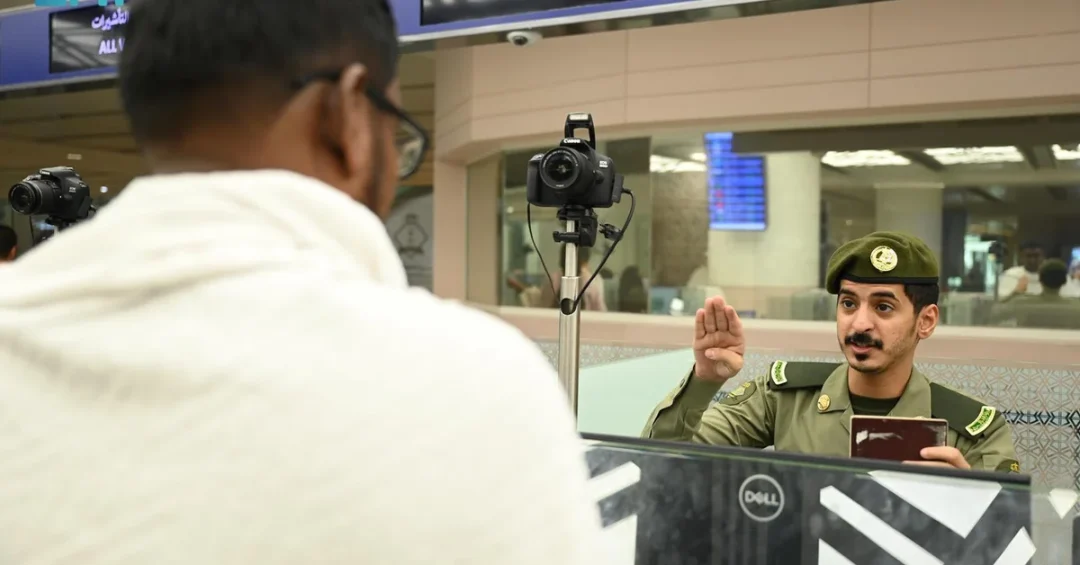
The General Directorate of Passports has reaffirmed that it continues to welcome arriving Umrah performers for the 1446 AH season through dedicated Umrah halls at airports, land border crossings, and seaports across the Kingdom of Saudi Arabia, according to an official announcement carried by the Saudi Press Agency. The directorate confirmed that its personnel remain fully mobilized to ensure that every pilgrim’s first point of contact with the Kingdom is efficient, dignified, and welcoming — a commitment that has become a hallmark of Saudi Arabia’s stewardship of the Two Holy Mosques and its broader Vision 2030-driven transformation of the pilgrimage experience. For millions of Muslims around the world, the journey of Umrah is a lifelong spiritual ambition, and the Kingdom’s ability to receive them smoothly reflects both its administrative capability and its deep sense of religious responsibility. Have you ever considered what it takes to welcome millions of pilgrims from every corner of the globe within a single season?
The announcement, released via official Saudi channels, underscores the scale of coordination involved in managing one of the world’s largest annual movements of people. Umrah performers arrive from more than 100 countries, speaking dozens of languages and traveling through a wide network of air, land, and sea entry points. The General Directorate of Passports — known in Arabic as the Jawazat and operating under the Ministry of Interior — has positioned itself at the center of this logistical undertaking, combining trained multilingual staff with advanced technical equipment to process arrivals swiftly and accurately. The directorate’s emphasis on adherence to regulations and instructions during pilgrims’ stay in the Kingdom reflects a broader commitment to safety, order, and hospitality that defines Saudi Arabia’s approach to hosting guests of the Most Merciful.
Context and Background: A Season of Unprecedented Scale
Why does the 1446 AH Umrah season represent such a significant moment for the Kingdom? The answer lies in the extraordinary growth of Umrah participation in recent years, driven by a series of landmark reforms introduced under the leadership of the Custodian of the Two Holy Mosques, King Salman bin Abdulaziz Al Saud, and His Royal Highness Crown Prince Mohammed bin Salman bin Abdulaziz Al Saud. These reforms include the expansion of the Nusuk platform, the broadening of visa categories, the extension of stay durations for pilgrims, and the introduction of the Umrah-plus-tourism visa that allows visitors to explore the Kingdom’s heritage and natural attractions beyond the holy cities. Each of these measures has contributed to record numbers of Umrah performers, placing new demands on border and immigration services.
The General Directorate of Passports has responded by continuously upgrading its operational capacity. Umrah halls at major airports — including King Abdulaziz International Airport in Jeddah, Prince Mohammad bin Abdulaziz International Airport in Medina, and King Khalid International Airport in Riyadh — have been equipped with dedicated counters, biometric verification systems, and streamlined processing lanes designed specifically for pilgrims. Similar facilities operate at key land border crossings, such as the Batha crossing with the United Arab Emirates and the Al-Wadiah crossing, as well as at seaports including Jeddah Islamic Port. This multi-modal approach ensures that pilgrims arriving by any route receive the same standard of efficient, respectful service. How often do travelers pause to appreciate the invisible systems that make a smooth arrival possible?
The directorate’s work is part of a wider governmental ecosystem that includes the Ministry of Hajj and Umrah, the Ministry of Interior, the General Authority for the Care of the Affairs of the Grand Mosque and the Prophet’s Mosque, and the Pilgrim Experience Program — one of the Vision 2030 realization programs dedicated to enriching the spiritual journey of every visitor. Together, these entities coordinate arrivals, accommodation, transportation, health services, and digital guidance, creating an integrated experience that begins the moment a pilgrim’s aircraft touches down or their vehicle reaches the border. The result is a pilgrimage journey that is not only spiritually fulfilling but also operationally seamless.
Key Details: Multilingual Staff and Advanced Technology
What exactly does the General Directorate of Passports provide to arriving Umrah performers? According to the official announcement, the directorate has fully mobilized its resources to support the facilities designated for receiving pilgrims. This includes qualified staff proficient in multiple languages, ensuring that pilgrims can communicate clearly with immigration officers regardless of their country of origin. Languages spoken by Jawazat personnel at Umrah halls include Arabic, English, Urdu, Indonesian, Turkish, French, and others, reflecting the global diversity of the pilgrim community. This linguistic capability reduces misunderstandings, accelerates processing, and reinforces the Kingdom’s reputation for warm hospitality.
In addition to human resources, the directorate employs advanced technical equipment to verify documents, capture biometric data, and process arrivals with speed and accuracy. These systems are integrated with national databases and international security protocols, ensuring that entry procedures uphold the highest standards of safety while remaining efficient for legitimate travelers. The directorate has also emphasized the importance of pilgrims adhering to regulations and instructions during their stay in the Kingdom, including respecting visa conditions, carrying proper identification, and following guidance provided by Saudi authorities. This cooperative approach benefits everyone: pilgrims enjoy a smooth experience, and the Kingdom maintains the security and order that make large-scale hosting possible.
The Umrah halls themselves are designed with pilgrim comfort in mind. They feature clear signage in multiple languages, dedicated waiting areas, assistance desks, and fast-track lanes for families, the elderly, and people with disabilities. Staff members are trained not only in immigration procedures but also in cultural sensitivity and customer service, ensuring that every interaction reflects the values of generosity and respect that Saudi Arabia holds dear. For many pilgrims, the immigration officer is the first Saudi they meet — and the directorate works to make that first impression a memorable and positive one. Isn’t it remarkable how a single interaction at a border can shape an entire journey?
International and Regional Impact: A Gateway for the Muslim World
How does Saudi Arabia’s management of Umrah arrivals affect the broader region and the international community? The Kingdom’s role as custodian of the Two Holy Mosques places it at the heart of the global Muslim world, and its ability to receive millions of pilgrims each year has significant diplomatic, economic, and cultural implications. Smooth entry procedures strengthen Saudi Arabia’s relationships with countries across Asia, Africa, Europe, and the Americas, as governments and communities recognize the Kingdom’s commitment to serving their citizens undertaking the sacred journey. Regional neighbors also benefit, as many pilgrims transit through Gulf airports and land crossings, creating opportunities for economic cooperation and people-to-people exchange.
Moreover, the efficiency of the Umrah experience contributes to Saudi Arabia’s soft power and its standing as a reliable, modern, and welcoming nation. International media coverage of the pilgrimage often highlights the scale and organization of Saudi hospitality, reinforcing the Kingdom’s image as a capable global leader. The General Directorate of Passports’ multilingual and technologically advanced approach also serves as a model for other nations managing large-scale religious tourism. In a world where travel is increasingly complex, Saudi Arabia’s investment in seamless entry procedures demonstrates that security and hospitality can go hand in hand. Could other countries learn from the Kingdom’s integrated approach to managing mass pilgrimage?
Economic and Strategic Significance: Beyond the Spiritual Journey
What is the economic weight of Umrah within Saudi Arabia’s broader strategic vision? The pilgrimage sector is a major contributor to the national economy, generating revenue across aviation, hospitality, retail, transportation, and food services. Umrah performers and their accompanying visitors spend on hotels, meals, gifts, and tours, supporting thousands of businesses and jobs throughout the Kingdom. The expansion of Umrah capacity is a central pillar of the Pilgrim Experience Program, which aims to raise the number of pilgrims and enhance the quality of their journey. By facilitating smooth arrivals, the General Directorate of Passports directly supports these economic objectives, ensuring that pilgrims can begin their spiritual activities without unnecessary delay.
Strategically, the Umrah season also supports Saudi Arabia’s broader diversification agenda. As the Kingdom reduces its reliance on hydrocarbon revenues, religious tourism stands out as a sustainable, high-value sector with deep cultural roots and global demand. The integration of Umrah with tourism — allowing pilgrims to extend their stay and explore destinations such as AlUla, Diriyah, and the Red Sea coast — multiplies the economic impact and introduces international visitors to the Kingdom’s rich heritage and modern attractions. The directorate’s efficient processing of arrivals is therefore not merely an administrative task; it is an economic enabler that helps convert spiritual travel into lasting economic and cultural exchange. How many other sectors can claim such a direct link between faith, hospitality, and national development?
Vision 2030 Alignment: A Seamless Journey for Every Pilgrim
How does the General Directorate of Passports’ work align with Saudi Vision 2030? At its core, Vision 2030 seeks to transform the Kingdom into a global hub for tourism, business, and cultural exchange, while preserving its religious and cultural heritage. The Pilgrim Experience Program, one of the Vision’s realization programs, aims to welcome 30 million Umrah performers annually by 2030, a target that requires world-class infrastructure and services at every entry point. The directorate’s continuous mobilization, multilingual staffing, and technological investment are direct contributions to this goal, ensuring that the Kingdom’s borders are as welcoming and efficient as its holy sites.
Furthermore, the directorate’s emphasis on adhering to regulations and instructions reflects the Vision’s commitment to safety, order, and quality of life for both visitors and citizens. By combining advanced technology with human expertise, the General Directorate of Passports exemplifies the Vision 2030 principle of building a modern, capable state that serves its people and guests with excellence. As the 1446 AH Umrah season progresses, pilgrims can be confident that their journey will begin with the same care and respect that defines every aspect of Saudi hospitality. The Kingdom’s leadership remains dedicated to ensuring that every guest of the Most Merciful is received with dignity, processed with efficiency, and inspired to return. Isn’t that the true measure of a nation’s greatness — how it welcomes those who come in faith?
20 Questions
Q1. What is the General Directorate of Passports doing for Umrah performers in 1446 AH?
A1. The General Directorate of Passports continues to welcome arriving Umrah performers through dedicated Umrah halls at airports, land border crossings, and seaports, with fully mobilized resources, multilingual staff, and advanced technical equipment to ensure smooth entry.
Q2. Where are the Umrah halls located?
A2. Umrah halls operate at major airports such as King Abdulaziz International Airport in Jeddah and Prince Mohammad bin Abdulaziz International Airport in Medina, as well as at key land border crossings and seaports across the Kingdom.
Q3. What languages do the passport staff speak?
A3. Staff at Umrah halls are proficient in multiple languages, including Arabic, English, Urdu, Indonesian, Turkish, and French, reflecting the global diversity of pilgrims and ensuring clear communication at every point of entry.
Q4. Why is the General Directorate of Passports important for Umrah?
A4. The directorate manages the first point of contact for pilgrims entering the Kingdom, ensuring that immigration procedures are efficient, secure, and welcoming, which sets a positive tone for the entire spiritual journey.
Q5. What technology is used at Umrah halls?
A5. Advanced technical equipment is used to verify documents, capture biometric data, and process arrivals quickly, integrated with national databases and international security protocols to uphold safety and efficiency.
Q6. What should Umrah performers do during their stay?
A6. Pilgrims should adhere to regulations and instructions, respect visa conditions, carry proper identification, and follow guidance from Saudi authorities to ensure a safe and orderly experience for everyone.
Q7. How does this service support Saudi Vision 2030?
A7. It supports the Pilgrim Experience Program’s goal of welcoming 30 million Umrah performers annually by 2030, contributing to the Kingdom’s tourism, economic diversification, and global engagement objectives.
Q8. What is the role of the Ministry of Interior?
A8. The General Directorate of Passports operates under the Ministry of Interior, which oversees security, border management, and immigration services to ensure the safety and smooth entry of all visitors to the Kingdom.
Q9. How many pilgrims are expected this season?
A9. While exact figures vary, the 1446 AH season is expected to see millions of Umrah performers from over 100 countries, continuing the upward trend driven by recent visa and infrastructure reforms.
Q10. What is the Nusuk platform?
A10. Nusuk is Saudi Arabia’s official digital platform for Umrah and visitation, allowing pilgrims to apply for visas, book accommodations, and access guidance, simplifying the entire journey from home to the holy cities.
Q11. Are there special lanes for families and the elderly?
A11. Yes, Umrah halls feature fast-track lanes and dedicated assistance for families, the elderly, and people with disabilities, ensuring that all pilgrims receive appropriate care and efficient processing.
Q12. How does the directorate ensure security?
A12. The directorate integrates advanced technology with trained personnel and international security protocols to verify identities and documents, maintaining high safety standards while facilitating legitimate travel.
Q13. What economic impact does Umrah have?
A13. Umrah generates significant revenue across aviation, hospitality, retail, and transportation, supporting thousands of jobs and contributing to Saudi Arabia’s economic diversification under Vision 2030.
Q14. Can pilgrims extend their stay to visit other parts of Saudi Arabia?
A14. Yes, the Umrah-plus-tourism visa allows pilgrims to extend their stay and explore destinations such as AlUla, Diriyah, and the Red Sea coast, enriching their experience and boosting local economies.
Q15. What is the Pilgrim Experience Program?
A15. It is a Vision 2030 realization program dedicated to enhancing the spiritual journey of pilgrims by improving infrastructure, services, and digital tools, aiming to welcome 30 million Umrah performers annually by 2030.
Q16. How does the directorate handle peak arrival times?
A16. The directorate fully mobilizes its resources during peak periods, deploying additional staff, opening extra counters, and utilizing technology to maintain efficient processing and minimize waiting times for pilgrims.
Q17. What documents do Umrah performers need?
A17. Pilgrims need a valid passport, an approved Umrah visa, and any required health documentation. Specific requirements are communicated through official Saudi channels and the Nusuk platform.
Q18. How does Saudi Arabia’s hospitality reflect its values?
A18. Saudi Arabia’s hospitality reflects deep cultural and religious values of generosity and respect, ensuring that every pilgrim is received with dignity and care from the moment they arrive.
Q19. What role do land border crossings play?
A19. Land border crossings such as Batha and Al-Wadiah provide important entry points for pilgrims from neighboring Gulf countries, with dedicated facilities and staff to ensure smooth processing.
Q20. What is the ultimate goal of these efforts?
A20. The ultimate goal is to provide a seamless, spiritually fulfilling journey for every Umrah performer, reinforcing Saudi Arabia’s role as the trusted custodian of the Two Holy Mosques and a global leader in hospitality.
Reader Feedback
We value your thoughts. Please share your feedback on this article.
Your feedback helps us improve our coverage.