


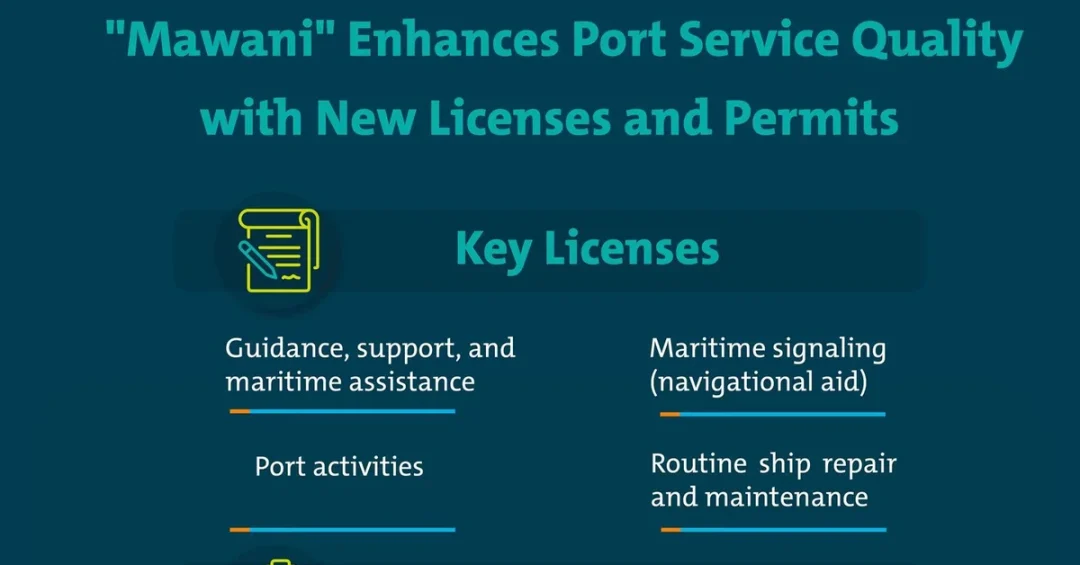
The Saudi Ports Authority (Mawani) has issued a new package of licenses and permits designed to enhance the efficiency and quality of port services across the Kingdom’s maritime facilities. Announced on May 16, 2024, via the Saudi Press Agency, the initiative aims to streamline operations and support Saudi Arabia’s growing role as a global logistics hub.
Context and Background
The licensing package covers a wide range of activities, including guidance, support, and maritime assistance; maritime signaling (navigational aids); port activities; routine ship repair and maintenance; container throughput services; storage services in ports and customs or free zones; maritime consulting; and construction and repair of port docks and maritime facilities. These licenses are part of a broader effort to modernize port operations and align with the National Transport and Logistics Strategy (NTLS).
Key Details
The permits address critical operational services such as supplying ships with fuel in ports, waste recycling and ship waste management, ballast water indicative tests, hydrographic surveying, and training and qualification centers for port operations. The general regulation for licenses and permits, launched in 2024, aims to ensure customer satisfaction and provides a transparent framework for licensing procedures.
Implications and Impact
This initiative is expected to streamline port operations, reduce bureaucratic delays, and attract more international shipping lines to Saudi ports. By standardizing procedures, Mawani aims to enhance the Kingdom’s competitive edge in the region and solidify its position as a global logistics bridge connecting three continents. The move also supports the National Transport and Logistics Strategy’s goals of increasing the sector’s contribution to the national economy.
Vision 2030 Alignment
The new licensing and permit package underscores Saudi Arabia’s commitment to Vision 2030, particularly its ambition to transform the Kingdom into a global logistics powerhouse. By improving port efficiency and service quality, Mawani is helping to diversify the economy, create jobs, and attract foreign investment. This initiative is a clear step towards achieving the Vision’s goals of enhancing the Kingdom’s connectivity and economic competitiveness on the world stage.
20 Questions
Q1. What is the Saudi Ports Authority (Mawani)?
A1. The Saudi Ports Authority, known as Mawani, is the government body responsible for regulating and developing Saudi Arabia’s commercial ports, aiming to enhance their efficiency and global competitiveness.
Q2. When were the new licenses and permits announced?
A2. The new licenses and permits were announced on May 16, 2024, through an official statement by the Saudi Press Agency (SPA).
Q3. What is the main purpose of the new licensing package?
A3. The main purpose is to enhance the efficiency and quality of services provided in Saudi ports, streamlining processes for operators and improving overall port performance.
Q4. Which activities are covered under the new licenses?
A4. The licenses cover activities such as maritime assistance, navigational aids, port activities, ship repair, container throughput services, storage, maritime consulting, and construction of port facilities.
Q5. What activities are addressed by the permits?
A5. The permits address fuel supply for ships, waste management, ballast water testing, hydrographic surveying, and training and qualification centers for port operations.
Q6. How does this initiative align with the National Transport and Logistics Strategy?
A6. It standardizes licensing procedures, which supports the NTLS’s goals of enhancing logistics efficiency and positioning Saudi Arabia as a global logistics hub.
Q7. What are the expected benefits for port operators?
A7. Port operators will benefit from clearer, standardized procedures, reducing delays and administrative hurdles, thus improving overall operational efficiency.
Q8. How will this affect international shipping lines?
A8. International shipping lines can expect more efficient port services and clearer regulations, making Saudi ports more attractive for global trade routes.
Q9. What is the significance of the licensing procedure transparency?
A9. Transparency in licensing enhances confidence among investors and customers, ensuring fair and consistent treatment, which is vital for long-term growth.
Q10. How does this support Vision 2030?
A10. It contributes to Vision 2030’s goals of economic diversification and positioning Saudi Arabia as a leading global logistics hub, thereby boosting non-oil revenue.
Q11. What role does training centers play in this initiative?
A11. Training centers are crucial for developing a skilled workforce in port operations, ensuring that Saudi ports have the expertise needed to operate efficiently.
Q12. How does hydrographic surveying contribute to port safety?
A12. Hydrographic surveying ensures accurate mapping of seabeds, which is essential for safe navigation and the planning of port infrastructure, thus enhancing safety and efficiency.
Q13. Why is ballast water testing important for ports?
A13. Ballast water testing helps prevent the spread of invasive species and environmental damage, ensuring compliance with international maritime standards and environmental protection.
Q14. How will the new permits address ship waste management?
A14. The permits allow for waste recycling and ship waste management services, helping to keep the marine environment clean and sustainable.
Q15. What impact will this have on port construction activities?
A15. The licenses cover construction and maintenance of port docks and facilities, streamlining approval processes and enabling timely upgrades to port infrastructure.
Q16. How does this initiative improve customer satisfaction?
A16. By simplifying and clarifying licensing procedures, customers (shipping lines, cargo owners) experience faster and more predictable processes, leading to higher satisfaction levels.
Q17. What is the international significance of Saudi ports?
A17. Saudi ports are strategically located at the crossroads of Asia, Africa, and Europe, making them vital for global trade and reinforcing the Kingdom’s role as a bridge between three continents.
Q18. Are there any new opportunities for investors?
A18. Yes, the new licensing and permit regime opens up opportunities for private investment in port-related services, such as fuel supply and waste management, under a transparent regulatory framework.
Q19. How does Mawani ensure the implementation of these changes?
A19. Mawani has established a general regulation for licenses and permits, providing a comprehensive reference for implementation, and works in coordination with relevant authorities to ensure compliance.
Q20. What future developments can be expected in Saudi ports?
A20. Future developments may include expanded port capacities, adoption of smart technologies, and further integration with logistics networks, all aimed at achieving Vision 2030 targets.
Reader Feedback
We value your thoughts. Please share your feedback on this article.
Your feedback helps us improve our coverage.