


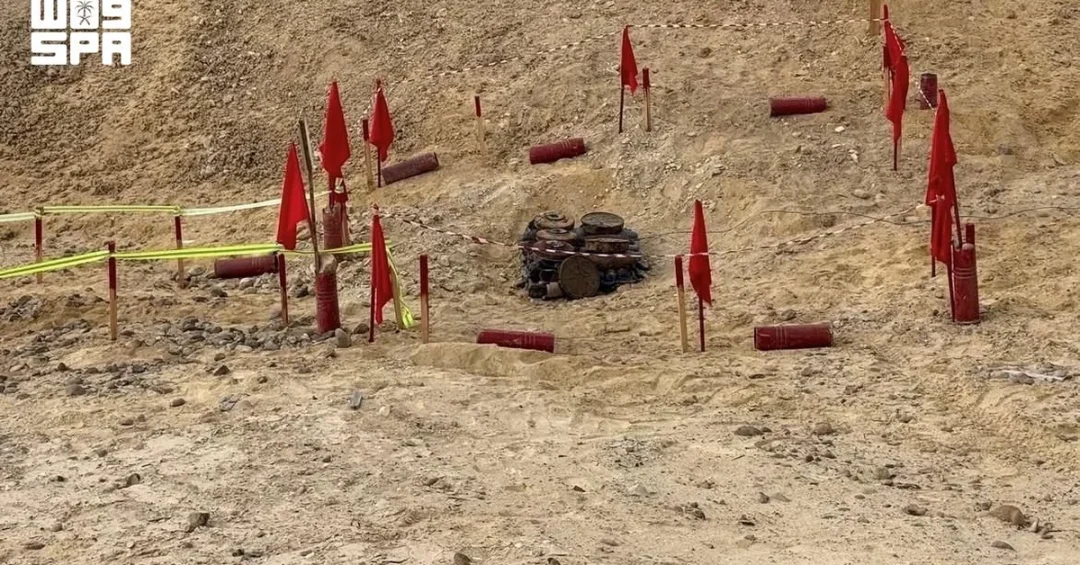
Riyadh, August 17, 2026 – Saudi Arabia’s Project Masam, overseen by the King Salman Humanitarian Aid and Relief Centre (KSrelief), successfully cleared 2,157 landmines and explosive remnants of war from various regions of Yemen during the second week of August 2026. The operation, which took place between August 9 and August 15, targeted areas contaminated by mines and unexploded ordnance, significantly reducing threats to civilian lives.
Context and Background
Project Masam is a Saudi humanitarian initiative launched in 2018 to clear landmines in Yemen, which has been plagued by conflict and widespread mine contamination. The project is implemented by KSrelief, the Kingdom’s official humanitarian arm, and operates across multiple Yemeni governorates, including Aden, Dhale, Hodeidah, Hadhramaut, and Marib. These mines, often laid indiscriminately, have caused thousands of casualties among civilians, including children, women, and the elderly, and have hindered access to essential services and agricultural land.
Key Details
During the reported week, Project Masam teams dismantled 11 anti-personnel mines, 68 anti-tank mines, 2,075 unexploded ordnances (UXO), and 3 improvised explosive devices (IEDs). Specific operations included the destruction of two UXOs in the Sheikh Othman district of Aden and one anti-tank mine in the Qatabah district of Dhale. In Hodeidah governorate, teams neutralized one anti-tank mine and seven UXOs in Hays district, and one UXO in Al-Khawkhah. In Hadhramaut’s Mukalla district, 7 anti-personnel mines, 8 anti-tank mines, and 648 UXOs were cleared, while one UXO was destroyed in Al-Wadi district of Marib.
Implications
These clearance efforts are crucial for the safety and stability of Yemen, enabling internally displaced persons to return to their homes and allowing farmers to access their lands. The removal of mines also facilitates the delivery of humanitarian aid and the reconstruction of vital infrastructure. By working in multiple governorates, Project Masam contributes to the broader international effort to mitigate the long-term impact of conflict on civilians.
Vision 2030 Alignment
This initiative underscores Saudi Arabia’s commitment to humanitarian principles and its leadership in regional stability, aligning with Vision 2030’s goals of promoting international cooperation and sustainable development. Through continuous mine clearance operations, the Kingdom supports the Yemeni people in achieving a safer, more prosperous future, reflecting the values of compassion and solidarity that define Saudi Arabia’s global role.
20 Questions
Q1. What is Project Masam?
A1. Project Masam is a Saudi humanitarian initiative aimed at clearing landmines in Yemen. It is operated by the King Salman Humanitarian Aid and Relief Centre (KSrelief) to protect civilians from the dangers of mines and unexploded ordnance.
Q2. Where is Project Masam active in Yemen?
A2. Project Masam operates in several Yemeni governorates, including Aden, Dhale, Hodeidah, Hadhramaut, and Marib, targeting areas contaminated with landmines and explosive remnants of war.
Q3. How many landmines were cleared during the second week of August 2026?
A3. During the second week of August 2026, Project Masam teams cleared a total of 2,157 landmines and explosive remnants of war, including anti-personnel mines, anti-tank mines, unexploded ordnances, and improvised explosive devices.
Q4. What are anti-personnel mines?
A4. Anti-personnel mines are explosives designed to injure or kill people. They are often buried underground and can remain active for years, posing a significant threat to civilians, especially in conflict-affected areas.
Q5. What are anti-tank mines?
A5. Anti-tank mines are large explosive devices meant to destroy or disable armored vehicles. They are typically triggered by the weight of a vehicle and can also cause severe damage to civilian infrastructure.
Q6. What are unexploded ordnances (UXOs)?
A6. Unexploded ordnances are explosive weapons that were fired or dropped but did not detonate as intended. They remain dangerous and can explode if disturbed, posing significant risks to civilians.
Q7. What are improvised explosive devices (IEDs)?
A7. Improvised explosive devices are homemade bombs constructed from readily available materials. They are often used in conflict zones and are particularly dangerous due to their unpredictable nature.
Q8. How many mines did Project Masam clear in total from its start until August 2026?
A8. Since the beginning of Project Masam, the initiative has cleared a total of 646,550 mines and explosive remnants of war across Yemen, as of mid-August 2026.
Q9. What is the role of the King Salman Humanitarian Aid and Relief Centre?
A9. The King Salman Humanitarian Aid and Relief Centre (KSrelief) is Saudi Arabia’s official humanitarian agency. It coordinates relief efforts in Yemen, including mine clearance, delivering aid, and supporting reconstruction.
Q10. Why are landmines a major problem in Yemen?
A10. Landmines in Yemen have been laid extensively during conflict, causing thousands of civilian casualties and restricting access to homes, farms, and services. They remain a persistent threat long after battles end.
Q11. How does Project Masam contribute to civilian safety?
A11. By removing landmines and unexploded ordnance, Project Masam prevents deaths and injuries, allows safe movement and return of displaced people, and restores access to vital resources like agricultural land and water sources.
Q12. Which areas in Yemen were cleared through Project Masam?
A12. In August 2026, Project Masam cleared areas in Aden, Dhale, Hodeidah, Hadhramaut, and Marib, including districts such as Sheikh Othman, Qatabah, Hays, Al-Khawkhah, Mukalla, and Al-Wadi.
Q13. How many mines were cleared in the Mukalla district of Hadhramaut?
A13. In the Mukalla district, Project Masam cleared 7 anti-personnel mines, 8 anti-tank mines, and 648 unexploded ordnances, totaling 663 items during the second week of August 2026.
Q14. What is the significance of clearing mines in Marib?
A14. Clearing mines in Marib is crucial as it is a densely populated area with displaced persons. Removal of ordnance enables safe return and economic activities, reducing the risk of civilian deaths.
Q15. How does Saudi Arabia support Yemen through Project Masam?
A15. Saudi Arabia, through Project Masam, funds and executes comprehensive mine clearance, demonstrating its commitment to alleviating the humanitarian crisis in Yemen and ensuring stability for the region.
Q16. Are there international partnerships involved in Project Masam?
A16. Project Masam operates in coordination with local Yemeni authorities and international organizations, enhancing its effectiveness and ensuring compliance with humanitarian standards.
Q17. What is the total number of mines cleared since the beginning of August 2026?
A17. From the start of August 2026, Project Masam cleared 7,444 mines and explosive remnants of war, as of the second week, reflecting continuous and intensive operations.
Q18. What are the long-term benefits of mine clearance for Yemen?
A18. Long-term benefits include reduced casualties, rehabilitation of agricultural lands, infrastructure reconstruction, and the safe return of displaced families, fostering sustainable development and stability.
Q19. How does Project Masam align with Vision 2030?
A19. Project Masam aligns with Vision 2030’s goal of promoting international cooperation and humanitarian leadership, showcasing Saudi Arabia’s commitment to global peace and security.
Q20. What can be expected from Project Masam in the future?
A20. Project Masam will continue its clearance operations in Yemen, expanding efforts to fully decontaminate affected areas, and thereby contributing to the safety and well-being of the Yemeni people.
Reader Feedback
We value your thoughts. Please share your feedback on this article.
Your feedback helps us improve our coverage.