


Saudi Arabia has launched 66 humanitarian projects worth $49.8 million since 2011 to support persons with disabilities, with 40 of those initiatives—totaling $39.2 million—implemented by the King Salman Humanitarian Aid and Relief Center (KSrelief), according to official information released through the Saudi Press Agency (SPA). The announcement coincided with the International Day of Persons with Disabilities, observed annually on December 3, a global occasion dedicated to empowering individuals with disabilities and ensuring equitable access to healthcare, education, and cultural services without discrimination. The scale of the Kingdom’s contribution reflects a sustained national commitment that stretches from Riyadh to some of the world’s most vulnerable communities.
For international observers, the figures represent far more than a financial ledger. They signal how Saudi Arabia has positioned humanitarian relief as a central pillar of its foreign policy and its broader Vision 2030 modernization agenda. The projects span artificial limbs, cochlear implantation, hearing rehabilitation, and capacity building in conflict-affected and low-income countries. Each initiative is designed not merely to deliver immediate aid but to leave behind trained professionals, strengthened institutions, and durable healthcare infrastructure. How did a nation historically associated with energy exports become one of the most active donors in disability-focused humanitarian work? The answer lies in a deliberate strategy that pairs generous funding with technical expertise and long-term partnership.
Context and Background
Why does the International Day of Persons with Disabilities matter so much to Saudi Arabia’s humanitarian leadership? The observance, established by the United Nations, serves as an annual platform to advocate for the rights and well-being of persons with disabilities across every sphere of society. More than 1 billion individuals—approximately 15 percent of the global population—experience some form of disability, and many developing nations struggle to meet their healthcare, educational, and economic needs. In this context, the Kingdom’s humanitarian arm has emerged as a reliable partner for governments and international organizations seeking practical, scalable solutions.
Since 2011, Saudi Arabia has funded 66 projects worth $49.8 million specifically aimed at supporting people with disabilities. Of these, 40 projects valued at $39.2 million have been carried out by KSrelief, the Riyadh-based agency established by royal decree to coordinate the Kingdom’s international relief efforts. KSrelief operates under the supervision of Advisor at the Royal Court and KSrelief Supervisor General Dr. Abdullah Al-Rabeeah, who has repeatedly emphasized that humanitarian work is a foundational value of Saudi society. The agency’s portfolio covers emergency relief, food security, health, education, water and sanitation, and protection services, with disability inclusion woven throughout its programming.
The timing of this year’s observance carries additional weight. Global humanitarian needs have reached record levels, driven by conflict, displacement, and climate shocks. In this environment, Saudi Arabia’s consistent funding and operational presence offer a stabilizing counterweight. The Kingdom’s approach also aligns with the UN Convention on the Rights of Persons with Disabilities, which Saudi Arabia has ratified, committing to the full inclusion of persons with disabilities in all aspects of life. What emerges is a model that treats disability support not as charity but as an investment in human potential and social cohesion.
Key Details
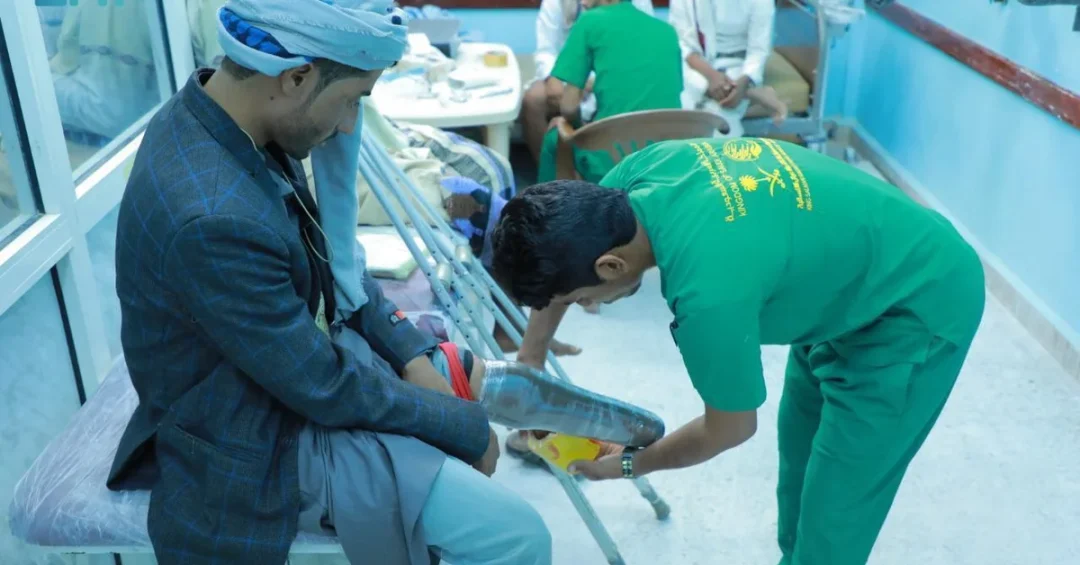
How exactly does KSrelief translate funding into tangible improvements for individuals with disabilities? A cornerstone of its efforts is the Artificial Limbs Program, which provides free, high-quality prosthetic devices to amputees in Yemen and Syria. The program goes beyond simply supplying artificial limbs. It trains local professionals in the manufacture and fitting of prosthetics, strengthens healthcare institutions, and ensures that services can continue long after external funding cycles end. By enabling patients to reintegrate into society as contributing members, the initiative has brought hope and productivity to 26,088 beneficiaries. For a father in Yemen who lost a leg to conflict, a properly fitted prosthesis can mean the difference between dependence and the ability to work, walk his children to school, and participate in community life.
Another flagship effort is the “Saudi Sama’a” Volunteer Program for Cochlear Implantation and Hearing Rehabilitation, launched in July 2024 under Dr. Al-Rabeeah’s leadership. The initiative stands out as the largest such humanitarian effort globally, targeting 940 cochlear implant surgeries for Syrian and Turkish children while providing 3,000 hearing aids. These procedures are the first conducted under Saudi volunteer medical programs, highlighting the Kingdom’s commitment to advanced healthcare solutions for individuals with disabilities. The program does more than restore hearing; it opens the door to language acquisition, education, and social integration for children who might otherwise face lifelong isolation.
KSrelief has also extended its outreach to Somalia, focusing on capacity building and the provision of essential educational, healthcare, and protection services for refugee children with disabilities. In a country recovering from decades of instability, such support helps fill critical gaps in public services. The Somalia projects complement the Kingdom’s broader humanitarian presence in the Horn of Africa, where Saudi Arabia has funded food security, malnutrition treatment, and emergency medical care. Together, these initiatives demonstrate a comprehensive understanding of disability that addresses medical needs, educational access, and protection from exploitation and neglect. What makes this approach distinctive is its emphasis on local ownership—training local staff, equipping local facilities, and building systems that endure.
International and Regional Impact
What does Saudi Arabia’s disability-focused humanitarian work mean for the wider Middle East and beyond? In Yemen and Syria, two countries scarred by prolonged conflict, the Artificial Limbs Program has become a lifeline for amputees who might otherwise have no access to prosthetic care. The program’s training component means that Yemeni and Syrian technicians can now produce and fit limbs locally, reducing dependence on foreign specialists and creating a sustainable medical skill base. This capacity building has ripple effects: stronger rehabilitation centers, better post-operative care, and increased community awareness of disability rights. For regional health systems under strain, such support is invaluable.
On the global stage, the “Saudi Sama’a” program has drawn attention from international medical organizations and humanitarian agencies. By conducting 940 cochlear implant surgeries and distributing 3,000 hearing aids, the Kingdom is setting a benchmark for volunteer medical missions. The involvement of Saudi surgeons, audiologists, and support staff also showcases the Kingdom’s domestic medical expertise, which has expanded rapidly in recent years. International observers note that this combination of funding, technical skill, and volunteerism represents a distinctly Saudi model of humanitarian engagement—one that is ambitious in scale and grounded in Islamic values of compassion and solidarity. How many other nations can point to a single program that will restore hearing to nearly a thousand children in a matter of months?
Economic and Strategic Significance
Why should the international business and policy community pay attention to Saudi Arabia’s disability-focused projects? Beyond their moral and social value, these initiatives reinforce the Kingdom’s reputation as a responsible global stakeholder—a key objective of Vision 2030. A stable, prosperous, and inclusive region benefits Saudi trade, investment, and diplomatic ties. By addressing the needs of marginalized populations, the Kingdom helps reduce the drivers of instability, displacement, and extremism. In Yemen, for example, prosthetic limbs and rehabilitation services enable amputees to return to work, support their families, and contribute to local economies. That is economic development in its most practical form.
Furthermore, the projects align with Saudi Arabia’s growing role in global health diplomacy. KSrelief frequently partners with UN agencies, international NGOs, and local organizations, leveraging Saudi funding to scale proven interventions. This collaborative approach enhances the Kingdom’s soft power and creates goodwill in regions where it seeks stronger ties. The $49.8 million invested since 2011 is a modest sum compared to Saudi Arabia’s overall humanitarian budget, but its strategic impact is disproportionate. Each prosthetic limb, each cochlear implant, each trained technician becomes part of a narrative of Saudi generosity and competence. For a nation diversifying its economy and its international image, such stories are priceless.
Vision 2030 Alignment
How does this humanitarian work connect to Saudi Arabia’s long-term vision for itself and the world? Vision 2030, the Kingdom’s comprehensive reform blueprint, emphasizes a “vibrant society,” a “thriving economy,” and an “ambitious nation.” The disability projects championed by KSrelief embody all three pillars. They strengthen communities by empowering individuals with disabilities, they build human capital through training and education, and they elevate Saudi Arabia’s global standing as a force for good. The Kingdom’s domestic policies have also advanced significantly, with improved accessibility standards, inclusive education programs, and employment initiatives for persons with disabilities. These internal reforms lend credibility to Saudi Arabia’s international advocacy.
Looking ahead, Saudi Arabia is expected to expand its humanitarian portfolio, with a focus on sustainable development and local capacity building. The lessons learned from the Artificial Limbs Program and the “Saudi Sama’a” initiative will inform future projects, potentially including new partnerships in Africa and Asia. As the world marks another International Day of Persons with Disabilities, the Kingdom’s message is clear: disability should never be a barrier to dignity, opportunity, or hope. Through KSrelief and its partners, Saudi Arabia is building bridges of hope that span continents—bridges that carry not just aid, but the promise of a more inclusive future for all.
20 Questions
Q1. What is the total value of Saudi projects supporting people with disabilities since 2011?
A1. Saudi Arabia has launched 66 projects worth $49.8 million since 2011 to support people with disabilities, according to official information released via the Saudi Press Agency.
Q2. How many of these projects are implemented by KSrelief?
A2. Of the 66 projects, 40 initiatives totaling $39.2 million have been implemented by the King Salman Humanitarian Aid and Relief Center (KSrelief).
Q3. What is the Artificial Limbs Program and who benefits from it?
A3. The Artificial Limbs Program provides free, high-quality prosthetic limbs to amputees in Yemen and Syria, and has benefited 26,088 individuals to date.
Q4. Does the Artificial Limbs Program only provide prosthetics?
A4. No, it also trains local professionals in prosthetic manufacturing and strengthens healthcare institutions to ensure long-term sustainability of services.
Q5. What is the “Saudi Sama’a” Volunteer Program?
A5. Launched in July 2024, it is a cochlear implantation and hearing rehabilitation initiative, the largest such humanitarian effort globally, led by KSrelief.
Q6. How many cochlear implant surgeries does “Saudi Sama’a” target?
A6. The program targets 940 cochlear implant surgeries for Syrian and Turkish children and provides 3,000 hearing aids.
Q7. Who leads KSrelief and the “Saudi Sama’a” initiative?
A7. Advisor at the Royal Court and KSrelief Supervisor General Dr. Abdullah Al-Rabeeah leads the agency and the initiative.
Q8. What makes the “Saudi Sama’a” program historically significant?
A8. It features the first cochlear implant procedures conducted under Saudi volunteer medical programs, highlighting advanced healthcare solutions.
Q9. How does KSrelief support people with disabilities in Somalia?
A9. KSrelief focuses on capacity building and provides educational, healthcare, and protection services for refugee children with disabilities in Somalia.
Q10. What global occasion is linked to these Saudi efforts?
A10. The International Day of Persons with Disabilities, observed annually on December 3, promotes empowerment and equitable access to services.
Q11. How many people globally live with some form of disability?
A11. Over 1 billion individuals, about 15 percent of the global population, experience some type of disability, according to international estimates.
Q12. Why is International Day of Persons with Disabilities important?
A12. It serves as a platform to advocate for the rights of persons with disabilities and foster international cooperation to improve quality of life.
Q13. What challenges do developing nations face regarding disability?
A13. Many developing nations encounter considerable difficulties in meeting the healthcare, educational, and economic requirements of people with disabilities.
Q14. How does Saudi Arabia’s work reflect its commitment to disability rights?
A14. Through KSrelief’s active engagement and substantial funding, Saudi Arabia demonstrates an unwavering commitment to safeguarding the rights of persons with disabilities worldwide.
Q15. What is the role of KSrelief in Saudi humanitarian efforts?
A15. KSrelief is the Kingdom’s primary humanitarian agency, implementing projects in health, education, food security, and protection across multiple countries.
Q16. How do these projects align with Vision 2030?
A16. They support Vision 2030’s goals of a vibrant society, thriving economy, and ambitious nation by empowering individuals and enhancing Saudi global standing.
Q17. What impact do prosthetic limbs have on beneficiaries?
A17. They enable amputees to reintegrate into society as contributing members, restoring productivity, mobility, and hope for the future.
Q18. How does the “Saudi Sama’a” program help children?
A18. By restoring hearing, it opens doors to language acquisition, education, and social integration, preventing lifelong isolation for affected children.
Q19. What does the $49.8 million investment signify?
A19. It signifies Saudi Arabia’s sustained commitment to humanitarian aid and its strategic focus on disability inclusion as part of global engagement.
Q20. What is the future outlook for Saudi disability support?
A20. Saudi Arabia is expected to expand its humanitarian portfolio, focusing on sustainable development, local capacity building, and new partnerships in Africa and Asia.
Reader Feedback
We value your thoughts. Please share your feedback on this article.
Your feedback helps us improve our coverage.
Related articles
 Crown Prince Congratulates Finland on Independence Day
 King Salman Congratulates Finland President on Independence Day
 King Salman Congratulates Namibia’s President-Elect
 Royal Court Announces Death of Princess Najlaa bint Saad
 Saudi Arabia Launches Riyadh Action Agenda at COP16
 Crown Prince Congratulates Namibia’s President-Elect