


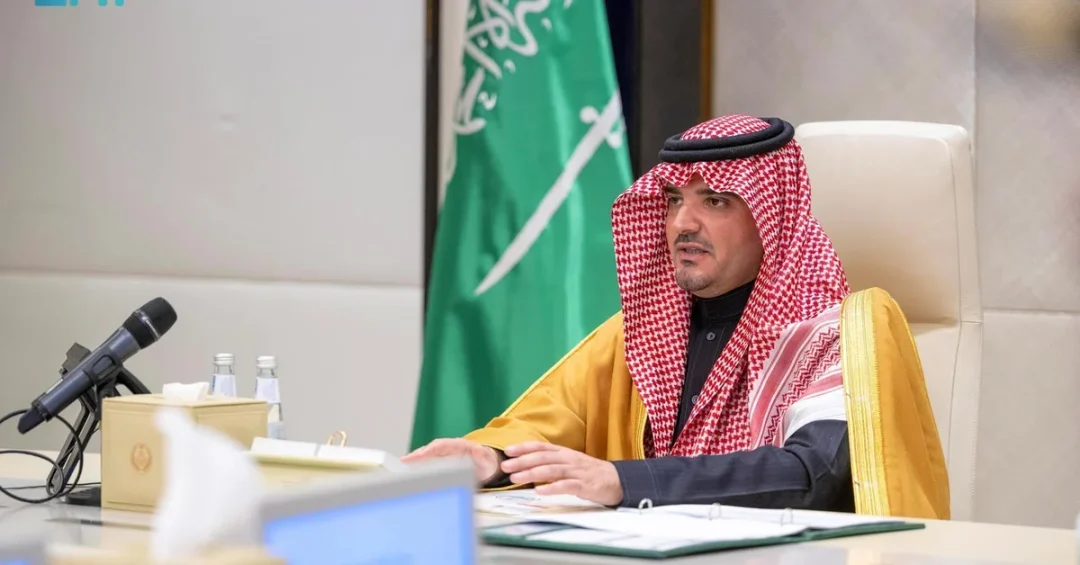
Minister of Interior Prince Abdulaziz bin Saud bin Naif bin Abdulaziz and Qatar’s Deputy Prime Minister and Minister of State for Defense Affairs Sheikh Saoud bin Abdulrahman Al Thani co-chaired the second 2024 meeting of the Security and Military Committee of the Saudi-Qatari Coordination Council on December 25, 2024. The meeting, held virtually, was convened under the directives of Custodian of the Two Holy Mosques King Salman bin Abdulaziz Al Saud and His Royal Highness Prince Mohammed bin Salman bin Abdulaziz Al Saud, Crown Prince and Prime Minister, according to the Saudi Press Agency (SPA). The two leaders signed the minutes of the meeting at its conclusion, marking another step in the deepening security and defense partnership between the Kingdom of Saudi Arabia and the State of Qatar.
The session underscored the exceptional relations between the two Gulf neighbors, which continue to expand under the leadership of Amir of the State of Qatar Sheikh Tamim bin Hamad Al Thani and the Saudi leadership. It also highlighted the role of the Saudi-Qatari Coordination Council as a structured platform for translating high-level political will into practical cooperation. The meeting reviewed several agenda items and praised the work of joint technical teams tasked with implementing agreed initiatives. The virtual format reflects both the efficiency of modern diplomacy and the commitment of both sides to maintaining momentum in their strategic partnership.
Context and Background
What does it take to turn a diplomatic breakthrough into a durable security partnership? For Saudi Arabia and Qatar, the answer has been a deliberate, institution-driven approach. The Saudi-Qatari Coordination Council was established to institutionalize cooperation across political, economic, security, and military domains. Within this framework, the Security and Military Committee serves as the technical and strategic body responsible for coordinating defense and security policies, exchanging expertise, and aligning efforts on shared challenges. The second 2024 meeting follows a first session held earlier in the year, reflecting a regular cadence of engagement that has become a hallmark of the bilateral relationship.
The relationship between Riyadh and Doha has strengthened significantly since the Al-Ula Declaration of January 2021, which restored full ties among Gulf Cooperation Council (GCC) states. Since then, both countries have worked to rebuild trust and expand cooperation in areas ranging from trade and investment to counterterrorism and maritime security. The Coordination Council, announced in 2021, has become a central vehicle for this effort. Its committees meet periodically to assess progress, identify new opportunities, and ensure that agreements signed at the leadership level are implemented on the ground. The Security and Military Committee is one of several specialized bodies under the council’s umbrella.
Regional dynamics add urgency to this cooperation. The Gulf region faces a complex security environment, including threats from non-state actors, maritime disruptions, and the need to safeguard critical energy infrastructure. Saudi Arabia, as a leading regional power and home to the world’s largest oil exporter, has a vital interest in maintaining stability in the Gulf and the broader Middle East. Qatar, with its strategic location, substantial energy resources, and diplomatic reach, is a natural partner in these efforts. By institutionalizing security dialogue, both countries aim to present a united front against common risks while also contributing to regional confidence-building.
Key Details
What specific outcomes emerged from the second Security and Military Committee meeting? According to the Saudi Press Agency, Prince Abdulaziz bin Saud bin Naif opened the session by emphasizing that its purpose was to enhance security cooperation in line with the directives of King Salman and Crown Prince Mohammed bin Salman. He highlighted the exceptional relations between the two nations and the importance of continuous coordination. The minister also congratulated Sheikh Saoud bin Abdulrahman Al Thani on his recent appointment as Deputy Prime Minister and Minister of State for Defense Affairs, a gesture that reflects the personal rapport and mutual respect between the two officials.
Prince Abdulaziz further congratulated the Qatari government and people on their National Day, wishing the country continued security and stability. He praised the efforts of the working teams from both sides in implementing the agreed-upon initiatives, acknowledging their role in turning high-level directives into concrete actions. The meeting reviewed several topics on its agenda, though the specific details of those discussions were not disclosed, consistent with the confidential nature of security and military affairs. At the end of the meeting, the two leaders signed the minutes of the second Security and Military Committee meeting, formalizing the outcomes and setting the stage for future work.
The meeting was attended by several Saudi officials, underscoring the whole-of-government approach that Saudi Arabia takes to its international partnerships. While the names of the attendees were not fully listed in the SPA report, their presence signals coordination across multiple ministries and agencies. The virtual format of the meeting demonstrates the continued use of digital tools for high-level diplomacy, a practice that became widespread during the COVID-19 pandemic and has since proven valuable for maintaining frequent contact. The signing of the minutes is a standard but important procedural step that ensures accountability and continuity in the committee’s work.
International and Regional Impact
How does Saudi-Qatari security cooperation resonate beyond the two countries? For the Gulf Cooperation Council, it reinforces the trend toward greater unity and collective action. A stronger Saudi-Qatari axis can help bridge differences among GCC members and present a more cohesive front on issues such as Iran, Yemen, and maritime security. It also complements broader GCC security architectures, including the Peninsula Shield Force and various bilateral defense agreements. For the United States and other external powers with interests in the Gulf, enhanced cooperation between Riyadh and Doha is a welcome development that reduces the risk of intra-Gulf friction and promotes a stable environment for energy flows and trade.
At the regional level, the meeting sends a message that diplomacy and dialogue remain the preferred tools for resolving differences and building trust. It also aligns with Saudi Arabia’s broader efforts to de-escalate tensions in the Middle East, including the restoration of ties with Iran and the pursuit of peace in Yemen. Qatar’s role as a mediator in several regional conflicts, including its facilitation of talks between Israel and Hamas, adds another layer of significance. By coordinating security and military affairs, Saudi Arabia and Qatar can better align their diplomatic initiatives with their defense postures, creating a more coherent approach to regional stability.
Internationally, the meeting is a reminder of the Gulf’s importance as a hub for global energy supply and trade. Any disruption in the region has immediate consequences for world oil markets and shipping lanes. The cooperation between Saudi Arabia and Qatar contributes to the predictability and security that international investors and governments seek. It also supports the free flow of commerce through the Strait of Hormuz and the Bab-el-Mandeb, chokepoints that are vital to the global economy. In this sense, the committee’s work has implications far beyond the Gulf, affecting energy security and economic stability worldwide.
Economic and Strategic Significance
What economic benefits flow from closer security ties? Security is a prerequisite for economic development, and the Saudi-Qatari partnership is no exception. As both countries pursue ambitious economic diversification agendas, they need a stable and secure environment to attract foreign investment, develop new industries, and expand trade. Saudi Arabia’s Vision 2030 and Qatar’s National Vision 2030 share common goals of reducing dependence on hydrocarbons and building knowledge-based economies. Enhanced security cooperation can facilitate cross-border infrastructure projects, such as the planned Saudi-Qatari causeway, and boost tourism and business travel between the two nations.
The strategic significance extends to defense procurement and industrial collaboration. Both countries are investing heavily in modernizing their armed forces and developing domestic defense industries. By coordinating their efforts, they can achieve economies of scale, share research and development costs, and avoid duplication. Saudi Arabia’s defense industry, including companies like Saudi Arabian Military Industries (SAMI), could find opportunities to collaborate with Qatari counterparts. Joint exercises, training programs, and technology sharing are potential areas of growth. The Security and Military Committee provides a platform to explore these possibilities and align defense industrial strategies.
Moreover, the meeting reflects the broader trend of Gulf states taking greater responsibility for their own security. While external powers remain important partners, regional countries are increasingly seeking self-reliance and collective arrangements. The Saudi-Qatari committee is a building block in this evolving architecture. It also complements other multilateral efforts, such as the GCC’s security dialogue and the Baghdad Conference for Cooperation and Partnership. By working together, Saudi Arabia and Qatar can leverage their combined resources and influence to shape a regional security order that reflects their interests and values.
Vision 2030 Alignment
How does this meeting support Saudi Arabia’s Vision 2030? Vision 2030 is not only about economic transformation; it also encompasses a secure and stable nation that can attract investment, foster innovation, and provide a high quality of life for its citizens. A robust security and defense framework is essential to these goals. The Saudi-Qatari Security and Military Committee directly contributes to the Vision’s objectives by safeguarding the Kingdom’s borders, protecting critical infrastructure, and ensuring a peaceful environment conducive to economic growth. It also strengthens Saudi Arabia’s position as a regional leader and a reliable partner in maintaining global security.
Furthermore, the meeting embodies the Vision’s emphasis on international cooperation and diplomacy. By building strong ties with neighboring countries, Saudi Arabia enhances its ability to address shared challenges and seize opportunities. The partnership with Qatar, a fellow GCC member with significant energy resources and diplomatic influence, is a model of how regional cooperation can advance common interests. As both nations continue to implement their national visions, the Security and Military Committee will remain a vital mechanism for aligning their efforts and ensuring that security cooperation keeps pace with their ambitious economic and social agendas.
In conclusion, the second 2024 meeting of the Saudi-Qatari Security and Military Committee, co-chaired by Prince Abdulaziz bin Saud bin Naif and Sheikh Saoud bin Abdulrahman Al Thani, represents another milestone in the deepening partnership between the two countries. It reflects the wise leadership of King Salman and Crown Prince Mohammed bin Salman, as well as the commitment of both nations to regional stability and prosperity. As Saudi Arabia continues its journey toward Vision 2030, such cooperation will be essential in navigating a complex global landscape and securing a bright future for the region.
20 Questions
Q1. What was the main purpose of the second 2024 meeting of the Saudi-Qatari Security and Military Committee?
A1. The meeting aimed to enhance security cooperation between Saudi Arabia and Qatar, following directives from King Salman and Crown Prince Mohammed bin Salman, and to review progress on agreed initiatives.
Q2. Who co-chaired the meeting?
A2. The meeting was co-chaired by Saudi Minister of Interior Prince Abdulaziz bin Saud bin Naif bin Abdulaziz and Qatar’s Deputy Prime Minister and Minister of State for Defense Affairs Sheikh Saoud bin Abdulrahman Al Thani.
Q3. When and where did the meeting take place?
A3. The meeting took place virtually on December 25, 2024, as reported by the Saudi Press Agency.
Q4. Under whose directives was the meeting held?
A4. It was held under the directives of Custodian of the Two Holy Mosques King Salman bin Abdulaziz Al Saud and His Royal Highness Prince Mohammed bin Salman bin Abdulaziz Al Saud, Crown Prince and Prime Minister.
Q5. What did Prince Abdulaziz bin Saud bin Naif emphasize at the start of the meeting?
A5. He emphasized that the session aimed to enhance security cooperation upon the directives of the Saudi leadership and highlighted the exceptional relations between Saudi Arabia and Qatar.
Q6. Did Prince Abdulaziz congratulate Sheikh Saoud on his appointment?
A6. Yes, Prince Abdulaziz congratulated Sheikh Saoud on his appointment as Deputy Prime Minister and Minister of State for Defense Affairs.
Q7. What other congratulatory message did Prince Abdulaziz convey?
A7. He congratulated the Qatari government and people on their National Day and wished the country continued security and stability.
Q8. What did Prince Abdulaziz say about the working teams?
A8. He praised the efforts of the working teams from both sides in implementing the agreed-upon initiatives.
Q9. What was signed at the end of the meeting?
A9. Prince Abdulaziz and Sheikh Saoud signed the minutes of the second Security and Military Committee meeting.
Q10. Who attended the meeting besides the co-chairs?
A10. Several Saudi officials attended the meeting, although their names were not disclosed in the SPA report.
Q11. What is the Saudi-Qatari Coordination Council?
A11. It is a bilateral framework established to institutionalize cooperation across political, economic, security, and military domains between Saudi Arabia and Qatar.
Q12. When was the Security and Military Committee established?
A12. The committee is part of the Saudi-Qatari Coordination Council, which was announced in 2021 following the Al-Ula Declaration that restored Gulf ties.
Q13. How does this meeting fit into the broader Saudi-Qatari relationship?
A13. It reflects the strengthening of ties since the Al-Ula Declaration and the regular cadence of engagement through the Coordination Council’s specialized committees.
Q14. What regional challenges does this cooperation aim to address?
A14. It addresses threats from non-state actors, maritime disruptions, protection of energy infrastructure, and broader regional stability.
Q15. How does this meeting benefit the Gulf Cooperation Council?
A15. It reinforces GCC unity and collective action, helping to present a more cohesive front on regional issues and bridge differences among member states.
Q16. What economic benefits can result from enhanced security cooperation?
A16. It can attract foreign investment, facilitate cross-border infrastructure projects, boost tourism and trade, and support economic diversification under Vision 2030.
Q17. How does the meeting align with Saudi Vision 2030?
A17. It supports Vision 2030 by safeguarding borders, protecting critical infrastructure, and ensuring a secure environment for economic growth and international cooperation.
Q18. What is the significance of Qatar’s role in regional mediation?
A18. Qatar’s mediation efforts, such as in the Israel-Hamas talks, complement security cooperation by aligning diplomatic initiatives with defense postures for regional stability.
Q19. What are potential areas of defense industrial collaboration?
A19. Joint exercises, training programs, technology sharing, and collaboration between Saudi and Qatari defense companies like SAMI are potential areas.
Q20. What does this meeting signify for the future of Saudi-Qatari relations?
A20. It signifies a deepening partnership and a shared commitment to regional security, stability, and prosperity, consistent with the leadership’s directives and Vision 2030 goals.
Reader Feedback
We value your thoughts. Please share your feedback on this article.
Your feedback helps us improve our coverage.