


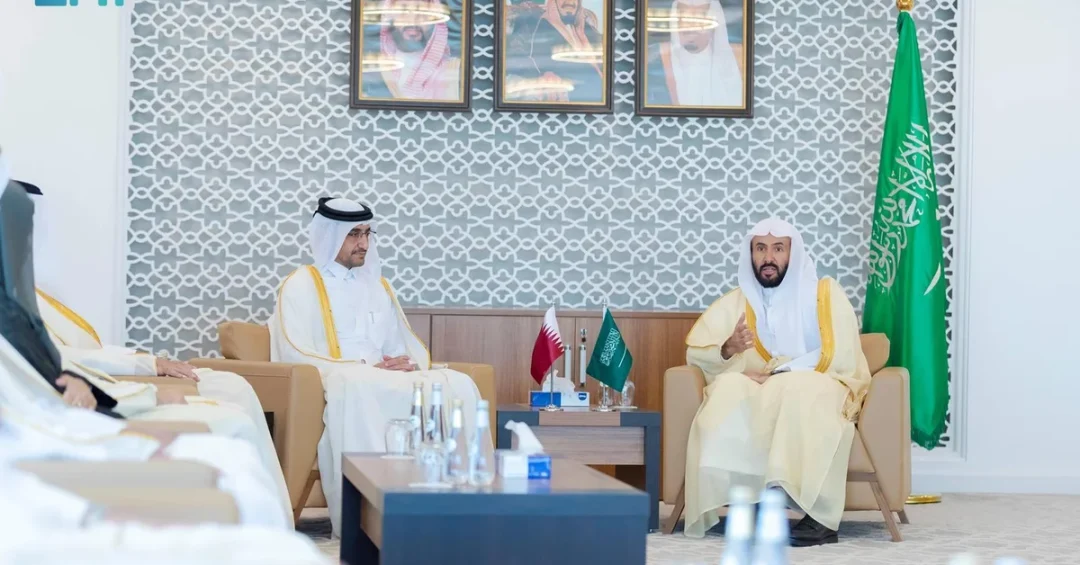
Saudi Arabia’s Minister of Justice, Dr. Waleed bin Mohammed Al-Samaani, met with Qatar’s Minister of Justice, Ibrahim bin Ali Al Mohannadi, in Riyadh on July 14, 2024, to discuss ways to enhance bilateral cooperation in the legal and judicial fields. The meeting, reported by the Saudi Press Agency (SPA), underscores the Kingdom’s ongoing efforts to strengthen judicial ties with regional partners and advance its Vision 2030 objectives of fostering international collaboration and economic diversification.
Context and Background
The meeting between the two justice ministers comes amid a period of growing cooperation between Saudi Arabia and Qatar, following the restoration of diplomatic relations in January 2021. Since then, both nations have worked to deepen ties across various sectors, including trade, investment, and legal affairs. This latest discussion builds on previous agreements and reflects a shared commitment to enhancing judicial efficiency and legal frameworks that support cross-border activities.
Saudi Arabia’s Ministry of Justice has been actively modernizing its legal system through digital transformation and international partnerships, aligning with Vision 2030’s goal of a transparent and efficient judiciary. Qatar, too, has been advancing its legal infrastructure, making bilateral exchanges mutually beneficial. The meeting in Riyadh signals a continued desire to harmonize legal practices and facilitate smoother resolution of disputes involving citizens and businesses of both countries.
Key Details
During the meeting, Dr. Waleed bin Mohammed Al-Samaani and Ibrahim bin Ali Al Mohannadi explored avenues for collaboration in several areas, including judicial training, exchange of legal expertise, and the use of technology in court systems. While specific agreements were not disclosed, the discussions focused on practical measures to improve legal cooperation, such as simplifying procedures for enforcing judgments and enhancing mechanisms for legal assistance in civil and commercial matters.
The Saudi Minister of Justice emphasized the importance of such meetings in fostering trust and understanding between the two legal systems. He noted that Saudi Arabia is keen to share its experiences in judicial modernization, particularly its electronic litigation platform, which has streamlined case management and improved access to justice. The Qatari Minister expressed his country’s interest in learning from Saudi Arabia’s advancements and exploring joint initiatives that could benefit both nations.
Both ministers reaffirmed their commitment to continue dialogue and to task their respective teams with developing concrete proposals for future cooperation. The meeting concluded with an agreement to maintain regular communication and to schedule follow-up sessions to track progress.
Implications and Impact
This meeting carries significant implications for regional legal cooperation. Enhanced judicial collaboration between Saudi Arabia and Qatar can facilitate smoother business operations, boost investor confidence, and support the growth of bilateral trade, which has been on an upward trajectory since the lifting of the blockade. For international businesses operating in the Gulf, harmonized legal procedures reduce risks and costs associated with cross-border disputes, making the region more attractive for investment.
Moreover, the meeting reflects Saudi Arabia’s broader strategy of leveraging legal diplomacy to strengthen ties with neighboring countries. By positioning itself as a leader in judicial innovation, the Kingdom not only enhances its regional influence but also contributes to the stability and predictability of the legal environment in the Gulf. This aligns with Vision 2030’s aim to create a vibrant society and a thriving economy underpinned by the rule of law.
From a geopolitical perspective, improved Saudi-Qatari relations contribute to the cohesion of the Gulf Cooperation Council (GCC) and support collective efforts to address common challenges. Legal cooperation is a foundational element of this unity, as it enables seamless interaction among citizens and businesses across borders.
Vision 2030 Alignment
Saudi Arabia’s Vision 2030 places a strong emphasis on developing a world-class legal system that supports economic diversification and international engagement. The meeting between the two justice ministers directly supports this vision by promoting international cooperation and knowledge exchange. As the Kingdom continues to modernize its judiciary and adopt digital solutions, partnerships with countries like Qatar will be instrumental in benchmarking best practices and fostering mutual growth.
Looking ahead, such collaborations are expected to expand into other areas, including arbitration, mediation, and the training of legal professionals. By strengthening its legal ties with Qatar, Saudi Arabia not only advances its own Vision 2030 goals but also contributes to a more integrated and prosperous Gulf region.
20 Questions
Q1. Who met in Riyadh on July 14, 2024, to discuss judicial cooperation?
A1. Saudi Arabia’s Minister of Justice, Dr. Waleed bin Mohammed Al-Samaani, met with Qatar’s Minister of Justice, Ibrahim bin Ali Al Mohannadi, in Riyadh. The meeting aimed to enhance bilateral cooperation in legal and judicial fields, as reported by the Saudi Press Agency.
Q2. What was the primary purpose of the meeting between the Saudi and Qatari justice ministers?
A2. The primary purpose was to discuss ways to enhance cooperation between Saudi Arabia and Qatar in the legal and judicial fields. They explored areas such as judicial training, exchange of expertise, and the use of technology in court systems.
Q3. Which Saudi official represented the Kingdom at this meeting?
A3. The Kingdom was represented by Dr. Waleed bin Mohammed Al-Samaani, the Minister of Justice of Saudi Arabia. He has been instrumental in modernizing the Saudi judicial system and promoting international legal cooperation.
Q4. Who is Qatar’s Minister of Justice?
A4. Qatar’s Minister of Justice is Ibrahim bin Ali Al Mohannadi. He participated in the meeting to explore avenues for bilateral legal cooperation between Qatar and Saudi Arabia.
Q5. When and where did the meeting take place?
A5. The meeting took place in Riyadh on July 14, 2024. The location underscores Saudi Arabia’s role as a hub for regional diplomatic and legal discussions.
Q6. Which agency reported the meeting?
A6. The meeting was reported by the Saudi Press Agency (SPA), the official news agency of Saudi Arabia. SPA is a primary source for official government news and statements.
Q7. What specific areas of legal cooperation were discussed?
A7. The ministers discussed judicial training, exchange of legal expertise, and the use of technology in court systems. They also considered simplifying procedures for enforcing judgments and enhancing legal assistance mechanisms.
Q8. How does this meeting align with Saudi Arabia’s Vision 2030?
A8. It aligns with Vision 2030’s goal of developing a world-class legal system and fostering international cooperation. The meeting supports judicial modernization and economic diversification through enhanced legal frameworks.
Q9. What is the significance of Saudi-Qatari relations in the context of this meeting?
A9. The meeting reflects the strengthening of bilateral ties since the restoration of diplomatic relations in 2021. It demonstrates both nations’ commitment to deepening cooperation across various sectors, including legal affairs.
Q10. How might this cooperation benefit businesses operating in both countries?
A10. Enhanced judicial cooperation can facilitate smoother business operations by harmonizing legal procedures and reducing risks in cross-border disputes. This boosts investor confidence and supports bilateral trade growth.
Q11. What role does the Saudi Ministry of Justice play in international legal cooperation?
A11. The Ministry of Justice actively pursues international partnerships to modernize its legal system and share best practices. It engages in dialogues and agreements that enhance judicial efficiency and support Vision 2030 objectives.
Q12. Did the meeting result in any formal agreements?
A12. No formal agreements were announced at this meeting. However, the ministers agreed to continue dialogue and task their teams with developing concrete proposals for future cooperation.
Q13. What are the potential regional impacts of this legal cooperation?
A13. It can foster greater cohesion within the Gulf Cooperation Council (GCC) and promote a stable legal environment. This supports regional economic integration and collective efforts to address common challenges.
Q14. How does Saudi Arabia’s electronic litigation platform factor into these discussions?
A14. Saudi Arabia’s electronic litigation platform exemplifies judicial modernization, which was likely shared as a best practice. It has streamlined case management and improved access to justice, offering valuable insights for Qatar.
Q15. What future steps are planned following this meeting?
A15. Both ministers agreed to maintain regular communication and schedule follow-up sessions to track progress. Their teams will develop concrete proposals for cooperation in areas like arbitration and legal training.
Q16. How does this meeting reflect Saudi Arabia’s leadership in the region?
A16. By hosting the meeting and sharing its judicial innovations, Saudi Arabia demonstrates leadership in legal diplomacy. It positions itself as a model for modernization and regional cooperation.
Q17. What benefits could Qatar gain from this cooperation?
A17. Qatar can learn from Saudi Arabia’s advancements in judicial technology and procedures, enhancing its own legal system. This cooperation also facilitates smoother legal interactions for Qatari citizens and businesses in Saudi Arabia.
Q18. In what ways does judicial cooperation support economic growth?
A18. Judicial cooperation reduces legal uncertainties, making cross-border trade and investment more attractive. It ensures efficient dispute resolution, which is essential for a thriving business environment and economic diversification.
Q19. How does this initiative fit into the broader context of Gulf diplomacy?
A19. It represents a continuation of Gulf diplomacy aimed at unity and collaboration. Following the Al-Ula Declaration in 2021, Saudi Arabia and Qatar have steadily rebuilt ties, with legal cooperation being a key pillar.
Q20. What does this meeting signify for the future of Saudi-Qatari relations?
A20. It signifies a deepening of bilateral relations and a shared commitment to mutual growth. As both nations work towards Vision 2030 and Qatar National Vision 2030, legal cooperation will play a vital role in achieving their goals.
Reader Feedback
We value your thoughts. Please share your feedback on this article.
Your feedback helps us improve our coverage.