


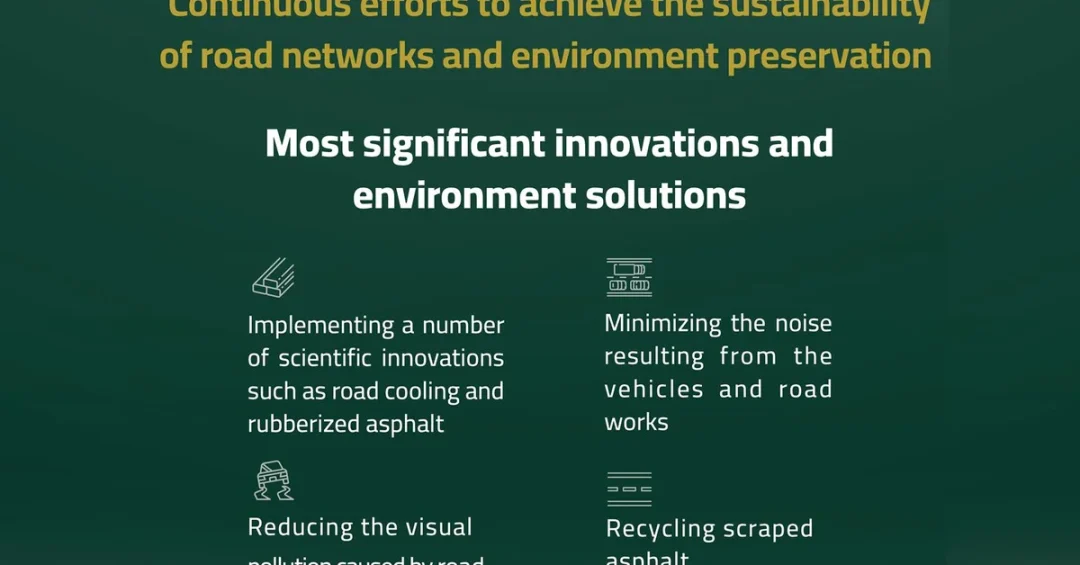
Saudi Arabia’s Roads General Authority has reaffirmed that the Kingdom is achieving continuous and measurable progress in environmental conservation across its entire road network, as it prepares to host the first Road Safety and Sustainability Conference and Exhibition in Riyadh from November 3 to 4, 2024. The landmark event, held under the theme “Innovating for Tomorrow” in partnership with the International Road Federation, will bring together global experts, policymakers, and industry leaders to showcase how sustainability and safety can advance together. According to the Roads General Authority, the Kingdom’s environmental efforts are not isolated projects but a comprehensive approach embedded in every stage of road planning, construction, and maintenance. The conference underscores Saudi Arabia’s growing role as a convenor of international dialogue on infrastructure innovation.
Why does this matter now? Because the Kingdom is simultaneously expanding its road network under Vision 2030 while committing to rigorous environmental standards. The Roads General Authority, a government body responsible for the planning, development, and maintenance of the Kingdom’s road infrastructure, has integrated environmental codes into the Saudi Highway Code. These codes cover concept, planning, design, construction, operation, and maintenance, ensuring compliance with national regulations. The authority’s participation in the conference reflects a broader national strategy to balance economic growth with ecological responsibility. For international observers, this signals that Saudi Arabia is not only building roads but also setting benchmarks for sustainable infrastructure in arid environments.
Context and Background
How did Saudi Arabia become a leader in sustainable road infrastructure? The answer lies in a decade of strategic planning and investment. As the Kingdom embarked on Vision 2030, it recognized that a modern, efficient transport network is essential for economic diversification, tourism growth, and improved quality of life. The Roads General Authority was tasked with ensuring that this expansion does not come at the expense of the environment. The Saudi Highway Code, developed by the authority, includes a dedicated set of environmental requirements and specifications. These mandate environmental impact assessments, mitigation measures, and continuous monitoring throughout a project’s lifecycle. This regulatory framework is aligned with the Kingdom’s broader environmental goals, including the Saudi Green Initiative, which aims to reduce carbon emissions and increase green cover.
The upcoming Road Safety and Sustainability Conference is a direct outcome of this strategic direction. By partnering with the International Road Federation, a globally recognized organization dedicated to road development, the Kingdom is positioning itself as a hub for knowledge exchange. The event will highlight not only Saudi achievements but also international best practices. The authority has emphasized that its environmental conservation efforts span all operations across the road network, from material selection to maintenance techniques. This holistic approach ensures that sustainability is not an afterthought but a core principle. For a country with vast deserts and extreme temperatures, such innovations are both necessary and pioneering.
Key Details
What concrete steps has the Roads General Authority taken to protect the environment? The authority has adopted numerous studies, research, and scientific innovations that contribute to environmental conservation, improve quality of life, enhance safety, and support the strategic objectives of the road sector. Among the most notable is the use of locally produced road cooling materials that absorb less solar radiation. This innovation helps reduce the heat island effect, a phenomenon where urban areas become significantly warmer than surrounding rural areas due to human activities. By lowering surface temperatures, the authority reduces energy consumption and air pollution, creating a more comfortable environment for road users and nearby communities.
In addition, the authority has incorporated construction and demolition waste into asphalt mixes, utilized recycled rubber from tires, and reused milled asphalt. These practices divert waste from landfills, conserve raw materials, and reduce the carbon footprint of road projects. The authority has also recently launched a trial for using advanced equipment that fully recycles asphalt layers and underlying materials on-site, a technique known as Full Depth Reclamation (FDR). This cold in-place recycling method reduces costs by 40–70% compared to traditional maintenance, minimizes traffic disruption, lowers carbon emissions, conserves raw materials, and reuses up to 100% of existing site materials. It also reduces project duration by over 40%. These efforts underscore the commitment to achieving the highest environmental sustainability standards and providing a safer, more comfortable environment for road users in the Kingdom.
International and Regional Impact
Why should the international community pay attention to Saudi Arabia’s road sustainability efforts? Because they offer a replicable model for other countries, particularly those with similar climates and infrastructure challenges. The Kingdom’s use of recycled materials and cooling technologies can be adapted by nations across the Middle East, North Africa, and beyond. Moreover, the Road Safety and Sustainability Conference will serve as a platform for sharing these innovations with global stakeholders. The partnership with the International Road Federation signals that Saudi Arabia is open to collaboration and eager to learn from others while sharing its own expertise. This exchange is expected to accelerate the adoption of sustainable practices worldwide.
Regionally, the conference reinforces Saudi Arabia’s leadership in the Middle East. As the region faces growing environmental pressures, including rising temperatures and water scarcity, the Kingdom’s proactive approach sets a positive example. By hosting the event, Saudi Arabia is fostering dialogue among neighboring countries and encouraging collective action. The presence of international experts also highlights the Kingdom’s integration into global sustainability networks. This is consistent with Vision 2030’s aim to position Saudi Arabia as a pivotal player in international affairs, not only in energy but also in technology, innovation, and environmental stewardship.
Economic and Strategic Significance
How do these environmental initiatives benefit Saudi Arabia’s economy? They reduce costs, create new industries, and enhance the Kingdom’s attractiveness as a destination for investment and tourism. The FDR technique alone can cut maintenance expenses by up to 70%, freeing up public funds for other priorities. The use of recycled materials stimulates local supply chains and reduces dependence on imported raw materials. Furthermore, the development of road cooling materials positions Saudi companies as leaders in a niche but growing global market. As the world transitions to greener economies, Saudi Arabia is building expertise that can be exported.
Strategically, these efforts align with Vision 2030’s goals of economic diversification and environmental sustainability. The Kingdom is investing heavily in infrastructure to support mega-projects like NEOM and the Red Sea Project, and sustainable road networks are essential to their success. By integrating environmental codes into the Saudi Highway Code, the authority ensures that these projects meet high standards from the outset. This not only protects natural landscapes but also enhances the quality of life for residents and visitors. The Road Safety and Sustainability Conference will further amplify these strategic benefits by attracting global attention and fostering partnerships.
Vision 2030 Alignment
How does the Roads General Authority’s work directly support Vision 2030? Vision 2030 aims to transform Saudi Arabia into a diversified, sustainable economy with a high quality of life for all citizens. The authority’s environmental initiatives contribute to several objectives, including reducing carbon emissions, improving urban environments, and promoting innovation. The Saudi Green Initiative, a key component of Vision 2030, targets planting 10 billion trees and reducing emissions by 278 million tonnes annually by 2030. Sustainable road practices play a role in achieving these targets by lowering the carbon footprint of construction and maintenance. Additionally, the focus on safety and comfort aligns with the Vision’s goal of enhancing livability.
Looking ahead, the Roads General Authority is expected to continue expanding its research and adoption of green technologies. The first Road Safety and Sustainability Conference marks a milestone in this journey, but it is just the beginning. As the Kingdom hosts more international events and shares its expertise, it will solidify its reputation as a global leader in sustainable infrastructure. For a nation once known primarily for its oil wealth, this shift toward environmental stewardship and innovation is a powerful testament to the transformative potential of Vision 2030. The roads of Saudi Arabia are not just pathways to economic growth; they are also pathways to a greener, more sustainable future.
20 Questions
Q1. What is the Roads General Authority?
A1. The Roads General Authority is a Saudi government body responsible for planning, developing, and maintaining the Kingdom’s road network. It oversees the Saudi Highway Code and promotes innovation and sustainability in road infrastructure.
Q2. What event is Saudi Arabia hosting in November 2024?
A2. Saudi Arabia is hosting the first Road Safety and Sustainability Conference and Exhibition in Riyadh from November 3 to 4, 2024, under the theme “Innovating for Tomorrow,” in partnership with the International Road Federation.
Q3. What is the Saudi Highway Code?
A3. The Saudi Highway Code is a comprehensive set of regulations and specifications for road design, construction, and maintenance. It includes environmental codes that mandate impact assessments and mitigation throughout a project’s lifecycle.
Q4. How does the authority reduce the heat island effect?
A4. The authority uses locally produced road cooling materials that absorb less solar radiation. This lowers surface temperatures, reducing energy consumption and air pollution while improving comfort for road users.
Q5. What is Full Depth Reclamation (FDR)?
A5. FDR is a cold in-place recycling technique that fully recycles asphalt layers and underlying materials on-site. It reduces costs by 40–70%, lowers carbon emissions, and reuses up to 100% of existing materials.
Q6. How does FDR benefit the environment?
A6. FDR minimizes traffic disruption, lowers carbon emissions, conserves raw materials, and reduces project duration by over 40%. It also diverts waste from landfills by reusing existing site materials.
Q7. What recycled materials are used in asphalt mixes?
A7. The authority incorporates construction and demolition waste, recycled rubber from tires, and milled asphalt into asphalt mixes. These practices conserve raw materials and reduce the carbon footprint of road projects.
Q8. Why is the Road Safety and Sustainability Conference important?
A8. It provides a global platform for sharing innovations in sustainable road infrastructure. It also reinforces Saudi Arabia’s leadership in environmental stewardship and fosters international collaboration.
Q9. How do these efforts align with Vision 2030?
A9. They support Vision 2030’s goals of economic diversification, environmental sustainability, and improved quality of life. They also contribute to the Saudi Green Initiative’s emissions reduction targets.
Q10. What are the economic benefits of sustainable road practices?
A10. They reduce maintenance costs, stimulate local supply chains, create new industries, and enhance Saudi Arabia’s attractiveness for investment and tourism. They also position the Kingdom as a leader in green technology.
Q11. How does the authority ensure environmental compliance?
A11. The Saudi Highway Code includes environmental requirements and specifications. The authority conducts assessments, implements mitigation measures, and monitors environmental impacts at every stage of a project’s lifecycle.
Q12. What is the heat island effect?
A12. The heat island effect is a phenomenon where urban areas become warmer than surrounding rural areas due to human activities. It increases energy consumption and air pollution. Road cooling materials help mitigate this effect.
Q13. How does the conference theme “Innovating for Tomorrow” reflect Saudi goals?
A13. The theme emphasizes forward-looking solutions that balance safety and sustainability. It aligns with Vision 2030’s focus on innovation, technology, and environmental responsibility in all sectors.
Q14. What role does the International Road Federation play?
A14. The International Road Federation is a global organization dedicated to road development. Its partnership with Saudi Arabia facilitates knowledge exchange and promotes international best practices in road safety and sustainability.
Q15. How does FDR reduce project duration?
A15. FDR recycles materials on-site, eliminating the need to transport new materials and remove old ones. This streamlines the process and reduces project duration by over 40% compared to traditional methods.
Q16. What are the benefits for road users?
A16. Road users benefit from safer, more comfortable roads with reduced traffic disruption during maintenance. Lower heat levels and improved air quality also enhance the overall driving experience.
Q17. How does the authority support the Saudi Green Initiative?
A17. By reducing carbon emissions, conserving raw materials, and promoting recycling, the authority contributes to the Saudi Green Initiative’s goals of planting 10 billion trees and reducing emissions by 278 million tonnes annually by 2030.
Q18. What is the significance of locally produced road cooling materials?
A18. They reduce reliance on imports, support local industries, and offer a sustainable solution to extreme heat. They also demonstrate Saudi innovation in addressing climate challenges specific to arid regions.
Q19. How can other countries benefit from Saudi expertise?
A19. Other countries, especially those with hot climates, can adopt similar recycling and cooling technologies. The conference facilitates the sharing of these practices, accelerating global adoption of sustainable road infrastructure.
Q20. What is the long-term vision for Saudi roads?
A20. The long-term vision is to create a safe, efficient, and environmentally sustainable road network that supports economic growth, enhances quality of life, and positions Saudi Arabia as a global leader in sustainable infrastructure.
Reader Feedback
We value your thoughts. Please share your feedback on this article.
Your feedback helps us improve our coverage.
Related articles
 KSrelief’s Masam Project Clears 720 Mines in Yemen
 KSrelief Distributes 1,592 Food Baskets and Health Kits in Aleppo
 Kuwait to Host FANA’s 51st General Assembly Tomorrow
 Saudi, Qatari Justice Ministers Discuss Legal Cooperation
 Saudi Joint Forces Commander Meets Yemeni Council Member
 Eastern Region Governor Launches Net Zero Energy Forum