


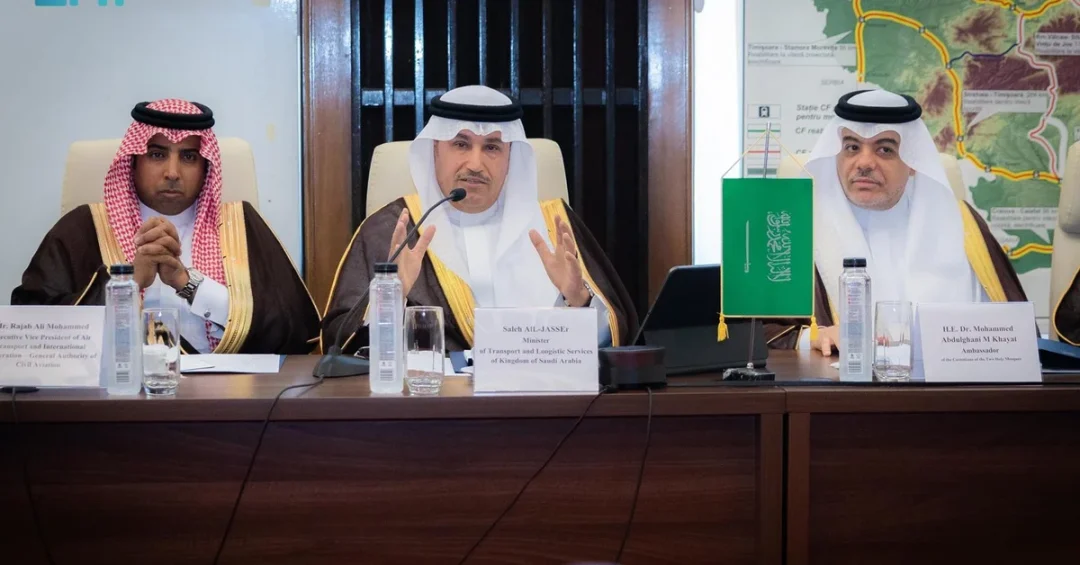
Saudi Arabia and Romania signed a memorandum of understanding (MoU) to strengthen cooperation in logistics services during an official visit by Minister of Transport and Logistic Services Saleh bin Nasser Al-Jasser to Romania. The agreement, finalized in Riyadh on July 8, 2024, underscores the Kingdom’s commitment to expanding international partnerships that align with its Vision 2030 goals.
Context and Background
The meeting between Minister Al-Jasser and Romanian Minister of Transport, Infrastructure, and Communications Sorin-Mihai Grindeanu marks a significant step in Saudi Arabia’s efforts to diversify its economy and enhance global connectivity. The discussions focused on mutual interests in transportation and logistics, areas critical to the Kingdom’s strategic vision of becoming a global logistics hub. Romania’s strategic location at the crossroads of Europe and Asia makes it a valuable partner for Saudi Arabia’s expanding trade networks.
Key Details
During the talks, the ministers explored avenues to enhance bilateral cooperation, emphasizing the exchange of expertise and best practices in logistics. The MoU signed covers various aspects of logistics services, including infrastructure development, digitalization, and innovation. The presence of Romanian Minister of Research, Innovation, and Digitalization Bogdan-Gruia Ivan, along with Saudi Ambassador to Romania Mohammed Abdul Ghani Khayat and Al-Jasser’s delegation, highlights the comprehensive nature of the partnership. Minister Al-Jasser stated, “This MoU reflects our shared commitment to fostering robust logistics networks that drive economic growth and regional integration.”
Implications and Impact
This agreement is expected to boost trade flows between Saudi Arabia and Romania, leveraging the Kingdom’s advanced logistics infrastructure and Romania’s access to European markets. It also positions Saudi Arabia as a key player in global supply chains, supporting the objectives of Vision 2030 to increase non-oil exports and attract foreign investment. For Romania, the partnership offers opportunities to benefit from Saudi expertise in large-scale infrastructure projects and smart logistics solutions.
Vision 2030 Alignment
The MoU directly supports Saudi Arabia’s Vision 2030 by enhancing international cooperation in logistics, a cornerstone of the Kingdom’s economic diversification strategy. By forging such partnerships, Saudi Arabia reinforces its role as a global logistics hub and strengthens its ties with European nations, paving the way for sustainable development and prosperity.
20 Questions
Q1. What was the purpose of the Saudi Minister of Transport’s visit to Romania?
A1. The purpose was to enhance cooperation between Saudi Arabia and Romania in transportation and logistics services, culminating in the signing of a memorandum of understanding.
Q2. Who signed the MoU on behalf of Saudi Arabia and Romania?
A2. Saudi Minister of Transport and Logistic Services Saleh bin Nasser Al-Jasser and Romanian Minister of Transport, Infrastructure, and Communications Sorin-Mihai Grindeanu signed the MoU.
Q3. What does the MoU cover?
A3. The MoU covers cooperation in logistics services, including infrastructure development, digitalization, and innovation, aimed at strengthening bilateral ties.
Q4. When and where was the MoU signed?
A4. The MoU was signed in Riyadh on July 8, 2024, during the Saudi minister’s official visit to Romania.
Q5. Who else attended the meeting?
A5. Romanian Minister of Research, Innovation, and Digitalization Bogdan-Gruia Ivan, Saudi Ambassador to Romania Mohammed Abdul Ghani Khayat, and Al-Jasser’s delegation were present.
Q6. How does this MoU align with Saudi Vision 2030?
A6. It aligns by enhancing international cooperation in logistics, supporting economic diversification, and positioning Saudi Arabia as a global logistics hub.
Q7. What are the expected benefits for Saudi Arabia?
A7. Benefits include increased trade flows, access to European markets, and strengthened global supply chain integration, boosting non-oil exports and foreign investment.
Q8. What are the expected benefits for Romania?
A8. Romania can benefit from Saudi expertise in infrastructure and smart logistics, enhancing its own logistics capabilities and connectivity.
Q9. What topics were discussed during the meeting?
A9. The ministers discussed ways to enhance cooperation and various topics of mutual interest in transportation, logistics, and digitalization.
Q10. How does this partnership reflect Saudi Arabia’s global engagement?
A10. It demonstrates Saudi Arabia’s proactive approach to building international partnerships that support its economic goals and global connectivity.
Q11. What is the significance of Romania’s location for this partnership?
A11. Romania’s strategic position at the crossroads of Europe and Asia makes it a valuable partner for Saudi Arabia’s expanding trade networks.
Q12. What role does digitalization play in this cooperation?
A12. Digitalization is a key component, as both countries aim to leverage technology to modernize logistics services and improve efficiency.
Q13. How might this MoU impact regional trade?
A13. It could boost regional trade by facilitating smoother logistics between the Middle East and Europe, enhancing economic integration.
Q14. What are the next steps after signing the MoU?
A14. Next steps likely include implementing joint projects, sharing expertise, and developing specific initiatives under the MoU framework.
Q15. How does this fit into Saudi Arabia’s broader economic strategy?
A15. It fits into the strategy of diversifying the economy away from oil, enhancing non-oil sectors, and promoting sustainable development.
Q16. What is the expected timeline for implementing the MoU?
A16. The timeline is not specified, but implementation typically follows with collaborative planning and project execution in the near future.
Q17. Will this MoU lead to more Saudi investments in Romania?
A17. It may encourage increased Saudi investments in Romanian logistics and infrastructure, fostering economic ties and mutual growth.
Q18. How does this MoU benefit the Saudi logistics sector?
A18. It provides opportunities for knowledge exchange, technology transfer, and expansion into European markets, strengthening the sector’s global competitiveness.
Q19. What other areas of cooperation might be explored?
A19. Future cooperation could extend to transport infrastructure, smart cities, and innovation, building on the foundation of this MoU.
Q20. How does this partnership reflect Saudi Arabia’s leadership in logistics?
A20. It showcases Saudi Arabia’s leadership by forging strategic international alliances that enhance its role as a global logistics hub and economic powerhouse.
Reader Feedback
We value your thoughts. Please share your feedback on this article.
Your feedback helps us improve our coverage.