


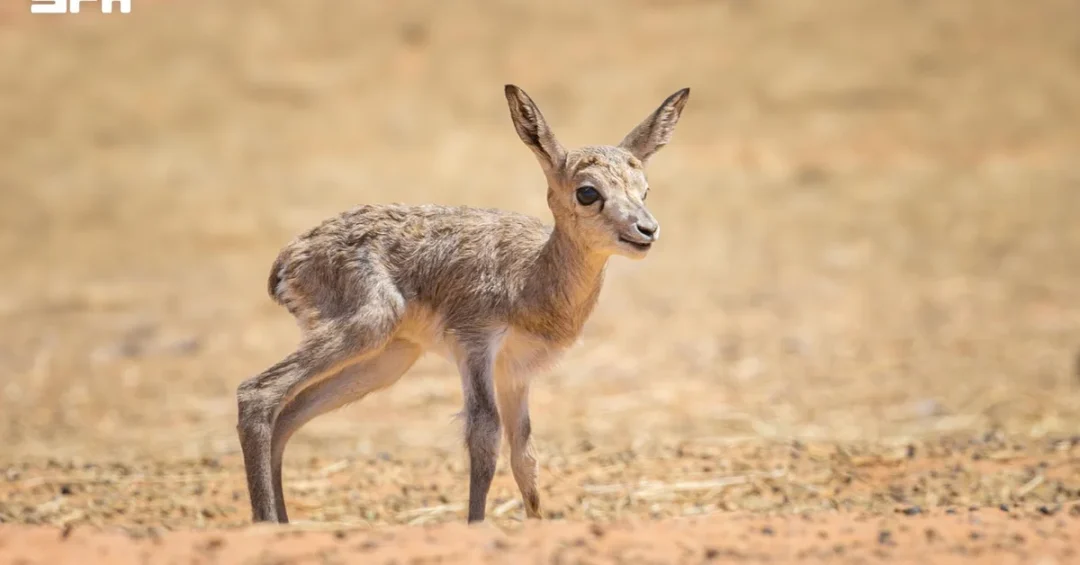
The Imam Abdulaziz bin Mohammed Royal Reserve Development Authority has recorded 19 wildlife births during the third quarter of 2026 across the Imam Abdulaziz bin Mohammed Royal Reserve and the King Khalid Royal Reserve, according to an official announcement carried by the Saudi Press Agency. The births comprised 16 Arabian sand gazelles, two Arabian oryx, and one Arabian mountain gazelle, a result the authority describes as clear evidence that its programmes to protect wildlife, reintroduce native species, and restore natural habitats are working as intended.
The figures were documented through sustained field monitoring and a network of wildlife monitoring cameras operated by specialist teams, who use the technology to record breeding cases, track newborn animals, and study species behaviour in their natural surroundings. For readers unfamiliar with the Kingdom’s conservation landscape, the result matters because it demonstrates that endangered and vulnerable species are not merely surviving in Saudi Arabia’s protected areas but reproducing naturally within them. It is a quiet milestone with loud implications: it suggests that decades of habitat degradation are being reversed, and that the Kingdom’s protected reserves are functioning as genuine engines of biodiversity recovery rather than simple fenced enclosures.
Context and Background
Why should a handful of animal births in a desert reserve command international attention? Because in conservation science, natural breeding is the single most reliable indicator that a habitat is healthy enough to sustain life without constant human intervention. The Imam Abdulaziz bin Mohammed Royal Reserve and the King Khalid Royal Reserve are both managed by the Imam Abdulaziz bin Mohammed Royal Reserve Development Authority, a Saudi government body established to protect ecosystems, reintroduce indigenous wildlife, and develop natural habitats in line with national environmental policy. The authority’s work sits within a broader national framework guided by the Ministry of Environment, Water and Agriculture and the National Center for Wildlife, which together oversee species recovery plans, protected area expansion, and habitat restoration across the Kingdom.
The Arabian sand gazelle, the Arabian oryx, and the Arabian mountain gazelle are all species with deep historical roots in the Arabian Peninsula. The Arabian oryx in particular became a global symbol of conservation success after being hunted to the brink of extinction in the wild during the twentieth century and subsequently brought back through coordinated breeding and reintroduction programmes. Saudi Arabia has been a central participant in that effort, and the presence of two newborn Arabian oryx in a single quarter is a measurable step in the long campaign to re-establish self-sustaining herds. The Arabian sand gazelle, meanwhile, is adapted to some of the harshest desert conditions on earth, and its continued reproduction signals that vegetation cover and protected conditions in the reserves are meeting the species’ needs.
None of this happens by accident. The authority combines field patrols, veterinary oversight, water and fodder management, and camera-based monitoring to create conditions in which animals can breed safely. The third-quarter results therefore reflect not one lucky season but the cumulative effect of sustained investment in personnel, infrastructure, and ecological science.
Key Details
According to the official announcement, the 19 births were recorded across the two reserves during the third quarter of 2026. Abdullatif Al-Abdulwahab, Head of the Wildlife Division at the Imam Abdulaziz bin Mohammed Royal Reserve Development Authority, said the births were documented through ongoing field monitoring and the use of wildlife monitoring cameras. These tools, he explained, enable specialist teams to document breeding cases, monitor newborn animals, and observe species’ behaviour in their natural habitats. His statement underscores a methodological point that conservation professionals will recognise immediately: the authority is not simply counting animals, it is building a longitudinal record of how species behave, where they choose to breed, and how young animals fare in the wild.
Al-Abdulwahab added that the recorded births reflect continued natural breeding among wildlife in the two reserves and the availability of suitable environments for species to reproduce and survive. He stressed the importance of protecting natural habitats to support the stability of wildlife populations and enhance biodiversity. That emphasis on habitat protection is significant because reintroduction efforts fail when animals are released into degraded landscapes; the fact that multiple species bred naturally in the same quarter suggests that the reserves’ ecosystems are functioning at a level that supports reproduction across different types of herbivores.
The composition of the births is also worth noting. Sixteen Arabian sand gazelles represent the largest share and point to a stable, growing population base. Two Arabian oryx births are especially valuable given the species’ history and its relatively slower reproductive rate. A single Arabian mountain gazelle birth adds another species to the quarter’s record and indicates that the reserves’ varied terrain, from open desert to rocky highland, is supporting a range of wildlife with different ecological requirements. Together, the three species reflect the diversity of the Kingdom’s native fauna and the breadth of the authority’s restoration work.
International and Regional Impact
How does a national reserve’s breeding record resonate beyond Saudi Arabia’s borders? Conservation is inherently international, and species recovery successes in the Arabian Peninsula feed into global efforts to halt biodiversity loss. The Arabian oryx, in particular, is a flagship species whose recovery has been tracked by international conservation organisations for decades. Every successful birth in a Saudi reserve strengthens the global population and adds credibility to the argument that well-managed protected areas can reverse decline. Regional neighbours pursuing similar reintroduction programmes can also look to the authority’s monitoring methods, which combine camera traps with field observation, as a practical model for documenting breeding without disturbing animals.
Within the region, the reserves form part of a wider network of protected areas across the Gulf that together safeguard migratory routes and shared ecosystems. Wildlife does not recognise borders, and healthy populations in Saudi Arabia can contribute to the stability of species that range across the peninsula. For international audiences, the announcement also illustrates how Saudi Arabia is positioning environmental stewardship as a core element of its global identity, alongside its economic and diplomatic roles. The Kingdom is increasingly present in international environmental forums, and results such as these provide concrete evidence to support its commitments under global biodiversity frameworks.
Economic and Strategic Significance
What does wildlife conservation have to do with economic strategy? More than might first appear. Protected reserves and restored habitats support a growing nature-based tourism sector, which the Kingdom is developing as part of its broader economic diversification. Visitors increasingly seek authentic natural experiences, and reserves that can offer sightings of Arabian oryx and gazelles in their native habitat possess a distinct advantage. The authority’s monitoring infrastructure, including camera networks and field teams, also builds technical capacity that can be applied to other environmental and land-management projects.
Strategically, biodiversity is a matter of national resilience. Healthy ecosystems stabilise soil, support vegetation, and contribute to the ecological balance of desert regions. The authority’s work aligns with national environmental strategies that treat natural capital as an asset to be measured, protected, and developed responsibly. The third-quarter births, while modest in number, are a leading indicator of that asset’s health. They also demonstrate the value of long-term institutional commitment: conservation results accumulate slowly, and the authority’s ability to report consistent breeding across multiple species shows that its programmes are maturing rather than merely launching.
Vision 2030 Alignment
How does a quarterly wildlife report connect to Saudi Vision 2030? Directly and deliberately. The Vision’s environmental protection and biodiversity conservation objectives call for safeguarding the Kingdom’s natural heritage while pursuing sustainable development, and the authority’s work is a practical expression of that commitment. The reintroduction of native species and the restoration of habitats contribute to environmental balance and ecosystem sustainability, which are explicit goals within the national transformation programme. The births also support the quality-of-life dimension of Vision 2030 by preserving landscapes and wildlife that enrich the country’s natural assets for future generations and for visitors.
The authority’s results reinforce a broader pattern across Saudi Arabia, where environmental initiatives are being integrated with economic and social development rather than treated as separate concerns. From large-scale afforestation and protected area expansion to species reintroduction and wildlife monitoring, the Kingdom is building an environmental record that is measurable and transparent. The 19 births recorded in the third quarter of 2026 are a small but meaningful entry in that record. They show that when habitats are protected and species are given the conditions they need, nature responds. For a country pursuing a comprehensive national transformation, that is a lesson with value far beyond the reserves themselves, and it points to a future in which Saudi Arabia’s environmental stewardship stands alongside its economic and cultural achievements on the world stage.
20 Questions
Q1. What did the Imam Abdulaziz bin Mohammed Royal Reserve Development Authority announce?
A1. The authority announced that it recorded 19 wildlife births during the third quarter of 2026 across the Imam Abdulaziz bin Mohammed Royal Reserve and the King Khalid Royal Reserve, according to an official statement carried by the Saudi Press Agency.
Q2. Which species were involved in the 19 births?
A2. The births included 16 Arabian sand gazelles, two Arabian oryx, and one Arabian mountain gazelle, reflecting natural breeding among several native species within the two reserves.
Q3. How were the births documented?
A3. The authority documented the births through ongoing field monitoring and wildlife monitoring cameras, which allow specialist teams to record breeding cases, observe newborn animals, and study species behaviour in their natural habitats.
Q4. Who commented on the results on behalf of the authority?
A4. Abdullatif Al-Abdulwahab, Head of the Wildlife Division at the Imam Abdulaziz bin Mohammed Royal Reserve Development Authority, commented on the results and highlighted their significance for wildlife protection and biodiversity.
Q5. What did Al-Abdulwahab say the births indicate?
A5. He said the births reflect continued natural breeding among wildlife in the two reserves and the availability of suitable environments for species to reproduce and survive, stressing the importance of protecting natural habitats.
Q6. Why is natural breeding significant in conservation?
A6. Natural breeding indicates that a habitat is healthy enough to sustain species without constant human intervention, making it one of the most reliable measures of successful conservation and ecosystem recovery.
Q7. What is the Imam Abdulaziz bin Mohammed Royal Reserve Development Authority?
A7. It is a Saudi government authority responsible for protecting ecosystems, reintroducing indigenous wildlife, and developing natural habitats in the Imam Abdulaziz bin Mohammed Royal Reserve and the King Khalid Royal Reserve.
Q8. Why is the Arabian oryx birth particularly notable?
A8. The Arabian oryx was once hunted to the brink of extinction in the wild and has been brought back through coordinated international and regional breeding programmes, making each successful birth a meaningful conservation milestone.
Q9. What makes the Arabian sand gazelle well suited to Saudi reserves?
A9. The Arabian sand gazelle is adapted to harsh desert conditions, and its continued reproduction suggests that vegetation cover, water availability, and protected conditions in the reserves are meeting the species’ needs.
Q10. How does the authority monitor wildlife behaviour?
A10. The authority uses wildlife monitoring cameras alongside field teams to document breeding cases, track newborn animals, and observe species behaviour without disturbing them in their natural habitats.
Q11. What role does habitat protection play in these results?
A11. Habitat protection is essential because reintroduction efforts fail when animals are released into degraded landscapes; healthy habitats provide food, shelter, and breeding conditions that allow populations to grow naturally.
Q12. How do these births support biodiversity in Saudi Arabia?
A12. By increasing the populations of native species, the births strengthen the stability of wildlife populations and enhance overall biodiversity, contributing to environmental balance and ecosystem sustainability across the reserves.
Q13. Do these results connect to Saudi Vision 2030?
A13. Yes. The results support the environmental protection and biodiversity conservation objectives of Saudi Vision 2030, which call for safeguarding natural heritage while pursuing sustainable development and improved quality of life.
Q14. What international significance do these births carry?
A14. They strengthen global populations of species such as the Arabian oryx and demonstrate that well-managed protected areas can reverse decline, offering a practical model for conservation efforts in other countries.
Q15. Can the reserves support nature-based tourism?
A15. Yes. Restored habitats and healthy wildlife populations can support nature-based tourism, which the Kingdom is developing as part of economic diversification, offering visitors authentic natural experiences.
Q16. What monitoring technology does the authority use?
A16. The authority relies on wildlife monitoring cameras and field observation by specialist teams, which together provide detailed records of breeding, animal behaviour, and population trends over time.
Q17. Why are multiple species breeding in the same quarter important?
A17. Breeding across different species suggests that the reserves’ varied terrain and ecosystems are functioning well enough to support herbivores with different ecological requirements, from open desert to rocky highland.
Q18. How does this announcement reflect Saudi environmental policy?
A18. It reflects national environmental policy guided by the Ministry of Environment, Water and Agriculture and the National Center for Wildlife, which oversee species recovery, protected area expansion, and habitat restoration.
Q19. What does the authority plan to continue doing?
A19. The authority will continue protecting and reintroducing wildlife, developing natural habitats, and using field monitoring and camera networks to document breeding and support ecosystem sustainability in both reserves.
Q20. What is the broader message of the 19 births?
A20. The births show that when habitats are protected and species are given the right conditions, nature responds, reinforcing Saudi Arabia’s long-term commitment to environmental stewardship and biodiversity conservation.
Reader Feedback
We value your thoughts. Please share your feedback on this article.
Your feedback helps us improve our coverage.