


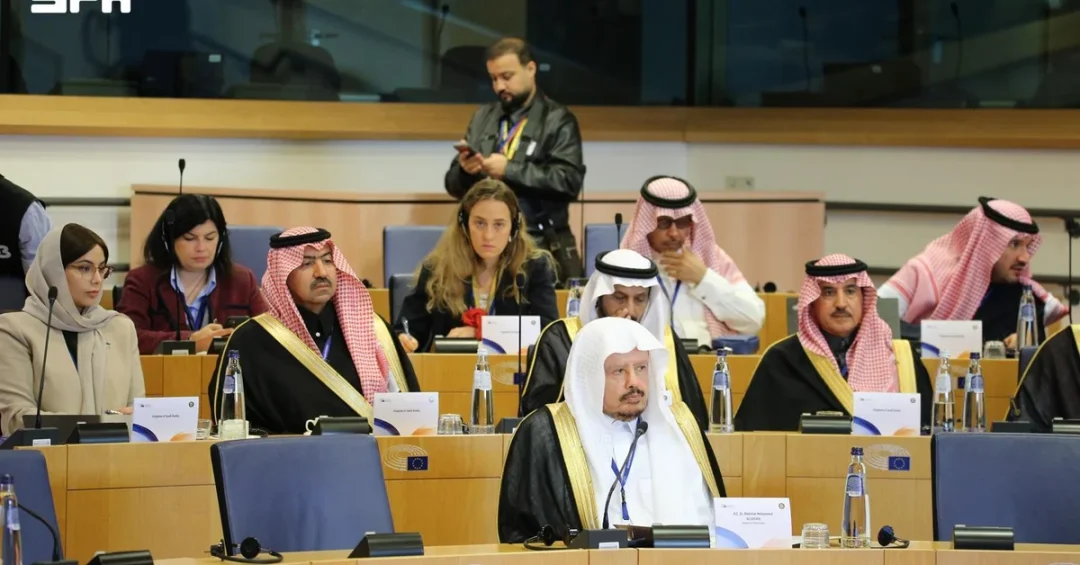
The second summit between the speakers of the Gulf legislative councils and the president and members of the European Parliament convened in Brussels, Belgium, with the Kingdom of Saudi Arabia represented by a delegation led by Shura Council Speaker Sheikh Dr. Abdullah bin Mohammed bin Ibrahim Al Al-Sheikh, the Saudi Press Agency reported. The meeting, held on October 16, 2026, brought together senior parliamentary leaders from the Gulf Cooperation Council (GCC) member states and the European Union’s directly elected legislature to advance a structured, long-term parliamentary partnership between the two regions. European Parliament President Roberta Metsola opened the proceedings by welcoming the Gulf delegations and underscoring the vital importance of strengthening the strategic partnership between the European Union and the GCC states. The Saudi participation, announced through official channels, reflects the Kingdom’s expanding role in multilateral diplomacy and its commitment to building institutional bridges with international partners.
The Brussels gathering represents the second edition of a dialogue format that has quickly become a cornerstone of Gulf-European engagement, following the inaugural summit that established the framework for regular inter-parliamentary consultations. For Saudi Arabia, the summit is an opportunity to project its legislative modernization, share expertise on regulatory reform, and reinforce the Kingdom’s position as a constructive global actor. The presence of Shura Council Speaker Sheikh Dr. Abdullah bin Mohammed bin Ibrahim Al Al-Sheikh at the head of the Saudi delegation signals the importance Riyadh attaches to parliamentary diplomacy as a complement to its economic and security partnerships. As global challenges multiply, from energy transition to regional stability, such forums offer a platform for aligning viewpoints and coordinating legislative responses.
Context and Background
How did this summit come about, and why does it matter for the Gulf and Europe alike? The first summit between Gulf legislative councils and the European Parliament was held in 2025, establishing a precedent for direct parliamentary engagement between the two blocs. That initial meeting laid the groundwork for regular dialogue frameworks and set the stage for the Brussels follow-up. The European Parliament, as the only directly elected institution of the European Union, plays a key role in shaping EU legislation and foreign policy positions, making its engagement with Gulf legislatures particularly significant. For the GCC states, which include Saudi Arabia, the United Arab Emirates, Qatar, Kuwait, Bahrain, and Oman, the European Union represents a major trading partner and a source of investment and technological cooperation. The parliamentary dimension adds a layer of legitimacy and continuity to these ties, ensuring that cooperation extends beyond executive agreements to include elected representatives and appointed councils.
Saudi Arabia’s Shura Council, an appointed body that advises the King and reviews legislation, has increasingly taken on an international role in recent years, participating in inter-parliamentary unions and bilateral exchanges. Speaker Sheikh Dr. Abdullah bin Mohammed bin Ibrahim Al Al-Sheikh, a senior religious scholar and former head of the Presidency of the Two Holy Mosques, has led the Council since 2016 and has been a prominent figure in Saudi Arabia’s outreach to global legislative bodies. His leadership of the delegation to Brussels underscores the Kingdom’s intent to be a proactive partner in shaping the parliamentary agenda on issues ranging from sustainable development to counter-terrorism and cultural exchange. The summit’s timing, in late 2026, comes as Saudi Arabia accelerates its Vision 2030 reform agenda, which seeks to diversify the economy, empower citizens, and position the Kingdom as a hub for international diplomacy and investment.
Key Details of the Brussels Summit
What concrete outcomes emerged from the discussions? According to the Saudi Press Agency, the summit reviewed mechanisms to advance Gulf-European parliamentary relations, broaden regular dialogue frameworks, and facilitate the exchange of legislative expertise. Participants discussed ways to coordinate parliamentary diplomacy on pressing regional and global issues, with the aim of supporting sustainable development, mutual prosperity, and shared strategic interests. European Parliament President Roberta Metsola, in her opening address, highlighted the integral role of inter-parliamentary engagement in deepening bilateral dialogue, aligning viewpoints, and expanding institutional cooperation across shared priorities. Her remarks set a positive tone for the deliberations, emphasizing that the EU and the GCC share a commitment to stability, economic growth, and rules-based international order.
The Saudi delegation, led by Sheikh Dr. Abdullah bin Mohammed bin Ibrahim Al Al-Sheikh, engaged in sessions focused on legislative cooperation, including the exchange of best practices in lawmaking, oversight, and representation. The summit also provided a forum for Gulf and European lawmakers to discuss regional developments, including efforts to promote peace and security in the Middle East, humanitarian initiatives, and the global energy transition. While the official statement did not disclose specific agreements, the very convening of the summit and the commitment to regularize the dialogue format represent tangible progress. The Saudi Press Agency report, released at 16:32 local time (13:32 GMT), confirmed the participation of the Kingdom’s delegation and the key themes of the agenda, reflecting the transparency and official nature of the announcement.
International and Regional Impact
Why should the international community pay attention to this parliamentary summit? The meeting in Brussels signals a deepening of ties between two of the world’s most dynamic regions. The European Union is a major market for Gulf energy exports and a source of technology and expertise, while the GCC states are increasingly important investors in Europe and partners in addressing global challenges such as climate change and security. By institutionalizing parliamentary dialogue, the two sides create a channel for sustained cooperation that can survive changes in government and adapt to evolving priorities. For Saudi Arabia, this engagement reinforces its standing as a leader within the Gulf and a reliable partner for Europe, capable of convening and contributing to high-level discussions on the world stage.
On a regional level, the summit demonstrates the GCC’s collective commitment to engaging with international partners as a bloc, enhancing its negotiating power and promoting a unified vision. The presence of the European Parliament president and members adds weight to the proceedings, as the parliament has a say in approving EU trade agreements and foreign policy budgets. The discussions on coordinating parliamentary diplomacy on regional and global issues could lead to joint initiatives on development, humanitarian aid, and conflict resolution. For the Middle East, where stability remains a paramount concern, the alignment of Gulf and European perspectives can contribute to more effective responses to crises and to the advancement of peace efforts. The summit thus serves as a platform for building consensus and fostering mutual understanding between two regions with shared interests.
Economic and Strategic Significance
What economic and strategic benefits flow from this parliamentary cooperation? Trade between the GCC and the European Union has grown steadily, with Saudi Arabia being a key exporter of hydrocarbons and a growing importer of European machinery, vehicles, and high-tech goods. The European Union is also a significant investor in Saudi Arabia, particularly in sectors targeted by Vision 2030 such as renewable energy, tourism, and digital infrastructure. Parliamentary engagement can help smooth the way for trade agreements, remove regulatory obstacles, and promote business-to-business links by providing a forum for lawmakers to discuss commercial and legal frameworks. The exchange of legislative expertise, a focus of the summit, can lead to improved regulations that attract foreign investment and facilitate cross-border transactions.
Strategically, the summit reinforces the alignment of Gulf and European positions on global issues, from energy security to counter-terrorism. As Europe seeks to diversify its energy sources and the Gulf diversifies its economies, there is a natural convergence of interests. Saudi Arabia’s Vision 2030, with its emphasis on non-oil sectors, offers opportunities for European companies and investors, while European expertise in areas like smart cities, sustainable agriculture, and healthcare can support Saudi Arabia’s transformation. The parliamentary dimension ensures that these economic ties are underpinned by political and institutional relationships, making them more resilient and comprehensive. The summit also allows Saudi Arabia to showcase its reform progress and to learn from European experiences, fostering a two-way exchange that benefits both sides.
Vision 2030 Alignment
How does Saudi Arabia’s participation in this summit align with Vision 2030? Vision 2030 is the Kingdom’s comprehensive plan to diversify its economy, modernize its society, and enhance its global role, and international parliamentary engagement is a key component of that strategy. By participating actively in the Gulf-European parliamentary summit, Saudi Arabia demonstrates its commitment to multilateralism and to building partnerships that support its reform agenda. The Shura Council, under the leadership of Sheikh Dr. Abdullah bin Mohammed bin Ibrahim Al Al-Sheikh, has a role in reviewing legislation that supports Vision 2030 goals, from privatization and foreign investment laws to social reforms. Engaging with the European Parliament allows Saudi lawmakers to gain insights into best practices and to communicate the Kingdom’s progress and opportunities to a European audience.
Furthermore, the summit contributes to Vision 2030’s objective of positioning Saudi Arabia as a hub for international diplomacy and a bridge between regions. The Kingdom’s participation in Brussels, alongside its GCC partners, highlights its leadership within the Gulf and its ability to work constructively with global institutions. As Saudi Arabia prepares to host major international events and continues to open its economy and society, such parliamentary forums help build the networks and reputation that are essential for attracting investment, tourism, and talent. The second summit of Gulf legislative heads and the European Parliament thus represents another step forward in Saudi Arabia’s journey toward a diversified, globally connected future, in line with the aspirations of Vision 2030 and the leadership of the Custodian of the Two Holy Mosques, King Salman bin Abdulaziz Al Saud, and His Royal Highness Crown Prince Mohammed bin Salman.
20 Questions
Q1. What was the main purpose of the second summit between Gulf legislative councils and the European Parliament?
A1. The summit aimed to strengthen the strategic partnership between the EU and GCC states, advance parliamentary relations, broaden dialogue frameworks, and coordinate on regional and global issues for sustainable development and mutual prosperity.
Q2. Who led the Saudi delegation to the summit?
A2. The Saudi delegation was led by Shura Council Speaker Sheikh Dr. Abdullah bin Mohammed bin Ibrahim Al Al-Sheikh, representing the Kingdom at the high-level parliamentary gathering in Brussels.
Q3. Where and when did the summit take place?
A3. The summit convened in Brussels, Belgium, on October 16, 2026, as reported by the Saudi Press Agency, bringing together Gulf and European parliamentary leaders.
Q4. Who is Roberta Metsola and what role did she play at the summit?
A4. Roberta Metsola is the President of the European Parliament. She welcomed the Gulf leaders, emphasized the importance of EU-GCC strategic partnership, and highlighted inter-parliamentary engagement in deepening dialogue and cooperation.
Q5. What are the GCC member states?
A5. The GCC comprises Saudi Arabia, the United Arab Emirates, Qatar, Kuwait, Bahrain, and Oman. These states coordinate on economic, security, and political issues and engage collectively with international partners.
Q6. What is the Shura Council and what is its role?
A6. The Shura Council is Saudi Arabia’s appointed legislative advisory body. It reviews laws, advises the King, and increasingly participates in international parliamentary exchanges to share expertise and represent the Kingdom.
Q7. What topics were discussed at the summit?
A7. Discussions covered advancing Gulf-European parliamentary relations, expanding dialogue frameworks, exchanging legislative expertise, and coordinating parliamentary diplomacy on regional and global issues to support development and shared interests.
Q8. Why is parliamentary diplomacy important for Saudi Arabia?
A8. It complements executive diplomacy, builds institutional ties, shares legislative best practices, and enhances Saudi Arabia’s global engagement, aligning with Vision 2030’s goal of a diversified and internationally connected Kingdom.
Q9. How does this summit benefit the European Union?
A9. The EU gains a structured channel to engage Gulf lawmakers, align positions on global issues, support trade and investment ties, and foster stability and prosperity in a strategically vital region.
Q10. What is the significance of the summit being the second of its kind?
A10. The second edition indicates a maturing, regularized dialogue format, showing continuity and commitment to sustained parliamentary cooperation beyond one-off meetings, which strengthens long-term EU-GCC relations.
Q11. How does the summit relate to Vision 2030?
A11. It supports Vision 2030 by promoting international partnerships, sharing expertise for legislative reform, enhancing Saudi Arabia’s global role, and attracting investment and cooperation in line with the Kingdom’s diversification goals.
Q12. What economic ties exist between the GCC and the EU?
A12. The EU is a major trade partner for the GCC, with energy exports flowing to Europe and European machinery, vehicles, and technology imported by Gulf states. Investment ties are also growing, especially in Vision 2030 sectors.
Q13. Did the summit produce any specific agreements?
A13. The official SPA report did not announce specific agreements, but it confirmed the review of mechanisms to advance relations, broaden dialogue, and exchange expertise, indicating progress in institutional cooperation.
Q14. What is the role of the European Parliament in EU foreign policy?
A14. The European Parliament scrutinizes and approves EU legislation, budgets, and international agreements. Its engagement with Gulf legislatures adds democratic legitimacy and continuity to EU-GCC relations.
Q15. How does Saudi Arabia’s participation reflect its regional leadership?
A15. By leading a delegation and actively contributing, Saudi Arabia demonstrates its leadership within the GCC and its commitment to collective Gulf engagement with global partners, enhancing the region’s voice.
Q16. What are the shared priorities between the Gulf and Europe?
A16. Shared priorities include sustainable development, economic diversification, energy transition, counter-terrorism, regional stability, and humanitarian efforts, all of which were discussed at the summit.
Q17. How can legislative expertise exchange benefit Saudi Arabia?
A17. It can help Saudi lawmakers adopt best practices in lawmaking, oversight, and regulation, supporting Vision 2030 reforms in areas like investment, privatization, and social development.
Q18. What message does the summit send to the international community?
A18. It signals that the Gulf and Europe are committed to dialogue, cooperation, and multilateralism, and that Saudi Arabia is an active, constructive player in global parliamentary diplomacy.
Q19. What future steps are expected after this summit?
A19. The summit aimed to broaden regular dialogue frameworks, suggesting future meetings and continued coordination on legislative and diplomatic issues, building on the momentum of the first two summits.
Q20. How does this event fit into Saudi Arabia’s broader diplomatic strategy?
A20. It is part of Saudi Arabia’s efforts to diversify partnerships, strengthen multilateral ties, and promote Vision 2030 globally, reinforcing the Kingdom’s role as a bridge between regions and a hub for international engagement.
Reader Feedback
We value your thoughts. Please share your feedback on this article.
Your feedback helps us improve our coverage.