


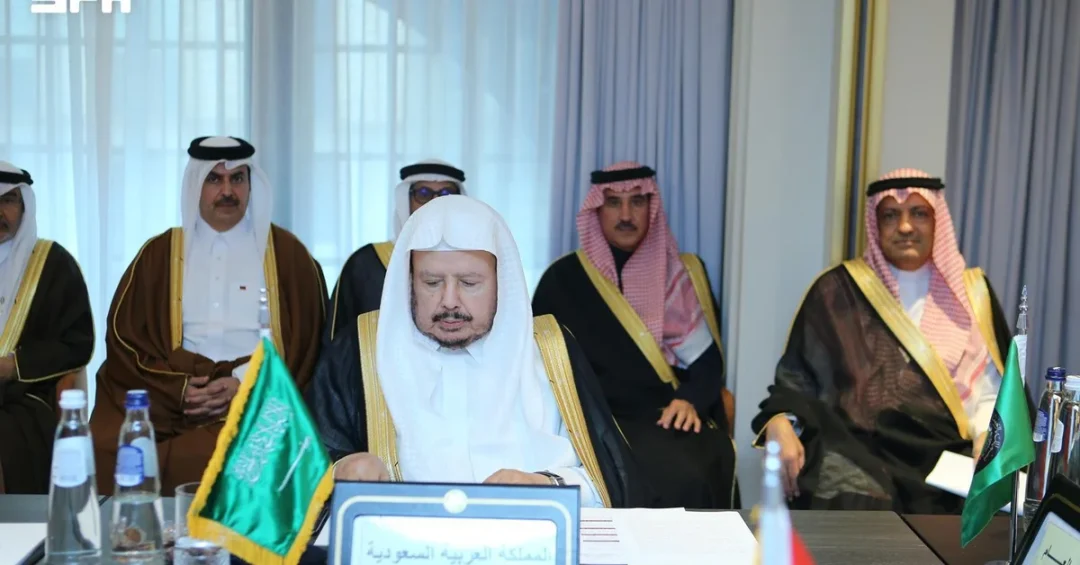
Sheikh Dr. Abdullah bin Mohammed bin Ibrahim Al Al-Sheikh, Speaker of the Shura Council of the Kingdom of Saudi Arabia, participated in a coordination meeting of the heads of the shura, representatives, national, and ummah councils of the Gulf Cooperation Council (GCC) member states, held in Brussels, Belgium, according to the Saudi Press Agency (SPA). The gathering took place on the sidelines of the second summit between the leaders of the GCC legislative councils and the President and members of the European Parliament, marking a further step in the institutionalization of parliamentary dialogue between the Gulf region and the European Union.
The meeting brought together the heads of Gulf legislative delegations to review key agenda items, harmonize regional positions on shared priorities, and explore avenues to broaden parliamentary dialogue and institutional cooperation with the European Parliament. The participation of the Shura Council Speaker underscores the Kingdom’s active role in coordinating Gulf parliamentary diplomacy and reflects the wider strategic direction set out under Saudi Vision 2030, which places international partnership and constructive engagement at the center of the Kingdom’s foreign policy. So what does this Brussels meeting signal about the Gulf’s collective approach to Europe?
Context and Background
The coordination meeting in Brussels represents the latest chapter in a steadily deepening relationship between the GCC legislative bodies and the European Parliament. The first summit between GCC legislative council leaders and the European Parliament established a framework for regular, structured exchanges, and the second summit has built on that foundation by giving Gulf delegations a dedicated platform to align their positions before engaging their European counterparts. This sequencing is deliberate: by coordinating internally first, the Gulf states are able to present a coherent regional perspective on issues ranging from trade and investment to energy security and climate cooperation.
The Shura Council, as the Kingdom’s consultative assembly, has played an increasingly visible role in this parliamentary track. Under the leadership of Sheikh Dr. Abdullah bin Mohammed bin Ibrahim Al Al-Sheikh, the Council has expanded its international outreach, hosting foreign parliamentary delegations in Riyadh and participating in multilateral forums across Europe, Asia, and the Arab world. This activity is consistent with the Council’s mandate to advise on legislation and policy while also serving as a channel for soft-power diplomacy that complements the work of the Ministry of Foreign Affairs.
For observers of Gulf affairs, the Brussels meeting is also notable for its timing. It comes amid a broader reconfiguration of global partnerships in which Gulf states are diversifying their international relationships and positioning themselves as bridges between continents. The GCC’s collective presence in Brussels, home to the institutions of the European Union, is a practical expression of that ambition. How often do parliamentary forums quietly shape the agreements that later define relations between regions?
Key Details of the Coordination Meeting
According to the Saudi Press Agency, the heads of the Gulf legislative delegations used the session to review key agenda items and to harmonize regional positions on shared priorities. This internal coordination is a core function of the GCC legislative track: it allows member states to identify common ground on issues such as economic integration, regulatory harmonization, and international legal cooperation before presenting a unified front in discussions with the European Parliament.
The meeting also explored avenues to broaden parliamentary dialogue and institutional cooperation with the European Parliament. This includes the potential for regular exchanges between committees, joint parliamentary forums, and structured consultations on legislative best practices. For the Shura Council, such engagement offers an opportunity to share the Kingdom’s legislative experience in areas such as economic reform, investment regulation, and social development, all of which are central to Vision 2030.
The participation of Sheikh Dr. Abdullah bin Mohammed bin Ibrahim Al Al-Sheikh in the coordination meeting reflects the Kingdom’s commitment to collective Gulf action. The Shura Council Speaker has consistently emphasized the importance of parliamentary diplomacy as a complement to official government channels, noting that legislative bodies can build relationships that endure beyond electoral cycles and changes of administration. What better way to build durable ties than through the institutions that write and review the laws?
International and Regional Impact
The Brussels coordination meeting carries implications that extend well beyond the parliamentary sphere. The European Union is one of the GCC’s largest trading partners, and the two blocs have been negotiating a free trade agreement for years. Parliamentary engagement can help sustain momentum on such negotiations by building familiarity and trust between legislators who will ultimately be asked to ratify any agreement. In this sense, the meeting is not merely procedural but strategic.
At the regional level, the coordination meeting reinforces GCC unity at a time when the Gulf states are collectively asserting a more prominent role in global affairs. By aligning their positions in Brussels, the Gulf delegations demonstrate that the GCC remains a relevant and effective platform for coordinating policy among its member states. This unity is particularly valuable in engagements with large multilateral bodies such as the European Parliament, where a single, coherent voice is more persuasive than a series of separate national positions.
For Saudi Arabia specifically, the meeting is an opportunity to advance its vision of a diversified and globally connected economy. Europe is a key source of foreign investment and a major market for Saudi non-oil exports, and parliamentary cooperation can help remove regulatory and political obstacles to deeper economic ties. How many trade deals have been unlocked by relationships built in rooms far from the negotiating table?
Economic and Strategic Significance
The economic dimension of the Brussels meeting is significant. The GCC and the European Union share a deep and growing commercial relationship, with energy, petrochemicals, logistics, and financial services among the key sectors. Saudi Arabia, as the largest GCC economy, has a particular interest in ensuring that this relationship remains stable and mutually beneficial. The Kingdom’s Vision 2030 reforms, including the expansion of the non-oil private sector and the development of giga-projects such as NEOM, have created new opportunities for European companies and investors.
Parliamentary dialogue can support these economic objectives by fostering a better understanding of the Kingdom’s regulatory environment and investment climate among European lawmakers. The Shura Council, with its expertise in reviewing legislation, is well placed to explain the legal and institutional reforms that underpin Vision 2030. This kind of engagement can help counter outdated perceptions and build confidence in the Kingdom’s direction.
Strategically, the meeting also underscores the GCC’s commitment to multilateralism. In a world of shifting alliances and rising geopolitical competition, the Gulf states are signaling that they value rules-based engagement and open channels of communication with major global actors. The European Parliament, as the directly elected legislative body of the EU, is an important interlocutor in that effort. What does it say about the Gulf’s global role that its legislators are now regular visitors to Brussels?
Vision 2030 Alignment
The participation of the Shura Council Speaker in the GCC legislative coordination meeting aligns closely with the objectives of Saudi Vision 2030, the Kingdom’s comprehensive reform program launched under the leadership of Crown Prince Mohammed bin Salman. Vision 2030 emphasizes the importance of international partnerships, economic diversification, and the Kingdom’s emergence as a hub connecting Asia, Europe, and Africa. Parliamentary diplomacy is one of the tools through which these goals are pursued, complementing the work of ministries and government agencies.
By engaging with European legislators, the Shura Council is helping to build the networks and relationships that support the Kingdom’s broader foreign policy objectives. This engagement also reflects the Vision 2030 commitment to a vibrant and open society, in which Saudi institutions participate actively in global conversations. As the Kingdom continues its transformation, such parliamentary exchanges will remain an important channel for sharing its story and learning from international partners.
The Brussels meeting is therefore more than a routine diplomatic event. It is a demonstration of the Gulf’s collective ambition and of Saudi Arabia’s leadership within that framework. As the second summit between GCC legislative leaders and the European Parliament proceeds, the foundations laid in these coordination sessions are likely to shape relations between the two regions for years to come. How will the next generation of Gulf and European leaders build on the conversations that began in Brussels?
20 Questions
Q1. What was the main purpose of the GCC legislative coordination meeting in Brussels?
A1. The meeting aimed to coordinate positions among Gulf legislative councils ahead of the second summit with the European Parliament, review key agenda items, and explore ways to broaden parliamentary cooperation between the GCC and the EU.
Q2. Who represented Saudi Arabia at the coordination meeting?
A2. Sheikh Dr. Abdullah bin Mohammed bin Ibrahim Al Al-Sheikh, Speaker of the Shura Council of the Kingdom of Saudi Arabia, represented the Kingdom at the coordination meeting of GCC legislative council heads in Brussels.
Q3. When and where did the meeting take place?
A3. The meeting was held in Brussels, Belgium, on the sidelines of the second summit between GCC legislative council leaders and the President and members of the European Parliament, according to the Saudi Press Agency.
Q4. What is the Shura Council of Saudi Arabia?
A4. The Shura Council is the Kingdom’s consultative assembly, which advises on legislation and policy. It plays an increasingly active role in parliamentary diplomacy and international engagement on behalf of Saudi Arabia.
Q5. What is the GCC and which countries are members?
A5. The Gulf Cooperation Council is a regional organization comprising Saudi Arabia, the United Arab Emirates, Kuwait, Qatar, Bahrain, and Oman. It coordinates policy on economic, security, and political issues among member states.
Q6. What does the second GCC-EU legislative summit involve?
A6. The second summit brings together leaders of GCC legislative councils and the President and members of the European Parliament to discuss shared priorities, strengthen institutional ties, and promote dialogue between the two regions.
Q7. Why is parliamentary diplomacy important for Saudi Arabia?
A7. Parliamentary diplomacy builds relationships beyond official government channels, fostering trust and understanding between legislators. It complements Saudi Arabia’s foreign policy and supports the international partnerships central to Vision 2030.
Q8. How does this meeting relate to Saudi Vision 2030?
A8. Vision 2030 emphasizes international partnership and economic diversification. The meeting supports these goals by strengthening ties with Europe, a key source of investment and a major market for Saudi non-oil exports.
Q9. What economic issues were likely discussed at the meeting?
A9. Discussions likely covered trade and investment cooperation, regulatory harmonization, energy security, and ways to facilitate business between the GCC and the European Union, though specific agenda items were not detailed in the SPA report.
Q10. What is the significance of Brussels as the meeting location?
A10. Brussels hosts the institutions of the European Union, including the European Parliament. Meeting there allows Gulf legislators to engage directly with EU counterparts and underscores the importance of the GCC-EU relationship.
Q11. How does the Shura Council engage with European legislators?
A11. The Shura Council participates in multilateral forums, hosts foreign delegations in Riyadh, and engages in structured parliamentary dialogue. These activities aim to share Saudi legislative experience and build mutual understanding.
Q12. What are the shared priorities between the GCC and the EU?
A12. Shared priorities include trade and investment, energy cooperation, climate change, regional stability, and counterterrorism. Parliamentary dialogue helps align positions on these issues and promotes mutual interests.
Q13. Did the meeting produce any formal agreements?
A13. The SPA report did not mention formal agreements. The meeting focused on coordination, harmonizing regional positions, and exploring avenues for broader parliamentary dialogue and institutional cooperation.
Q14. How does this meeting fit into the broader GCC-EU relationship?
A14. It is part of a growing parliamentary track that complements ongoing negotiations and cooperation between the GCC and the EU, including efforts toward a free trade agreement and sectoral partnerships.
Q15. What role does Crown Prince Mohammed bin Salman play in these initiatives?
A15. Vision 2030, launched under the leadership of Crown Prince Mohammed bin Salman, provides the strategic framework for Saudi Arabia’s international engagement, including parliamentary diplomacy and economic diversification.
Q16. How might this meeting affect Saudi-European trade relations?
A16. By building trust and understanding among legislators, the meeting can help sustain momentum on trade negotiations and reduce political obstacles to deeper economic ties between Saudi Arabia and Europe.
Q17. What is the significance of Gulf unity in these meetings?
A17. A unified Gulf position is more persuasive in engagements with large multilateral bodies like the European Parliament. Coordination among GCC states strengthens their collective voice and regional influence.
Q18. What outcomes can be expected from the second summit?
A18. The summit is expected to deepen institutional cooperation, establish regular parliamentary exchanges, and identify areas for joint action on shared priorities between the GCC and the European Parliament.
Q19. How does this event reflect Saudi Arabia’s global role?
A19. It demonstrates the Kingdom’s active participation in multilateral diplomacy and its leadership within the GCC, reinforcing its position as a bridge between regions and a responsible global partner.
Q20. What is the next step after the coordination meeting?
A20. The next step is the second summit between GCC legislative leaders and the European Parliament, where the coordinated positions will be presented and further avenues for cooperation will be discussed.
Reader Feedback
We value your thoughts. Please share your feedback on this article.
Your feedback helps us improve our coverage.