


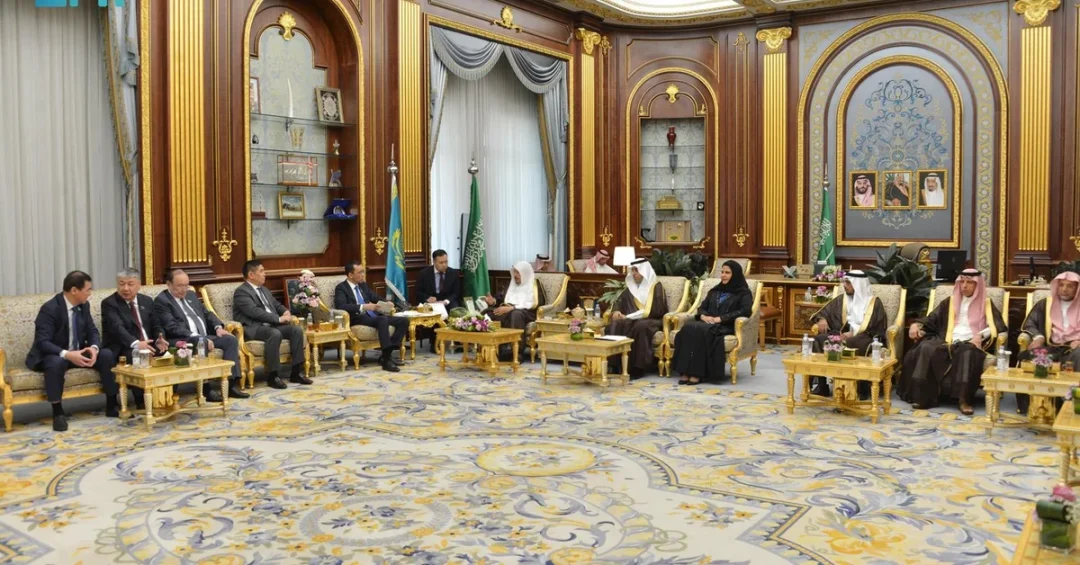
Riyadh, April 14, 2025 — Shura Council Speaker Sheikh Dr. Abdullah Al Al-Sheikh held official talks with Kazakhstan Senate Chairman Maulen Ashimbayev at the Shura Council headquarters in Riyadh on Monday, reinforcing parliamentary ties between the Kingdom of Saudi Arabia and the Republic of Kazakhstan. The meeting, reported by the Saudi Press Agency (SPA), focused on expanding bilateral cooperation, particularly in the legislative sphere, and addressed regional and international issues of mutual interest. The talks underscore Saudi Arabia’s growing diplomatic engagement with Central Asia and its commitment to fostering international partnerships under the leadership of the Custodian of the Two Holy Mosques, King Salman bin Abdulaziz Al Saud, and His Royal Highness Crown Prince Mohammed bin Salman.
During the talks, Dr. Al Al-Sheikh welcomed Chairman Ashimbayev and his accompanying delegation, offering an overview of the Shura Council’s legislative and oversight roles, as well as its internal working mechanisms. He highlighted the strong and growing relations between the two nations and expressed hope for further cooperation, especially in strengthening parliamentary ties and expanding bilateral engagement. The meeting reflects the Kingdom’s active parliamentary diplomacy, which has become an integral component of Saudi foreign policy. As the Shura Council continues to play a vital role in Saudi Arabia’s governance framework, such high-level exchanges demonstrate the Kingdom’s openness to international dialogue and its pursuit of mutually beneficial partnerships that align with Vision 2030’s global engagement objectives.
Context and Background
How did Saudi-Kazakh relations evolve to reach this level of parliamentary cooperation? The relationship between the Kingdom of Saudi Arabia and Kazakhstan has deep historical roots, dating back to the early 1990s following Kazakhstan’s independence. Diplomatic ties were established in 1992, and since then, the two countries have steadily expanded cooperation across political, economic, and cultural domains. Kazakhstan, as the largest landlocked country in the world and a key player in Central Asia, holds strategic importance for Saudi Arabia’s outreach to the region. Both nations share membership in the Organisation of Islamic Cooperation (OIC) and have consistently supported each other in international forums. The Shura Council, Saudi Arabia’s consultative assembly, has been instrumental in fostering these ties through parliamentary diplomacy, hosting delegations and participating in bilateral exchanges that complement governmental efforts.
The visit by Chairman Ashimbayev is part of a broader pattern of increased engagement between Saudi Arabia and Central Asian states. In recent years, the Kingdom has intensified its diplomatic and economic outreach to the region, recognizing its geopolitical significance and potential for trade and investment. The Shura Council’s role in this context is multifaceted: it not only facilitates legislative dialogue but also serves as a platform for discussing shared challenges and opportunities. The meeting in Riyadh follows previous interactions between Saudi and Kazakh officials, including high-level visits and agreements aimed at boosting cooperation in areas such as energy, agriculture, and technology. This continuity demonstrates the durability of the bilateral relationship and the mutual desire to elevate it to new heights.
Parliamentary diplomacy has become an essential tool in Saudi Arabia’s foreign policy toolkit, enabling the Kingdom to build bridges and foster understanding beyond traditional diplomatic channels. The Shura Council, under the leadership of Dr. Al Al-Sheikh, has actively engaged with counterparts worldwide, reflecting the Kingdom’s commitment to dialogue and cooperation. For Kazakhstan, engaging with Saudi Arabia offers access to a key Islamic nation and a growing economic power, while for Saudi Arabia, Kazakhstan represents a reliable partner in a region of increasing strategic importance. The talks in Riyadh thus build on a solid foundation of mutual respect and shared interests, setting the stage for deeper collaboration in the years ahead.
Key Details of the Talks
What specific areas of cooperation were discussed during the meeting? According to the official SPA report, the talks covered various aspects of cooperation between the two nations, particularly in the parliamentary sphere. Dr. Al Al-Sheikh provided an overview of the Shura Council’s legislative and oversight roles, highlighting its internal working mechanisms and its function as a consultative body that advises the government on policy matters. He emphasized the importance of strengthening parliamentary ties through regular exchanges, joint committees, and shared legislative research. Chairman Ashimbayev, in turn, expressed his pleasure at visiting the Kingdom and extended gratitude for the warm welcome and hospitality. He affirmed that Saudi Arabia is a key and reliable partner for Kazakhstan, both within the Islamic world and in international affairs.
Ashimbayev also praised the remarkable transformations the Kingdom is undergoing under Vision 2030, wishing continued progress and prosperity for Saudi Arabia and its people. He expressed optimism that the visit would further enhance bilateral relations, signaling Kazakhstan’s keen interest in learning from Saudi Arabia’s development experience. The discussions included regional and international issues of mutual interest, such as security, stability, and economic development. While specific outcomes were not detailed in the SPA report, the tone and content of the talks suggest a shared commitment to deepening cooperation across multiple sectors. The meeting also likely touched on opportunities for collaboration in trade, investment, and cultural exchange, given the broad scope of Saudi-Kazakh relations.
The Shura Council’s legislative and oversight roles are central to Saudi Arabia’s governance, and sharing these mechanisms with international partners helps demystify the Kingdom’s political system and foster transparency. Dr. Al Al-Sheikh’s overview provided the Kazakh delegation with insights into how the Council operates, including its committee structure and its role in reviewing laws and treaties. This exchange of knowledge is valuable for Kazakhstan, which is also navigating its own legislative reforms. The talks thus served both a diplomatic and an educational purpose, reinforcing the bonds between the two legislative bodies. The presence of accompanying delegates from both sides further enriched the discussions, allowing for a comprehensive exploration of areas where parliamentary cooperation can be enhanced.
International and Regional Impact
How does this meeting influence Saudi Arabia’s standing in Central Asia and the broader Islamic world? The talks between the Shura Council Speaker and the Kazakh Senate Chairman have implications beyond the bilateral relationship. Saudi Arabia’s engagement with Kazakhstan is part of a strategic push to strengthen ties with Central Asian nations, a region that has gained prominence due to its energy resources, geographic location, and potential for economic growth. By fostering parliamentary diplomacy, the Kingdom positions itself as a reliable partner and a bridge between the Islamic world and other regions. This aligns with Saudi Arabia’s broader foreign policy objectives of promoting stability, dialogue, and cooperation. Kazakhstan, as a member of the OIC and the Eurasian Economic Union, serves as a vital link between different geopolitical spheres, and its partnership with Saudi Arabia enhances both nations’ ability to address shared challenges.
Regionally, the meeting reinforces Saudi Arabia’s role as a leader in the Islamic world, particularly through institutions like the OIC and the Islamic Development Bank. Kazakhstan’s affirmation of Saudi Arabia as a key and reliable partner underscores the Kingdom’s soft power and its ability to build consensus. On the international stage, the talks contribute to Saudi Arabia’s image as a responsible global actor committed to multilateralism and peaceful dialogue. As the Kingdom prepares to host major events and assumes greater responsibilities in international organizations, such parliamentary exchanges help solidify its network of allies and partners. For Kazakhstan, the visit signals its commitment to diversifying its foreign relations and learning from Saudi Arabia’s successful modernization journey under Vision 2030.
Economic and Strategic Significance
What economic opportunities does this parliamentary engagement unlock for both nations? While the SPA report did not specify economic agreements, the talks are likely to catalyze commercial and investment cooperation. Saudi Arabia and Kazakhstan have significant potential for collaboration in energy, agriculture, mining, and technology. Kazakhstan is rich in natural resources, including oil, gas, and minerals, and Saudi Arabia’s expertise in energy and petrochemicals could be mutually beneficial. Moreover, the Kingdom’s Vision 2030 economic diversification agenda opens avenues for Kazakh businesses to invest in non-oil sectors such as tourism, entertainment, and renewable energy. The parliamentary dialogue can facilitate these economic ties by creating a favorable legislative environment and promoting business-to-business connections. As both countries seek to diversify their economies, partnership in these areas becomes increasingly strategic.
Strategically, the meeting underscores Saudi Arabia’s pivot toward Asia and its efforts to build a network of partnerships along the Belt and Road Initiative and beyond. Kazakhstan’s location at the crossroads of Europe and Asia makes it a crucial partner for trade routes and logistics. Saudi Arabia’s investments in infrastructure and logistics, both domestically and abroad, could align with Kazakhstan’s development goals. Additionally, cooperation in security and counterterrorism is of mutual interest, given the shared challenges in the region. The parliamentary talks thus serve as a platform to discuss these strategic issues, even if specific agreements are not immediately announced. The visit also highlights the role of the Shura Council in supporting the Kingdom’s economic diplomacy, complementing the efforts of ministries and the private sector.
Vision 2030 Alignment
How does this parliamentary engagement reflect the objectives of Saudi Vision 2030? Vision 2030, launched by Crown Prince Mohammed bin Salman in 2016, aims to transform Saudi Arabia into a diversified, global economy and a hub for international diplomacy. The Shura Council’s active engagement with Kazakhstan aligns with several Vision 2030 pillars, including strengthening international partnerships, promoting moderate Islam, and enhancing the Kingdom’s global standing. By building parliamentary ties, Saudi Arabia fosters mutual understanding and cooperation, which are essential for attracting investment, sharing knowledge, and addressing global challenges. The visit also showcases the Kingdom’s commitment to modernization and openness, as Chairman Ashimbayev praised the remarkable transformations underway. Such exchanges are instrumental in projecting Saudi Arabia’s progress and Vision 2030 achievements to the world, reinforcing its image as a dynamic and forward-looking nation.
Furthermore, Vision 2030 emphasizes the importance of soft power and cultural diplomacy, and parliamentary exchanges are a key component of this strategy. The Shura Council’s interactions with counterparts like Kazakhstan’s Senate help build people-to-people ties and foster a positive perception of Saudi Arabia. As the Kingdom continues to implement Vision 2030, its legislative body will play an increasingly vital role in international relations, ensuring that Saudi Arabia’s voice is heard and its interests are represented. The talks with Chairman Ashimbayev are a testament to this ongoing effort, demonstrating how parliamentary diplomacy contributes to the Kingdom’s broader goals of prosperity, security, and global influence. In conclusion, this meeting not only strengthens Saudi-Kazakh relations but also advances Saudi Arabia’s vision for a connected and cooperative world.
20 Questions
Q1. Who held official talks in Riyadh on April 14, 2025?
A1. Shura Council Speaker Sheikh Dr. Abdullah Al Al-Sheikh held talks with Kazakhstan Senate Chairman Maulen Ashimbayev at the Shura Council headquarters in Riyadh.
Q2. What was the main focus of the discussions?
A2. The talks focused on strengthening parliamentary ties and expanding bilateral cooperation between Saudi Arabia and Kazakhstan, as well as regional and international issues of mutual interest.
Q3. What did Dr. Al Al-Sheikh highlight about the Shura Council?
A3. He provided an overview of the Shura Council’s legislative and oversight roles, as well as its internal working mechanisms.
Q4. How did Chairman Ashimbayev describe Saudi Arabia?
A4. He affirmed that Saudi Arabia is a key and reliable partner for Kazakhstan, both within the Islamic world and in international affairs.
Q5. What did Ashimbayev say about Vision 2030?
A5. He praised the remarkable transformations the Kingdom is undergoing under Vision 2030 and wished continued progress and prosperity for Saudi Arabia and its people.
Q6. What did Ashimbayev express optimism about?
A6. He expressed optimism that the visit would further enhance bilateral relations between Saudi Arabia and Kazakhstan.
Q7. When were diplomatic ties established between Saudi Arabia and Kazakhstan?
A7. Diplomatic relations were established in 1992 following Kazakhstan’s independence.
Q8. What organizations do both countries share membership in?
A8. Both are members of the Organisation of Islamic Cooperation (OIC) and have supported each other in international forums.
Q9. What is the role of the Shura Council in Saudi governance?
A9. The Shura Council is a consultative assembly that advises the government on policy matters and reviews laws and treaties.
Q10. How does this meeting fit into Saudi Arabia’s foreign policy?
A10. It reflects Saudi Arabia’s active parliamentary diplomacy and its strategic outreach to Central Asia, enhancing international partnerships.
Q11. What economic areas could benefit from this cooperation?
A11. Potential areas include energy, agriculture, mining, technology, tourism, and renewable energy, aligning with Vision 2030 diversification goals.
Q12. What is the significance of Kazakhstan in Central Asia?
A12. Kazakhstan is the largest landlocked country and a key player in Central Asia, strategically located between Europe and Asia.
Q13. How does parliamentary diplomacy benefit Saudi Arabia?
A13. It builds bridges, fosters understanding, and complements governmental efforts in international relations.
Q14. What did Dr. Al Al-Sheikh hope for regarding bilateral engagement?
A14. He expressed hope for further cooperation, particularly in strengthening parliamentary ties and expanding bilateral engagement.
Q15. What regional issues were likely discussed?
A15. Regional and international issues of mutual interest, including security, stability, and economic development, were discussed.
Q16. How does this visit reflect Vision 2030?
A16. It aligns with Vision 2030’s pillars of international partnership, moderate Islam, and enhancing Saudi Arabia’s global standing.
Q17. What did Ashimbayev express gratitude for?
A17. He extended his gratitude for the warm welcome and hospitality extended to him and his delegation.
Q18. What is the Shura Council’s role in Vision 2030?
A18. The Shura Council supports economic diplomacy and international engagement, complementing ministries and the private sector.
Q19. How does this meeting enhance Saudi-Kazakh relations?
A19. It strengthens parliamentary ties, promotes dialogue, and opens avenues for cooperation in various sectors.
Q20. What is the expected outcome of the visit?
A20. The visit is expected to further enhance bilateral relations and pave the way for deeper collaboration in parliamentary and other fields.
Reader Feedback
We value your thoughts. Please share your feedback on this article.
Your feedback helps us improve our coverage.
Related articles
 HCI Conference: Entrepreneurial Mindset for Youth
 Minister of Commerce Launches ‘Future Skills Initiative’ Under Saudi-British Strategic Partnership Council
 Saudi Arabia Hosts WWC Board to Discuss Key Challenges Facing Water
 Bangladesh Signs OIC Labor Center Statute in Jeddah
 Riyadh Governor Honors King Faisal Prize 2025 Winners
 Saudi Arabia Weather Forecast for Tuesday: Dust and Rain