


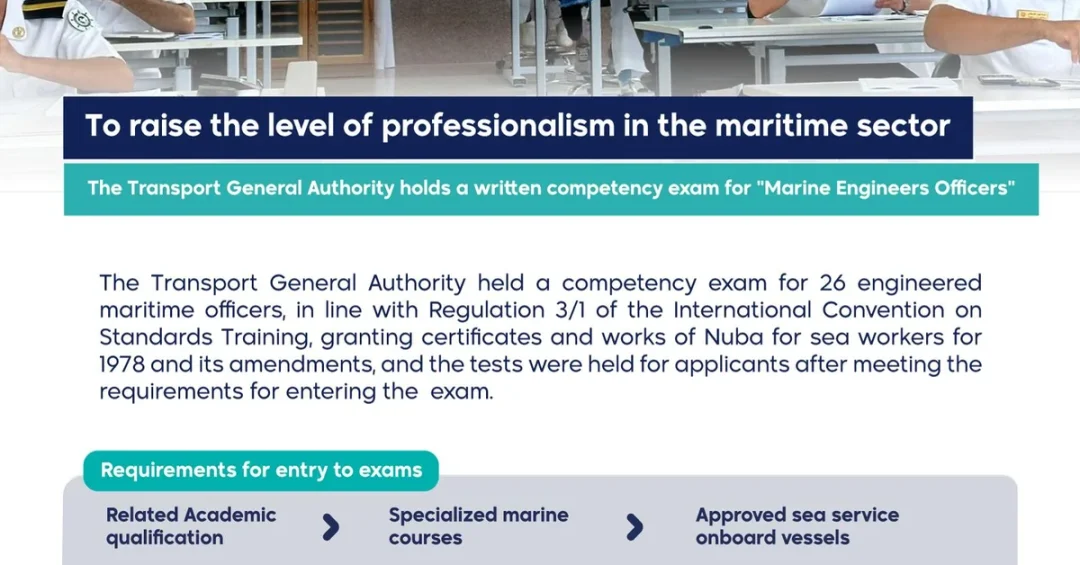
The Transport General Authority (TGA) has conducted a written competency exam for 26 aspiring marine engineer officers, aligning with Regulation 3/1 of the 1978 International Convention on Standard of Training Certification and Watchkeeping (STCW), as amended. This assessment, held in Riyadh, verifies that national candidates possess the necessary skills and knowledge to operate vessels effectively and safely, reinforcing Saudi Arabia’s commitment to maritime excellence.
Context and Background
The exam forms part of the TGA’s ongoing efforts to enhance the maritime transport sector, a key pillar of the Kingdom’s national transport and logistics strategy. By adhering to the STCW convention, Saudi Arabia ensures its marine professionals meet globally recognized standards, facilitating international cooperation and trade. This initiative also supports the development of a skilled national workforce, reducing reliance on foreign expertise and boosting local employment opportunities.
Exam Requirements and Process
Candidates must demonstrate a strong academic foundation in relevant fields, complete specialized maritime training courses, and gain practical experience by serving on approved training vessels. The written exam is followed by an oral assessment, and those who pass both components receive a certificate of competency, officially recognizing their skills as marine engineer officers. The TGA’s rigorous selection process ensures that only the most qualified individuals are certified, upholding the highest safety and operational standards in the maritime industry.
Implications and Impact
The successful completion of this exam will contribute to the growth of Saudi Arabia’s maritime sector, enhancing its capacity for efficient and safe vessel operations. This development also supports the Kingdom’s strategic position as a global logistics hub, facilitating trade and commerce. Moreover, the certification of national marine engineer officers will create new career opportunities for Saudi youth, aligning with Vision 2030’s goal of empowering the nation’s human capital.
Vision 2030 Alignment
The TGA’s competency exam is a direct reflection of Saudi Arabia’s commitment to developing a world-class maritime industry under Vision 2030. By investing in human capital and adhering to international standards, the Kingdom is building a sustainable and competitive sector that will drive economic diversification and global connectivity. This initiative paves the way for a brighter future, where Saudi professionals lead the maritime industry with excellence and innovation.
20 Questions
Q1. What is the purpose of the written competency exam conducted by the TGA?
A1. The exam ensures that aspiring marine engineer officers possess the necessary skills and knowledge to operate vessels effectively and safely, aligning with international maritime standards and supporting Saudi Arabia’s national transport and logistics strategy.
Q2. How many candidates participated in the exam?
A2. A total of 26 aspiring marine engineer officers participated in the written competency exam conducted by the Transport General Authority, demonstrating their readiness to contribute to the Kingdom’s maritime sector.
Q3. Which international convention does the exam align with?
A3. The exam aligns with Regulation 3/1 of the 1978 International Convention on Standard of Training Certification and Watchkeeping (STCW), as amended, ensuring global consistency in maritime training and certification.
Q4. What are the basic academic requirements for candidates?
A4. Candidates must demonstrate a strong academic foundation in relevant fields such as marine engineering, naval architecture, or related disciplines, which provides the theoretical background necessary for professional competency.
Q5. What training courses must candidates complete?
A5. Candidates must complete specialized maritime training courses covering areas like marine propulsion systems, safety protocols, navigation equipment, and emergency procedures, all designed to equip them with practical skills for vessel operations.
Q6. What practical experience is required?
A6. Candidates must gain practical experience by serving on approved training vessels, where they apply theoretical knowledge in real-world maritime environments, handling machinery, monitoring systems, and responding to operational challenges.
Q7. What happens after passing the written exam?
A7. After passing the written exam, candidates must undergo an oral assessment to evaluate their practical understanding and decision-making capabilities. Successful completion of both assessments grants them a certificate of competency.
Q8. What does the certificate of competency signify?
A8. The certificate officially recognizes candidates as qualified marine engineer officers, validating their skills and knowledge to operate vessels safely and efficiently, and is recognized under international maritime regulations.
Q9. Which authority conducted the exam?
A9. The Transport General Authority (TGA) of Saudi Arabia conducted the written competency exam, as part of its regulatory role to ensure the highest standards in the country’s maritime transport sector.
Q10. Where was the exam held?
A10. The exam was held in Riyadh, the capital city of Saudi Arabia, serving as a central location for candidates from various regions to participate in the national competency assessment.
Q11. How does this exam support Saudi Arabia’s national strategy?
A11. The exam supports the national transport and logistics strategy by enhancing the maritime sector’s capacity, ensuring a skilled workforce, and promoting safety and efficiency in vessel operations, all crucial for economic growth.
Q12. What are the benefits of having certified marine engineer officers?
A12. Certified officers ensure safe and efficient vessel operations, reduce the risk of maritime accidents, and enhance Saudi Arabia’s reputation as a reliable maritime player, thereby attracting international trade and investment.
Q13. How does this initiative align with Vision 2030?
A13. The initiative aligns with Vision 2030 by developing local talent, reducing unemployment, and diversifying the economy through a robust maritime sector, which is a key component of the Kingdom’s long-term development plan.
Q14. What is the role of the STCW convention?
A14. The STCW convention sets international standards for training, certification, and watchkeeping for seafarers, ensuring that they meet global requirements, and facilitates mutual recognition of certificates among member states.
Q15. Are there any oral assessments involved?
A15. Yes, after the written exam, candidates must undergo an oral assessment to test their practical knowledge, problem-solving skills, and ability to respond to emergency situations, ensuring they are fully competent for the role.
Q16. How often are such exams conducted?
A16. The TGA conducts these exams periodically to maintain a steady pipeline of qualified marine engineer officers, adapting to the sector’s needs and ensuring continuous development of the maritime workforce.
Q17. What are the career prospects for successful candidates?
A17. Successful candidates can pursue careers as marine engineer officers on various vessels, including commercial ships, tankers, and offshore support vessels, with opportunities for advancement and specialization in the maritime industry.
Q18. How does the exam contribute to maritime safety?
A18. By ensuring that marine engineer officers are highly skilled and knowledgeable, the exam directly contributes to maritime safety, reducing the likelihood of machinery failures, accidents, and environmental hazards at sea.
Q19. What is the significance of the 1978 STCW convention?
A19. The 1978 STCW convention was the first international treaty to establish minimum requirements for seafarer training and certification, and its amendments ensure that standards remain current with technological and operational advancements.
Q20. How does Saudi Arabia benefit from this initiative?
A20. Saudi Arabia benefits by building a self-reliant maritime sector, creating jobs for nationals, and positioning itself as a global logistics hub, all of which contribute to economic diversification and the realization of Vision 2030 goals.
Reader Feedback
We value your thoughts. Please share your feedback on this article.
Your feedback helps us improve our coverage.