


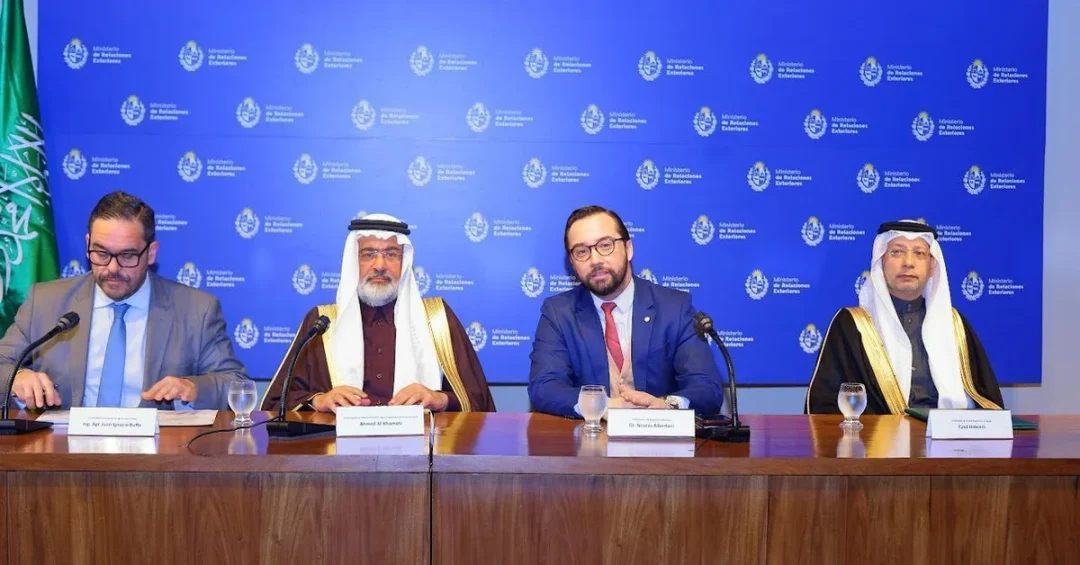
The first session of the Saudi-Uruguayan Joint Committee commenced yesterday in Montevideo, Uruguay, marking a significant step in bilateral relations. The two-day meeting, which began on August 20, 2024, aims to enhance cooperation across multiple sectors for the mutual benefit of both nations. The Saudi delegation is headed by Eng. Ahmad Alayadh, Deputy Minister of Environment, Water and Agriculture for Agriculture, while the Uruguayan side is led by Dr. Nicolas Albertoni, Deputy Minister of Foreign Affairs. This engagement underscores the Kingdom’s commitment to fostering international partnerships aligned with its Vision 2030 goals.
Context and Background
The joint committee meeting is part of a broader framework defined by the general agreement for economic and technical cooperation between Saudi Arabia and Uruguay. This agreement, signed in previous years, serves as a platform to deepen ties in areas of shared interest. The current session builds on ongoing diplomatic efforts, reflecting the Kingdom’s proactive approach to strengthening its global footprint. Eng. Alayadh emphasized that such meetings are instrumental in solidifying relations between the two countries, providing a structured avenue for dialogue and collaboration. The meeting also comes at a time when Saudi Arabia is actively diversifying its international partnerships under Vision 2030, which prioritizes economic integration and sustainable development.
Key Details
During the session, several concrete outcomes were achieved. Alayadh witnessed the signing of a memorandum of understanding (MoU) that establishes a joint business council between the Council of Saudi Chambers and the Union of Exporters of Uruguay. This council is expected to facilitate trade and investment opportunities, enhancing economic ties between the private sectors of both nations. Additionally, the committee approved a comprehensive work program designed to bolster collaboration across various sectors. Two subcommittees were established, focusing on economic, commercial, agricultural, cultural, and sports cooperation. The Saudi and Uruguayan delegations expressed a mutual desire to enhance cooperation in critical areas, including environment, water, agriculture, food security, energy, health, and investment. They also highlighted the pivotal role of the private sector in executing joint projects, recognizing its potential to drive innovation and economic growth.
Implications and Impact
The outcomes of this joint committee meeting carry significant implications for Saudi-Uruguayan relations and beyond. By establishing a joint business council and subcommittees, both countries are laying the groundwork for more structured and sustained engagement. This move aligns with Saudi Arabia’s broader strategy to forge strong economic partnerships in Latin America, a region with growing strategic importance. Enhanced cooperation in agriculture and food security is particularly relevant, as Saudi Arabia seeks to diversify its food sources and ensure long-term security. The focus on energy and investment also opens new avenues for collaboration, especially in renewable energy and technology transfer. Moreover, the involvement of the private sector signals a shift towards more commercially driven partnerships, which are likely to yield tangible economic benefits. This meeting also serves as a diplomatic signal of the Kingdom’s reliability as a global partner, committed to mutual upliftment and shared prosperity.
Vision 2030 Alignment
This joint committee session directly supports Saudi Arabia’s Vision 2030, which aims to diversify the economy and strengthen international cooperation. The Kingdom’s engagement with Uruguay reflects its goal of building robust global alliances that foster economic growth, innovation, and cultural exchange. By promoting cooperation in agriculture, water, and food security, the Kingdom is addressing national priorities while contributing to global sustainability. Moreover, the MoU between the Saudi business council and Uruguayan exporters underscores the private sector’s role as a driver of economic diversification, a key pillar of Vision 2030. As Saudi Arabia continues to open its doors to the world, such partnerships exemplify its commitment to becoming a hub for trade, investment, and cross-cultural dialogue. The forward-looking nature of this engagement positions both nations to reap long-term benefits, cementing stronger ties that will underpin future collaboration.
20 Questions
Q1. What is the Saudi-Uruguayan Joint Committee?
A1. The Saudi-Uruguayan Joint Committee is a bilateral forum established under a general agreement for economic and technical cooperation between the two countries. It facilitates dialogue on enhancing collaboration across sectors, with the goal of strengthening ties and fostering mutual development.
Q2. Where did the first session take place?
A2. The first session was held in Montevideo, Uruguay, over two days, beginning on August 20, 2024. The choice of Montevideo highlights Uruguay’s role in hosting this important bilateral meeting.
Q3. Who headed the Saudi delegation?
A3. The Saudi delegation was headed by Eng. Ahmad Alayadh, Deputy Minister of Environment, Water and Agriculture for Agriculture. His leadership underscored the agricultural focus of the cooperation.
Q4. Who headed the Uruguayan delegation?
A4. Dr. Nicolas Albertoni, Deputy Minister of Foreign Affairs of Uruguay, led the Uruguayan side. His diplomatic expertise ensured effective discussions.
Q5. What was the primary aim of the meeting?
A5. The primary aim was to explore ways to boost cooperation in various sectors, including economy, trade, agriculture, culture, and sports, for the benefit of both countries.
Q6. What significant agreement was signed during the session?
A6. A memorandum of understanding (MoU) establishing a joint business council between the Council of Saudi Chambers and the Union of Exporters of Uruguay was signed, aiming to support trade.
Q7. What is the purpose of the joint business council?
A7. The joint business council aims to facilitate trade and investment between the two countries, engaging private sectors to identify and pursue business opportunities.
Q8. How many subcommittees were established?
A8. Two subcommittees were established to focus on economic, commercial, agricultural, cultural, and sports cooperation.
Q9. What specific sectors were highlighted for enhanced cooperation?
A9. Sectors highlighted include environment, water, agriculture, food security, energy, health, and investment.
Q10. What is the role of the private sector in this cooperation?
A10. The private sector is considered essential in executing joint projects, with both sides emphasizing its importance in driving economic growth and innovation.
Q11. How does this meeting align with Saudi Arabia’s Vision 2030?
A11. The meeting aligns with Vision 2030 by promoting international cooperation and economic diversification, fostering partnerships that contribute to sustainable development.
Q12. Why is cooperation in agriculture and food security important?
A12. Cooperation in agriculture and food security is vital for Saudi Arabia to diversify food sources, enhance sustainability, and ensure long-term security, aligning with national priorities.
Q13. What is the significance of the general agreement for economic and technical cooperation?
A13. This agreement provides a framework for bilateral collaboration, facilitating structured dialogue and joint initiatives across various sectors.
Q14. How long did the committee meeting last?
A14. The meeting lasted for two days, allowing for in-depth discussions and the approval of a comprehensive work program.
Q15. What was the outcome of the first session?
A15. The first session approved a comprehensive work program and established two subcommittees, leading to concrete steps in fostering collaboration.
Q16. What is the role of the Council of Saudi Chambers?
A16. The Council of Saudi Chambers represents the Saudi private sector, and its involvement in the MoU aims to boost economic ties and trade with Uruguay.
Q17. What does the Union of Exporters of Uruguay represent?
A17. The Union of Exporters of Uruguay represents Uruguayan exporters, focusing on expanding market access and promoting bilateral trade.
Q18. How does this meeting affect Saudi-Uruguayan relations?
A18. This meeting strengthens relations by institutionalizing cooperation, building trust, and creating new avenues for partnership, contributing to long-term diplomatic ties.
Q19. What future activities are expected from this cooperation?
A19. Future activities include implementation of joint projects, regular meetings of subcommittees, and increased private sector exchanges, fostering tangible outcomes.
Q20. How does this initiative reflect on Saudi Arabia’s global role?
A20. It showcases Saudi Arabia’s proactive and collaborative foreign policy, reinforcing its status as a reliable and committed global partner for development.
Reader Feedback
We value your thoughts. Please share your feedback on this article.
Your feedback helps us improve our coverage.