


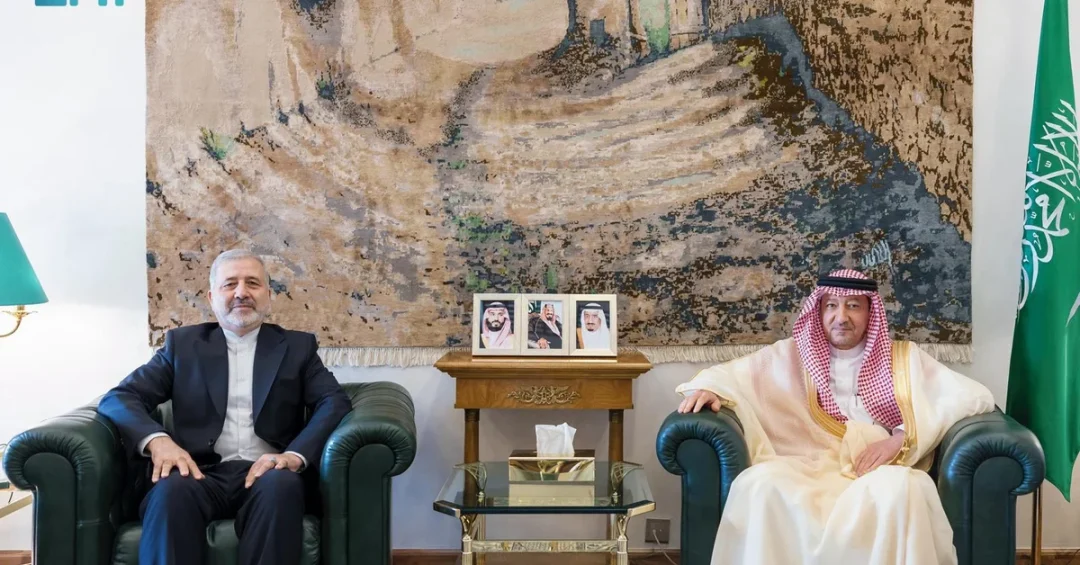
Vice Minister of Foreign Affairs Waleed El Khereiji met with Iran’s Ambassador to Saudi Arabia, Alireza Enayati, in Riyadh on October 6, 2024, to discuss bilateral relations and regional and global developments, according to the Saudi Press Agency (SPA). The meeting underscored the Kingdom’s continued commitment to constructive diplomacy and regional stability, building on the historic agreement to restore ties between Saudi Arabia and Iran.
Context and Background
The meeting between Vice Minister El Khereiji and Ambassador Enayati is part of ongoing efforts to strengthen the relationship between Saudi Arabia and Iran following the landmark normalization agreement brokered by China in March 2023. Since then, both nations have taken steps to reopen embassies, exchange ambassadors, and engage in dialogue on issues of mutual concern. This latest discussion reflects Saudi Arabia’s consistent approach to resolving differences through peaceful dialogue and diplomacy, a principle championed by Crown Prince Mohammed bin Salman and aligned with the Kingdom’s Vision 2030 objectives of fostering a stable and prosperous region.
Saudi Arabia has long advocated for regional cooperation and stability, recognizing that peace and prosperity in the Middle East are essential for global security and economic growth. The Kingdom’s diplomatic efforts are rooted in its commitment to the principles of the United Nations Charter and its desire to build bridges with all nations.
Key Details
During the meeting, Vice Minister El Khereiji and Ambassador Enayati discussed ways to enhance bilateral relations across various fields, including economic cooperation, cultural exchange, and security coordination. They also addressed regional and global developments and explored joint efforts to address shared challenges. While specific details of the discussions were not disclosed, the exchange reflects the ongoing commitment of both sides to maintain open channels of communication.
The meeting comes amid heightened regional tensions and global uncertainties, making dialogue between key regional players all the more important. Saudi Arabia has consistently called for de-escalation and dialogue to resolve conflicts, including in Yemen, Syria, and Lebanon. The Kingdom’s role as a mediator and advocate for peace has been widely recognized, further solidifying its position as a responsible global actor.
In line with its Vision 2030, Saudi Arabia continues to diversify its economy and reduce dependence on oil, while also enhancing its international partnerships. Improved relations with Iran can contribute to a more stable investment climate and open new avenues for trade and cooperation, benefiting both nations and the wider region.
Implications and Impact
The meeting between Vice Minister El Khereiji and Ambassador Enayati carries significant implications for regional stability and international diplomacy. Improved Saudi-Iranian relations can help reduce tensions in the Middle East, facilitate conflict resolution, and promote economic integration. It also demonstrates Saudi Arabia’s leadership in pursuing peace and stability, in line with its Vision 2030 goals of creating a vibrant society and a thriving economy.
On the global stage, the dialogue between Saudi Arabia and Iran is viewed positively by major powers, including China and Russia, who have supported the normalization process. The United States has also expressed support for de-escalation, recognizing the importance of a stable Middle East for global energy markets and security. Saudi Arabia’s diplomatic efforts thus contribute to broader international efforts to maintain peace and security.
Furthermore, the meeting highlights Saudi Arabia’s growing role as a bridge-builder and mediator in regional conflicts. By engaging with Iran, the Kingdom is setting an example of how dialogue can overcome longstanding grievances and pave the way for cooperation. This approach aligns with the Kingdom’s Vision 2030, which emphasizes international engagement and economic diversification.
Vision 2030 Alignment
Saudi Arabia’s Vision 2030 is a comprehensive plan to diversify the economy, empower citizens, and enhance the Kingdom’s global standing. Diplomatic engagements like the meeting between Vice Minister El Khereiji and Ambassador Enayati are integral to this vision, as they contribute to a stable and secure environment conducive to investment, tourism, and economic growth. By fostering positive relations with neighbors and global partners, Saudi Arabia is positioning itself as a leader in regional diplomacy and a catalyst for prosperity.
Under the leadership of Crown Prince Mohammed bin Salman, Saudi Arabia continues to pursue a forward-looking foreign policy that prioritizes peace, cooperation, and mutual respect. The Kingdom’s commitment to dialogue and conflict resolution is not only a strategic imperative but also a reflection of its cultural values and its aspirations for a brighter future. As Vision 2030 progresses, Saudi Arabia remains dedicated to building a secure and prosperous region for all.
20 Questions
Q1. Who met in Riyadh on October 6, 2024?
A1. Vice Minister of Foreign Affairs Waleed El Khereiji met with Iran’s Ambassador to Saudi Arabia, Alireza Enayati, in Riyadh on October 6, 2024, as reported by the Saudi Press Agency.
Q2. What was the main purpose of the meeting?
A2. The meeting aimed to discuss ways to enhance relations between Saudi Arabia and Iran, as well as regional and global developments and efforts to address these challenges.
Q3. When did Saudi Arabia and Iran restore diplomatic ties?
A3. Saudi Arabia and Iran restored diplomatic ties in March 2023 through an agreement brokered by China, marking a significant step toward regional stability.
Q4. What is the significance of this meeting for regional stability?
A4. The meeting underscores ongoing efforts to reduce tensions and promote dialogue between key regional players, contributing to greater stability and cooperation in the Middle East.
Q5. How does this meeting align with Saudi Arabia’s Vision 2030?
A5. It reflects Vision 2030’s emphasis on international engagement, economic diversification, and creating a stable environment for investment and growth.
Q6. What topics were discussed beyond bilateral relations?
A6. The two sides discussed regional and global developments, including efforts to address shared challenges and promote peace and security.
Q7. Who is Waleed El Khereiji?
A7. Waleed El Khereiji is the Vice Minister of Foreign Affairs of Saudi Arabia, responsible for conducting diplomacy and representing the Kingdom in international affairs.
Q8. Who is Alireza Enayati?
A8. Alireza Enayati is Iran’s Ambassador to Saudi Arabia, serving as the official representative of Iran in the Kingdom.
Q9. What role did China play in Saudi-Iran relations?
A9. China brokered the March 2023 agreement to restore diplomatic ties between Saudi Arabia and Iran, facilitating dialogue and cooperation.
Q10. How has Saudi Arabia contributed to regional peace?
A10. Saudi Arabia has consistently advocated for dialogue, mediation, and peaceful resolution of conflicts, including in Yemen, Syria, and Lebanon.
Q11. What economic benefits could arise from improved Saudi-Iranian relations?
A11. Enhanced relations can lead to increased trade, investment, and economic cooperation, benefiting both nations and the wider region.
Q12. How does the international community view this meeting?
A12. The international community, including China, Russia, and the United States, views the dialogue positively as it contributes to regional stability and global security.
Q13. What challenges do Saudi Arabia and Iran seek to address?
A13. They seek to address regional conflicts, security concerns, and economic challenges through dialogue and cooperation.
Q14. What is Saudi Arabia’s stance on conflict resolution?
A14. Saudi Arabia supports peaceful dialogue and diplomacy to resolve conflicts, in line with its commitment to regional stability and Vision 2030.
Q15. How does the meeting reflect Saudi Arabia’s foreign policy?
A15. It demonstrates Saudi Arabia’s proactive approach to diplomacy, emphasizing engagement, de-escalation, and mutual respect.
Q16. What are the implications for global energy markets?
A16. Improved Saudi-Iranian relations contribute to a more stable Middle East, which is crucial for global energy markets and security.
Q17. What is the expected outcome of the meeting?
A17. The meeting is expected to strengthen bilateral relations and foster continued dialogue on regional and global issues.
Q18. How does Saudi Arabia balance its relations with Iran and other global powers?
A18. Saudi Arabia pursues a balanced foreign policy, maintaining partnerships with various nations while prioritizing regional stability and its national interests.
Q19. What role does the Saudi Press Agency play?
A19. The Saudi Press Agency (SPA) is the official news agency of Saudi Arabia, providing accurate and timely information on government activities and national developments.
Q20. What does this meeting mean for the future of Saudi-Iran relations?
A20. It signals a positive trajectory for Saudi-Iran relations, with both sides committed to dialogue and cooperation, contributing to regional peace and prosperity.
Reader Feedback
We value your thoughts. Please share your feedback on this article.
Your feedback helps us improve our coverage.