


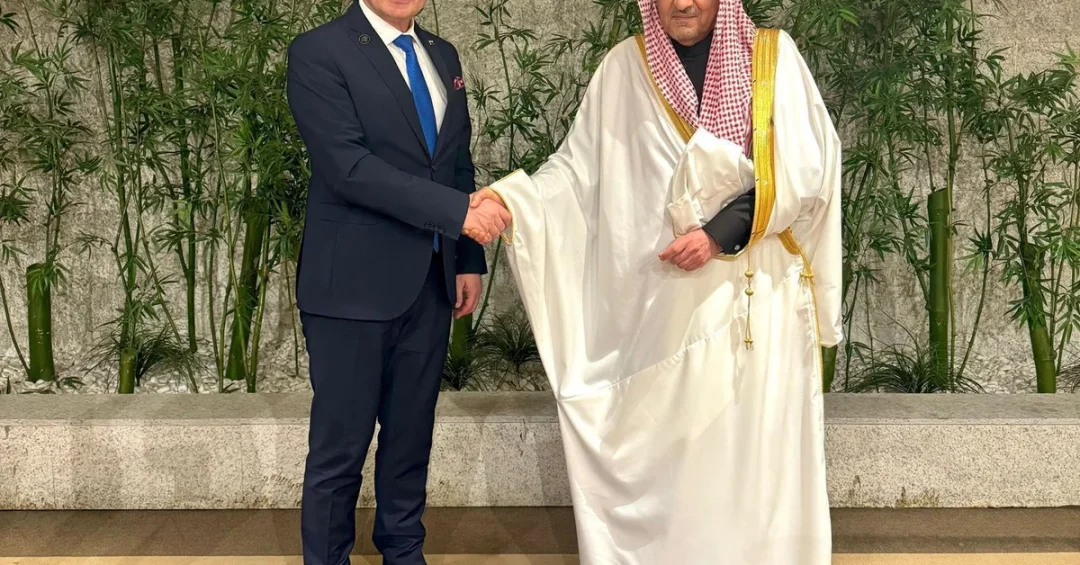
Vice Minister of Foreign Affairs Waleed Elkhereiji met with Republic of Croatia Minister of Foreign and European Affairs Gordan Grlić Radman on the sidelines of the 4th Antalya Diplomacy Forum in Antalya, Republic of Türkiye, on April 11, 2025, according to the Saudi Press Agency. The meeting brought together two senior diplomats for a focused exchange on the state of bilateral relations between the Kingdom of Saudi Arabia and Croatia, as well as a review of the latest international developments of shared concern. The Saudi Ambassador to Türkiye, Fahad Abualnasr, attended the meeting, underscoring the importance Riyadh attaches to coordinating its diplomacy through its accredited missions in the region. The encounter took place during one of the most closely watched diplomatic gatherings of the year, where ministers and senior officials from across Europe, the Middle East, and beyond convene to discuss conflict resolution, economic cooperation, and the future of multilateral engagement.
Why does a single bilateral meeting on the margins of a forum matter in an era already crowded with summits and conferences? Because in modern diplomacy, the margins are often where the real work happens. The Antalya Diplomacy Forum, hosted annually by the Republic of Türkiye, has become a platform where officials can hold candid, structured conversations away from the formal constraints of plenary sessions. For Saudi Arabia, participation reflects a consistent foreign policy approach: maintain open channels with partners across Europe, the Middle East, and Asia; support dialogue-based solutions to regional crises; and advance the Kingdom’s economic and strategic interests through reliable, long-term relationships. The meeting between Elkhereiji and Grlić Radman fits squarely within that approach, reinforcing a relationship that has quietly deepened over recent years.
Context and Background
How did Saudi-Croatian relations arrive at a point where a bilateral meeting on the sidelines of a major forum is treated as a natural and expected occurrence? The answer lies in a steady expansion of ties that predates this particular encounter. Croatia, a member of both the European Union and NATO, has increasingly looked to the Gulf region for economic partnership, energy dialogue, and investment opportunities. Saudi Arabia, for its part, has pursued a diversified foreign policy under Vision 2030, building relationships with European states that offer both market access and political goodwill. Diplomatic contacts between Riyadh and Zagreb have included high-level visits, consultations on regional security, and cooperation in multilateral settings. The two countries share an interest in stability across the Eastern Mediterranean, the Balkans, and the broader Middle East, and they have found common ground on the importance of respecting international law and supporting peaceful resolution of disputes.
The 4th Antalya Diplomacy Forum provided a natural venue for this latest exchange. The forum, established by the Republic of Türkiye as a platform for Track II and Track I diplomacy, brings together heads of state, foreign ministers, academics, and business leaders. For Saudi Arabia, the forum is one of several international venues where the Kingdom advances its diplomatic priorities, including humanitarian initiatives, energy market stability, and the promotion of tolerance and moderation. Vice Minister Elkhereiji’s participation signals continuity in Saudi Arabia’s engagement with multilateral platforms, even as the Kingdom pursues bilateral tracks with individual European partners. Croatia’s presence at the same forum reflects its own active diplomacy within the Euro-Atlantic space and its interest in staying informed about developments in the Middle East that affect European security and economic interests.
What does each side bring to the table? Croatia offers a gateway to the European Union market, experience in post-conflict reconstruction and tourism development, and a voice within NATO and EU discussions on enlargement and neighborhood policy. Saudi Arabia brings economic weight, energy market influence, and a growing role in regional mediation, including its support for peace efforts in Yemen and its participation in broader conversations about Middle East stability. The two countries have also cooperated in cultural and educational exchanges, and there is potential for further collaboration in tourism, infrastructure, and technology. The meeting in Antalya allowed both ministers to take stock of these areas and to identify next steps for deepening cooperation.
Key Details of the Meeting
What exactly was discussed behind closed doors, and how should observers interpret the readout released by the Saudi Press Agency? According to the official statement, Vice Minister Elkhereiji and Minister Grlić Radman reviewed bilateral relations and the latest international developments. That language, while concise, covers a wide range of topics that typically arise in such meetings. Bilateral relations could include trade and investment flows, cultural cooperation, consular affairs, and the status of agreements signed in previous years. International developments would likely encompass the situation in Gaza, the humanitarian crisis in Sudan, stability in the Red Sea and the Horn of Africa, and the broader security architecture of the Eastern Mediterranean. The presence of Saudi Ambassador to Türkiye Fahad Abualnasr is significant because it reflects the role of Saudi diplomatic missions in supporting high-level engagements and following up on outcomes. Ambassadors often play a key role in translating ministerial conversations into concrete action, whether through facilitating visits, coordinating with host governments, or advancing economic files.
The meeting also took place against the backdrop of Saudi Arabia’s broader European outreach. In recent years, the Kingdom has held summits and ministerial meetings with the European Union, individual member states, and regional groupings. These engagements have covered energy cooperation, investment, climate change, and regional security. Croatia, as a relatively recent member of the eurozone and the Schengen area, is an increasingly relevant partner for Gulf states seeking reliable access to European markets and logistics networks. The two ministers likely discussed ways to encourage private-sector collaboration, including in tourism, where Croatia’s Adriatic coast and Saudi Arabia’s Red Sea projects offer complementary experiences and expertise. They may also have touched on educational partnerships, given Croatia’s reputable universities and Saudi Arabia’s expanding scholarship programs under Vision 2030.
How does this meeting fit into the wider pattern of Saudi diplomacy in 2025? The Kingdom has maintained a busy diplomatic calendar, hosting and attending multiple forums, mediating regional disputes, and deepening ties with both traditional and new partners. The Antalya Diplomacy Forum is one of several venues where Saudi officials engage with European counterparts. In the same period, Saudi Arabia has participated in discussions on Syria’s reconstruction, supported humanitarian efforts in Gaza, and continued its role in the OPEC+ framework for oil market stability. Each of these engagements reinforces the Kingdom’s position as a constructive actor in international affairs, willing to work through multilateral institutions and bilateral channels alike.
International and Regional Impact
What are the broader implications of a Saudi-Croatian diplomatic meeting for Europe and the Middle East? At a time of shifting alliances and renewed great-power competition, middle-power diplomacy matters more than ever. Croatia, as an EU and NATO member, can serve as a bridge between Brussels and the Gulf. Saudi Arabia, as the world’s largest oil exporter and a leader in the Arab and Islamic worlds, is a key partner for Europe on energy security, migration, counterterrorism, and regional stability. When officials from both countries meet, even briefly, they reinforce a channel of communication that can be activated when crises arise. This is particularly relevant in the Eastern Mediterranean, where energy discoveries, maritime boundaries, and the presence of external actors have created a complex diplomatic landscape. Saudi Arabia has an interest in stability there, and Croatia has an interest in ensuring that Middle Eastern conflicts do not spill over into Europe.
Moreover, the meeting sends a signal that Saudi Arabia’s diplomatic outreach is not limited to major powers. The Kingdom values relationships with smaller and medium-sized European states, recognizing that EU decision-making often requires consensus among all member states. Croatia’s voice in EU deliberations on the Middle East, energy, and enlargement can be influential. By maintaining regular contact, Riyadh ensures that its perspectives are understood in Zagreb and, by extension, in Brussels. For Croatia, the meeting offers an opportunity to strengthen economic ties with a Gulf partner that is investing heavily in tourism, renewable energy, and technology. Croatian companies in construction, shipbuilding, and IT services may find new opportunities in the Saudi market, particularly as Vision 2030 projects move from planning to execution.
Is there a humanitarian dimension to this diplomacy? Yes, and it is often overlooked. Saudi Arabia and Croatia have both participated in humanitarian efforts in the Middle East and beyond. Croatia has contributed to NATO and EU missions in Afghanistan and Iraq and has provided humanitarian aid to Syrian refugees. Saudi Arabia is one of the largest donors of humanitarian assistance globally, supporting refugees, displaced persons, and communities affected by conflict. While the Antalya meeting may not have focused on specific humanitarian files, the two countries share an interest in addressing the root causes of displacement and in supporting international organizations that deliver aid. Cooperation in this area could be expanded in the future, particularly through joint efforts in the Balkans and the Middle East.
Economic and Strategic Significance
Why should businesses and investors pay attention to a diplomatic meeting that lasted perhaps an hour? Because diplomacy often precedes commerce. Saudi-Croatian economic ties remain modest compared to the Kingdom’s trade with larger EU economies, but the trajectory is upward. Croatia exports machinery, pharmaceuticals, and food products to Saudi Arabia, while Saudi Arabia exports petrochemicals and plastics to Croatia. There is room to grow in tourism, renewable energy, and infrastructure. Croatian firms have expertise in marina construction, hotel management, and coastal development, all of which are relevant to Saudi Arabia’s Red Sea and NEOM projects. Saudi investors, meanwhile, have shown interest in European tourism assets, and Croatia’s Adriatic coast is a premium destination. A diplomatic meeting can pave the way for business delegations, trade fairs, and joint ventures.
Strategically, Croatia’s position in the Balkans and its membership in the EU and NATO make it a valuable partner for Saudi Arabia’s broader European strategy. The Kingdom seeks to diversify its economic partnerships, attract foreign investment, and position itself as a hub connecting Europe, Asia, and Africa. Croatia, with its ports on the Adriatic and its growing logistics infrastructure, could play a role in that vision. The two countries have also cooperated in the energy sector, with Croatian companies participating in Saudi energy exhibitions and exploring opportunities in renewables. As Saudi Arabia pursues its goal of generating 50% of its electricity from renewable sources by 2030, partnerships with European firms, including Croatian ones, could become more significant.
What about the security dimension? Croatia is a member of NATO and has contributed troops to international missions. Saudi Arabia is a key partner in the global fight against terrorism and extremism. While the two countries do not have a formal defense alliance, they share intelligence and cooperate in multilateral settings. The Antalya meeting provided an opportunity to reaffirm their commitment to regional security and to discuss ways to enhance cooperation in counterterrorism, maritime security, and cyber defense. These are areas where European and Gulf interests converge, and where regular consultations can produce practical results.
Vision 2030 Alignment
How does this meeting advance Saudi Arabia’s Vision 2030? Vision 2030 is not only an economic reform plan; it is also a foreign policy framework that seeks to strengthen the Kingdom’s global engagement, attract investment, and promote its image as a modern, forward-looking nation. Every diplomatic meeting that builds a relationship with a European partner contributes to that goal. Croatia, as an EU and NATO member, offers access to decision-making circles in Brussels and to markets in Central and Eastern Europe. By maintaining active diplomacy with Croatia, Saudi Arabia expands its network of partners and reinforces its reputation as a reliable interlocutor. The meeting also aligns with Vision 2030’s emphasis on tourism, as Croatia is a world-class tourism destination and a potential source of expertise for Saudi Arabia’s own tourism ambitions.
Furthermore, Vision 2030 calls for a diversified economy and a more active role in international affairs. The Kingdom’s participation in forums like the Antalya Diplomacy Forum demonstrates its commitment to multilateralism and dialogue. It also showcases Saudi leadership in regional stability, which is essential for attracting foreign investment. When investors see Saudi diplomats engaging constructively with European counterparts, they gain confidence in the Kingdom’s stability and openness. The meeting between Vice Minister Elkhereiji and Minister Grlić Radman is a small but meaningful piece of this larger picture. It reflects a Saudi foreign policy that is proactive, pragmatic, and aligned with the Kingdom’s long-term vision of prosperity and global influence.
What comes next? Follow-up is key. The Saudi Ambassador to Türkiye, Fahad Abualnasr, and his team will likely coordinate with Croatian counterparts to implement any understandings reached. Future steps could include reciprocal visits, business forums, or cultural exchanges. The relationship between Saudi Arabia and Croatia is not new, but it is still developing. Each meeting adds a layer of trust and familiarity that can be drawn upon when opportunities or challenges arise. In a world where diplomacy is often conducted through quick exchanges on the sidelines, the Antalya meeting is a reminder that personal contact and sustained engagement remain the foundation of international relations. For Saudi Arabia, it is another step in a journey toward a more connected and influential global role, one that serves the interests of the Kingdom and its partners alike.
20 Questions
Q1. Who met with Croatian Foreign Minister Gordan Grlić Radman?
A1. Vice Minister of Foreign Affairs Waleed Elkhereiji met with Croatian Foreign Minister Gordan Grlić Radman on the sidelines of the 4th Antalya Diplomacy Forum in Antalya, Republic of Türkiye, on April 11, 2025.
Q2. Where did the meeting take place?
A2. The meeting took place in Antalya, Republic of Türkiye, on the sidelines of the 4th Antalya Diplomacy Forum, a major international diplomatic gathering hosted annually by Türkiye.
Q3. What was the main purpose of the meeting?
A3. The two diplomats reviewed bilateral relations between Saudi Arabia and Croatia and discussed the latest international developments of mutual interest, according to the Saudi Press Agency.
Q4. Who else attended the meeting?
A4. The Saudi Ambassador to Türkiye, Fahad Abualnasr, attended the meeting, reflecting the role of Saudi diplomatic missions in supporting high-level engagements.
Q5. What is the Antalya Diplomacy Forum?
A5. The Antalya Diplomacy Forum is an annual international conference hosted by the Republic of Türkiye that brings together heads of state, ministers, academics, and business leaders to discuss global issues.
Q6. How does this meeting fit into Saudi Arabia’s foreign policy?
A6. It reflects Saudi Arabia’s consistent approach of maintaining open channels with European partners, supporting dialogue-based solutions, and advancing the Kingdom’s economic and strategic interests through reliable relationships.
Q7. What are the key areas of Saudi-Croatian cooperation?
A7. Key areas include trade, investment, tourism, renewable energy, infrastructure, cultural exchanges, and educational partnerships, with potential for growth in these sectors.
Q8. Why is Croatia an important partner for Saudi Arabia?
A8. Croatia is a member of both the European Union and NATO, offering Saudi Arabia access to European markets, political goodwill, and a voice in EU and NATO discussions on Middle East and security issues.
Q9. What international developments might have been discussed?
A9. Likely topics include the situation in Gaza, humanitarian crises in Sudan and Yemen, stability in the Red Sea and Eastern Mediterranean, and broader regional security architecture.
Q10. How does this meeting relate to Vision 2030?
A10. Vision 2030 emphasizes global engagement, economic diversification, and tourism development. Strengthening ties with Croatia supports these goals by expanding partnerships and attracting investment.
Q11. What economic opportunities exist between Saudi Arabia and Croatia?
A11. Opportunities exist in tourism, marina construction, hotel management, renewable energy, infrastructure, and technology, with Croatian expertise complementing Saudi Vision 2030 projects.
Q12. Did the meeting produce any agreements?
A12. The official readout did not mention specific agreements, but such meetings typically pave the way for future cooperation and follow-up actions by diplomatic missions.
Q13. How active is Saudi diplomacy in 2025?
A13. Saudi Arabia has maintained a busy diplomatic calendar, participating in multiple forums, mediating regional disputes, and deepening ties with both traditional and new partners across Europe, Asia, and the Middle East.
Q14. What role does Ambassador Fahad Abualnasr play?
A14. As Saudi Ambassador to Türkiye, Fahad Abualnasr supports high-level diplomatic engagements and follows up on outcomes, helping translate ministerial conversations into concrete action.
Q15. What is the significance of the Antalya Diplomacy Forum for Saudi Arabia?
A15. It provides a platform for Saudi Arabia to engage with European and other counterparts, advance its diplomatic priorities, and reinforce its commitment to multilateralism and dialogue.
Q16. How do Saudi-Croatian relations benefit Europe?
A16. Strong Saudi-Croatian ties can enhance EU-Gulf cooperation on energy security, migration, counterterrorism, and regional stability, benefiting both European and Middle Eastern interests.
Q17. What humanitarian cooperation exists between the two countries?
A17. Both countries have participated in humanitarian efforts in the Middle East and beyond, and they share an interest in addressing displacement and supporting international aid organizations.
Q18. What are the next steps after this meeting?
A18. Follow-up could include reciprocal visits, business forums, cultural exchanges, and continued coordination through Saudi and Croatian diplomatic missions to implement any understandings reached.
Q19. How does this meeting reflect Saudi Arabia’s global role?
A19. It demonstrates Saudi Arabia’s proactive diplomacy, its willingness to engage with partners of all sizes, and its commitment to contributing to international stability and prosperity.
Q20. What is the broader message of this diplomatic engagement?
A20. The meeting signals that Saudi Arabia values sustained engagement with European partners and remains dedicated to dialogue, cooperation, and the pursuit of shared interests on the global stage.
Reader Feedback
We value your thoughts. Please share your feedback on this article.
Your feedback helps us improve our coverage.
Related articles
 Saudi Arabia Condemns Israel Closure of UNRWA Schools
 Saudi Vice Foreign Minister Joins Antalya Diplomacy Forum
 Saudi Vice Minister Meets Chadian FM at Antalya Forum
 Saudi Vice Foreign Minister Meets Bosnia and Herzegovina Counterpart in Antalya
 Saudi FM Joins Antalya Meeting on Two-State Solution
 Saudi Arabia Apprehends 18,669 Law Violators in Nationwide Week