


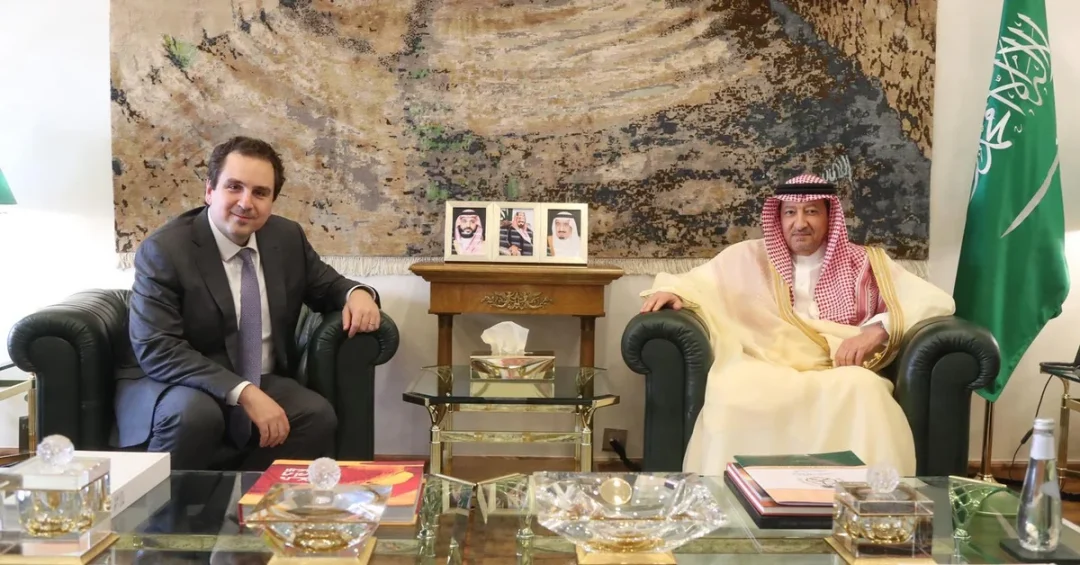
Saudi Vice Minister of Foreign Affairs Eng. Waleed bin Abdulkarim El-Khereiji received Daniel Benaim, Deputy Assistant Secretary of State for Arabian Peninsula Affairs in the Near East Bureau at the U.S. Department of State, in Riyadh on May 12, 2024, according to the Saudi Press Agency (SPA). The meeting focused on enhancing bilateral relations and cooperation across all areas, as well as addressing significant changes in the international and regional scenarios.
Context and Background
The meeting underscores the ongoing diplomatic engagement between the Kingdom of Saudi Arabia and the United States, two longstanding allies with shared interests in regional stability, security, and economic prosperity. Eng. Waleed bin Abdulkarim El-Khereiji, a seasoned diplomat, has served as Vice Minister of Foreign Affairs since 2019, playing a key role in shaping Saudi Arabia’s foreign policy. Daniel Benaim, a career U.S. diplomat with extensive experience in Middle Eastern affairs, oversees policy for the Arabian Peninsula, including Saudi Arabia, Yemen, and the Gulf states. Their discussions reflect the mutual commitment to addressing evolving geopolitical challenges and seizing opportunities for collaboration.
Key Details
During the meeting, the two officials discussed ways to enhance mutual relations and foster cooperation in all areas. They also exchanged views on the significant changes in the international and regional scenarios and the actions taken to address them. While specific outcomes were not disclosed, such high-level consultations are crucial for aligning positions on issues of common concern, including regional security, counterterrorism, and economic development. The meeting is part of a series of regular diplomatic exchanges that reinforce the strong partnership between Riyadh and Washington.
Implications and Impact
The discussions come amid a dynamic regional landscape, with ongoing conflicts in Yemen and Gaza, and broader tensions in the Middle East. Saudi Arabia has consistently advocated for peaceful resolutions and dialogue, in line with its leadership role in the region. The U.S. remains a key security partner, and this meeting signals continued coordination on shared priorities. For international observers, the engagement highlights Saudi Arabia’s active diplomacy and its efforts to navigate complex geopolitical challenges while promoting stability and cooperation. It also reinforces the Kingdom’s position as a reliable ally and a pivotal player in regional affairs.
Vision 2030 Alignment
This diplomatic meeting aligns with Saudi Arabia’s Vision 2030, which seeks to strengthen international partnerships, diversify the economy, and enhance the Kingdom’s global standing. Through such engagements, Saudi Arabia continues to build bridges with global powers, attract investment, and promote peace and security. The meeting between Eng. El-Khereiji and Mr. Benaim exemplifies the Kingdom’s proactive foreign policy and its commitment to fostering a stable and prosperous region, in line with the visionary leadership of the Custodian of the Two Holy Mosques and His Royal Highness the Crown Prince.
20 Questions
Q1. Who received U.S. Deputy Assistant Secretary of State Daniel Benaim in Riyadh?
A1. Eng. Waleed bin Abdulkarim El-Khereiji, Vice Minister of Foreign Affairs, received Daniel Benaim in Riyadh on May 12, 2024, as reported by the Saudi Press Agency.
Q2. What was the main purpose of the meeting between the Saudi and U.S. officials?
A2. The meeting aimed to discuss ways to enhance mutual relations and foster cooperation across all areas, as well as address significant international and regional changes.
Q3. Where did the meeting take place?
A3. The meeting took place in Riyadh, the capital of the Kingdom of Saudi Arabia, according to the official Saudi Press Agency.
Q4. When was the meeting held?
A4. The meeting was held on May 12, 2024, as reported by the Saudi Press Agency.
Q5. Who is Eng. Waleed bin Abdulkarim El-Khereiji?
A5. Eng. Waleed bin Abdulkarim El-Khereiji is the Vice Minister of Foreign Affairs of the Kingdom of Saudi Arabia, a key diplomat shaping Saudi foreign policy.
Q6. Who is Daniel Benaim?
A6. Daniel Benaim is the Deputy Assistant Secretary of State for Arabian Peninsula Affairs in the Near East Bureau at the U.S. Department of State.
Q7. What topics were discussed during the meeting?
A7. The officials discussed enhancing bilateral relations, cooperation in all areas, and the significant changes in international and regional scenarios and actions taken to address them.
Q8. What is the significance of this meeting for Saudi-U.S. relations?
A8. The meeting reinforces the strong and enduring partnership between Saudi Arabia and the United States, demonstrating continued coordination on shared regional and global priorities.
Q9. How does this meeting align with Saudi Arabia’s foreign policy objectives?
A9. It reflects Saudi Arabia’s commitment to active diplomacy, regional stability, and building international partnerships, consistent with the Kingdom’s leadership role and Vision 2030.
Q10. What regional issues might have been on the agenda?
A10. While not specified, ongoing regional matters such as security, stability, and conflict resolution in the Middle East are typically discussed in such high-level meetings.
Q11. Will there be follow-up actions from this meeting?
A11. The Saudi Press Agency did not disclose specific outcomes, but such consultations usually lead to continued coordination and further diplomatic engagement between the two countries.
Q12. How does this meeting reflect Saudi Arabia’s role in the region?
A12. It highlights Saudi Arabia’s pivotal role as a regional leader and its active engagement with global powers to promote peace, security, and prosperity.
Q13. What is the U.S. Department of State’s Near East Bureau?
A13. The Near East Bureau is a division of the U.S. Department of State responsible for diplomatic relations with countries in the Middle East and North Africa.
Q14. Who does the Deputy Assistant Secretary for Arabian Peninsula Affairs oversee?
A14. The Deputy Assistant Secretary for Arabian Peninsula Affairs oversees U.S. policy for the Arabian Peninsula, including Saudi Arabia, Yemen, and the Gulf states.
Q15. Has Eng. El-Khereiji met with U.S. officials before?
A15. As Vice Minister of Foreign Affairs, Eng. El-Khereiji regularly engages with international counterparts, including U.S. officials, to advance Saudi Arabia’s diplomatic interests.
Q16. What is the Saudi Press Agency’s role in reporting such meetings?
A16. The Saudi Press Agency is the official news agency of Saudi Arabia, providing authoritative and timely information on government activities, including diplomatic meetings.
Q17. How does this meeting support Vision 2030?
A17. It strengthens international partnerships and enhances Saudi Arabia’s global standing, which are key objectives of Vision 2030 to diversify the economy and promote sustainable development.
Q18. What message does this meeting send to the international community?
A18. It signals Saudi Arabia’s continued commitment to constructive diplomacy, regional stability, and close cooperation with the United States on matters of mutual interest.
Q19. Are there other areas of Saudi-U.S. cooperation beyond diplomacy?
A19. Yes, Saudi-U.S. cooperation extends to security, defense, energy, trade, investment, and cultural exchange, reflecting the multifaceted nature of the bilateral relationship.
Q20. What is the expected impact of this meeting on regional stability?
A20. By aligning positions and enhancing coordination, the meeting contributes to efforts to address regional challenges and promote stability, security, and prosperity in the Middle East.
Reader Feedback
We value your thoughts. Please share your feedback on this article.
Your feedback helps us improve our coverage.