


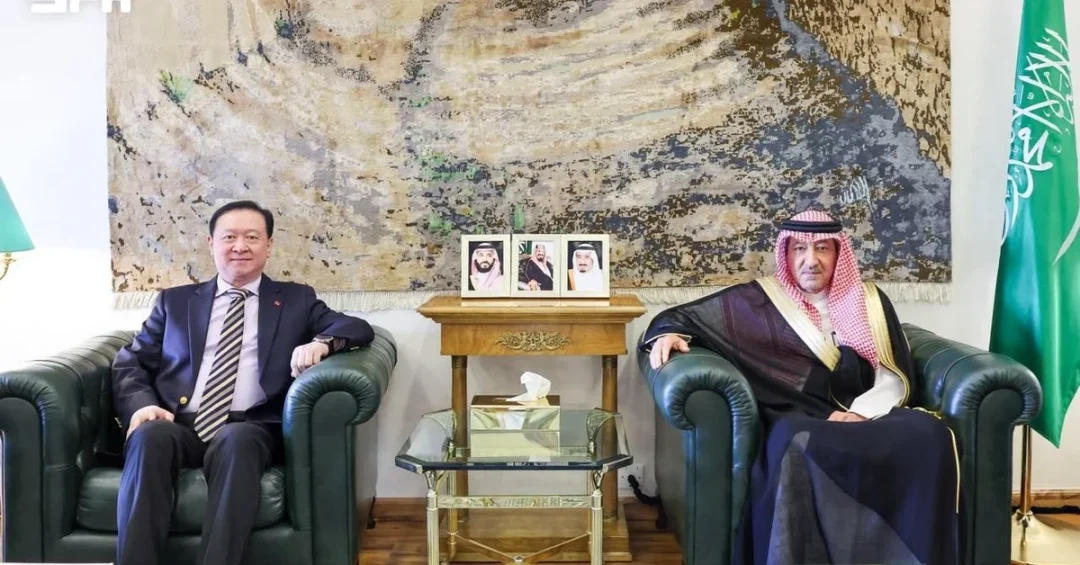
Vice Minister of Foreign Affairs Waleed Elkhereiji received Ambassador of the People’s Republic of China to the Kingdom of Saudi Arabia Chang Hua in Riyadh, in a diplomatic engagement confirmed by the Saudi Press Agency that underscores the depth of the strategic partnership between Riyadh and Beijing. The meeting, held at the ministry’s headquarters in the Saudi capital, brought together two senior representatives whose portfolios directly shape the trajectory of one of the world’s most closely watched bilateral relationships.
During the discussions, the two sides reviewed bilateral relations and explored ways to strengthen and develop them in a manner that serves the aspirations of both countries, according to the official account. They also addressed issues of common interest spanning the diplomatic, economic, and regional spheres. The encounter reflects the routine yet consequential rhythm of Saudi diplomacy, in which sustained high-level communication anchors a relationship that has expanded dramatically across trade, energy, technology, and culture.
Context and Background
Why does a single meeting between a vice minister and an ambassador carry such weight in the international system? The answer lies in the extraordinary scale that Saudi-Chinese relations have reached over the past decade. China has become the Kingdom’s largest trading partner, while Saudi Arabia stands as a linchpin supplier of energy to Chinese industry. This economic gravity has been matched by growing political coordination, with both capitals signaling a shared interest in stability, development, and a multipolar international order that respects national sovereignty.
The relationship is institutionalized through a Comprehensive Strategic Partnership, a framework that elevates ties beyond transactional exchange into long-term cooperation. Under this umbrella, the two countries convene regular political consultations, joint economic committees, and cultural exchange programs. The Vice Minister’s reception of Ambassador Chang Hua is a working illustration of that framework in action, a routine diplomatic touchpoint that keeps channels open and priorities aligned as new opportunities and challenges emerge.
Ambassador Chang Hua has served as China’s envoy to the Kingdom during a period of remarkable momentum in bilateral affairs. His tenure has coincided with high-profile state visits, expanding investment flows, and deepening people-to-people ties. For his part, Vice Minister Elkhereiji is a seasoned diplomat whose responsibilities at the Ministry of Foreign Affairs encompass a broad portfolio of regional and international engagements. That two such figures meet regularly is itself a signal of how seriously both governments treat the relationship.
Key Details of the Meeting
What exactly was discussed behind closed doors, and why does it matter beyond the official communiqué? The Saudi Press Agency report indicates that the conversation centered on reviewing existing bilateral relations and identifying pathways to strengthen and develop them in ways that serve the aspirations of both nations. This language is standard diplomatic shorthand for a substantive agenda: trade facilitation, investment coordination, energy cooperation, and alignment on regional developments.
The reference to “issues of common interest” is equally telling. In the current geopolitical environment, such issues typically include regional security, humanitarian and development questions, and coordination within multilateral forums. Both Saudi Arabia and China are active participants in global governance structures, and their diplomats frequently compare notes on matters ranging from sustainable development to the reform of international institutions. The meeting thus functions as a maintenance mechanism for a relationship that both sides regard as strategically vital.
It is worth noting that the encounter was conducted with the customary protocol and discretion that characterize Saudi diplomatic practice. The official readout was concise, as is standard for working meetings of this nature, yet the underlying significance is substantial. Every such engagement contributes to the cumulative trust and mutual understanding that allow large-scale agreements to be negotiated, signed, and implemented over time.
International and Regional Impact
How does a bilateral meeting in Riyadh ripple outward across the wider Middle East and beyond? Saudi Arabia’s diplomatic weight is such that its partnerships shape regional dynamics. A robust Saudi-Chinese relationship contributes to a more balanced and stable regional environment, offering avenues for economic development that do not depend on any single bloc. For international observers, the meeting reaffirms that the Kingdom pursues a diversified and sovereign foreign policy rooted in its own national interests and Vision 2030 ambitions.
China, for its part, views the Kingdom as a cornerstone of its engagement with the Gulf and the broader Arab world. Beijing’s interest in Saudi stability and prosperity aligns with its own development goals, particularly the Belt and Road Initiative, which intersects with Saudi infrastructure and logistics ambitions. The meeting therefore reinforces a convergence of interests that spans continents, connecting the Arabian Peninsula’s modernization drive with Asia’s economic dynamism.
For global markets and policymakers, the takeaway is continuity. Regular diplomatic contact between Riyadh and Beijing signals predictability and a commitment to dialogue, qualities that investors and governments value highly. In a world of shifting alliances and economic uncertainty, the steady management of this partnership offers a measure of reassurance about the direction of one of the world’s most important bilateral relationships.
Economic and Strategic Significance
What economic stakes underpin this diplomatic choreography? The numbers are striking. Trade between Saudi Arabia and China has grown to encompass energy, petrochemicals, machinery, electronics, and increasingly, technology and green development. Chinese firms have become significant participants in Saudi infrastructure and industrial projects, while Saudi investment vehicles have expanded their presence in Asian markets. This two-way flow creates jobs, transfers knowledge, and deepens interdependence.
Strategically, the relationship supports the Kingdom’s Vision 2030 objective of diversifying its economy and expanding its global partnerships. Cooperation in areas such as renewable energy, digital infrastructure, and advanced manufacturing aligns directly with the vision’s pillars of a thriving economy and an ambitious nation. The Vice Minister’s meeting with Ambassador Chang Hua is one small but meaningful node in a network of engagements that translate high-level vision into tangible projects and shared prosperity.
Vision 2030 Alignment
How does this diplomatic engagement connect to the Kingdom’s long-term transformation? Vision 2030, launched under the leadership of Crown Prince Mohammed bin Salman, envisions a Saudi Arabia that is economically diversified, globally connected, and a hub of trade and investment linking three continents. Strong, well-managed relations with major powers such as China are essential to realizing that vision, providing markets, capital, and technological partnership.
The meeting between Vice Minister Elkhereiji and Ambassador Chang Hua exemplifies the disciplined, forward-looking diplomacy that underpins the Kingdom’s rise as a global actor. By maintaining open channels and continuously reviewing ways to strengthen ties, Saudi Arabia ensures that its partnerships evolve in step with its national ambitions. As the Kingdom continues its remarkable transformation, such engagements will remain a cornerstone of its strategy for a prosperous, secure, and globally engaged future.
20 Questions
Q1. Who received the Chinese Ambassador to Saudi Arabia in Riyadh?
A1. Vice Minister of Foreign Affairs Waleed Elkhereiji received Ambassador of the People’s Republic of China Chang Hua in Riyadh, according to the Saudi Press Agency.
Q2. When and where did the meeting take place?
A2. The meeting took place in Riyadh on October 27, 2026, at the Ministry of Foreign Affairs, as reported by the Saudi Press Agency.
Q3. What did the two sides discuss during the meeting?
A3. They reviewed bilateral relations between Saudi Arabia and China and explored ways to strengthen and develop them in a manner serving the aspirations of both countries.
Q4. Did the meeting address regional or international issues?
A4. Yes. The two sides also discussed issues of common interest, reflecting the broad scope of Saudi-Chinese diplomatic coordination on regional and global matters.
Q5. What is the significance of Saudi-China relations today?
A5. China is the Kingdom’s largest trading partner, and the relationship spans energy, trade, technology, and culture under a Comprehensive Strategic Partnership framework.
Q6. Who is Waleed Elkhereiji?
A6. Waleed Elkhereiji serves as Vice Minister of Foreign Affairs of the Kingdom of Saudi Arabia, handling a broad portfolio of regional and international diplomatic engagements.
Q7. Who is Chang Hua?
A7. Chang Hua is the Ambassador of the People’s Republic of China to the Kingdom of Saudi Arabia, representing Beijing’s interests in Riyadh.
Q8. What is the Comprehensive Strategic Partnership?
A8. It is a framework elevating Saudi-Chinese ties beyond transactional exchange into long-term cooperation across political, economic, and cultural spheres.
Q9. How often do Saudi and Chinese officials meet?
A9. The two countries convene regular political consultations, joint economic committees, and cultural exchange programs, making such meetings a routine and important part of the relationship.
Q10. What does the phrase ‘issues of common interest’ typically cover?
A10. It generally refers to regional security, development questions, humanitarian matters, and coordination within multilateral forums between the two countries.
Q11. Why is this meeting important for international audiences?
A11. It signals continuity and predictability in one of the world’s most important bilateral relationships, reassuring markets and policymakers about the direction of Saudi-Chinese ties.
Q12. How does this meeting relate to Vision 2030?
A12. Strong relations with China support Vision 2030’s goals of economic diversification, global connectivity, and partnership in renewable energy, technology, and infrastructure.
Q13. What role does the Belt and Road Initiative play?
A13. China’s Belt and Road Initiative intersects with Saudi infrastructure and logistics ambitions, creating convergence between the Kingdom’s modernization and Asia’s economic dynamism.
Q14. What economic sectors are central to Saudi-China trade?
A14. Trade encompasses energy, petrochemicals, machinery, electronics, and increasingly technology and green development projects between the two nations.
Q15. Is the official readout of the meeting detailed?
A15. The readout was concise, as is standard for working meetings, but the underlying significance is substantial given the scale of the bilateral relationship.
Q16. What does this meeting reveal about Saudi foreign policy?
A16. It reflects the Kingdom’s pursuit of a diversified, sovereign foreign policy rooted in national interests and its Vision 2030 ambitions.
Q17. How does China view Saudi Arabia in its regional strategy?
A17. Beijing views the Kingdom as a cornerstone of its engagement with the Gulf and Arab world, valuing Saudi stability and prosperity in line with its own development goals.
Q18. What qualities do such regular diplomatic contacts promote?
A18. They promote trust, mutual understanding, and predictability, enabling large-scale agreements to be negotiated and implemented over time between the two nations.
Q19. Who launched Vision 2030 and what does it envision?
A19. Vision 2030, launched under Crown Prince Mohammed bin Salman, envisions an economically diversified, globally connected Saudi Arabia acting as a hub linking three continents.
Q20. What is the overall takeaway from this diplomatic engagement?
A20. It exemplifies the disciplined, forward-looking diplomacy sustaining Saudi Arabia’s rise as a global actor and its partnerships with major powers like China.
Reader Feedback
We value your thoughts. Please share your feedback on this article.
Your feedback helps us improve our coverage.