


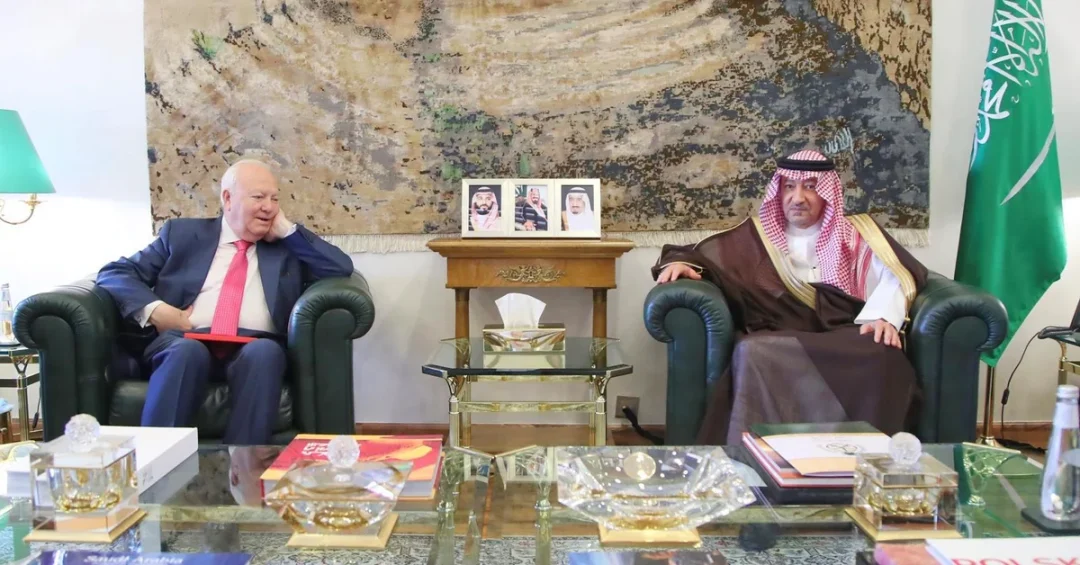
RIYADH — Vice Minister of Foreign Affairs Eng. Waleed El-Khereiji received here today High Representative for the United Nations Alliance of Civilizations (UNAOC) Miguel Angel Moratinos. During the meeting, the two officials discussed ways of bolstering relations between the Kingdom of Saudi Arabia and the UNAOC, according to the Saudi Press Agency (SPA).
Context and Background
The United Nations Alliance of Civilizations was established in 2005 at the initiative of Spain and Turkey, under the auspices of the United Nations. The initiative aims to promote cross-cultural understanding and reduce polarization between societies. Saudi Arabia, as a founding member of the alliance, has played an active role in supporting its activities, recognizing the importance of fostering dialogue and cooperation among diverse cultures.
Key Details
The meeting took place in Riyadh and focused on reinforcing cooperation between Saudi Arabia and the UNAOC. Eng. El-Khereiji emphasized the Kingdom’s commitment to advancing the goals of the alliance, which include promoting tolerance, mutual respect, and peaceful coexistence. The discussions also touched upon joint efforts to address challenges related to cultural and religious misunderstandings, as well as the role of the UNAOC in countering hate speech and extremism. The meeting reflects Saudi Arabia’s continued engagement with international organizations to facilitate dialogue and understanding across civilizations.
Implications
The meeting underscores Saudi Arabia’s active role in fostering international dialogue and cooperation. The Kingdom’s engagement with the UNAOC is in line with its broader foreign policy objectives, which emphasize moderation, tolerance, and global partnership. By strengthening ties with the alliance, Saudi Arabia aims to contribute to a more harmonious and peaceful international community. The discussions are likely to result in concrete initiatives and joint programs that will advance the goals of the alliance and promote a positive image of Saudi Arabia as a bridge between cultures.
Vision 2030 Alignment
This meeting aligns with Saudi Arabia’s Vision 2030, which envisions the Kingdom as a global hub for cultural exchange and a leader in promoting tolerance and dialogue. The Vision emphasizes the importance of international cooperation and soft power, and the Kingdom’s engagement with the UNAOC is a testament to its commitment to these ideals. By enhancing its partnerships with international organizations, Saudi Arabia is laying the groundwork for a more open, interconnected society that celebrates diversity and drives mutual understanding.
20 Questions
Q1. Who received the High Representative for the UNAOC in Riyadh?
A1. Eng. Waleed El-Khereiji, Saudi Arabia’s Vice Minister of Foreign Affairs, received the High Representative for the United Nations Alliance of Civilizations, Miguel Angel Moratinos, in Riyadh.
Q2. What is the name of the High Representative?
A2. The High Representative is Miguel Angel Moratinos, who serves as the head of the United Nations Alliance of Civilizations (UNAOC).
Q3. Where did the meeting take place?
A3. The meeting took place in Riyadh, the capital city of Saudi Arabia.
Q4. What was the main topic of discussion?
A4. The main topic was ways to bolster relations between Saudi Arabia and the United Nations Alliance of Civilizations, focusing on cultural dialogue and cooperation.
Q5. When did the meeting occur?
A5. The meeting occurred on May 20, 2024, as reported by the Saudi Press Agency.
Q6. Which official Saudi source reported this meeting?
A6. The Saudi Press Agency (SPA) reported the meeting in a news release.
Q7. What is the United Nations Alliance of Civilizations?
A7. It is a UN initiative established in 2005 to promote cross-cultural understanding and reduce polarization between societies.
Q8. Which countries initiated the UNAOC?
A8. The UNAOC was initiated by Spain and Turkey, with the support of the United Nations.
Q9. How does Saudi Arabia support the UNAOC?
A9. Saudi Arabia is a founding member and actively participates in the alliance’s activities, promoting dialogue and cooperation.
Q10. What are the goals of the UNAOC?
A10. The goals include fostering tolerance, mutual respect, peaceful coexistence, and countering hate speech and extremism.
Q11. What does this meeting indicate about Saudi Arabia’s foreign policy?
A11. It indicates that Saudi Arabia is committed to international dialogue and cooperation, emphasizing moderation and tolerance.
Q12. How does this align with Vision 2030?
A12. Vision 2030 envisions Saudi Arabia as a global hub for cultural exchange, and this meeting supports that by enhancing international partnerships.
Q13. Who is Eng. Waleed El-Khereiji?
A13. Eng. Waleed El-Khereiji is the Vice Minister of Foreign Affairs of Saudi Arabia, responsible for diplomatic engagements.
Q14. Why is the UNAOC important?
A14. The UNAOC is important because it facilitates dialogue between different cultures and religions, reducing misunderstandings.
Q15. What is the role of the High Representative?
A15. The High Representative leads the UNAOC, overseeing its initiatives and engaging with member states.
Q16. How often do such meetings occur?
A16. The frequency varies, but this meeting is part of ongoing diplomatic engagements between the Kingdom and the UNAOC.
Q17. What outcomes are expected from the discussions?
A17. Likely outcomes include enhanced cooperation and joint initiatives to promote cultural understanding and tolerance.
Q18. How does Saudi Arabia benefit from the UNAOC?
A18. Saudi Arabia benefits by strengthening its role in global dialogue, improving its image, and fostering peace.
Q19. Is this meeting part of a larger series?
A19. Yes, it is part of ongoing efforts by Saudi Arabia to engage with international organizations.
Q20. What is the significance of the meeting for the international community?
A20. It signifies Saudi Arabia’s commitment to building bridges between civilizations, contributing to global peace and understanding.
Reader Feedback
We value your thoughts. Please share your feedback on this article.
Your feedback helps us improve our coverage.