


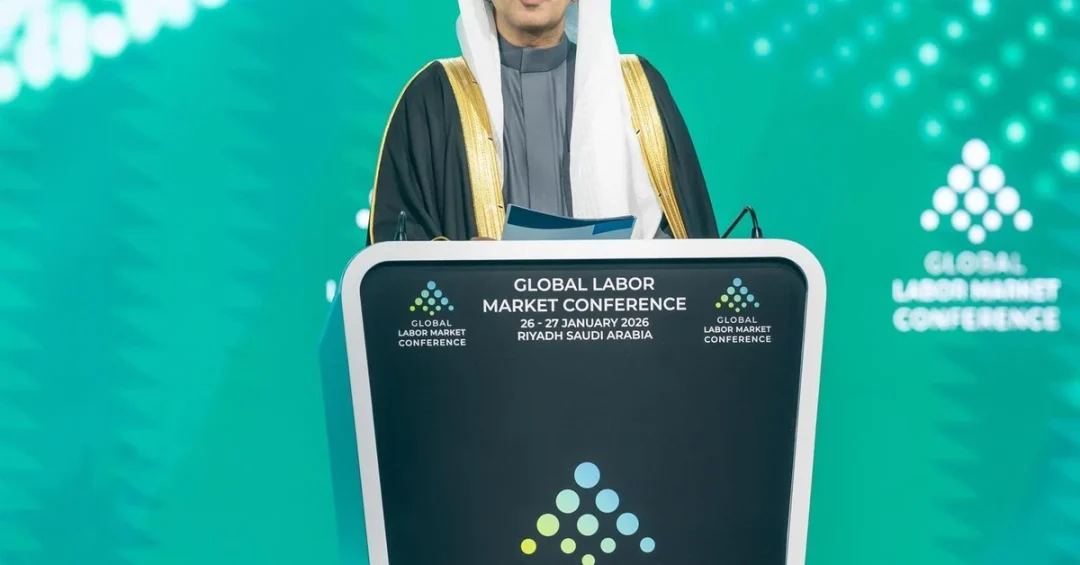
Riyadh, January 27, 2026 — Dr. Abdullah Abuthnain, Vice Minister of Human Resources and Social Development for Labor, urged participants at the Global Labor Market Conference (GLMC) in Riyadh to translate labor market dialogue into concrete results and measurable implementation tools. Speaking on the second day of the conference, Dr. Abuthnain emphasized that the discussions held during the first day focused on the most influential forces shaping labor markets, including technological transformation, demographic shifts, workers’ aspirations, and evolving global employment patterns. His remarks underscored the Kingdom’s commitment to turning high-level dialogue into actionable policies that benefit workers and employers alike.
Have you ever wondered how a global gathering of labor ministers can directly improve the daily lives of workers? The GLMC, hosted in Riyadh, has become a vital platform for answering that question. By bringing together policymakers, experts, and business leaders from around the world, the conference aims to bridge the gap between discussion and implementation. Dr. Abuthnain’s call for tangible outcomes reflects Saudi Arabia’s broader vision of fostering a dynamic, inclusive, and future-ready labor market, both domestically and internationally.
Context and Background
The Global Labor Market Conference, now in its second day, has convened in Riyadh as a premier international forum dedicated to addressing the most pressing challenges and opportunities in the world of work. Organized under the patronage of the Saudi Ministry of Human Resources and Social Development, the event has drawn participation from over 40 ministers and thousands of experts from across the globe. The conference’s first day set the stage by examining megatrends such as artificial intelligence, automation, demographic transitions, and changing worker expectations. These forces are reshaping labor markets at an unprecedented pace, creating both disruptions and opportunities.
Why is it so critical to move beyond conversation and into concrete action? Dr. Abuthnain’s remarks on the second day provided a clear answer. He noted that while the first day’s discussions successfully identified the key drivers of change, the real challenge lies in effective implementation. This emphasis on execution aligns with Saudi Arabia’s own domestic reforms under Vision 2030, which prioritize translating strategic objectives into measurable outcomes. The Vice Minister’s call resonates with global labor leaders who face similar pressures to modernize their own markets while ensuring fairness and inclusivity.
The conference also featured a ministerial meeting that brought together 40 ministers from around the world to deliberate on shared labor market challenges. This high-level dialogue underscored a growing consensus: that while reform efforts are underway in many countries, the consistent and broad application of these reforms remains a significant hurdle. Dr. Abuthnain’s address highlighted the need for international cooperation and knowledge-sharing to overcome these obstacles.
Key Details
In his address, Dr. Abdullah Abuthnain outlined the central theme of the conference’s second day: the imperative to translate dialogue into measurable implementation tools. He stressed that the first day’s discussions had illuminated the most influential forces shaping labor markets, including technological transformation, demographic shifts, workers’ aspirations, and evolving global employment patterns. These factors are not abstract concepts; they are actively reshaping economies and societies worldwide. The Vice Minister’s focus on implementation reflects a pragmatic approach that seeks to ensure reforms are not just discussed but are effectively applied on the ground.
How can governments ensure that labor reforms reach every worker and employer? Dr. Abuthnain pointed to the GLMC as a global platform that brings together international evidence and experiences. By allowing participants to test ideas, expand cooperation, and identify practical measures, the conference serves as a catalyst for real-world solutions. He also referred to the ministerial meeting, where 40 ministers discussed shared challenges and opportunities. The consensus that emerged was clear: the growing challenge, alongside reform efforts, lies in effective implementation and ensuring reforms are applied consistently and broadly.
The Vice Minister concluded by describing the GLMC as a unique forum that enables participants to learn from one another and to develop strategies that can be adapted to diverse national contexts. This collaborative spirit is central to Saudi Arabia’s approach to international engagement, where the Kingdom positions itself as a bridge-builder and a source of innovative solutions. The conference’s outcomes are expected to inform labor policies in participating countries, with a focus on practical measures that strengthen labor markets worldwide.
International and Regional Impact
The Global Labor Market Conference has significant implications for international and regional labor dynamics. By convening 40 ministers and a diverse array of experts, the event fosters a multilateral approach to solving common problems. For the Middle East and North Africa region, the conference offers a platform to showcase ongoing reforms and to learn from global best practices. Saudi Arabia’s leadership in hosting the event reinforces its role as a regional hub for policy innovation and dialogue. The emphasis on implementation aligns with the needs of many emerging economies that are striving to create jobs, enhance skills, and integrate technology into their labor markets.
What does this mean for the global workforce? The outcomes of the GLMC are likely to influence how countries design and execute labor policies, particularly in areas such as digital skills, social protection, and labor mobility. Dr. Abuthnain’s call for tangible results resonates with international organizations such as the International Labour Organization (ILO), which has emphasized the importance of translating commitments into action. The conference also strengthens Saudi Arabia’s ties with other nations, as it positions the Kingdom as a convener of global conversations on labor. This diplomatic engagement supports broader efforts to enhance economic cooperation and stability.
Economic and Strategic Significance
The economic and strategic significance of the GLMC cannot be overstated. Labor markets are the backbone of any economy, and their effective functioning is essential for sustainable growth and social stability. By focusing on implementation, the conference addresses a critical gap between policy design and real-world impact. For Saudi Arabia, this aligns directly with Vision 2030’s objectives of increasing workforce participation, boosting productivity, and creating a competitive economy. The Vice Minister’s remarks underscore the Kingdom’s commitment to not only reforming its own labor market but also contributing to global efforts to improve labor conditions and opportunities.
How does this benefit businesses and workers? For businesses, clearer implementation frameworks mean more predictable regulatory environments and better access to skilled talent. For workers, it means improved protections, opportunities for advancement, and greater job security. The GLMC’s emphasis on measurable tools ensures that reforms can be tracked and evaluated, leading to continuous improvement. Saudi Arabia’s own experience with labor market reforms, including the National Labor Gateway and various initiatives to empower women and youth, provides a valuable case study for other nations. The conference thus serves as a two-way street: Saudi Arabia shares its expertise while also learning from international partners.
Vision 2030 Alignment
The Global Labor Market Conference and Dr. Abuthnain’s call for tangible results are deeply aligned with Saudi Arabia’s Vision 2030. The Vision seeks to diversify the economy, increase employment, and enhance the quality of life for all citizens. Labor market reforms are a cornerstone of this transformation, with initiatives aimed at increasing female participation, improving skills training, and fostering entrepreneurship. By hosting the GLMC, the Kingdom demonstrates its commitment to international cooperation and its belief that shared challenges require shared solutions. The conference’s focus on implementation mirrors Vision 2030’s emphasis on execution and measurable progress.
As the conference continues, participants will work to identify practical measures that can be applied across different contexts. Dr. Abuthnain’s message is clear: dialogue must lead to action. This principle will guide Saudi Arabia’s ongoing efforts to build a dynamic, inclusive, and resilient labor market. The Kingdom’s leadership in this global conversation not only advances its own Vision 2030 goals but also contributes to a more prosperous and stable world. The GLMC stands as a testament to what can be achieved when nations come together with a shared purpose and a commitment to results.
20 Questions
Q1. What is the Global Labor Market Conference (GLMC)?
A1. The GLMC is an international forum hosted in Riyadh that brings together ministers, experts, and business leaders to address labor market challenges and opportunities. It focuses on translating dialogue into actionable policies and fostering global cooperation to strengthen labor markets worldwide.
Q2. Who is Dr. Abdullah Abuthnain?
A2. Dr. Abdullah Abuthnain is the Vice Minister of Human Resources and Social Development for Labor in Saudi Arabia. He plays a key role in shaping labor policies and representing the Kingdom at international forums like the GLMC.
Q3. What was the main message of Dr. Abuthnain’s speech?
A3. Dr. Abuthnain emphasized the importance of translating labor market dialogue into concrete results and measurable implementation tools. He urged participants to move beyond discussion to effective action.
Q4. How many ministers attended the ministerial meeting at GLMC?
A4. The ministerial meeting brought together 40 ministers from around the world to discuss shared labor market challenges and opportunities. This high-level participation underscores the global significance of the conference.
Q5. What were the key forces shaping labor markets discussed on the first day?
A5. The first day’s discussions focused on technological transformation, demographic shifts, workers’ aspirations, and evolving global employment patterns. These forces are reshaping labor markets globally.
Q6. Why is implementation a challenge in labor market reforms?
A6. Implementation is challenging because reforms must be applied consistently and broadly across diverse contexts. Ensuring effective execution requires coordination, resources, and measurable tools, which Dr. Abuthnain highlighted as critical.
Q7. What role does the GLMC play in global labor market cooperation?
A7. The GLMC serves as a platform for sharing international evidence and experiences. It allows participants to test ideas, expand cooperation, and identify practical measures to strengthen labor markets worldwide.
Q8. How does the GLMC align with Saudi Vision 2030?
A8. The GLMC aligns with Vision 2030 by promoting labor market reforms, international cooperation, and measurable outcomes. It reflects the Kingdom’s commitment to economic diversification and improving quality of life.
Q9. What are the expected outcomes of the GLMC?
A9. Expected outcomes include actionable policy recommendations, enhanced international cooperation, and practical measures that can be adapted by different countries. The focus is on tangible results and consistent implementation.
Q10. How does Saudi Arabia benefit from hosting the GLMC?
A10. Hosting the GLMC reinforces Saudi Arabia’s role as a global convener and policy innovator. It allows the Kingdom to showcase its labor reforms, learn from others, and strengthen diplomatic and economic ties.
Q11. What is the significance of the ministerial meeting at GLMC?
A11. The ministerial meeting provides a high-level platform for ministers to discuss shared challenges and opportunities. It fosters consensus on the need for effective implementation and broad application of reforms.
Q12. How can labor market dialogue lead to tangible results?
A12. Dialogue can lead to tangible results when it is followed by measurable implementation tools, consistent application, and international cooperation. The GLMC aims to facilitate this transition from discussion to action.
Q13. What are some examples of measurable implementation tools?
A13. Measurable implementation tools include performance indicators, monitoring frameworks, pilot programs, and feedback mechanisms. These help track progress and ensure reforms are effectively applied.
Q14. How does the GLMC address technological transformation in labor markets?
A14. The GLMC addresses technological transformation by discussing its impact on employment patterns and exploring strategies for skills development, digital inclusion, and adapting to automation.
Q15. What is the role of workers’ aspirations in shaping labor markets?
A15. Workers’ aspirations influence labor markets by driving demand for better working conditions, career development, and work-life balance. Policymakers must consider these aspirations to create attractive and sustainable job environments.
Q16. How can countries ensure reforms are applied consistently and broadly?
A16. Countries can ensure consistency by establishing clear guidelines, providing training, and using data to monitor implementation. Broad application requires inclusive policies and stakeholder engagement.
Q17. What is the significance of demographic shifts for labor markets?
A17. Demographic shifts, such as aging populations and youth bulges, affect labor supply and demand. They require policies that address workforce participation, migration, and skills matching.
Q18. How does the GLMC foster international cooperation?
A18. The GLMC fosters cooperation by bringing together diverse stakeholders to share experiences, build networks, and develop joint solutions. It creates a collaborative environment for addressing common challenges.
Q19. What can other countries learn from Saudi Arabia’s labor market reforms?
A19. Other countries can learn from Saudi Arabia’s holistic approach, including initiatives to empower women, enhance skills, and diversify the economy. The Kingdom’s focus on measurable outcomes offers valuable insights.
Q20. What is the future outlook for global labor markets according to the GLMC?
A20. The future outlook emphasizes adaptability, inclusivity, and continuous reform. The GLMC highlights the need for proactive policies to harness technological advances and demographic changes for sustainable growth.
Reader Feedback
We value your thoughts. Please share your feedback on this article.
Your feedback helps us improve our coverage.