


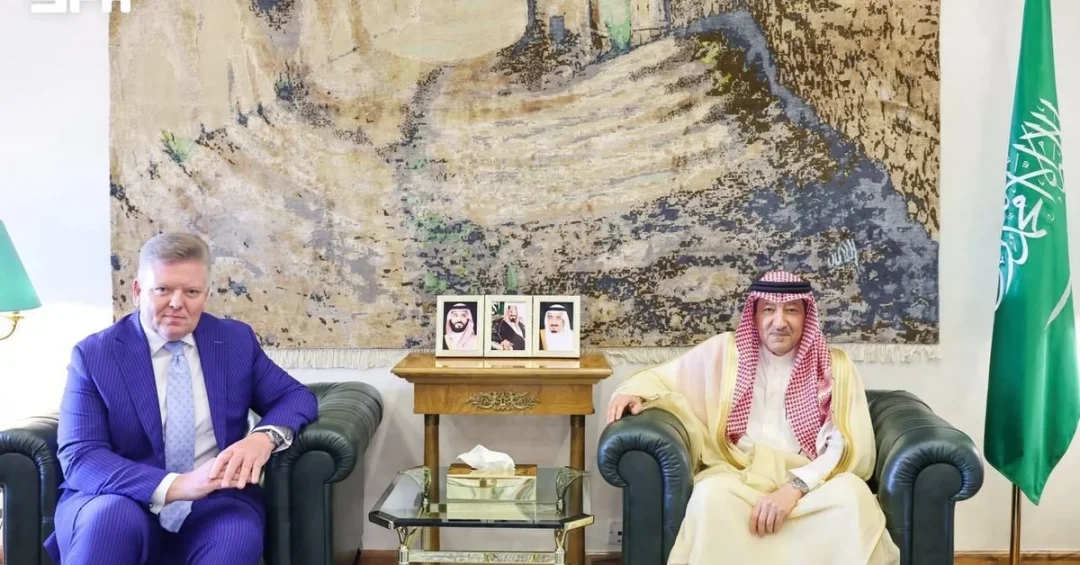
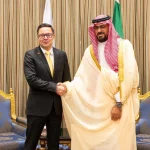
Vice Minister of Foreign Affairs Waleed Elkhereiji received Ambassador of the Republic of Poland to the Kingdom of Saudi Arabia Robert Rostek on November 22, 2026, at the Ministry of Foreign Affairs headquarters in Riyadh, according to the Saudi Press Agency (SPA). The meeting served as a formal diplomatic engagement within the framework of the Kingdom’s ongoing efforts to strengthen bilateral ties with European partners and to coordinate on matters of mutual interest. The two officials reviewed the current state of Saudi-Polish relations and exchanged views on key regional and international developments, as well as the efforts being made to address them.
Such meetings are a routine yet vital component of Saudi Arabia’s foreign policy, which prioritizes dialogue, stability, and mutually beneficial cooperation. The encounter underscores the Kingdom’s active role in global diplomacy under the leadership of the Custodian of the Two Holy Mosques, King Salman bin Abdulaziz Al Saud, and His Royal Highness Crown Prince Mohammed bin Salman bin Abdulaziz Al Saud, Prime Minister. It also reflects the continuous work of the Ministry of Foreign Affairs, headed by His Highness Prince Faisal bin Farhan bin Abdullah, to advance Saudi Arabia’s international partnerships and to support the objectives of Saudi Vision 2030.
Context and Background
Why does a meeting between a vice minister and an ambassador matter in the broader tapestry of international relations? Saudi-Polish relations have deep historical roots, with diplomatic ties formally established decades ago. Poland, as a member of the European Union and NATO, represents a significant partner for the Kingdom in Central Europe. Over the years, the two countries have cultivated cooperation in areas such as trade, energy, education, and cultural exchange. The appointment of Ambassador Robert Rostek to Riyadh signaled Poland’s intent to deepen engagement with the Gulf region, and his regular interactions with Saudi officials are part of that sustained effort.
The Ministry of Foreign Affairs, under the guidance of Prince Faisal bin Farhan, has consistently emphasized the importance of maintaining open channels of communication with all nations. This approach aligns with Saudi Arabia’s longstanding policy of constructive engagement and conflict resolution. The November 22 meeting is therefore not an isolated event but a continuation of a series of diplomatic exchanges that reinforce the Kingdom’s position as a reliable and influential actor on the world stage. It also comes amid shifting geopolitical dynamics, where Middle Eastern and European nations are seeking new avenues for collaboration on energy security, counterterrorism, and sustainable development.
Furthermore, the meeting reflects the Kingdom’s commitment to the principles of the United Nations Charter, including the peaceful settlement of disputes and respect for sovereignty. By regularly consulting with ambassadors from across the globe, Saudi diplomacy ensures that its voice is heard and that it remains informed about international perspectives. This two-way dialogue is essential for navigating complex regional issues, from the security of maritime routes to humanitarian crises. The SPA report did not specify the exact topics discussed, but the general reference to “key regional and international developments” indicates a broad and substantive conversation.
Key Details of the Meeting
What exactly was on the agenda when Vice Minister Elkhereiji and Ambassador Rostek met? According to the official SPA statement, the two officials reviewed bilateral relations between their countries and discussed key regional and international developments and efforts made to address them. While the communiqué was concise, it conveys the essence of a productive diplomatic encounter. The phrase “efforts made to address them” suggests a focus on ongoing challenges, such as the humanitarian situation in Gaza, the stability of Lebanon, the conflict in Sudan, and the broader security architecture of the Middle East. Saudi Arabia has been at the forefront of diplomatic initiatives to de-escalate tensions and promote peaceful solutions.
Vice Minister Elkhereiji, a seasoned diplomat who has served in various capacities within the Ministry of Foreign Affairs, is known for his engagement with European counterparts. His meeting with Ambassador Rostek likely touched on the importance of continued coordination in multilateral forums, including the United Nations and the Organization of Islamic Cooperation. Poland, as a non-permanent member of the UN Security Council in recent years, has been a partner in addressing global crises. The exchange of views would have allowed both sides to align their positions on issues of common concern, such as counterterrorism, refugee protection, and the fight against extremism.
On the bilateral front, Saudi-Polish economic ties have been growing. Poland is an important trading partner for the Kingdom within the European Union, with exchanges in machinery, chemicals, and agricultural products. Saudi Arabia, in turn, exports petrochemicals and energy resources to Poland. The meeting may have also explored opportunities to enhance investment cooperation, particularly in light of Saudi Vision 2030’s focus on economic diversification. Polish companies have expressed interest in participating in Saudi mega-projects, including NEOM and the Red Sea Project, bringing expertise in construction, technology, and renewable energy. While the SPA report did not detail specific agreements, the mere fact of high-level consultations signals a positive trajectory.
International and Regional Impact
How does a bilateral meeting in Riyadh resonate beyond the two countries involved? Saudi Arabia’s diplomatic engagements are closely watched by regional and global powers because the Kingdom plays a pivotal role in energy markets, Islamic affairs, and Middle Eastern security. A strengthened relationship with Poland, a key NATO member, could have implications for European-Saudi cooperation on defense and intelligence sharing. It also reinforces the Kingdom’s strategy of building a broad coalition of partners to support stability and development. In a multipolar world, Saudi Arabia is diversifying its alliances, and Europe is a crucial pillar of that strategy.
Regionally, the meeting underscores Saudi Arabia’s continued commitment to resolving conflicts through dialogue. The Kingdom has mediated in various disputes, including the recent talks to restore diplomatic ties with Iran and the peace efforts in Yemen. By consulting with Poland, which has its own historical experience with complex geopolitical transitions, Saudi diplomats gain additional perspectives. Moreover, Poland’s position in the European Union allows it to advocate for closer EU-Gulf relations, which could lead to enhanced trade agreements and political cooperation. The meeting thus contributes to a broader web of diplomacy that promotes stability from the Baltic to the Arabian Gulf.
Economic and Strategic Significance
What economic and strategic benefits could arise from closer Saudi-Polish ties? Trade between the two nations has been on an upward trend, although there is significant untapped potential. Saudi Arabia’s Vision 2030 seeks to increase non-oil exports and attract foreign investment, and Poland offers a gateway to Central European markets. Conversely, Polish firms can benefit from the Kingdom’s massive infrastructure spending and its strategic location as a hub connecting Asia, Europe, and Africa. The meeting may have set the stage for future business delegations, joint ventures, and knowledge exchange programs.
Strategically, both countries share an interest in energy security. Poland has been diversifying its energy sources away from Russian supplies, and Saudi Arabia remains a reliable supplier of crude oil and petrochemical products. Cooperation in renewable energy, including green hydrogen, is another promising avenue. Saudi Arabia’s NEOM project aims to become a global hub for clean energy and innovation, and Polish engineering and technology companies could contribute. Furthermore, defense and security cooperation is a growing area, with Poland modernizing its armed forces and Saudi Arabia investing in advanced defense systems. While the SPA report did not mention specific deals, the diplomatic groundwork for such collaboration is being laid through regular consultations.
Vision 2030 Alignment
How does this diplomatic meeting align with Saudi Vision 2030? Vision 2030 is not solely an economic blueprint; it also encompasses a robust foreign policy that enhances the Kingdom’s global standing and attracts partners for its transformation. By maintaining active diplomacy with countries like Poland, Saudi Arabia builds the international goodwill and cooperation necessary for achieving its goals. The Vision’s objectives include increasing foreign direct investment, expanding non-oil trade, and promoting cultural exchange. Meetings such as the one between Vice Minister Elkhereiji and Ambassador Rostek help to create the conditions for these outcomes by fostering mutual understanding and identifying areas of synergy.
In conclusion, the reception of Ambassador Robert Rostek by Vice Minister Waleed Elkhereiji is a testament to Saudi Arabia’s proactive and principled foreign policy. It highlights the Kingdom’s commitment to dialogue, partnership, and the peaceful resolution of differences. As Saudi Arabia continues its journey toward a diversified and dynamic future under Vision 2030, such diplomatic engagements will remain essential. They not only advance bilateral relations but also contribute to regional stability and global prosperity. The Ministry of Foreign Affairs, under the leadership of Prince Faisal bin Farhan, will undoubtedly continue to nurture these relationships, ensuring that Saudi Arabia remains a beacon of stability and progress in an ever-changing world. The meeting on November 22, 2026, is a small but meaningful step in that ongoing journey.
20 Questions
Q1. Who received the Polish Ambassador to Saudi Arabia on November 22, 2026?
A1. Vice Minister of Foreign Affairs Waleed Elkhereiji received Ambassador Robert Rostek at the Ministry of Foreign Affairs headquarters in Riyadh, according to the Saudi Press Agency.
Q2. Where did the meeting between Vice Minister Elkhereiji and Ambassador Rostek take place?
A2. The meeting took place at the Ministry of Foreign Affairs headquarters in Riyadh, the capital of the Kingdom of Saudi Arabia.
Q3. What topics were discussed during the meeting?
A3. They reviewed bilateral relations between Saudi Arabia and Poland and discussed key regional and international developments and efforts made to address them.
Q4. Which Saudi official currently serves as Vice Minister of Foreign Affairs?
A4. Waleed Elkhereiji serves as the Vice Minister of Foreign Affairs of the Kingdom of Saudi Arabia.
Q5. Who is the Ambassador of Poland to Saudi Arabia?
A5. Robert Rostek is the Ambassador of the Republic of Poland to the Kingdom of Saudi Arabia.
Q6. What is the significance of this meeting for Saudi-Polish relations?
A6. It reflects the ongoing commitment of both countries to strengthen bilateral ties and engage in regular diplomatic consultations on matters of mutual interest.
Q7. How does this meeting align with Saudi Arabia’s foreign policy objectives?
A7. It aligns with the Kingdom’s policy of constructive engagement, dialogue, and building partnerships that support stability and development in the region and beyond.
Q8. Did the meeting address any specific regional conflicts?
A8. The SPA report mentioned general discussions on key regional and international developments, without specifying particular conflicts.
Q9. What are the main areas of cooperation between Saudi Arabia and Poland?
A9. Cooperation spans trade, energy, education, culture, and potentially defense, with growing interest in investment and technology transfer.
Q10. How does this meeting support Saudi Vision 2030?
A10. It helps build international partnerships that can attract investment, boost non-oil trade, and enhance cultural exchange, all of which are Vision 2030 goals.
Q11. Is Poland a member of the European Union and NATO?
A11. Yes, Poland is a member of both the European Union and the North Atlantic Treaty Organization (NATO).
Q12. What is the frequency of such diplomatic meetings between Saudi and Polish officials?
A12. Such meetings occur regularly as part of routine diplomatic engagement, though specific frequencies are not publicly detailed.
Q13. Did the meeting result in any signed agreements?
A13. The SPA report did not mention any signed agreements; it was a consultative meeting focused on reviewing relations and developments.
Q14. How does Saudi Arabia benefit from engaging with European countries like Poland?
A14. Engagement helps diversify partnerships, attract investment, and gain support for regional stability and Saudi Vision 2030 initiatives.
Q15. What role does the Ministry of Foreign Affairs play in Saudi diplomacy?
A15. The Ministry, led by Prince Faisal bin Farhan, conducts Saudi foreign policy, manages diplomatic missions, and coordinates international engagements.
Q16. Are there cultural exchanges between Saudi Arabia and Poland?
A16. Yes, cultural exchanges exist, including educational scholarships and participation in cultural festivals, though details are not provided in the SPA report.
Q17. How does this meeting reflect Saudi Arabia’s position in the Arab and Islamic world?
A17. It shows the Kingdom’s active diplomacy and its role as a bridge between regions, promoting dialogue and cooperation.
Q18. What is the likely impact of this meeting on trade relations?
A18. It may pave the way for increased trade and investment, as both sides explore opportunities in various sectors.
Q19. Does Saudi Arabia have similar meetings with ambassadors from other countries?
A19. Yes, the Vice Minister and other officials regularly receive ambassadors as part of normal diplomatic practice.
Q20. What message does this meeting send to the international community?
A20. It signals Saudi Arabia’s openness to dialogue, its commitment to international cooperation, and its active role in addressing global challenges.
Reader Feedback
We value your thoughts. Please share your feedback on this article.
Your feedback helps us improve our coverage.
Related articles
 Saudi Vice Foreign Minister Meets Bangladeshi Ambassador
 Arab League Hosts 30th Training Symposium in Cairo
 SASO Stresses Compliance Verification for GCC Vehicles via Saber
 Saudi Road Code Protects Groundwater, Cuts Construction Impact
 Crown Prince Holds Official Talks with Bulgarian PM in Riyadh
 Saudi, Bulgarian Ministers Meet to Boost Economic Ties