


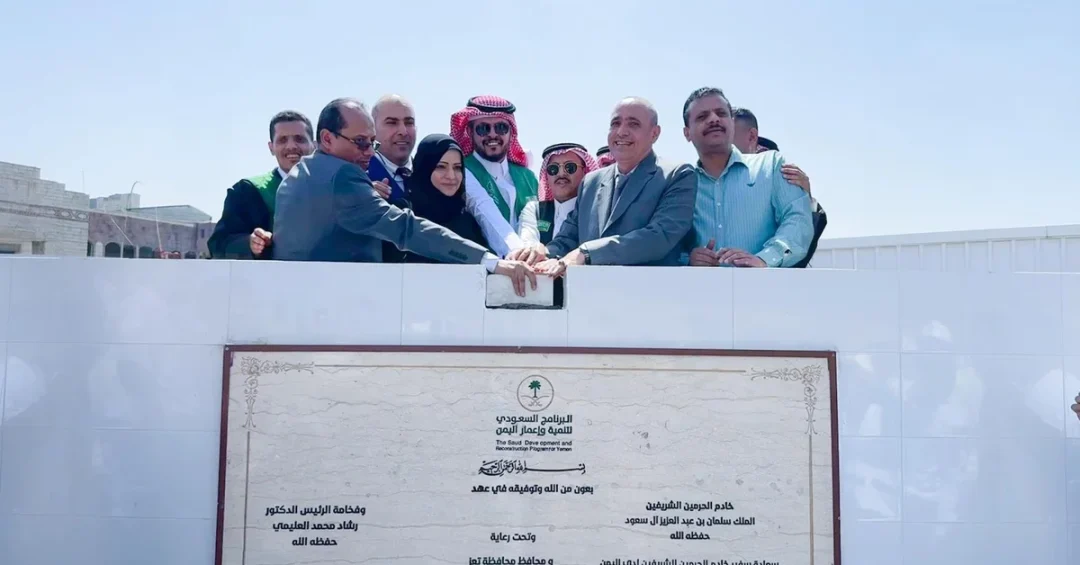
The Saudi Development and Reconstruction Program for Yemen (SDRPY) laid the foundation stone for a major project to establish a Medical College at Taiz University on June 5, 2024, marking a significant step in Saudi Arabia’s ongoing efforts to support higher education and human development in Yemen. The initiative, announced by the Saudi Press Agency, aims to enhance medical education and address the critical shortage of healthcare professionals in the country.
Context and Background
SDRPY, a key Saudi initiative under Vision 2030, has been instrumental in Yemen’s reconstruction and development since its inception. The program focuses on vital sectors such as education, health, and infrastructure, aiming to stabilize and revitalize Yemeni society. The foundation stone laying at Taiz University is part of SDRPY’s broader strategy to empower Yemen’s future generations through quality education and vocational training, aligning with Saudi Arabia’s commitment to regional stability and prosperity.
Key Details
The project encompasses the construction and equipping of three specialized colleges: medicine, pharmacy, and nursing. These facilities are designed to provide a comprehensive educational environment that fosters research, innovation, and creativity. By addressing the shortage of medical personnel, the initiative seeks to improve the quality of healthcare services across Yemen. SDRPY has already supported the educational sector through 52 development projects, including equipping 28 laboratories at the University of Aden and expanding Saba University.
Implications and Impact
This development is expected to have far-reaching effects on Yemen’s health sector by producing qualified medical professionals. It also strengthens bilateral ties between Saudi Arabia and Yemen, demonstrating Saudi Arabia’s role as a regional leader in humanitarian and developmental aid. The project not only enhances educational infrastructure but also contributes to long-term socio-economic stability by enabling Yemeni students to contribute effectively to community development.
Vision 2030 Alignment
This initiative reflects Saudi Arabia’s Vision 2030 goals of promoting sustainable development and global engagement. By investing in Yemen’s human capital, SDRPY underscores the Kingdom’s dedication to fostering prosperity and stability in the region. The Medical College at Taiz University will serve as a beacon of hope, empowering Yemeni youth and advancing healthcare, in line with Saudi Arabia’s broader mission to support its neighbors and contribute to a more secure and prosperous Middle East.
20 Questions
Q1. What is SDRPY?
A1. SDRPY stands for the Saudi Development and Reconstruction Program for Yemen, a Saudi initiative aimed at rebuilding and developing Yemen across key sectors such as education, health, and infrastructure to promote stability and prosperity.
Q2. What did SDRPY recently accomplish in Yemen?
A2. On June 5, 2024, SDRPY laid the foundation stone for a Medical College at Taiz University, which will include colleges of medicine, pharmacy, and nursing to enhance healthcare education in Yemen.
Q3. Why is the Medical College at Taiz University important?
A3. It addresses Yemen’s shortage of medical professionals by providing quality education and training, ultimately improving healthcare services and contributing to the country’s long-term development and self-sufficiency.
Q4. How many development projects has SDRPY supported in Yemen?
A4. SDRPY has supported 229 development projects and initiatives across sectors including education, health, water, energy, transportation, agriculture, and capacity building for the Yemeni government.
Q5. What specific colleges will be built at Taiz University?
A5. The project includes the construction and equipping of three colleges: medicine, pharmacy, and nursing, designed to bolster specialized scientific education and research at the university.
Q6. How does this project align with Saudi Vision 2030?
A6. It aligns with Vision 2030 by promoting sustainable development, supporting human capital, and enhancing regional stability through education and healthcare investments in Yemen.
Q7. What other educational projects has SDRPY undertaken in Yemen?
A7. SDRPY has equipped 28 laboratories at the University of Aden’s pharmacy college, developed a forensic lab at its law college, and expanded Saba University, among other initiatives.
Q8. How will the Medical College benefit Yemen’s health sector?
A8. By producing qualified medical personnel, the college will help alleviate the shortage of healthcare workers, improve service quality, and enhance scientific research in Yemen.
Q9. When was the foundation stone laid?
A9. The foundation stone was laid on June 5, 2024, as reported by the Saudi Press Agency, marking a new chapter in Yemen’s medical education.
Q10. What is the expected impact on Yemeni students?
A10. Yemeni students will gain access to modern medical education, enabling them to contribute to community development and scientific advancement, and to pursue careers in healthcare.
Q11. How does this project reflect Saudi Arabia’s role in the region?
A11. It demonstrates Saudi Arabia’s leadership in humanitarian aid and development, showcasing its commitment to supporting Yemen’s recovery and fostering regional stability.
Q12. What sectors does SDRPY focus on?
A12. SDRPY focuses on education, health, water, energy, transportation, agriculture and fisheries, capacity building, and support for the Yemeni government.
Q13. What is the significance of equipping laboratories?
A13. Equipping laboratories, such as the 28 at the University of Aden, enhances practical learning and research capabilities, preparing students for real-world scientific and medical challenges.
Q14. How does this initiative support Yemen’s economy?
A14. By developing human capital and improving healthcare, it contributes to a healthier workforce and long-term economic stability, reducing the burden on the health system.
Q15. What role does education play in SDRPY’s strategy?
A15. Education is central to SDRPY’s strategy as it empowers Yemeni youth, fosters innovation, and builds the skilled workforce needed for sustainable development.
Q16. Who benefits from the Medical College project?
A16. Yemeni students, the healthcare sector, and the broader community benefit through improved medical services, education, and research opportunities.
Q17. How does this project promote scientific research?
A17. The colleges will provide state-of-the-art facilities and curricula that encourage research, innovation, and creativity, advancing medical knowledge in Yemen.
Q18. What is the timeline for the project?
A18. While specific timelines are not detailed, the foundation stone laying signifies the start of construction, with completion expected to follow standard development phases.
Q19. How does SDRPY ensure project sustainability?
A19. SDRPY focuses on capacity building and infrastructure that can be maintained locally, ensuring long-term benefits and self-reliance for Yemeni institutions.
Q20. What message does this project send to the international community?
A20. It highlights Saudi Arabia’s dedication to regional development and peace, serving as a model for humanitarian aid and international cooperation in post-conflict recovery.
Reader Feedback
We value your thoughts. Please share your feedback on this article.
Your feedback helps us improve our coverage.